
Tool Sales Calendars: When Hardware Stores Actually Cut Prices
Discover the seasonal patterns behind tool discounts so you can plan purchases around genuine markdowns rather than artificial urgency.
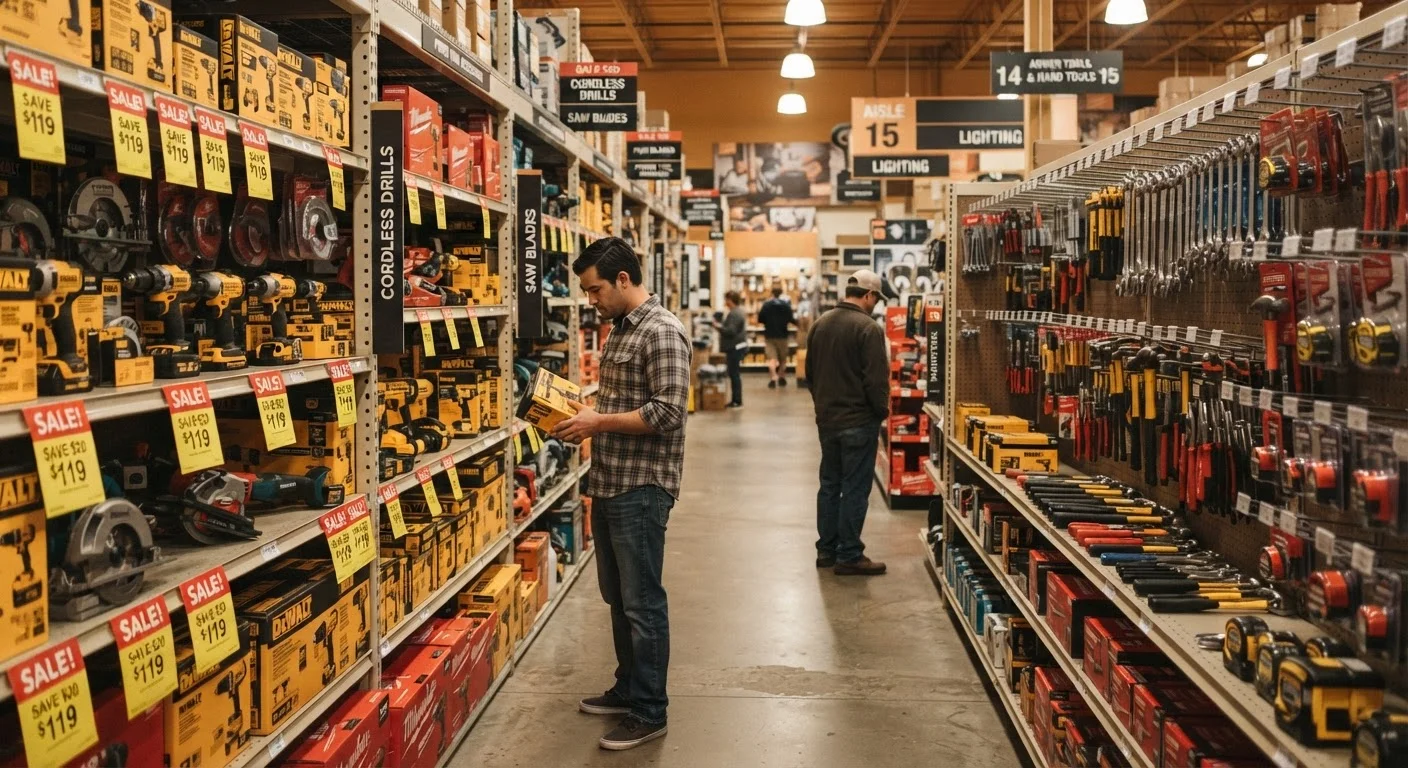
Photo: SaverSteals.com | Explore More. Shop Smarter. editorial
—— In This Article
How Tool Sale Calendars Actually Work
Hardware store pricing is not random. Retailers follow predictable markdown cycles tied to inventory turnover, contractor demand seasons, and retail holiday events. Understanding these patterns won't guarantee a deal, but it removes the guesswork from timing a significant tool purchase.
Unlike clothing or toys — where seasonal toy price cycles follow school schedules — tool discounts track contractor activity, home improvement project seasons, and specific retail holidays that have become entrenched over decades.
Two broad forces drive markdowns: seasonal demand shifts (retailers discount what contractors aren't buying right now) and promotional retail events (calendar-anchored sales that hardware chains run consistently year after year). Both are worth tracking separately.
The Seasonal Markdown Windows
Late winter (January–February) is historically the slowest period for hardware retail. Contractors are between projects, homeowners aren't yet in improvement mode, and stores are clearing holiday-season inventory. This is when corded power tools, compressors, and larger stationary equipment tend to see clearance pricing.
Spring (March–April) is the opposite — demand rises as outdoor projects ramp up. Prices on lawn equipment, outdoor power tools, and garden hardware typically increase or hold firm. If you need a pressure washer or cordless outdoor kit, late winter is the more sensible window than spring.
Mid-summer (July) brings a secondary lull. Spring projects are wrapping up; fall renovation season hasn't started. Retailers sometimes run mid-year promotions to move inventory before back-to-school and fall restocks arrive. This overlaps with the same pricing logic behind garden supply seasonal cycles.
Post-Thanksgiving through December is the most marketed tool-sale period of the year, anchored to Black Friday and the weeks that follow. Cordless drill kits, combo sets, and branded power tool bundles appear prominently. Discounts here can be genuine, but they're also where artificial urgency is most aggressively deployed — compare prices against a 90-day price history before assuming a markdown is meaningful. Price drop alert tools make this straightforward.
Verify Discounts Against Price History
Black Friday tool promotions frequently use a 'regular price' that was only in effect briefly before the sale. A tool listed at 40% off may have been at that same 'sale' price for much of the prior quarter. Use a price history extension or tracker for 60–90 days before a major promotional window to establish a reliable baseline. Don't assume the advertised percentage off reflects a genuine markdown from the typical selling price.
Promotional Events Worth Tracking
Beyond seasonal patterns, specific retail events have become reliable markdown triggers at major hardware chains:
- Memorial Day (late May): Outdoor power tools, grills, and deck-building supplies. One of the more consistent promotional windows hardware retailers run each year.
- Labor Day (early September): End-of-summer outdoor equipment clearances. Lawn tractors and outdoor power tools often see steeper cuts than spring promotions.
- Black Friday / Cyber Monday: The most heavily promoted event. Cordless combo kits and power tool sets are common loss-leaders. Verify against historical pricing before acting.
- Father's Day (mid-June): Modest promotional activity on hand tools, tool storage, and accessories. Discounts tend to be shallower than the major holiday events.
For a more comprehensive approach that integrates these windows into a purchase strategy, see a year-round framework for tool spending.
Stacking Sale Timing with Other Discount Levers
Sale calendars are most useful when combined with other cost-reduction strategies. A store promotion running during a seasonal markdown window can compound savings — but only if you've done the groundwork.
Price matching: If a competitor is running a promotion during a window when your preferred retailer isn't, you may be able to use it. Hardware store price-match policies vary significantly in their eligibility rules — check the fine print before assuming it applies.
Membership discounts: Some hardware retailer loyalty programs offer member-exclusive pricing during promotional events. Whether a paid membership pays off depends on your purchase frequency.
Used and clearance channels: If a tool purchase isn't time-sensitive, the secondary market runs on its own timeline. Used tool sourcing can outperform any retail sale event when the right item becomes available. Similarly, understanding how outlet stock differs from clearance aisles helps you locate the deepest in-store discounts independent of promotional timing.
Finally, for single-project tools, a discounted purchase may still be more expensive than renting. Comparing rental to on-sale purchase costs is worth doing before committing to either path.

Tools Editorial Team
Tools Editorial Team is the collective byline for our editorial team and contributor network. Articles published under this byline or an editorial pen name are researched, written, and reviewed according to our editorial standards for clarity, consistency, and independence before publication.
View author profile