
Price Matching at Hardware Stores: What the Policy Fine Print Actually Means
Most major hardware retailers offer price matching, but eligibility rules vary widely. Here's what to check before you ask at the register.
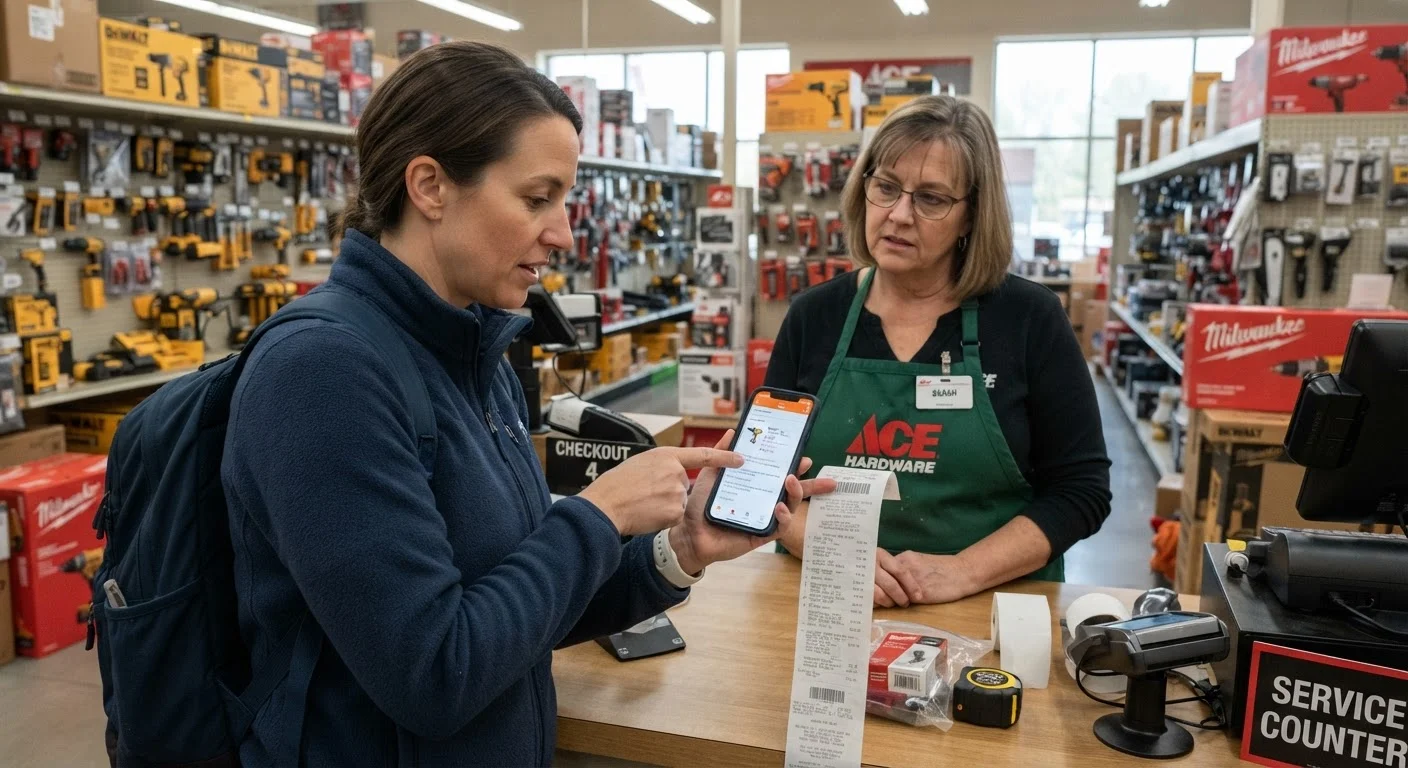
Photo: SaverSteals.com | Explore More. Shop Smarter. editorial
—— In This Article
Key Takeaways
- Price matching typically requires an identical item — same model number, same size, same configuration.
- Many policies exclude online-only retailers, marketplace sellers, and auction-style listings.
- Clearance, closeout, and bundle pricing are commonly excluded from price match eligibility.
- You usually need to present verifiable proof of the competitor's current price at time of request.
- Price adjustment windows — for matching a price drop at the same store — are often shorter than shoppers expect.
- Combining a price match with a loyalty reward or coupon is allowed at some retailers but explicitly blocked at others.
Why Price Match Policies Have So Many Conditions
Hardware retailers offer price matching as a retention tool — it reduces the chance a customer walks out to buy elsewhere. But a policy with no guardrails would be commercially unworkable, so every major retailer attaches qualifying conditions. Understanding those conditions before you reach the register is the difference between a smooth adjustment and a frustrating refusal.
The core requirement across virtually all hardware store policies is item identity: the product must be identical — same manufacturer, same model number, same configuration. A similar-looking drill or a comparable-spec circular saw does not qualify. If the competitor lists a bundle that includes accessories, that bundle price typically cannot be matched against a standalone unit price.
Read the Policy Document, Not the Poster
In-store signage and staff summaries of price match policies are frequently oversimplified. The authoritative source is the full written policy, usually available on the retailer's website under customer service or FAQs. Pulling it up on your phone before you shop takes about two minutes and removes guesswork at the register.
Which Competitors Count — and Which Don't
Most policies name a defined set of qualifying competitors, and that list matters enormously. Brick-and-mortar hardware chains and their own websites are the most common inclusions. What frequently gets excluded:
- Online-only retailers with no physical store presence
- Third-party marketplace sellers (items sold by a third party on a retailer's platform)
- Auction or bidding-style listings
- Club or membership stores that require paid access
- Local or regional independent hardware stores not on the approved list
Even when a competitor qualifies, the price must be a current, publicly available price — not a price from a membership program, a coupon code available only to certain customers, or a one-day flash sale that has already ended. Policies typically require the price to be verifiable in real time, which means a live web listing or a current printed circular.
~7–30 days
Typical price adjustment window at hardware retailers
Window lengths vary by retailer; check the written policy at time of purchase, as verbal estimates from staff are not binding.
Model number match
Most common reason price match requests are declined
Retail industry consumer affairs reporting consistently identifies item-identity mismatches as the leading cause of denied price match requests.
The Exclusions That Catch Shoppers Off Guard
Beyond competitor restrictions, the fine print commonly excludes specific pricing situations regardless of the competitor's legitimacy:
- Clearance and closeout pricing
- Competitors liquidating discontinued stock are almost universally excluded. This is one of the most frequently misunderstood exclusions.
- Promotional bundle pricing
- If the lower price is only available as part of a multi-item bundle, it typically cannot be separated out.
- Limited-quantity or doorbusters
- Time-limited or inventory-limited promotions are often explicitly carved out.
- Pricing errors
- Policies usually contain language allowing the store to decline a match on what it determines is an obvious pricing mistake at a competitor.
If you're planning purchases around predictable markdowns rather than relying on price matching alone, the tool sales calendar guide lays out when genuine seasonal discounts tend to occur at hardware retailers.
How to Make a Request That Holds Up
The mechanics of a successful price match request come down to preparation and timing. Have the following ready before you approach the register:
- The item's exact model number — confirm it matches what's on the competitor's listing, not just the product name
- A live, verifiable price — a current webpage you can display or a dated printed advertisement
- Confirmation the item is in stock at the competitor, not backordered or sold out
Requests made after purchase fall under price adjustment rules, which have their own — often shorter — windows and sometimes stricter documentation requirements. If you're also enrolled in a loyalty scheme, verify before requesting whether a price match affects your points accrual on that transaction; some retailers recalculate rewards on the adjusted price. For a broader view of how loyalty programs interact with discounts, see loyalty programmes at hardware retailers.
Price Matching Isn't the Only Lever
Price matching works best when you've already identified a confirmed lower price elsewhere. If you haven't done that groundwork, other approaches — timing purchases to known sale cycles, using store loyalty credits, or evaluating discount memberships — may produce more reliable savings with less friction. See hardware store discount memberships for a look at how paid membership programs compare.
Frequently Asked Questions

Tools Editorial Team
Tools Editorial Team is the collective byline for our editorial team and contributor network. Articles published under this byline or an editorial pen name are researched, written, and reviewed according to our editorial standards for clarity, consistency, and independence before publication.
View author profile