
Outlet Sections vs. Clearance Aisles: Where Tool Discounts Are Deepest
Outlet stock and clearance items are not the same thing. Understanding the difference helps you find genuine savings on hand and power tools.
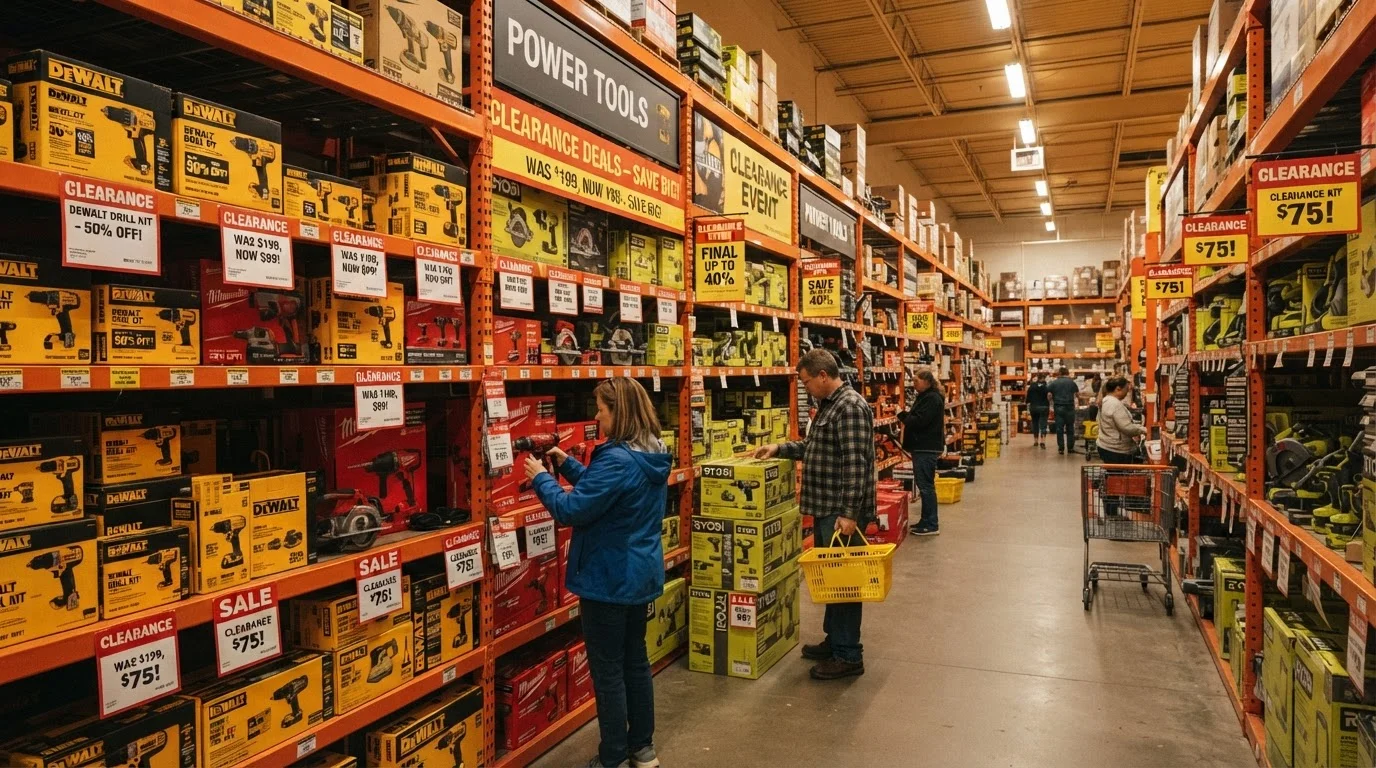
Photo: SaverSteals.com | Explore More. Shop Smarter. editorial
—— In This Article
Key Takeaways
- Outlet sections typically carry factory-refurbished, overstock, or returned tools — not always current retail models.
- Clearance aisles mark down tools that a retailer is actively retiring from its floor inventory, often to make room for new lines.
- Discount depth varies: outlet pricing is set by the manufacturer or outlet operator; clearance pricing is set by the individual retailer.
- Warranty terms frequently differ between outlet and clearance purchases — always verify before buying.
- Neither channel guarantees the lowest available price; comparing both against standard retail is always worth the effort.
What Actually Separates Outlet Stock from Clearance Items
The terms "outlet" and "clearance" get used interchangeably in casual conversation, but they describe fundamentally different inventory pipelines — and understanding the difference determines how much leverage you actually have as a buyer.
Outlet sections — whether standalone outlet stores or dedicated sections within a retailer's website — exist to move inventory that never made it into the standard retail chain cleanly. That includes manufacturer overruns (tools produced in excess of retail orders), customer returns that have been inspected and repackaged, cosmetically imperfect units, and occasionally discontinued models that the brand wants off its books. The pricing is set at the outlet level, often by the brand itself or by an outlet operator, and it reflects the cost of processing that inventory rather than a time-pressured markdown.
Clearance aisles, by contrast, represent a retailer's decision to stop carrying a product. The tool was once on a regular retail shelf at full price. Now — because a new model is coming in, the SKU is being dropped, or a seasonal buying cycle is ending — the store needs to clear floor space and recover cash. The retailer sets the markdown, and the discount often deepens in stages as the item sits longer. See when hardware stores actually cut prices to understand how those markdown cycles align with the retail calendar.
| Criterion | Outlet Sections | Clearance Aisles |
|---|---|---|
| Inventory source | Overstock, returns, refurbished units | Discontinued or overstocked retail floor stock |
| Who sets the price | Manufacturer or outlet operator | Individual retailer |
| Typical discount range | 20–40% off original retail | 15–60%+ depending on markdown stage |
| Warranty coverage | Varies; often reduced (90 days–1 year) | Usually full manufacturer warranty |
| Return policy | Often stricter (15–30 days) | Sometimes final sale; varies by retailer |
| Model currency | May be older configurations | Typically current or recent retail models |
| Inventory consistency | Rotates continuously | Limited quantities; no replenishment |
Discount Depth: Which Channel Goes Lower?
There's no universal answer, because discount depth depends on the retailer, the category, and how urgently inventory needs to move. That said, some patterns hold up consistently across the tools and hardware space.
Outlet pricing on hand and power tools tends to cluster in the 20–40% off original retail range for refurbished or open-box units. Factory-certified refurbs at the higher end of that range often come with limited warranties, which partially explains why the discount isn't steeper — the manufacturer is absorbing some risk. Cosmetically imperfect units with no warranty can go deeper, but you're accepting more uncertainty.
Clearance markdowns in physical stores frequently start at 15–25% off, but items that linger through multiple markdown cycles — common with cordless tools whose battery platforms are being phased out — can reach 50–60% off or more. The catch: by the time the price is that low, a specific unit may be the only one left, it may be missing accessories, or it may have been handled by many shoppers. Online clearance tabs at major hardware retailers follow a similar pattern but tend to move faster because visibility is higher.
50–60%
Maximum clearance discount depth on phased-out cordless platforms
Observed across major hardware retail channels when battery systems are discontinued and remaining stock lingers through multiple markdown cycles.
20–40%
Typical outlet discount on factory-refurbished power tools
This range reflects pricing on certified refurbished units that include at least a limited manufacturer warranty, according to standard outlet channel norms.
90 days
Common minimum return window at standard retail vs. outlet tabs
Standard hardware retail return windows are frequently 90 days; many online outlet sections operate on 15–30 day windows, a difference worth confirming before purchase.
For shoppers comparing both channels, the practical approach is to note the full retail price first, then evaluate each discounted price against it — not against each other. A 35% outlet discount and a 35% clearance discount on the same tool are not equivalent if the outlet unit is an older configuration or lacks a battery.
The used tools market is a third option worth keeping in mind: private-party and auction-channel pricing on secondhand tools can undercut both outlet and clearance pricing, though condition verification becomes entirely your responsibility.
Warranties, Returns, and the Fine Print
Warranty coverage is where outlet and clearance purchases diverge most sharply — and where buyers most often get caught out.
Tools purchased through manufacturer-run outlet sections frequently carry a reduced but real warranty: commonly 90 days to one year on factory-refurbished units. Read the product listing carefully; the warranty terms should be stated explicitly. If they aren't, treat the purchase as final-sale.
Tools bought from clearance aisles at a standard hardware retailer typically carry the same manufacturer warranty as a full-price purchase — because from the manufacturer's perspective, the tool is new and was simply marked down by the retailer. This is a meaningful advantage that's easy to overlook when comparing sticker prices.
Return policies are a separate question from warranties. Many outlet sections — especially online outlet tabs — operate under stricter return windows (often 15–30 days versus a standard 90-day retail policy). Clearance items at physical stores sometimes carry a "final sale" designation, meaning no returns at all. Confirm the return policy before completing any purchase in either channel.
"Final Sale" Doesn't Always Mean No Recourse
Even on items marked final sale, a valid manufacturer warranty still applies to defects — the retailer's no-return policy and the manufacturer's warranty are separate obligations. If a clearance tool fails due to a manufacturing defect within the warranty period, the manufacturer is still responsible for honoring the warranty claim. Keep your receipt and packaging regardless of the sale terms.
These same dynamics appear across other product categories. The outlet vs. clearance distinction in clothing follows a nearly identical logic — the inventory source changes the nature of the discount in ways the price tag alone won't tell you.
How to Evaluate a Tool Deal in Either Channel
Regardless of which channel you're shopping, a consistent evaluation checklist prevents the most common mistakes budget tool shoppers make.
- Verify the exact model number against current retail listings. Outlet sections sometimes list tools under a refurbished SKU that masks whether it's the current generation or a previous one.
- Check battery platform compatibility. A discounted drill is far less useful if its battery system has been discontinued and replacement packs are scarce or expensive.
- Confirm what's included in the box. Clearance units occasionally arrive missing manuals, blade guards, or chargers. Outlet listings should specify contents explicitly.
- Look up the street price across multiple retailers before deciding the discount is real. Outlet and clearance prices are sometimes set against an inflated "original" reference price.
- Factor in the warranty situation as described above — a longer warranty can justify paying more in one channel over the other.
If your project timeline is flexible, planning purchases around the hardware store sale calendar gives you a third lever: standard promotional sales that can sometimes match or beat both outlet and clearance pricing on in-demand tools without any of the inventory uncertainty.
For context on how the same outlet-versus-clearance question plays out with different product types, see how outlet and clearance pricing differ for sports gear — the structural logic is consistent even when the categories vary.

Tools Editorial Team
Tools Editorial Team is the collective byline for our editorial team and contributor network. Articles published under this byline or an editorial pen name are researched, written, and reviewed according to our editorial standards for clarity, consistency, and independence before publication.
View author profile