


Key Takeaways
Option A
Rakuten
The established cashback portal with real dollar payouts.
Best for: Shoppers who want predictable, high-value cashback paid directly as a check or PayPal deposit.
Option B
Honey
The coupon-first extension with a points-based rewards layer.
Best for: Bargain hunters who want automatic coupon testing at checkout and don't mind earning rewards in a gift-card format.
If you want the highest dollar return on planned purchases
Rakuten
Rakuten's cashback rates frequently beat Honey Gold's equivalent value, and payouts arrive as real money - not gift cards with redemption friction.
If you want automatic coupon codes applied without any extra steps
Honey
Honey's checkout coupon scanner tests every available code automatically, consistently delivering immediate discounts that Rakuten simply doesn't offer.
If you shop heavily at one or two major retailers
Rakuten
Rakuten's in-store cashback, higher rates at major department stores, and quarterly Big Fat Check make it the better engine for focused, high-volume shopping.
If you're a casual shopper who forgets to activate deals
Honey
Honey's extension pops up automatically at checkout - no portal navigation required - making savings happen passively even when you're not thinking about deals.
If you want to stack every possible savings layer
Rakuten
Rakuten pairs cleanly with cashback credit cards and its in-store program, making it easier to build a multi-layer savings stack on a single transaction.
How Each Tool Actually Works
Understanding the mechanics before you install anything saves a lot of frustration later. Rakuten and Honey are built on fundamentally different models, and confusing them leads to missed savings.
Rakuten: Portal-Based Cashback
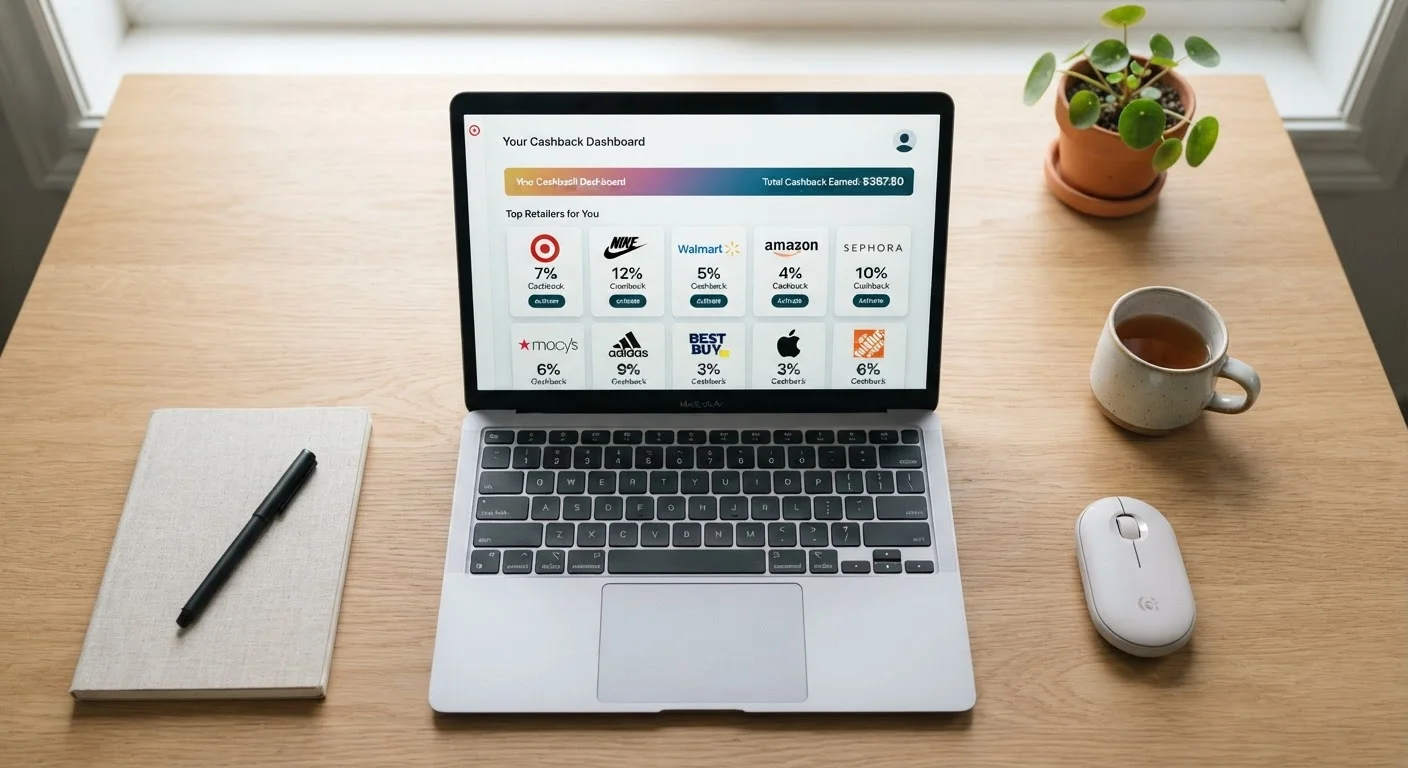
Rakuten operates as a cashback portal. You start a shopping session by clicking through Rakuten's website or using its browser extension button, which plants a tracking cookie. When you complete a purchase, the retailer pays Rakuten a commission, and Rakuten rebates a portion of that commission to you. Rates are expressed as a percentage of your purchase - for example, 5% back at a clothing retailer - and accumulate in your account until Rakuten issues a quarterly payout called the Big Fat Check. You can opt to receive that as a physical check or a PayPal deposit.
The extension simplifies the activation step: instead of navigating to Rakuten.com first, a button appears in your browser when you land on a partner retailer's page. One click activates cashback for that session. Rakuten also offers in-store cashback at select retailers by linking a credit or debit card to your account.
Honey: Coupon-First, Points Second
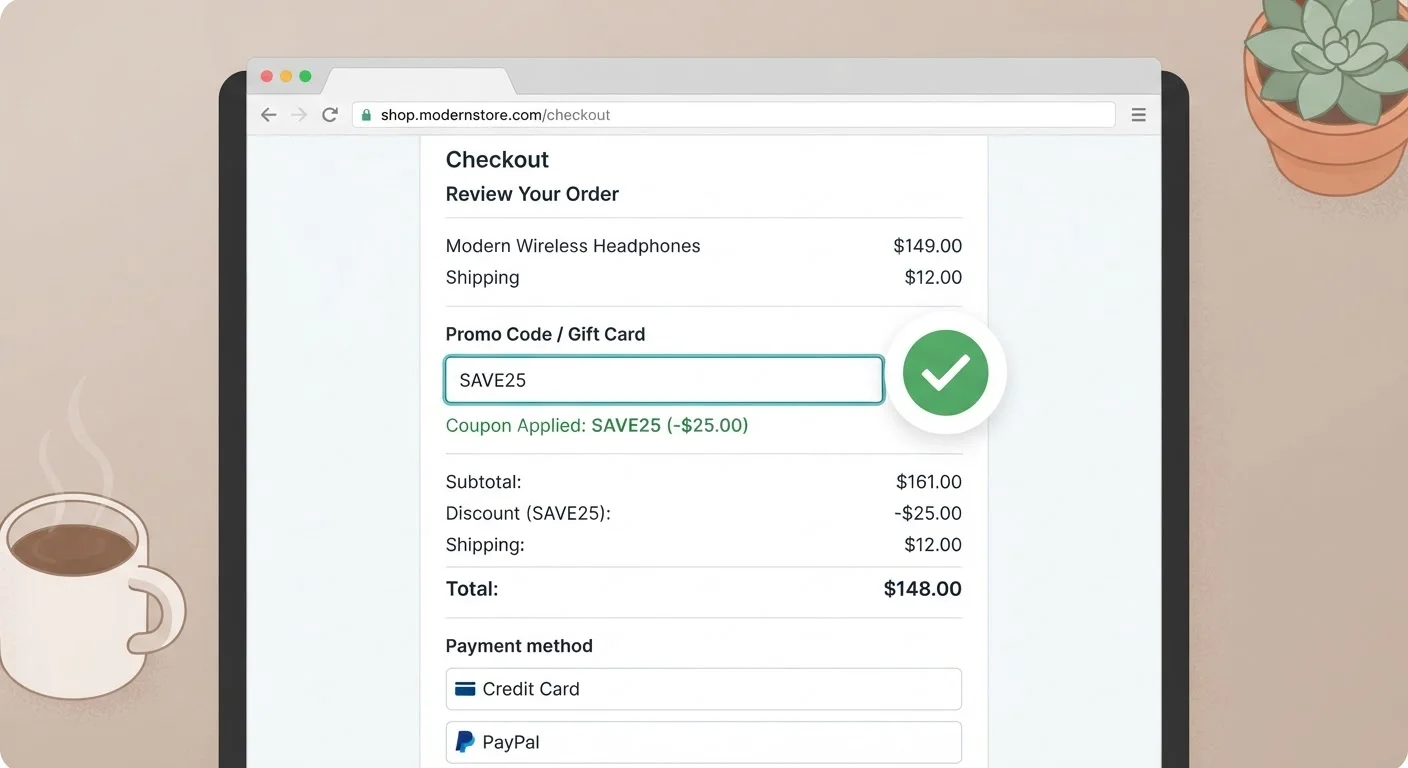
Honey's primary function is coupon discovery, not cashback. When you reach a retailer's checkout page, the extension automatically opens and tests every coupon code it has on file, applying the best-performing one. This happens without you lifting a finger beyond clicking "Apply Coupons."
The cashback layer - Honey Gold - is secondary. You earn Gold points when shopping at participating stores through Honey's system, then redeem those points for gift cards. The conversion rate is typically 1,000 Gold = $10 in gift cards, though the ratio varies slightly by redemption option. Unlike Rakuten, there's no cash payout; your earnings are locked into the gift card ecosystem.
Both tools offer browser extensions for Chrome, Firefox, Safari, and Edge. For a broader look at how extensions compare to app-based cashback methods, see our browser extensions vs. mobile cashback apps breakdown.
Cashback Rates, Payout Structure, and Real Dollar Value
This is where the two tools diverge most sharply - and where most shoppers make the wrong assumption.
| Criterion | Rakuten | Honey |
|---|---|---|
| Payout format | Cash (check or PayPal) | Gift cards via Honey Gold points |
| Payout frequency | Quarterly (4x per year) | On-demand when threshold met |
| Typical cashback rates | 1-15% (store-dependent) | 0.5-5% in Gold equivalent |
| Coupon testing | None | Automatic at checkout |
| Amazon coverage | Not supported | Price tracking + Droplist |
| Travel cashback | Yes (hotels, flights, car rental) | Very limited |
| In-store cashback | Yes (linked card program) | No |
| Activation required | Yes - click to activate per session | Coupons auto-trigger at checkout |
| Partner store count | 3,500+ | 30,000+ (coupons); fewer for Gold |
| Sign-up bonus | $30 after first $30 purchase | Varies by promotion |
Rakuten's Rate Advantage
Rakuten's cashback percentages are publicly listed and frequently updated. At major retailers, rates of 3-10% are common during standard periods, with promotional windows pushing select stores to 15-20%. Because these are real-dollar percentages, a $500 electronics purchase at 5% back puts $25 in your account directly. Rakuten also runs a referral bonus ($30 for new members who spend $30 within 90 days) and periodic double-cashback events that amplify returns significantly.
The quarterly payout schedule is Rakuten's main friction point. Earnings issued in January, April, July, and October mean you might wait up to three months to see your money. Rakuten does allow you to hold a PayPal payout in your PayPal balance immediately upon issue, which speeds up access slightly.
Honey Gold's Gift-Card Lock-In
Honey Gold's equivalent return rate is lower on average. When a store offers both Rakuten cashback and Honey Gold, Rakuten's cash value typically wins - sometimes by a meaningful margin. The bigger constraint is the gift card requirement. If you wanted to use your earnings toward a utility bill or rent, Honey Gold can't help you. Rakuten's check or PayPal payout can be spent anywhere.
$346M+
Rakuten cashback paid to members annually
Rakuten reports paying out hundreds of millions in cashback per year to its U.S. member base, underscoring the scale of its cash payout model.
17M+
Active Honey users at time of PayPal acquisition
PayPal acquired Honey for $4 billion in 2020, citing its 17 million monthly active users as a key driver of the deal's valuation.
30,000+
Retailers where Honey tests coupon codes
Honey's coupon database spans a much wider retailer set than its Gold cashback program, meaning the coupon tool works even where Gold earnings don't apply.
Up to 20%
Peak Rakuten cashback rate during promotions
Rakuten periodically runs double or triple cashback events at select retailers, with rates occasionally reaching 15-20% for limited windows.
That said, Honey Gold does offer gift cards to Amazon, Target, Walmart, and dozens of other retailers where most people spend money anyway, so the lock-in is less punishing than it sounds for everyday shoppers.
For a direct rate comparison across multiple portals beyond just these two, this comparison of Rakuten, TopCashback, and Honey Gold breaks down which portal actually pays more across categories.
Store Coverage and Category Strengths
Raw store counts matter less than whether your specific stores are covered at useful rates. Both platforms work with thousands of retailers, but their category strengths differ.
Where Rakuten Leads
- Travel: Rakuten partners with major hotel chains, booking platforms, and airlines - categories where Honey Gold offers little to nothing. A 4% cashback on a $1,200 flight is $48 back in cash.
- Financial services: Credit card applications, insurance quotes, and banking products can earn significant Rakuten cashback - sometimes $50-$200 per approved application.
- Department stores: Macy's, Nordstrom, and similar retailers often have stronger rates on Rakuten than on Honey.
Where Honey Holds Its Own
- Coupon availability: For retailers with active discount codes, Honey's automatic testing beats manually hunting codes - and works even at stores that don't participate in Honey Gold at all.
- Amazon: Honey's Droplist feature tracks Amazon prices over time and alerts you when items drop. Rakuten doesn't offer Amazon cashback (Amazon doesn't participate in third-party portals), so Honey's price-drop alerts fill a real gap there.
- Fast fashion and apparel: Honey tends to surface working promo codes reliably in this category, where promo codes are abundant and competition is high.
If Amazon price tracking is central to how you shop, it's worth reading how Honey compares to CamelCamelCamel and Keepa as a price tracker - Honey's tracking features are useful but not the deepest on the market.
Honey's Coupon Sourcing Controversy
In late 2024, a widely circulated report alleged that Honey's extension was overriding affiliate links from content creators, replacing their tracking cookies with Honey's own. This affected which codes Honey surfaced and potentially stripped commissions from influencers who recommended products. PayPal disputed some claims, but the episode raised legitimate questions about how Honey selects and prioritizes coupon codes. For most shoppers the practical impact is minimal, but it's worth knowing the extension has commercial incentives that may not always align with finding the absolute best code available.
When Rakuten Tracking Can Break
Rakuten cashback tracking depends on a cookie staying active through your entire checkout session. Clicking away to a third-party site, opening a new tab partway through, or using a second browser extension that redirects links can break the tracking chain and void your cashback. Always complete checkout in the same tab and browser window where you activated Rakuten.
Browser Extension UX: Day-to-Day Usability
The best cashback tool is the one you actually use consistently. UX friction is a real savings killer.
Rakuten's Extension Experience
Rakuten's extension appears as a button in your browser toolbar. When you navigate to a partner site, it activates and shows the current cashback rate. You click to confirm activation, and the session is tracked. The friction: you have to notice the button and click it. If you're in a distracted purchasing mindset - like quickly buying a gift - you'll skip the click and miss the cashback. There's no automatic activation without that confirmation step.
Rakuten's extension also surfaces in-store offer reminders and sends email alerts for rate increases at stores you've shopped before, which helps with habit formation.
Honey's Extension Experience
Honey operates more passively. At checkout, a yellow pop-up appears and offers to apply coupons. It doesn't require upfront activation on every page visit - the coupon check triggers at the payment stage, which is exactly when your attention is already focused. This design choice means Honey captures savings even from impulse purchases.
The Gold earnings activation is less obvious: you have to look for the Honey button on product pages to check if Gold is available and activate it before adding to cart. Many casual users miss this step, effectively using Honey only for coupons while leaving Gold on the table.
Both extensions are lightweight and don't noticeably slow browsing. Privacy-conscious shoppers should know that both tools collect browsing data on shopping activity - Honey's data practices attracted scrutiny after its acquisition by PayPal, so reviewing both privacy policies before installing is a reasonable step.
Stacking Both Tools (and Credit Cards) for Maximum Return
The smartest move is often not choosing between Rakuten and Honey - it's running both simultaneously with a cashback credit card on top.
The Stacking Logic
Cashback portals and coupon extensions operate at different layers of a transaction. A coupon code reduces your pre-tax total. Rakuten cashback is calculated on your purchase total after the coupon is applied. Your credit card earns rewards on the final charged amount. These three mechanisms don't conflict - they compound.
Example stack:
- Activate Rakuten cashback for a retailer (e.g., 6% back)
- At checkout, let Honey test coupon codes - best code applies 15% off
- Pay with a credit card earning 2% back on all purchases
On a $200 purchase: the coupon drops the price to $170. Rakuten pays 6% of $170 = $10.20 back. The credit card pays 2% of $170 = $3.40 back. Total savings: $30 (coupon) + $10.20 (Rakuten) + $3.40 (card) = $43.60 saved on a $200 item.
This is the system-level approach to cashback. For a deeper look at how portals and cards interact, our cashback portal vs. credit card rewards comparison covers the tradeoffs in detail.
One caveat: activating Honey Gold on a purchase at the same time as Rakuten cashback can sometimes cause tracking conflicts, with only one portal receiving credit. The general rule is to activate Rakuten first (via the portal click), then allow Honey to apply coupons at checkout. The coupon application typically doesn't void Rakuten tracking, but purchasing through a Honey Gold-specific link can. When in doubt, prioritize Rakuten for the cashback and rely on Honey purely for the coupon-testing function.
For a three-way comparison that includes Capital One Shopping alongside these two, see our full extension shootout covering savings rates, retailer coverage, and privacy tradeoffs.
Which One Should You Actually Install?
Here's the honest answer: install both. They're free, they don't conflict meaningfully when used correctly, and they cover each other's blind spots. But if you're forced to choose one - or want to know which to prioritize - the decision comes down to two factors: how you shop and what you want to do with your earnings.
Choose Rakuten as Your Primary Tool If:
- You make planned, higher-value purchases where cashback percentage matters most
- You want real cash - not gift cards - returned to you on a predictable schedule
- You travel and want cashback on hotels and flights
- You're comfortable navigating to a portal or clicking an extension button before each shopping session
Choose Honey as Your Primary Tool If:
- You frequently shop at retailers with active promo codes and want them applied automatically
- You don't mind gift card redemptions and tend to spend them at major retailers anyway
- You're an Amazon-heavy shopper who wants price-drop tracking in addition to coupon testing
- You want a fully passive experience that works without any pre-purchase activation step
Both tools connect to the broader cashback portal ecosystem, which is worth understanding fully before deciding how much of your shopping workflow to automate. And if you're evaluating the entire landscape of cashback options - not just these two - the cashback programs hub is a useful starting point for mapping out your strategy.
The bottom line: Rakuten wins on payout quality and category depth. Honey wins on automation and immediate coupon value. Used together, they cover more ground than either does alone.