

Key Takeaways
Cashback Portal
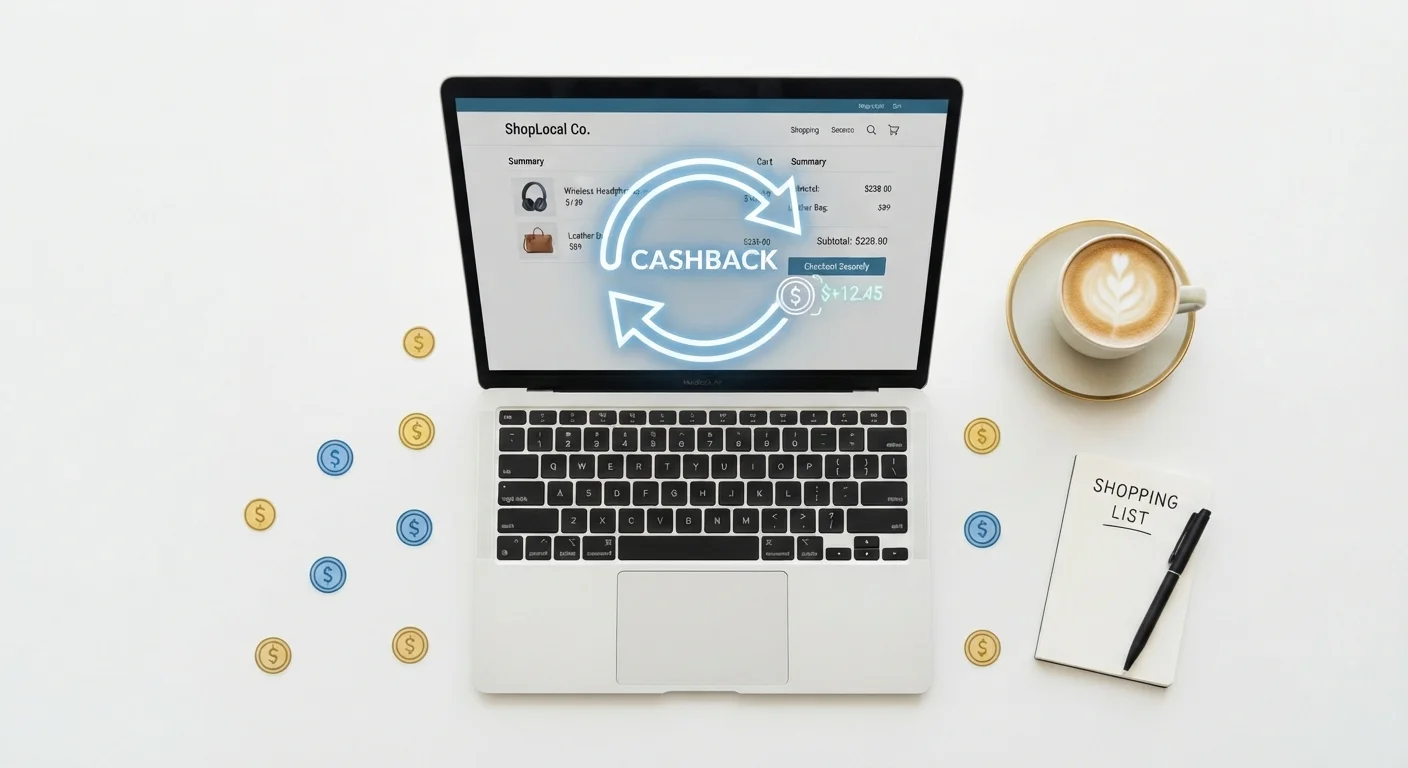
A cashback portal is a website that acts as a middleman between you and an online retailer. When you click through the portal before shopping, it earns a referral commission from the retailer - and then passes a portion of that commission back to you as cashback. You pay exactly the same price for your purchase; the reward comes out of the retailer's marketing budget, not your wallet.
Portals track your purchase using browser cookies or affiliate links. The cashback percentage varies by retailer and is set by the retailer's affiliate program terms, which portals agree to before listing a store.
The Basic Mechanic: What Actually Happens When You Click Through
Every time you buy something online without going through a referral channel, the retailer keeps 100% of the margin. Cashback portals exploit a system that was already in place - affiliate marketing - to redirect a slice of that margin back to you.
Here's the sequence in plain terms:
- You visit a cashback portal (like Rakuten or TopCashback) and find the retailer you want to shop at.
- You click the portal's tracked link. This sets a browser cookie that identifies the portal as the traffic source.
- You shop and check out normally at the retailer's site. Nothing about the experience changes - same prices, same products.
- The retailer pays the portal an affiliate commission, typically 2%-15% of the sale value.
- The portal keeps a portion of that commission as its own revenue and credits the rest to your account as cashback.
The key insight: this commission exists whether or not you use a portal. Retailers budget it as a customer acquisition cost. If you shop directly, the retailer simply keeps it. Using a portal is a mechanism for claiming your share.
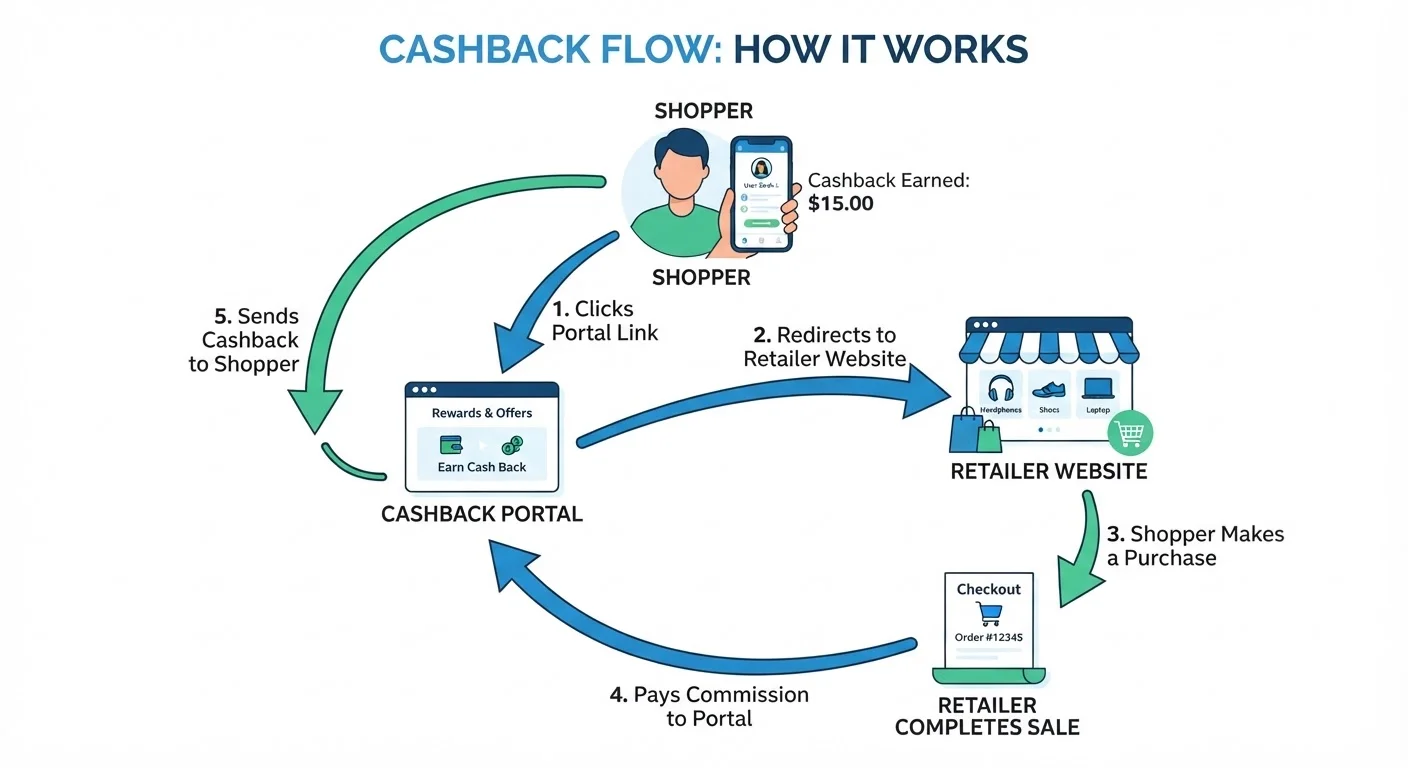
Tracking is almost entirely cookie-based on desktop. The portal's link plants a first-party or third-party cookie in your browser that persists for a set window - usually 24 hours to 30 days depending on the retailer's affiliate program. As long as you complete the purchase within that window in the same browser session and don't trigger a conflicting cookie, the sale is attributed to the portal and your cashback is queued.
Cookie Hygiene Affects Tracking Success
Cashback tracking relies on cookies that can be overwritten by other affiliate links, browser extensions, or incognito mode. Always click through the portal in a standard browser session, disable competing extensions for that session, and avoid opening multiple retailer tabs from different sources. Small technical habits protect your earnings from invisible failures.
Mobile Tracking Is Less Reliable Than Desktop
Most portal cashback tracking was designed around desktop browsers, and mobile sessions - especially in-app shopping environments - frequently break the cookie chain. If you're making a larger purchase, switching to a desktop browser for checkout after clicking through the portal on desktop significantly improves tracking reliability.
Rates Can Change Between Your Click and Checkout
The cashback rate that applies to your purchase is typically locked in at the time of your click-through, not at the time you add items to your cart or when the portal displays the rate. However, if a retailer changes its commission terms mid-session, confirmed rates may differ. Most portals honor the rate shown at click time, but reviewing your pending cashback amount confirms the correct amount was captured.
Where the Money Actually Comes From
One of the most common misconceptions about cashback portals is that there must be a catch - that the price is inflated, or the portal is somehow harvesting your data for profit. In reality, the economics are straightforward.
~$150
Average annual cashback earned by active portal users
Rakuten has publicly reported that active members earn approximately $150 per year on average through portal cashback alone.
2%-15%
Typical affiliate commission range paid by retailers
Affiliate commission rates vary widely by industry; fashion and beauty retailers often pay higher rates than electronics or grocery categories.
30-90 days
Standard cashback pending period before payout
Most major portals hold cashback in pending status while waiting for retailer confirmation that the order hasn't been returned.
2,500+
Retailers available on leading cashback portals
Top portals like Rakuten and TopCashback list thousands of participating retailers across virtually every shopping category.
$2B+
Cashback paid to US consumers via Rakuten alone
Rakuten has reported paying out over two billion dollars in cumulative cashback to its US member base since launch.
Retailers pay affiliate commissions because sending qualified, purchase-ready traffic is worth paying for. It's cheaper than most forms of paid advertising on a cost-per-acquisition basis. The portal earns by aggregating thousands of shoppers and negotiating commission rates with hundreds of retailers - then taking a margin on every transaction it facilitates.
The split varies. Some portals are more generous than others. TopCashback, for example, is known for passing through nearly the full commission rate, making its profit through a premium membership model and optional upsells. Rakuten takes a larger margin but compensates with occasional Big Fat Check promotions and referral bonuses. Neither model is free money - both portals are businesses - but the user-facing result is genuine, earned cashback.
For a deeper look at the affiliate layer and how portals generate rebates behind the scenes, see how cashback portals generate rebates.
Always Check Rates Before Clicking Through
Portal cashback rates at the same retailer can differ by 3-5 percentage points between platforms on the same day. Spending 20 seconds on a rate comparison tool like Cashback Monitor before each purchase ensures you activate the highest available rate. On a $500 purchase, a 4-percentage-point difference is $20 left on the table.
Consolidate Into Two or Three Primary Portals
Spreading purchases across a dozen portals leaves small balances that never reach each platform's minimum payout threshold. Pick two or three portals that cover most of your regular retailers, and route your spending through those. Concentrated balances reach payout faster and reduce the administrative overhead of tracking multiple accounts.
Portal Cashback vs. Credit Card Rewards: Two Layers, Not a Choice
A persistent myth is that you have to choose between portal cashback and credit card rewards. You don't. These two systems operate at completely different layers of a transaction, and they stack.
- Portal cashback is calculated by the retailer's affiliate program on the net order value. It is paid by the retailer to the portal, then shared with you.
- Credit card cashback is calculated by the card issuer on the full transaction amount charged to the card. It is funded by interchange fees and card program economics.
Because neither system knows about the other, both rewards are triggered independently by the same purchase. A $200 order through a portal earning 5% cashback and paid with a 2% cashback credit card earns $10 from the portal plus $4 from the card - $14 total on a purchase you were making anyway.
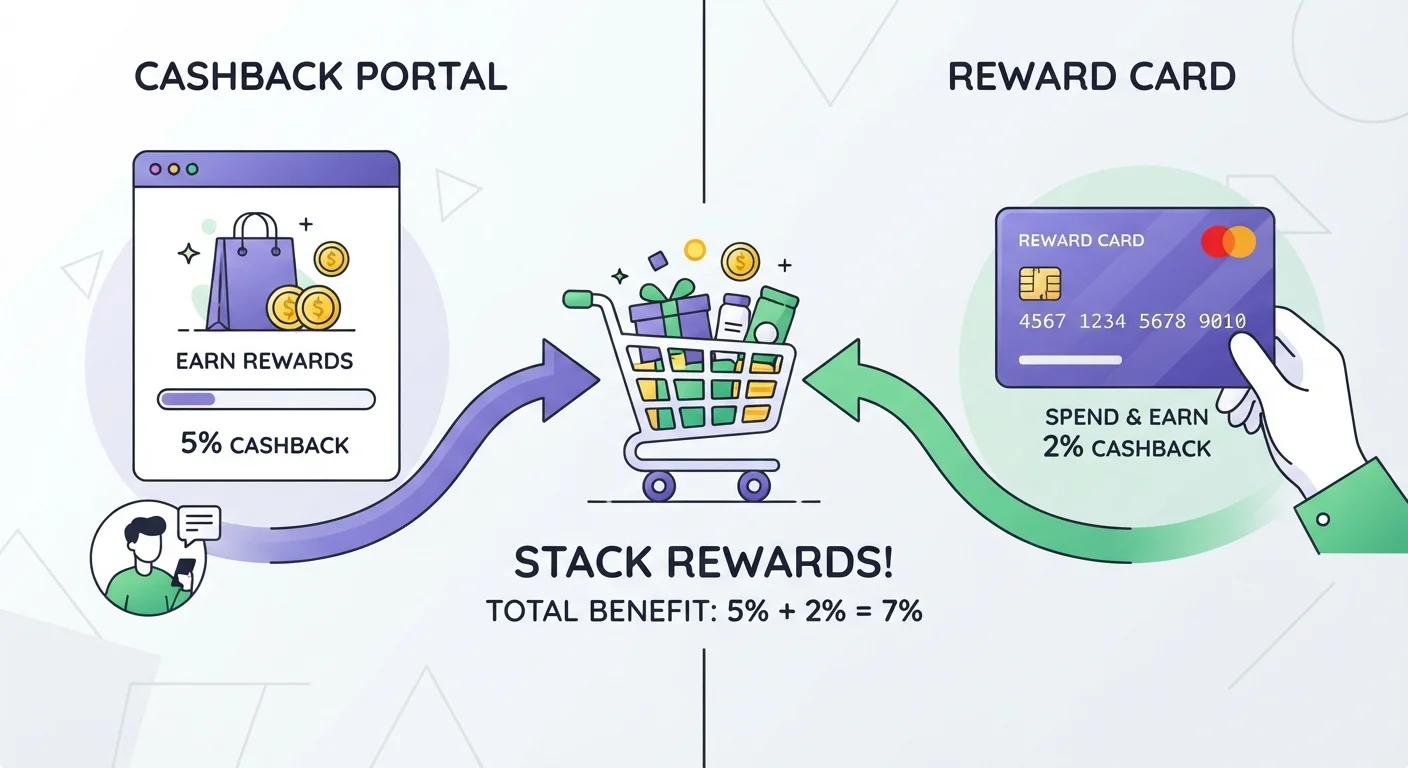
The practical caveat: some cashback cards have rotating category bonuses or store-specific multipliers that beat portal rates for certain retailers. Before defaulting to a portal, check whether your card offers elevated rewards for that category. In many cases the right answer is both - but knowing which layer is adding more value for a specific purchase is how you optimize over time.
See how portals and credit card rewards compare side by side for a full breakdown of when each wins.
“The best cashback strategy isn't the one with the highest headline rate - it's the one you actually execute before every purchase. Consistency beats optimization.”
— Stephanie Henkel, Personal finance educator and affiliate rewards analyst
Choosing the Right Portal for Each Purchase
Not all portals offer the same rate at the same retailer. A store that pays 6% through TopCashback may only offer 3% through Rakuten on the same day. Rates also change frequently - sometimes daily - based on the retailer's promotional calendar and affiliate budget.
The most reliable approach is to use a portal rate aggregator before you click through anywhere. Tools like Cashback Monitor, BeFrugal, and CashbackHolic pull live rates from multiple portals and display them side by side. A 30-second check before a $300 purchase can mean the difference between 2% and 7% cashback - a $15 swing for a few seconds of effort.
Factors that affect the rate you actually earn:
- Product category exclusions
- Many retailers exclude certain categories - electronics, clearance items, gift cards, and subscription renewals are common exclusions. The displayed rate applies only to qualifying purchases.
- New vs. returning customer status
- Some portals and retailers offer elevated rates for first-time shoppers. If you've bought from a retailer before, you may qualify for a lower tier.
- Coupon code conflicts
- Using a promo code not listed through the portal can void your cashback. Stick to codes the portal explicitly endorses, or skip the code if the cashback rate is worth more.
- Browser extension conflicts
- Multiple deal extensions running simultaneously can overwrite each other's tracking cookies. Disable competing extensions before activating a portal click-through.
For a practical comparison of browser-based tools versus dedicated apps, this breakdown of browser extensions vs. mobile cashback apps clarifies which earns more depending on how you shop.
The Pending Period and Getting Paid
Cashback doesn't land in your account immediately after purchase. Most portals hold it in a pending state while waiting for confirmation from the retailer - a process that typically takes 30 to 90 days. The delay exists because retailers need time to process returns: if you return an item, the cashback is reversed. Once the return window closes, the sale is confirmed and your cashback becomes payable.
Payment methods vary by portal. Rakuten distributes via PayPal or check quarterly. TopCashback allows transfers to PayPal, ACH bank deposit, or gift cards (often with a bonus for choosing gift cards). Honey Gold converts points to gift cards only. Knowing the payout mechanism before you sign up matters - a portal that only pays out in Amazon gift cards isn't useful if you want actual cash.
Most portals set a minimum payout threshold, typically $5-$25. If you spread purchases across too many portals without consolidating, balances can sit below the threshold indefinitely. Picking two or three primary portals and routing most of your shopping through them keeps balances moving toward payout faster.
Always Check Rates Before Clicking Through
Portal cashback rates at the same retailer can differ by 3-5 percentage points between platforms on the same day. Spending 20 seconds on a rate comparison tool like Cashback Monitor before each purchase ensures you activate the highest available rate. On a $500 purchase, a 4-percentage-point difference is $20 left on the table.
Consolidate Into Two or Three Primary Portals
Spreading purchases across a dozen portals leaves small balances that never reach each platform's minimum payout threshold. Pick two or three portals that cover most of your regular retailers, and route your spending through those. Concentrated balances reach payout faster and reduce the administrative overhead of tracking multiple accounts.
If your cashback doesn't appear as pending within 1-2 weeks of purchase, file a missing cashback claim through the portal's support. You'll need your order number, the date of purchase, and the total order value. Most portals resolve legitimate claims within 30 days, though success rates vary and are never guaranteed.
To understand the most common reasons cashback falls short of expectations, this article on why cashback never adds up the way you expect covers the hidden rules that eat into your earnings.
Building Cashback Into a Repeatable Shopping System
The shoppers who see meaningful annual cashback totals aren't hunting deals obsessively - they've built a few low-friction habits that activate automatically before any significant purchase.
A minimal system that works:
- Check the rate aggregator first. Before clicking to any retailer directly, run the store through Cashback Monitor or BeFrugal. Takes 20 seconds.
- Click through from the winning portal. Open the portal, find the store, click through. Don't open new tabs or switch browsers before completing checkout.
- Pay with a cashback card. Stack the credit card layer on top. Don't use a debit card when a 2%+ cashback card is available.
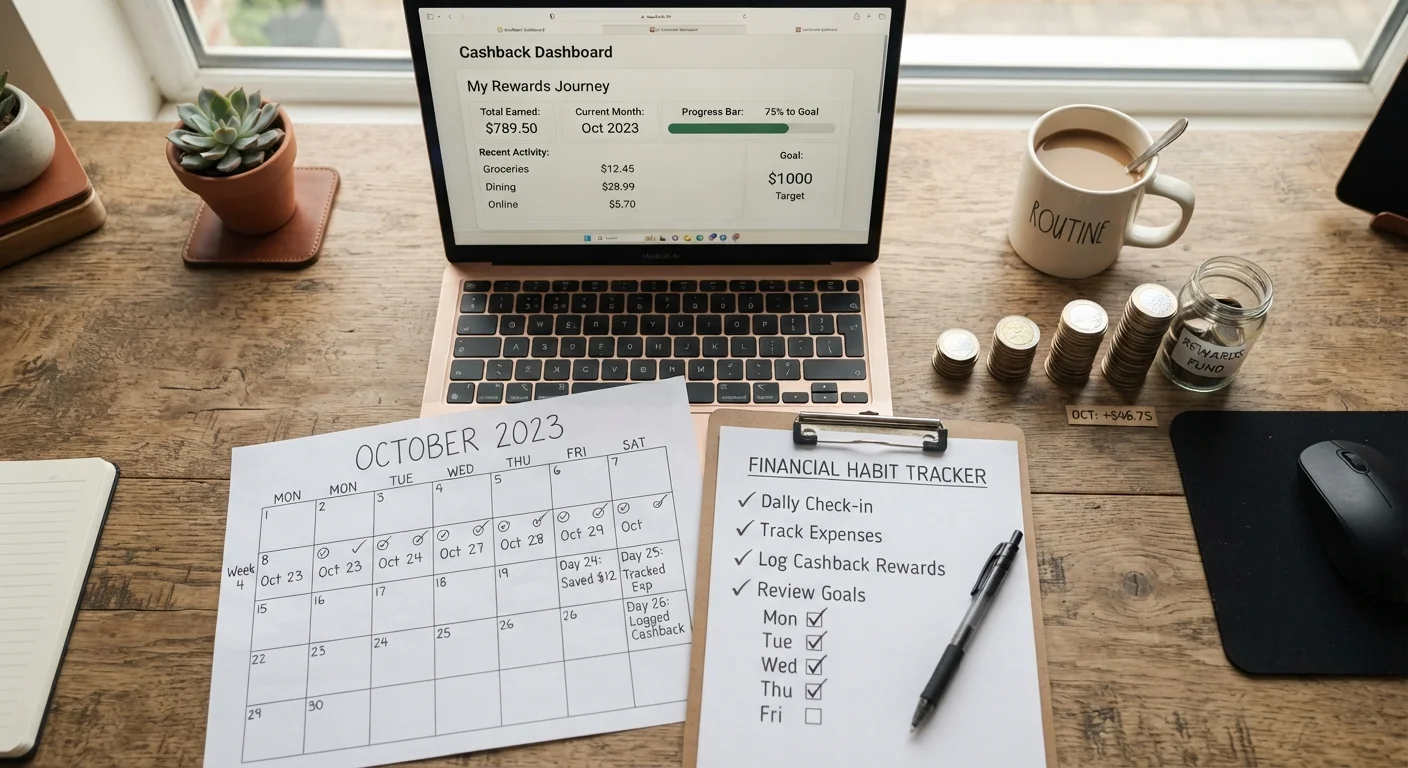
- Log the purchase. A simple spreadsheet with the date, store, portal used, and expected cashback makes it easy to spot missing payouts and track actual earnings.
- File missing claims promptly. Set a calendar reminder for two weeks after each purchase to confirm pending status.
Applied consistently across grocery delivery, travel bookings, electronics, home goods, and subscription services, this system realistically generates $200-$600 in annual cashback for a household with moderate online spending - without changing what you buy or where you buy it.
Cashback portals integrate cleanly with other reward structures too. Understanding how loyalty program structures work helps you see where portal cashback fits alongside points and tiered reward systems - and where the two can complement each other without conflicting.
The cashback portals hub and cashback apps hub are good starting points if you want to compare the major platforms side by side before committing to a primary portal.
Cookie Hygiene Affects Tracking Success
Cashback tracking relies on cookies that can be overwritten by other affiliate links, browser extensions, or incognito mode. Always click through the portal in a standard browser session, disable competing extensions for that session, and avoid opening multiple retailer tabs from different sources. Small technical habits protect your earnings from invisible failures.
Mobile Tracking Is Less Reliable Than Desktop
Most portal cashback tracking was designed around desktop browsers, and mobile sessions - especially in-app shopping environments - frequently break the cookie chain. If you're making a larger purchase, switching to a desktop browser for checkout after clicking through the portal on desktop significantly improves tracking reliability.
Rates Can Change Between Your Click and Checkout
The cashback rate that applies to your purchase is typically locked in at the time of your click-through, not at the time you add items to your cart or when the portal displays the rate. However, if a retailer changes its commission terms mid-session, confirmed rates may differ. Most portals honor the rate shown at click time, but reviewing your pending cashback amount confirms the correct amount was captured.