

Key Takeaways
Loyalty Program Structure
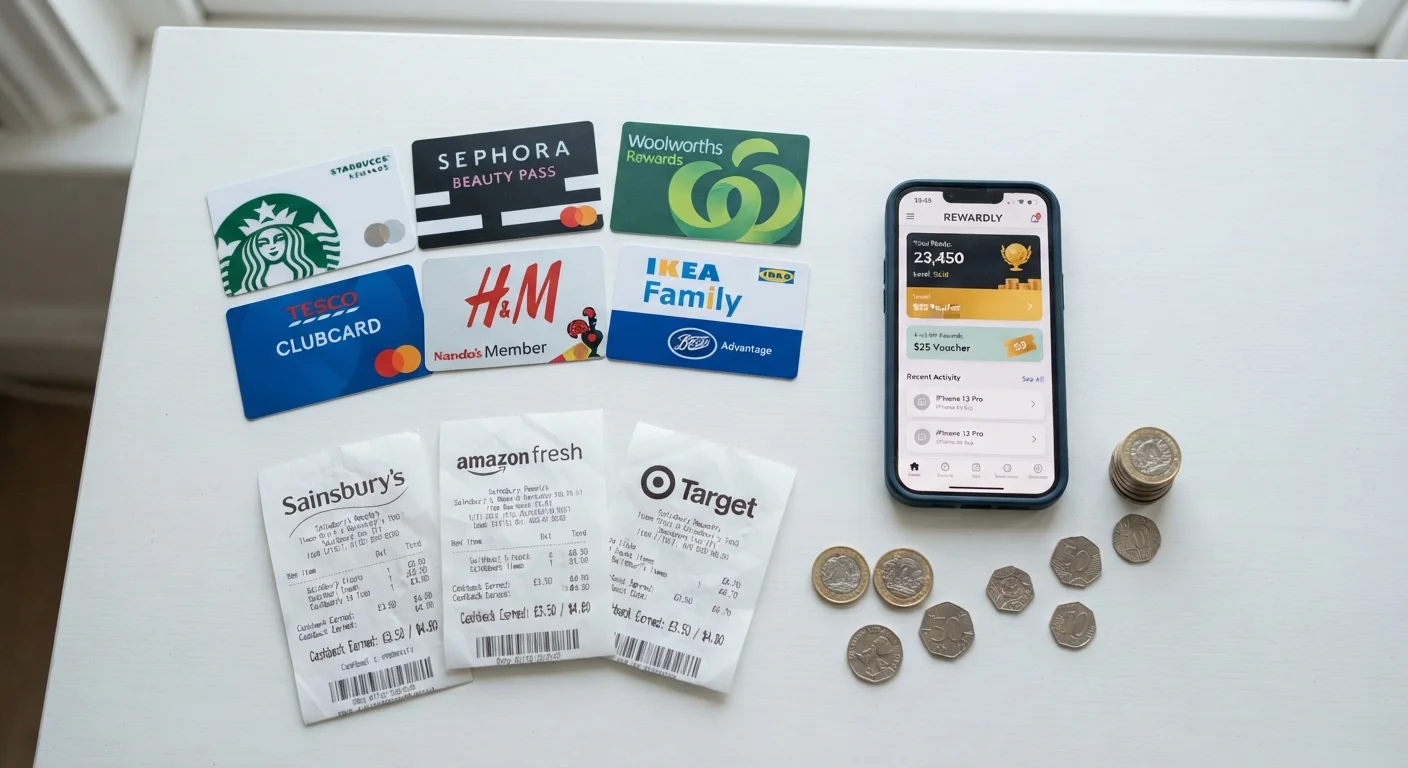
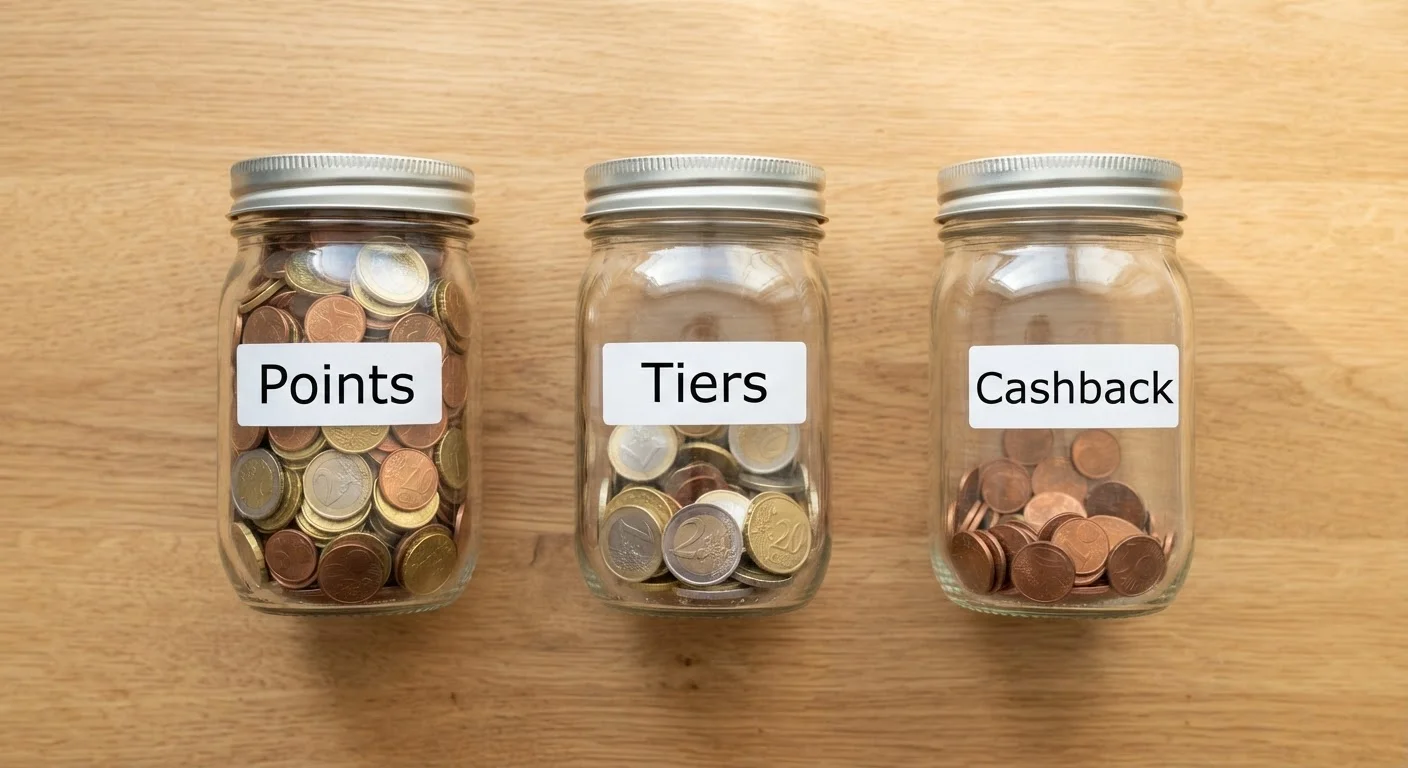
A loyalty program structure is the underlying system a retailer or brand uses to reward repeat customers. The three dominant models - points accumulation, tiered status, and flat cashback - each distribute value differently and favor different types of shoppers. Understanding how the mechanics work tells you which programs actually reward your habits and which ones are designed to hold your money hostage.
Many modern programs are hybrids, blending points with tiered multipliers or adding cashback redemption options onto a points base - knowing the primary structure still determines your effective earn rate.
The Three Core Loyalty Structures: A Plain-English Breakdown
Loyalty programs look similar on the surface - sign up, shop, earn rewards. But the mechanics underneath vary dramatically, and those differences directly affect how much money ends up back in your pocket. Before you decide which programs deserve your attention, you need to understand the three primary architectures.
Points Programs
Points programs assign a currency unit - points, stars, coins, whatever the brand calls them - for each dollar spent. You accumulate that currency and later redeem it for merchandise, discounts, or sometimes cash equivalents. The appeal is flexibility: a large points balance feels like a savings account you can spend across a catalog of options.
The catch is valuation opacity. Retailers set the conversion rate, and they set the redemption rates separately. A points program might give you 10 points per dollar but require 1,000 points for a $5 reward - an effective earn rate of 0.5%. That same program might promote a "10x points event" that sounds exciting but still only delivers 5% back if the baseline valuation is low. Always calculate the cents-per-dollar earned, not the points count.
Tiered Programs
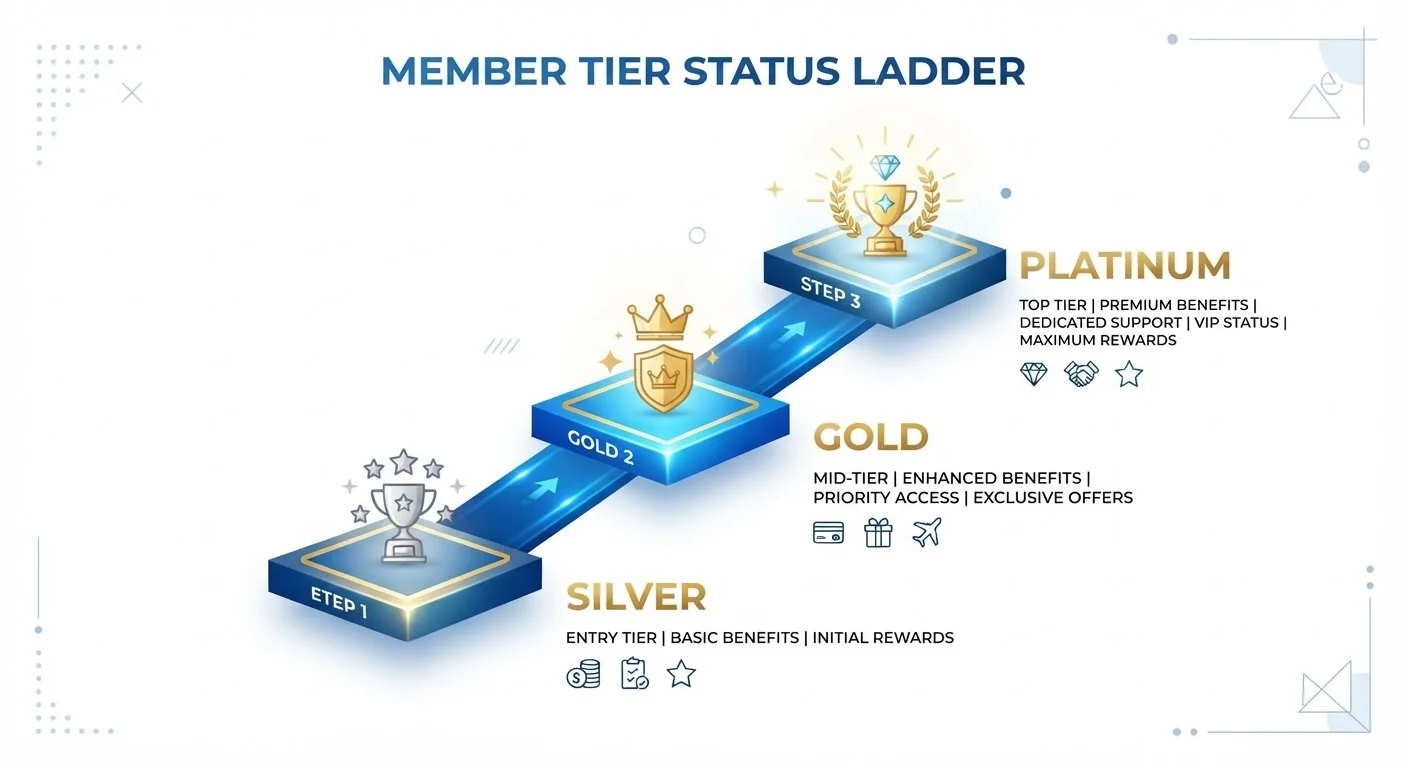
Tiered programs stratify members by spending volume, usually tracked over a rolling 12-month window. Entry-level members earn at a base rate. As annual spend crosses defined thresholds, members unlock progressively richer benefits: higher earn multipliers, free shipping, early access to sales, or dedicated customer service lines.
This structure is deliberately unequal by design. A Silver member at a department store might earn 1 point per dollar; a Platinum member earns 3 points per dollar plus quarterly bonus rewards. The program is highly profitable for the retailer because most members never reach the upper tiers - they earn just enough to stay engaged without ever reaching high-value redemption territory.
Cashback Programs
Cashback programs credit a flat percentage of each transaction back to you, either as statement credit, direct deposit, or in-store credit. There's no currency conversion to decode. If a program offers 3% cashback, you earn exactly $3 on a $100 purchase. This transparency is the structural advantage of cashback: the value is immediately legible.
Cashback programs appear prominently in two contexts - retailer-specific programs (like Target Circle's percentage-back offers) and financial products like cashback credit cards and portals. For a deeper look at how the portal version works, see how cashback portals pay you back.
30-45%
Loyalty points that are never redeemed (breakage rate)
Industry estimates from loyalty program analysts consistently place consumer program breakage in this range, representing unredeemed value that remains with the issuing retailer.
$175B+
Outstanding loyalty points liability in U.S. programs
Bond Brand Loyalty and similar research firms estimate the total unspent loyalty currency across U.S. consumer programs exceeds this figure, underscoring the scale of the breakage opportunity for retailers.
77%
U.S. consumers enrolled in at least one loyalty program
According to a 2023 Statista consumer survey, the vast majority of American shoppers hold at least one loyalty program membership, though active engagement rates are significantly lower.
1-2%
Typical effective earn rate for base-tier points programs
After accounting for realistic redemption options and minimum thresholds, most consumer points programs deliver an effective return of 1-2% on qualifying purchases at entry-level status.
3-5x
Earn-rate multiplier at top tiers vs. base tiers
In tiered department store and travel programs, the gap between base and elite earn rates commonly reaches 3-5 times the base rate, illustrating the structural advantage for high-concentration spenders.
How Points Programs Actually Price Their Rewards
The most important skill in evaluating a points program is converting points into cents. Retailers know that most members never do this math, which is why points programs remain popular with merchants despite offering relatively low effective returns.
The Cents-Per-Point Calculation
Take any reward option and divide its dollar value by the points required:
Reward value ($) ÷ Points required = Cents per point
$10 reward ÷ 1,000 points = 1 cent per point
Then calculate your effective earn rate by multiplying cents-per-point by your earn rate:
Points earned per dollar × Cents per point = Effective % return
5 points per dollar × 1 cent = 5% effective return
Run this calculation across every redemption option the program offers. You'll typically find that merchandise and gift card redemptions offer the worst rate, while travel or statement credit redemptions offer significantly more. A program that looks mediocre for merchandise might be genuinely excellent if you redeem strategically.
Expiration and Breakage: The Hidden Revenue Model
Points programs are built around a concept retailers call breakage - the percentage of issued points that members never redeem. Industry estimates suggest breakage rates between 30-45% across consumer loyalty programs. That unredeemed value stays with the retailer. Points expiration policies accelerate this: if your account is inactive for 12 months, your balance may zero out entirely.
Points Expiration Varies Widely
Some programs expire points after 12 months of account inactivity; others expire points on a fixed calendar schedule regardless of activity. A small number of premium programs (particularly co-branded credit card programs) never expire points. Always read the expiration terms before committing significant spending to any points program. A single qualifying purchase is usually enough to reset an activity-based expiration clock.
Program Terms Can Change Without Notice
Loyalty program terms - including earn rates, redemption values, tier thresholds, and expiration policies - are not contractually fixed. Retailers reserve the right to modify them at any time. This is especially relevant for points accumulated over long periods: a devaluation can reduce the purchasing power of your balance before you redeem it. Redeeming points at or near their peak value, rather than holding large balances indefinitely, is generally the lower-risk approach.
Before committing significant shopping volume to a points program, check the expiration policy. A points program with 12-month activity requirements and low baseline earn rates may cost you more in unredeemed currency than it returns in actual rewards.
Tiered Programs: When Status Is Worth the Spend - and When It Isn't
Tiered programs are the most psychologically sophisticated loyalty structure. They use status as a motivator - people will spend more than they otherwise would specifically to maintain a tier level. That's a feature for the retailer and a potential trap for the shopper.
The Actual Value of Upper Tiers
Run an honest comparison between what you'd spend to reach a tier versus the incremental benefit that tier provides. If Gold status requires $1,000 in annual spending and gives you a 2% earn rate versus Silver's 1%, the additional $500 in spending (to go from $500 Silver to $1,000 Gold) generates $20 in bonus rewards. That's a 4% return on the incremental spending - reasonable, but not extraordinary.
Where tiered programs deliver genuine outsized value is in non-monetary perks: free shipping thresholds, priority customer service, exclusive sale access, or free returns. These perks have real dollar values that are easy to overlook in a pure earn-rate analysis. A top-tier airline or hotel program member who gets free checked bags and room upgrades can extract hundreds of dollars in annual value that never shows up in a points statement.
When Tiers Work Against You
Tier qualification windows reset. If you reach Gold status in October and then spend less the following year, you drop to Silver - often right when you expect your status perks to apply. Retailers design qualification windows knowing that status anxiety drives incremental spending near the reset date. If you find yourself buying things you don't need to protect tier status, the program is working as intended - for the retailer.
Calculate the Real Rate Before You Sign Up
Before enrolling in any loyalty program, run the cents-per-dollar math on two or three realistic redemption options. If the effective earn rate is below 1%, compare it directly to a cashback alternative. Most shoppers discover that a modest cashback card outperforms the retailer's points program at base-tier earn rates - and the cashback comes without expiration risk or minimum thresholds.
Consolidate Earning to Maximize Value
Spreading purchases across six loyalty programs generates six small balances, often below the minimum redemption threshold in each. Pick two or three programs where your natural spending is already concentrated, focus earning there, and treat the remaining retailers as cashback-card purchases. Concentrated balances reach meaningful redemption levels faster and are far less vulnerable to expiration.
The grocery and retail breakdown in grocery vs. retail vs. brand loyalty programs shows where tiered structures tend to reward consistent shoppers most reliably by category.
Cashback Structures: Transparent Rewards for Rational Shoppers
Cashback programs remove the valuation problem entirely. The earn rate is stated in dollars or percentages, and the reward is redeemed in dollars. This makes comparison straightforward - you can place a cashback program's return directly alongside alternatives without any currency conversion.
Flat Rate vs. Category Cashback
Flat-rate cashback applies the same percentage to all purchases. Category cashback programs - common with credit cards - offer elevated rates in specific categories (groceries, gas, dining) and a lower rate on everything else. Category programs can outperform flat-rate programs significantly if your spending is concentrated in the bonus categories. If your spending is diffuse, a flat rate is more predictable and usually competitive.
Stacking Cashback with Loyalty Programs
One of the most underutilized strategies is combining a retailer's loyalty program with an external cashback mechanism. Retailer loyalty programs track purchase history and issue their own rewards. Cashback portals and credit cards operate on the transaction at the payment layer. These typically don't conflict - you can earn both simultaneously.
For a detailed comparison of how portal cashback and credit card rewards stack up independently and together, see cashback portal vs. credit card rewards. The key point: a 2% cashback card combined with a retailer program offering 1% back gets you to 3% without any additional complexity.
“The best loyalty program is the one that rewards what you already do. Any program that changes your behavior to capture rewards is costing you money, not saving it.”
— Dennis Armbruster, Managing Partner at LoyaltyOne, speaking on loyalty program design principles
Hybrid Programs: Reading the Fine Print Before You Commit
Most major loyalty programs today are hybrids - they combine elements of two or all three structures. Amazon Prime Rewards offers points that convert to cashback. Sephora's Beauty Insider uses points with tiered multipliers. Starbucks Rewards uses stars (points) with a status tier that unlocks free add-ons. Understanding the dominant mechanism tells you which analysis to apply.
How to Audit a Hybrid Program
- Identify the primary earn mechanism: Is the base reward points, cashback, or status-gated perks?
- Calculate the effective earn rate at your realistic spend level: Assume you stay at your current tier or below, not the aspirational top tier.
- Value any non-monetary perks separately: Free shipping, early access, and extended returns have dollar values - estimate them based on your actual shopping patterns.
- Check expiration and minimum redemption rules: A $5 minimum redemption on a slow-earning program could mean your rewards sit locked for months.
- Compare against alternatives: Would a cashback portal or rewards card deliver more on the same purchases without requiring any loyalty concentration?
Points Expiration Varies Widely
Some programs expire points after 12 months of account inactivity; others expire points on a fixed calendar schedule regardless of activity. A small number of premium programs (particularly co-branded credit card programs) never expire points. Always read the expiration terms before committing significant spending to any points program. A single qualifying purchase is usually enough to reset an activity-based expiration clock.
Program Terms Can Change Without Notice
Loyalty program terms - including earn rates, redemption values, tier thresholds, and expiration policies - are not contractually fixed. Retailers reserve the right to modify them at any time. This is especially relevant for points accumulated over long periods: a devaluation can reduce the purchasing power of your balance before you redeem it. Redeeming points at or near their peak value, rather than holding large balances indefinitely, is generally the lower-risk approach.
Once you understand the structure, the next question is which features you're missing. Loyalty program rewards you're probably leaving on the table covers bonus multiplier windows, partner redemptions, and other underused mechanisms that meaningfully increase what you actually earn.
Matching Program Structure to Your Shopping Behavior
The best loyalty program structure isn't universal - it's the one that aligns with how you actually shop. Here's how to match structure to behavior honestly.

High-Volume, Concentrated Spenders
If you spend heavily at a single retailer or in a single category, tiered programs with status multipliers likely deliver the best return. The math favors you because you'll reach upper tiers without behavioral distortion - you'd be spending there anyway. Airlines, hotel chains, and department stores are the classic examples where top-tier status genuinely pays off.
Moderate, Diversified Spenders
If your spending is spread across many retailers and categories without a dominant pattern, cashback programs - especially credit card cashback - are structurally superior. They reward every dollar equally and don't require concentration at any one merchant. You won't leave value on the table by splitting spending across different stores.
Occasional, Category-Specific Shoppers
If you shop infrequently at a given retailer, points programs are likely to work against you. Infrequent accumulation plus expiration policies means a meaningful portion of your earned currency will lapse. Cashback on a general rewards card or a category portal is a better fit. Explore the broader cashback ecosystem through the cashback apps hub and the cashback programs hub to find options that don't require loyalty concentration.
Calculate the Real Rate Before You Sign Up
Before enrolling in any loyalty program, run the cents-per-dollar math on two or three realistic redemption options. If the effective earn rate is below 1%, compare it directly to a cashback alternative. Most shoppers discover that a modest cashback card outperforms the retailer's points program at base-tier earn rates - and the cashback comes without expiration risk or minimum thresholds.
Consolidate Earning to Maximize Value
Spreading purchases across six loyalty programs generates six small balances, often below the minimum redemption threshold in each. Pick two or three programs where your natural spending is already concentrated, focus earning there, and treat the remaining retailers as cashback-card purchases. Concentrated balances reach meaningful redemption levels faster and are far less vulnerable to expiration.
One common mistake is letting small points balances accumulate across five or six programs simultaneously. Pick two or three programs where your natural spending is highest, consolidate earning there, and let the rest go. Thin balances across many accounts earn less than focused balances in a few.
What to Watch Out For Across All Program Types
- Devaluations: Retailers can change point values or redemption rates at any time. Points are a liability on the retailer's balance sheet, and devaluations reduce that liability at your expense.
- Category exclusions: Many programs exclude sale items, clearance merchandise, or specific departments from earning. The effective earn rate on your actual purchases may be lower than the headline rate.
- Minimum redemption thresholds: Programs requiring 500-point minimums for a $5 reward keep your money locked until you hit the threshold - that's an interest-free loan to the retailer.
- Cashback that isn't really cash: Some programs call their reward "cashback" but deliver it as store credit only. That's a meaningful restriction - it forces you to spend with the same retailer again.
For a complete picture of how these restrictions shrink your actual earnings, why your cashback never adds up the way you expected explains each mechanism in detail.