

Key Takeaways
Option A
Cashback Portals
The free rebate layer that activates before you shop.
Best for: Shoppers who want to earn extra cashback on top of existing payment methods with zero annual fee or approval process.
Option B
Credit Card Rewards
The consistent, automatic earner tied to every swipe.
Best for: Consumers who want predictable, automatic rewards on all spending - online and in-store - without remembering to activate anything.
If you want zero-commitment cashback with no fees or credit check
Cashback Portals
Portals are free to join, require no credit approval, and immediately add a rebate layer to purchases you'd make anyway. The only cost is remembering to click through.
If you spend heavily in fixed categories like groceries, dining, or travel
Credit Card Rewards
Category-specific rewards cards routinely return 3-6% on targeted spend, which surpasses most portal rates in those same categories - and it's fully automatic.
If you're an active online shopper who already has a rewards card
Cashback Portals
Stacking a portal click on top of your card payment is the single highest-leverage habit in deal-finding - you earn both without any additional spend.
If you want rewards that extend to in-store and offline purchases
Credit Card Rewards
Portals are exclusively online. A rewards card follows you to the grocery store, gas station, and restaurant - capturing cashback everywhere portals can't reach.
If you want to maximize every online purchase with minimal ongoing effort
Cashback Portals
A browser extension from Rakuten or TopCashback automates portal activation, making it nearly as passive as a card swipe while adding an entirely separate earnings stream.
How Each System Actually Works
Before comparing rates, it's worth being precise about what you're actually comparing. These two tools operate in fundamentally different parts of the transaction.
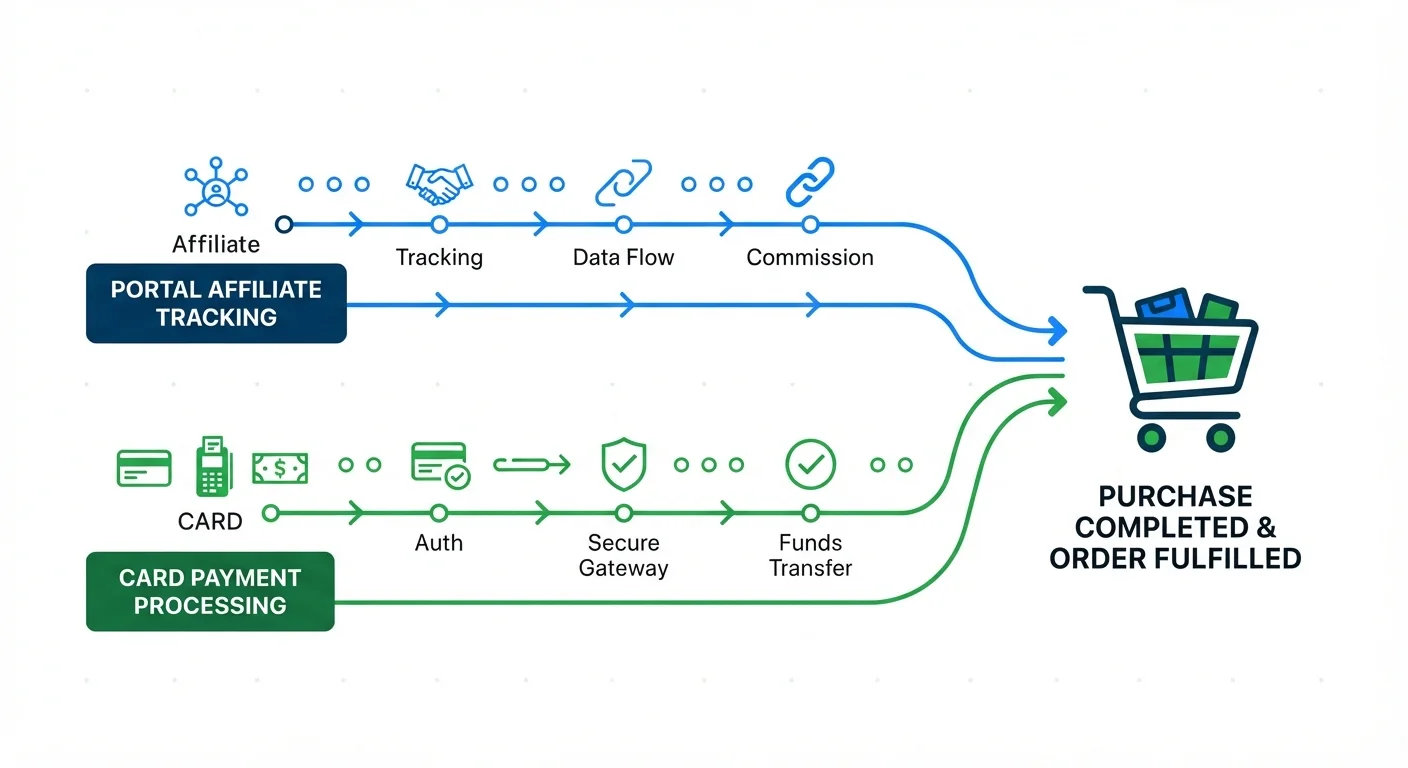
Cashback portals sit between you and the retailer. When you click through a portal like Rakuten, TopCashback, or the Honey Gold hub, the portal passes an affiliate tracking cookie to the retailer's site. When you complete a purchase, the retailer pays the portal a referral commission - and the portal shares a cut of that commission with you. The retailer's price doesn't change. You're simply redirecting a marketing fee that the retailer was already budgeting. For a deeper explanation of the mechanics, see how cashback portals generate rebates.
Credit card rewards work at the payment layer. The card issuer earns interchange fees from merchants on every transaction, and your rewards represent a portion of those fees returned to you. Unlike portals, nothing has to be activated - every qualifying purchase on the card earns automatically, whether you're buying online, in-store, or over the phone.
The critical insight: these two mechanisms are completely independent of each other. The portal tracks which website sent you; the card tracks how you paid. Using both simultaneously is not just allowed - it's the entire point.
That said, each tool has constraints that make it better suited to specific situations. Understanding those constraints is how you stop leaving money behind.
Rates and Return: What You Actually Earn
Raw cashback rates are the most obvious comparison point, but they require context to be useful.
Portal Rates
Portal rates are retailer-specific and volatile. A single portal might offer 1% at Target, 8% at a luggage brand, and 12% at a travel accessories store - all on the same day. Rates shift based on retailer promotions, seasonal campaigns, and portal negotiations. The upside is occasional double-digit returns on categories where cards typically pay 1-2%. The downside is unpredictability: that 8% rate may drop to 2% next week.
Rates also vary between portals for the same retailer. Running a quick comparison across Rakuten, TopCashback, and similar platforms before a large purchase is worth the 90 seconds - rate gaps of 3-5 percentage points on the same store are common. See the head-to-head portal rate comparison for specifics.
Credit Card Rates
Card rewards are predictable but tiered. Most flat-rate cards return 1.5-2% on everything. Category cards push higher - 3% on dining, 5% on travel booked through the issuer's portal, 6% on groceries at select retailers. These rates are locked in by your card agreement and don't fluctuate seasonally.
The catch: category cards require you to actually spend heavily in those categories to justify their often-significant annual fees. A 6% grocery card charging $95/year only breaks even once you've spent roughly $1,600 on groceries annually - which most households clear, but it's a real threshold.
3,500+
Retailers covered by top cashback portals
Rakuten alone lists over 3,500 participating merchants across its US platform, though rates vary significantly by retailer.
Up to 15%
Peak portal cashback rates at select retailers
Specialty retailers in categories like travel accessories, footwear, and beauty regularly offer portal rates well above what any card can match.
6%
Top grocery rewards rate on select credit cards
The American Express Blue Cash Preferred offers 6% back at US supermarkets on up to $6,000 per year, among the highest fixed category rates available.
$95-$550
Annual fee range for premium rewards cards
Premium travel and cashback cards charge significant annual fees, requiring calculated break-even analysis before applying.
5%+
Combined cashback rate when stacking both tools
Stacking a 2-3% portal rate with a 2% flat-rate card regularly produces 4-5%+ combined returns on online purchases at participating retailers.
The Stacking Math
When you combine both tools on a single online purchase, you add the rates together. A 3% portal rate plus a 2% flat-rate card equals 5% back on that transaction - with no extra effort beyond the portal click. On a $500 electronics purchase, that's $25 returned versus the $10 you'd earn from the card alone.
| Criterion | Cashback Portals | Credit Card Rewards |
|---|---|---|
| Cost to use | Free - no fees ever | $0-$550 annual fee depending on card |
| Typical cashback rate | 1%-15% (retailer-specific) | 1.5%-6% (category-specific) |
| Rate consistency | Variable - shifts by retailer and season | Fixed - set by card agreement |
| Activation required | Yes - click-through or browser extension | No - automatic on every purchase |
| Works in-store | No - online only | Yes - everywhere card is accepted |
| Credit check required | No | Yes - good/excellent credit for best cards |
| Amazon compatibility | Limited or unavailable | Full rewards on all purchases |
| Stackable with the other | Yes - use both simultaneously | Yes - use both simultaneously |
| Payout speed | Days to quarterly depending on portal | Monthly statement credit or redemption |
| Best single use case | Specialty online retailers with high rates | Offline spend and Amazon-heavy shoppers |
Activation, Friction, and the Habit Problem
The most common reason shoppers underperform on cashback is friction - specifically, the friction of remembering to do something before purchasing.
Credit cards have zero activation friction. You pay with the card; the rewards post. There's nothing to remember, no portal to visit, no browser extension to install. This automatic quality is genuinely valuable, especially for in-store spend and recurring subscriptions where portals can't reach.
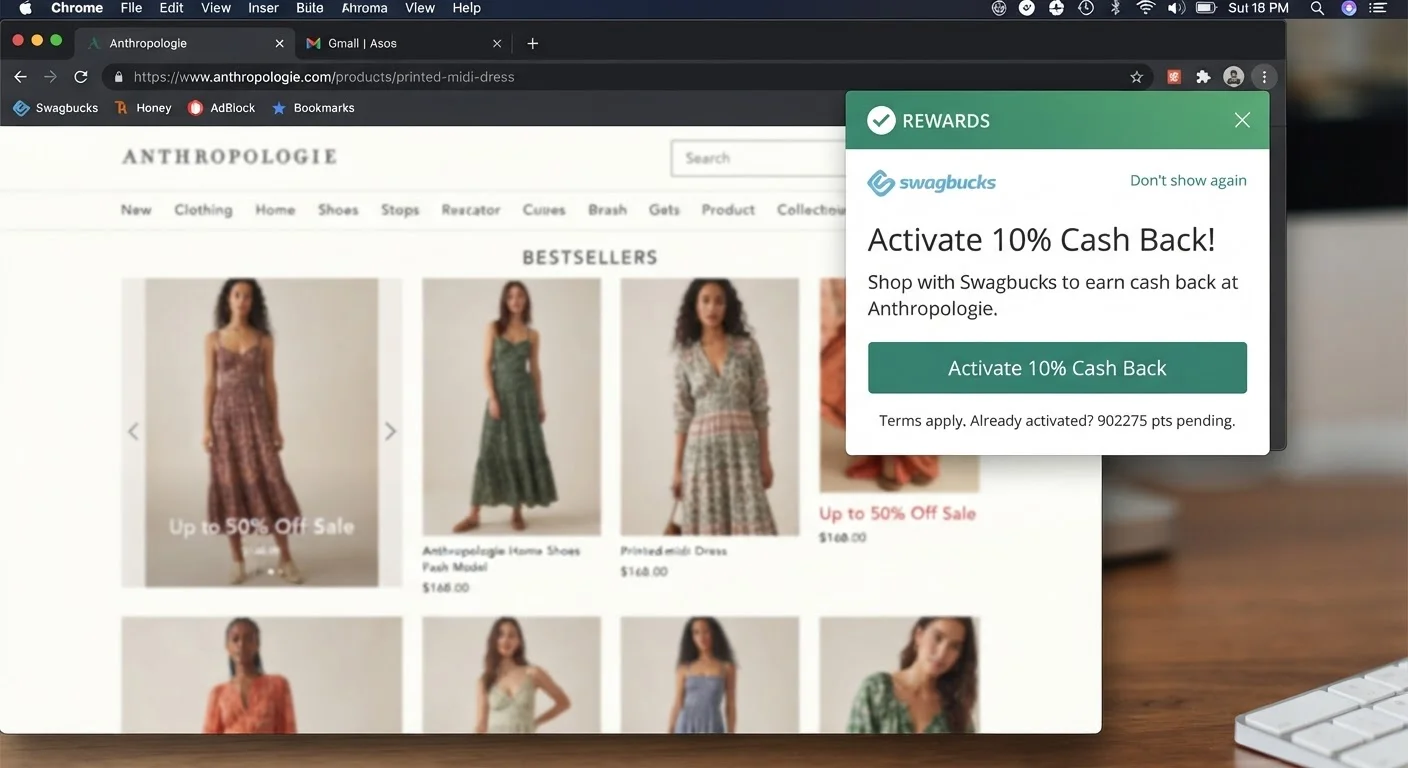
Portals require deliberate action. You must visit the portal before navigating to the retailer, or have a browser extension installed that activates automatically. If you go directly to the retailer's site - typing the URL, clicking a bookmark, or arriving from a Google search - no tracking cookie is set and you earn nothing. This gap is where most portal cashback is lost.
Browser Extensions and Cookie Conflicts
Some older coupon browser extensions - particularly those that auto-apply promo codes - can overwrite the affiliate tracking cookie set by your cashback portal, causing the portal to lose credit for your purchase. If you use both types of extensions, disable the coupon tool before activating portal cashback, or stick to a single integrated tool that handles both functions. This is one of the most common reasons portal cashback goes uncredited.
Not All Cards Block Portal Stacking
There's a persistent myth that certain credit cards prohibit portal cashback stacking. In practice, card issuers track payment method and merchants - not affiliate referral cookies. The two systems are invisible to each other. There's no card terms clause that prevents you from earning portal cashback simultaneously with card rewards on the same transaction.
Portal Payout Timelines Vary Significantly
Rakuten pays quarterly via check or PayPal. TopCashback offers more flexible withdrawal but some earnings are held in 'payable' status until the retailer confirms the return window has closed - typically 30-90 days post-purchase. Factor this into your expectations, particularly for high-value purchases where you're counting on a significant rebate.
The practical solution is installing a reputable portal's browser extension (Rakuten's is the most widely used) so activation becomes passive. The extension detects when you land on a participating retailer's site and prompts you to activate. At that point, portal cashback approaches the same friction level as card rewards - close to zero. For a breakdown of the mistakes that prevent cashback from being credited at all, see common cashback portal pitfalls.
Even with an extension, there are edge cases: incognito browsing, certain VPNs, and other browser extensions (particularly older coupon tools) can interfere with tracking cookies. Cards have none of these issues.
Bottom line on friction: if you're disciplined enough to install and maintain a browser extension, portals become nearly automatic. If you're not, a solid rewards card is the more reliable earner for online purchases - and the only earner for offline ones.
Coverage: Where Each Tool Works
Coverage is the dimension that most clearly separates these tools - and the one that makes combining them logical rather than redundant.
Portal Coverage
Portals work exclusively online, and only at participating retailers. Major portals cover thousands of merchants - Rakuten lists over 3,500, TopCashback over 4,000 - but gaps exist. Smaller retailers, marketplace sellers (individual Amazon third-party sellers, for instance), and subscription renewals frequently don't qualify. Amazon itself is a notable partial exception: portal cashback on Amazon is limited or unavailable on most items because Amazon controls its own affiliate ecosystem.
In-store purchases, recurring subscriptions, utilities, rent, and restaurant tabs are entirely outside portal reach.
Card Coverage
A rewards card follows you everywhere the card network is accepted. In-store, online, abroad, subscription billing, phone orders - the card earns on all of it. The only common exclusion categories are things like cash advances, balance transfers, and certain peer-to-peer payment apps. Your groceries, gas, and morning coffee all qualify; none of those are addressable by portals.
This universal coverage is the credit card's most durable advantage. For shoppers who spend significantly offline - which is most people - portals simply cannot replace card rewards. They can only supplement them online.
For context on how loyalty structures (including card rewards) vary in design, this breakdown of points, tiers, and cashback program structures is a useful reference.
Cost, Access, and Commitment
The barriers to entry differ dramatically between these two tools - and that matters when deciding where to start.
Portals: No Cost, No Credit Check
Every major cashback portal is free to join. There's no credit check, no annual fee, no minimum spend, and no approval process. You create an account with an email address and you're in. Payout thresholds vary ($5-$25 before you can withdraw), and some portals pay quarterly rather than immediately, but there's no ongoing financial commitment.
This accessibility makes portals the right first move for anyone new to cashback strategies. The ROI is immediate and the downside risk is essentially zero. The cashback portals topic hub and cashback apps hub cover the major platforms worth signing up for.
Credit Cards: Annual Fees and Credit Requirements
The best rewards cards - the ones returning 3-6% in key categories - typically charge annual fees between $95 and $550. Justifying those fees requires reaching spend thresholds in the card's bonus categories. Cards offering premium rates also tend to require good-to-excellent credit scores (typically 700+), putting them out of reach for some shoppers.
There are no-annual-fee options (the Citi Double Cash and Wells Fargo Active Cash are popular examples at 2% flat), but the highest category rates are gated behind paid cards. The math usually works out in favor of premium cards for heavy spenders, but the commitment is real - you're paying upfront and betting on spending enough to justify the fee.
It's also worth noting that opening new credit cards affects your credit score temporarily and requires managing another account responsibly. Portals have no such implications.
The Stacking Playbook: Getting Both
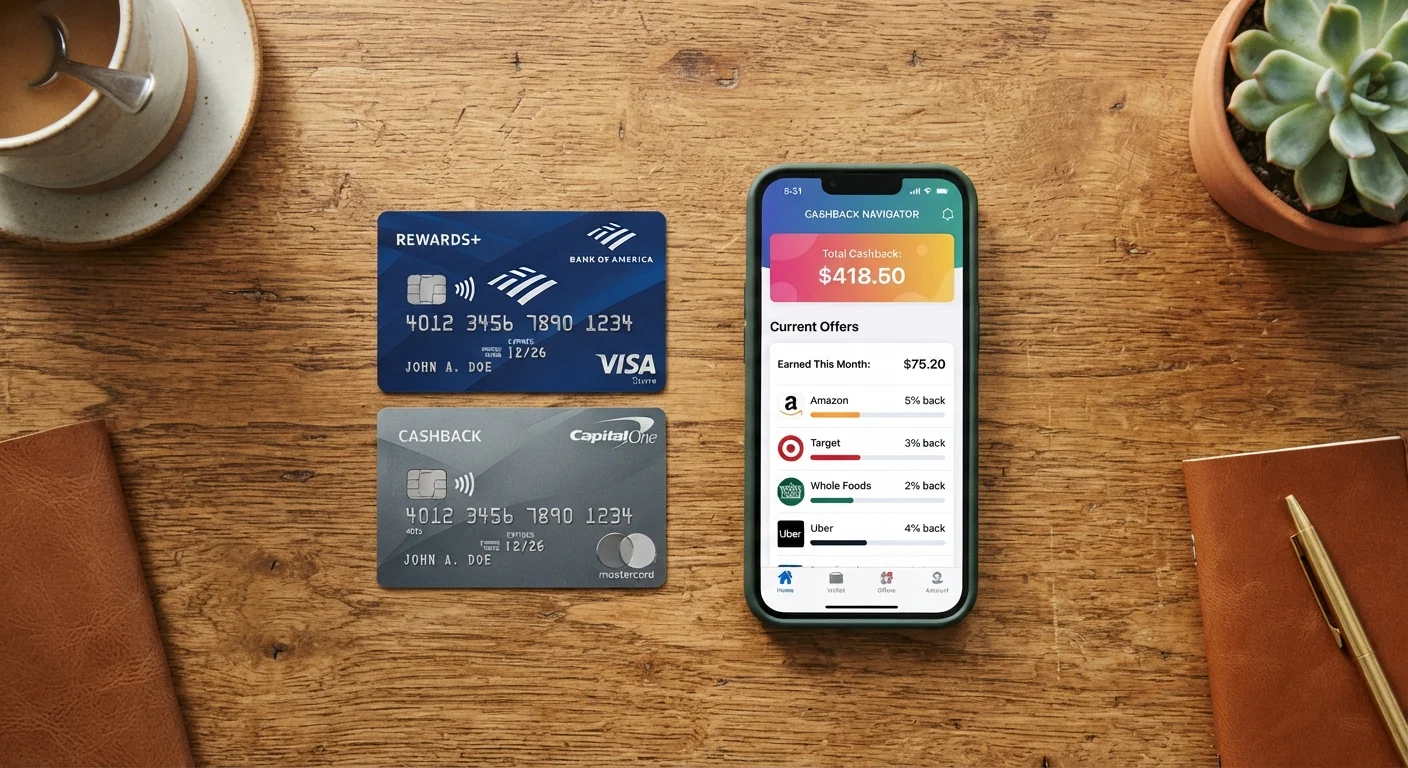
Once you understand that portals and cards operate at different layers of the same transaction, the logical move is to treat them as complementary systems rather than alternatives. Here's how to build that habit systematically.
Step 1: Install a Portal Extension
Choose one primary portal (Rakuten is the most practical starting point for most US shoppers given its retailer coverage and quarterly Big Fat Check payout model) and install its browser extension. This automates activation for most online shopping sessions.
Step 2: Pair with the Right Card
For online shopping, a flat-rate 2% card ensures you're always earning something regardless of portal availability. If you spend heavily in specific categories, layer a category card on top - but only if your spend clearly justifies the annual fee. Running the break-even math before applying takes five minutes and saves you from paying fees that outrun your rewards.
Step 3: Check Rates Before Large Purchases
For purchases over $100, spend 90 seconds checking two or three portals for the highest rate before clicking through. Comparing Rakuten, TopCashback, and Honey Gold on the same retailer often surfaces a meaningful rate difference. This manual check replaces years of leaving money on the table.
Step 4: Know the Exclusions
Understand which of your card's categories earn bonus rates and which retailers your portal covers. Amazon and Walmart have reduced or no portal cashback - lean on your card there. For specialty retailers where portal rates spike, the portal does the heavy lifting. Mapping this out once prevents the common habit errors covered in habits that quietly cost you cashback.

The compounding effect of this system is meaningful over time. A shopper spending $15,000/year online, earning an average of 2% from a card and 3% from portals where available, is looking at several hundred dollars in annual cashback that required no coupons, no price negotiation, and no change in what they bought. The system runs in the background once it's set up.
For additional context on how clicking through a portal before you shop adds up over time, the mechanics are straightforward once you see them in action.