
Scented Candles and Indoor Air Quality: What the Research Suggests
Scented candles are popular, but some emit compounds that affect indoor air. Here's what current research says and how to ventilate smarter.
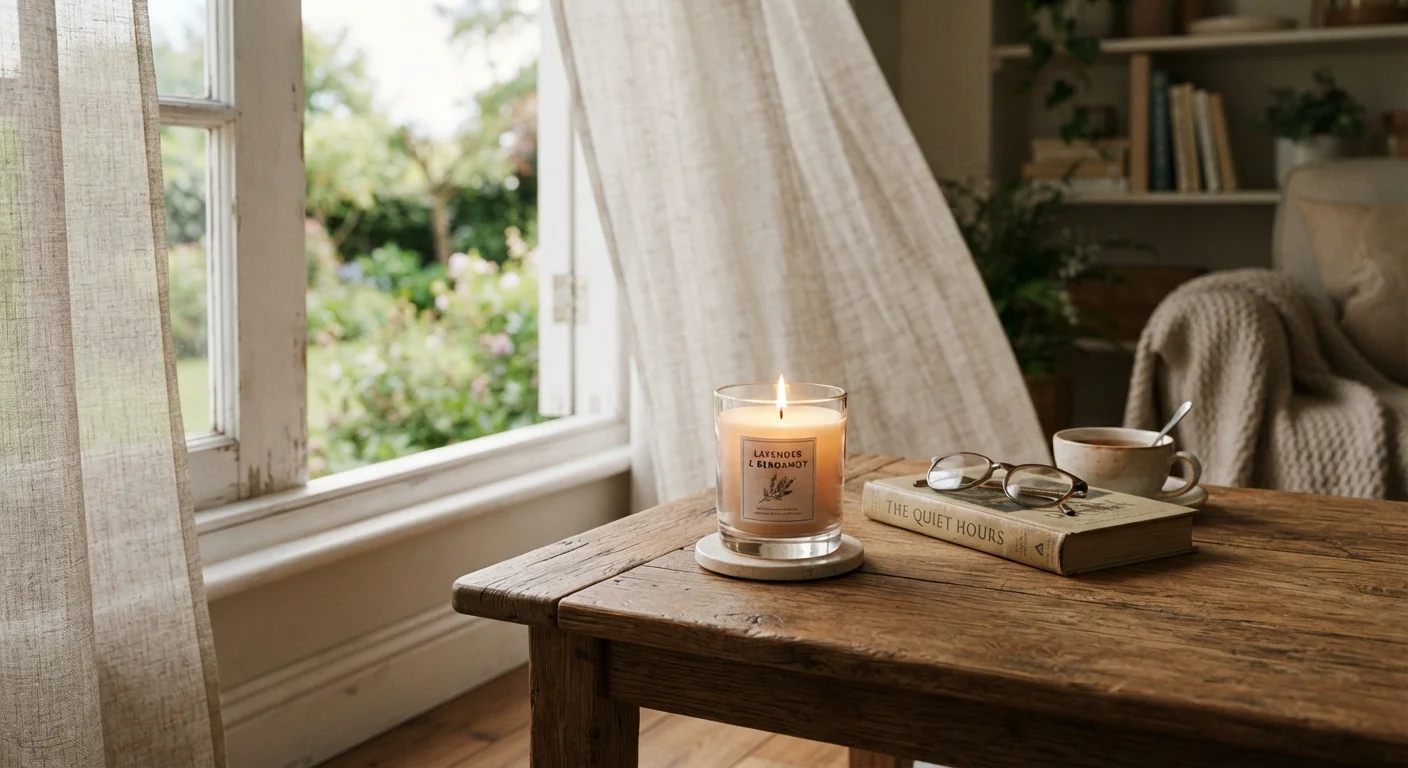
Photo: SaverSteals.com editorial
—— In This Article
Key Takeaways
- Burning scented candles can release volatile organic compounds (VOCs) and fine particulate matter indoors.
- Paraffin candles tend to produce more soot and emissions than soy or beeswax alternatives.
- Good ventilation significantly reduces any air quality impact from candle use.
- Occasional, well-ventilated candle use poses a low risk for most healthy adults.
- People with asthma, allergies, or respiratory conditions may be more sensitive to candle emissions.
Creates mood and atmosphere at low cost
Scented candles are widely cited for their role in stress reduction and relaxation rituals. Warm lighting and pleasant fragrance can meaningfully influence perceived comfort in a room.
Masks or neutralizes household odors
In practical terms, candles can reduce the perception of cooking smells, pet odors, or musty air — a common reason households reach for them daily.
Plant-based waxes burn relatively cleaner
Soy, beeswax, and coconut wax options have gained ground as alternatives that produce measurably less soot than traditional paraffin — a meaningful improvement in particulate output.
Low risk at typical, occasional use levels
Current evidence consistently indicates that normal, occasional candle use in adequately ventilated homes is unlikely to cause harm in healthy adults.
Releases VOCs into indoor air
Synthetic fragrance blends can emit benzene, toluene, and other VOCs during combustion. While concentrations during typical use are low, they rise sharply in small, unventilated spaces.
Produces fine soot and PM2.5 particles
Particularly with paraffin candles and untrimmed wicks, fine particulate matter accumulates indoors. PM2.5 particles are small enough to reach deep lung tissue.
Fragrance ingredients often undisclosed
U.S. labeling regulations do not require full fragrance ingredient disclosure, making it difficult for sensitive consumers to assess specific chemical exposures.
Higher risk for people with respiratory conditions
People living with asthma, allergies, or chemical sensitivities may experience eye irritation, headaches, or breathing discomfort at lower exposure levels than unaffected individuals.
Fire and surface damage risk if unattended
Open flames carry inherent safety risks unrelated to air quality — candles are among the leading causes of residential fires according to the U.S. Fire Administration's published data.
What Scented Candles Actually Release When Burned
When a candle burns, it undergoes combustion — and like any combustion process, it doesn't produce only light and heat. Research has identified several categories of emissions worth understanding:
- Volatile organic compounds (VOCs): These include benzene, toluene, and formaldehyde, which are produced especially when synthetic fragrance oils are used. The concentrations detected in most home studies are typically low, but they accumulate in enclosed spaces.
- Fine particulate matter (PM2.5): Candle soot contains ultrafine particles that can penetrate deep into the lungs. Paraffin-based candles — still the most widely sold type — tend to produce more visible soot than plant-based waxes.
- Polycyclic aromatic hydrocarbons (PAHs): A class of chemical compounds associated with incomplete combustion. These are present in candle emissions at low levels but are more pronounced with poor wick trimming or drafty burning conditions.
It's worth noting that the volume of emissions varies widely based on wax type, fragrance load, wick material, and how the candle is burned. A well-trimmed wick in a draft-free room produces far less soot than a flickering, untrimmed flame.
Incense Burns Hotter Than Candles
If you're comparing scented candles to incense, note that incense typically burns at higher temperatures and produces significantly more particulate matter and VOCs per session. Researchers studying indoor air quality frequently flag incense as a higher-emission source than candles. This doesn't make candles risk-free, but the comparison is useful for putting emissions in perspective.
The Real-World Risk: Context Matters
Reading about VOCs and PM2.5 can sound alarming, but context is essential. Indoor air quality researchers consistently emphasize that exposure levels — not mere presence — determine risk.
~11,000
U.S. home fires started by candles annually
According to the U.S. Fire Administration, candles cause roughly 11,000 home fires each year — a safety consideration separate from air quality.
~30%
Reduction in VOC concentration with open window
Studies on indoor combustion sources consistently show that natural ventilation can reduce pollutant concentrations substantially compared to sealed room conditions.
A 2014 review published in the journal Regulatory Toxicology and Pharmacology examined candle emission studies and concluded that occasional candle use in ventilated spaces was unlikely to pose a significant health risk for the general population. However, the review noted that daily, heavy use in small, unventilated rooms could push certain compound concentrations toward levels warranting attention.
For comparison, cooking on a gas stove, burning incense, or even running certain laser printers releases comparable or higher VOC loads. Candles are one of many indoor emission sources — not a uniquely dangerous one, but not a zero-risk activity either.
Certain groups have more reason to be cautious: people living with asthma, chronic obstructive pulmonary disease (COPD), or fragrance sensitivities may notice symptoms — headaches, eye irritation, or respiratory discomfort — at lower exposure thresholds than the general population. If you or a household member falls into this category, consulting a healthcare provider about your home environment is a reasonable step.
Pros and Cons of Using Scented Candles Indoors
Understanding the trade-offs helps you make a genuinely informed decision rather than defaulting to either dismissal or alarm.
Creates mood and atmosphere at low cost
Scented candles are widely cited for their role in stress reduction and relaxation rituals. Warm lighting and pleasant fragrance can meaningfully influence perceived comfort in a room.
Masks or neutralizes household odors
In practical terms, candles can reduce the perception of cooking smells, pet odors, or musty air — a common reason households reach for them daily.
Plant-based waxes burn relatively cleaner
Soy, beeswax, and coconut wax options have gained ground as alternatives that produce measurably less soot than traditional paraffin — a meaningful improvement in particulate output.
Low risk at typical, occasional use levels
Current evidence consistently indicates that normal, occasional candle use in adequately ventilated homes is unlikely to cause harm in healthy adults.
Releases VOCs into indoor air
Synthetic fragrance blends can emit benzene, toluene, and other VOCs during combustion. While concentrations during typical use are low, they rise sharply in small, unventilated spaces.
Produces fine soot and PM2.5 particles
Particularly with paraffin candles and untrimmed wicks, fine particulate matter accumulates indoors. PM2.5 particles are small enough to reach deep lung tissue.
Fragrance ingredients often undisclosed
U.S. labeling regulations do not require full fragrance ingredient disclosure, making it difficult for sensitive consumers to assess specific chemical exposures.
Higher risk for people with respiratory conditions
People living with asthma, allergies, or chemical sensitivities may experience eye irritation, headaches, or breathing discomfort at lower exposure levels than unaffected individuals.
Fire and surface damage risk if unattended
Open flames carry inherent safety risks unrelated to air quality — candles are among the leading causes of residential fires according to the U.S. Fire Administration's published data.
One practical note on fragrance ingredients: candle manufacturers in the U.S. are not currently required to disclose all components of a "fragrance" blend on the label, as fragrance formulas are considered trade secrets. If ingredient transparency matters to you, look for candles that voluntarily list their fragrance components or use single-source essential oils — though essential oils are not automatically safer, as some release their own VOCs when heated.
Practical Steps to Reduce Your Exposure
If you enjoy scented candles and want to keep using them thoughtfully, a few evidence-informed habits make a meaningful difference:
- Ventilate the room: Open a window or run a ventilation fan while burning a candle. This is the single most effective step, as it dilutes emissions before they concentrate. Good ventilation applies to many indoor air quality concerns — see how it intersects with other household habits in our piece on household cleaning myths.
- Trim the wick to about ¼ inch before each use. A shorter wick produces a smaller, steadier flame with less soot and fewer particulates.
- Avoid burning for extended periods: Most candle guidance suggests limiting continuous burn time to two to four hours, then allowing the wax to cool before relighting.
- Choose your wax type deliberately: Soy, coconut, and beeswax candles generally produce less soot than paraffin, though no wax type is emission-free.
- Place candles away from vents and drafts: Drafty conditions cause incomplete combustion and increase soot production significantly.
- Consider flameless alternatives: Wax warmers using electric heat rather than a flame eliminate combustion byproducts entirely, though the fragrance compounds themselves may still off-gas into room air.
This article is for general informational purposes only and does not constitute medical advice. If you have concerns about indoor air quality and your health, particularly with an existing respiratory condition, consult a qualified healthcare provider.

Shopping Editorial Team
Shopping Editorial Team is the collective byline for our editorial team and contributor network. Articles published under this byline or an editorial pen name are researched, written, and reviewed according to our editorial standards for clarity, consistency, and independence before publication.
View author profile