
Financing an Investment Property: How the Lending Landscape Differs from a Primary Home Loan
Investment property mortgages carry different requirements and costs than owner-occupied loans. Here's what prospective investors should generally expect.
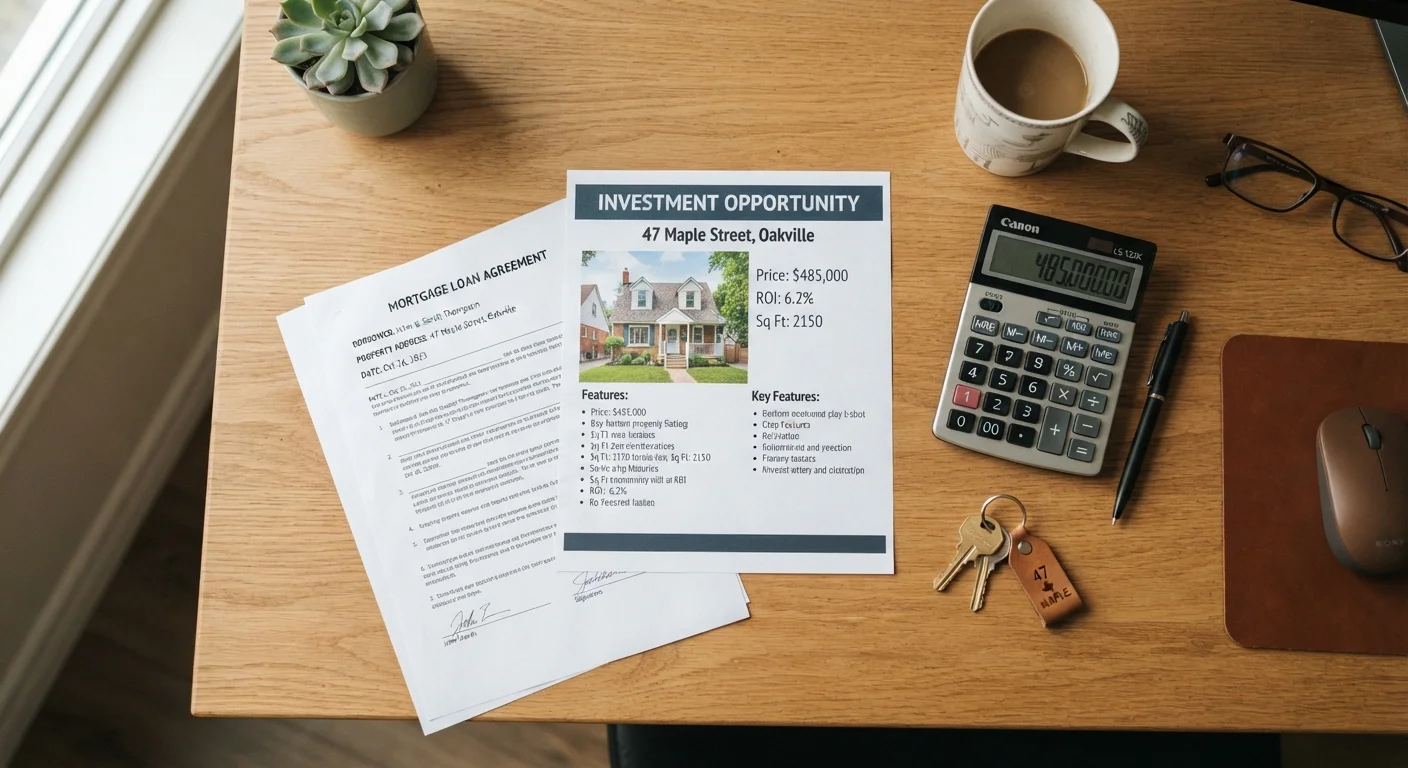
Photo: SaverSteals.com editorial
—— In This Article
Key Takeaways
- Investment property loans generally require larger down payments than owner-occupied mortgages, often 15–25%.
- Interest rates on investment property loans are typically higher to reflect the elevated risk lenders assume.
- Lenders apply stricter credit score and reserve requirements compared to primary home loans.
- Rental income from the property may count toward qualifying income, but lenders usually apply a discount factor.
- Understanding these differences upfront helps prospective investors plan their finances more accurately.
Why Investment Property Loans Are a Different Category
When a lender evaluates a mortgage application, one of the first questions they ask is: how will the borrower use this property? Owner-occupied homes carry different risk assumptions than properties bought to generate income. If a borrower hits financial hardship, they are statistically more likely to prioritize their own home over a rental property — meaning lenders assume more default risk with investment loans and price them accordingly.
This distinction has real consequences. Investment property mortgages sit in a separate underwriting category governed by stricter guidelines, and borrowers who misrepresent their intended use — claiming a property will be owner-occupied when it will not — commit occupancy fraud, which is taken seriously by lenders and federal agencies alike.
If you're new to property investment, it's worth first building a solid foundation. Our overview of how real estate works as an asset explains how properties generate returns and what risks they carry before you consider financing.
Second Home vs. Investment Property: A Key Distinction
Lenders treat a second home — a vacation property the borrower uses personally — differently from an investment property. Second homes often qualify for slightly lower rates than investment properties but still carry stricter requirements than primary residences. A property rented out year-round with no personal use is almost always classified as an investment property, not a second home.
Key Differences: Down Payment, Rate, and Reserves
Three areas where investment property financing diverges most sharply from primary home loans are down payments, interest rates, and cash reserve requirements.
Down Payment
Conventional loans for a primary residence can go as low as 3–5% down with certain programs. Investment property loans generally require a minimum of 15% for a single-unit property and often 20–25% for properties with two to four units. Government-backed loans — FHA, VA, and USDA — are not available for pure investment properties, though there are nuanced exceptions when the borrower occupies one unit in a multi-family building.
Interest Rates
Because investment loans carry greater risk from the lender's perspective, rates are typically 0.5 to 0.875 percentage points higher than comparable owner-occupied mortgages, though the exact spread depends on the borrower's credit profile, down payment size, and market conditions. Over a 30-year loan, even a modest rate difference translates to a meaningful increase in total borrowing cost.
Cash Reserves
Lenders commonly require borrowers to hold two to six months of mortgage payments in liquid reserves after closing. This cushion protects against vacancy periods where rental income may temporarily stop.
15–25%
Typical minimum down payment for investment properties
Under conventional lending guidelines, investment property down payments are substantially higher than those for owner-occupied homes, which can go as low as 3–5% with certain programs.
~0.5–0.875%
Typical rate premium over owner-occupied loans
Industry mortgage professionals generally cite this range as the additional rate spread investors pay, though the exact amount varies with credit profile, down payment, and market conditions.
75%
Of gross rent typically used for qualifying income
Lenders commonly apply a 25% vacancy and expense discount to rental income when calculating a borrower's debt-to-income ratio under standard underwriting guidelines.
How Rental Income Factors Into Qualification
One advantage of financing income-producing property is that lenders may count projected or existing rental income toward your debt-to-income ratio — the calculation lenders use to assess how much debt you can manage relative to your income. However, they rarely count the full gross rent. A common approach is to use 75% of documented rental income, with the remaining 25% assumed to cover vacancies and maintenance expenses.
For a property being purchased without a rental history, lenders may rely on a market rent estimate from a licensed appraiser. For existing rentals, lenders typically want to see current lease agreements and tax returns showing Schedule E income.
Understanding the terminology lenders and investors use can make the qualification process far less confusing. Our property investment glossary breaks down terms like debt-to-income ratio, loan-to-value, and cash-on-cash return in plain language.
Improving Your Profile Before Applying
Borrowers who take time to pay down existing debts, raise their credit score above key thresholds (such as 720 or 740), and accumulate a larger down payment often access meaningfully better loan terms. Running the numbers on rate differences before applying can help clarify whether waiting and improving qualifications makes financial sense for your situation.
Credit Standards and What Lenders Look For
Investment property applicants face higher credit score thresholds than borrowers seeking a primary residence loan. While a 620 score may clear the minimum bar under some conventional guidelines, the most favorable pricing — lowest rates and fees — typically requires a score of 720 or above. Borrowers with lower scores are not necessarily disqualified, but they should expect materially higher costs.
Beyond credit scores, lenders assess the borrower's overall financial picture: existing debt obligations, employment history or business income, and the size of the down payment relative to the property's appraised value (known as the loan-to-value ratio). A lower loan-to-value ratio generally signals lower risk to the lender.
Prospective investors who want to understand the full scope of financial questions they should be asking before applying can consult our article on key questions before your first investment property. It covers carrying costs, exit strategies, and financial readiness in practical terms.
This article is for general informational and educational purposes only and does not constitute financial, investment, tax, or legal advice. Mortgage products, rates, and qualification standards vary by lender, loan program, and individual circumstances. Consult a licensed mortgage professional, financial adviser, or tax professional before making decisions about investment property financing.
Frequently Asked Questions

Real Estate Editorial Team
Real Estate Editorial Team is the collective byline for our editorial team and contributor network. Articles published under this byline or an editorial pen name are researched, written, and reviewed according to our editorial standards for clarity, consistency, and independence before publication.
View author profile