
Mindfulness vs. Meditation: Two Overlapping Practices Worth Telling Apart
Mindfulness and meditation are often used interchangeably, but they're not the same thing. Here's what distinguishes them and when each applies.
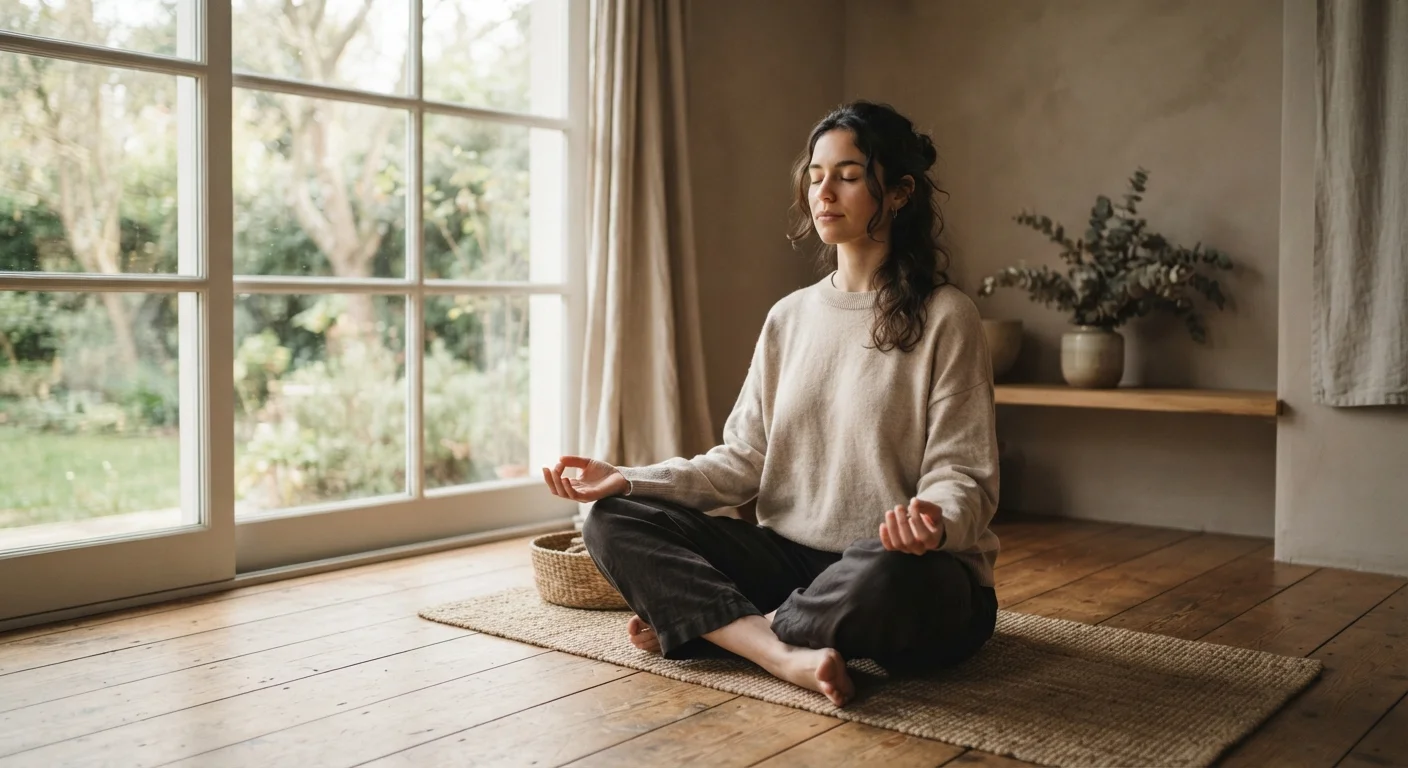
Photo: SaverSteals.com editorial
—— In This Article
Key Takeaways
- Mindfulness is a quality of attention; meditation is a formal practice that cultivates it.
- You can practice mindfulness anywhere — while eating, walking, or working — without sitting down.
- Meditation typically requires dedicated time and a structured technique such as breath-focused or body-scan practice.
- Both practices are backed by research linking them to reduced stress and improved emotional regulation.
- Neither replaces professional mental health care when that care is needed.
Why the Confusion Exists
Mindfulness and meditation appear together so often in wellness conversations that many people treat them as interchangeable. They are not — though they are closely related. Understanding the distinction helps you choose the right approach for the right moment, rather than picking one arbitrarily and wondering why it does or does not fit your routine.
At their core, the two concepts operate at different levels. Mindfulness is a mental quality — the capacity to pay deliberate, non-judgmental attention to the present moment. Meditation is a practice — a structured set of techniques designed to train that quality, among other mental skills. Put simply: meditation is one way to develop mindfulness, but mindfulness can exist outside of meditation entirely.
| Criterion | Mindfulness | Meditation |
|---|---|---|
| What it is | A quality of awareness | A structured practice or technique |
| Requires dedicated time | No — woven into daily activity | Yes — set-aside sessions |
| Requires special setting | No — anywhere works | Usually a quiet, comfortable space |
| Learning curve | Low — start immediately | Moderate — technique matters |
| Primary goal | Present-moment attention | Training attention and emotional regulation |
| Evidence base | Strong for stress and emotional reactivity | Strong for stress, attention, and well-being |
| Common formats | Mindful eating, walking, breathing | Breath focus, body scan, loving-kindness |
What Mindfulness Actually Means
Mindfulness is sometimes described in clinical literature as "present-moment awareness without judgment." In practical terms, it means noticing what you are experiencing right now — your breath, your emotions, the sounds around you — without immediately reacting, labeling, or getting lost in thought.
Crucially, mindfulness is portable. You do not need to sit still or set a timer. Washing dishes mindfully means giving full attention to the sensation of warm water and the movement of your hands, rather than mentally rehearsing tomorrow's agenda. Eating mindfully means noticing flavors, textures, and hunger cues instead of scrolling a screen. Research published in peer-reviewed journals such as Psychological Science has linked higher trait mindfulness — the tendency to be present in daily life — with lower emotional reactivity and better stress management.
This quality can be cultivated informally through intentional habits, or more formally through meditation. It also underpins many evidence-based therapeutic frameworks, including Mindfulness-Based Cognitive Therapy (MBCT) and Mindfulness-Based Stress Reduction (MBSR). If you're curious how structured mental health support compares to self-directed practices, see how therapy, counseling, and psychiatry differ.
~8 weeks
Time to measurable stress reduction in MBSR programs
Mindfulness-Based Stress Reduction (MBSR), developed at the University of Massachusetts, typically runs eight weeks and is among the most studied mindfulness interventions.
10–20 min
Typical daily meditation session length in research studies
Many peer-reviewed trials showing benefits for attention and stress used daily sessions in the 10–20 minute range, suggesting significant time investment is not always required.
~1 in 5
U.S. adults reporting regular meditation practice
National survey data from the CDC's National Health Interview Survey indicates meditation use among U.S. adults has grown substantially over the past decade.
What Meditation Actually Is
Meditation refers to a category of deliberate mental exercises practiced during a set-aside period of time. Common forms include:
- Focused-attention meditation: Anchoring awareness to a single object — usually the breath — and gently returning attention whenever the mind wanders.
- Open-monitoring meditation: Observing all thoughts, sensations, and emotions as they arise, without fixing on any one of them.
- Body-scan meditation: Systematically moving attention through different parts of the body to develop physical awareness and release tension.
- Loving-kindness (metta) meditation: Directing goodwill toward oneself and others through intentional mental phrases or imagery.
What these have in common is intentionality and structure. A meditation session has a beginning, a duration, and a technique. Research consistently associates regular meditation practice with measurable changes in self-reported stress, attention, and emotional well-being. Some neuroimaging studies suggest structural brain changes with long-term practice, though this field is still developing and findings should not be overstated.
Digital tools can support a meditation habit, though they come with real limitations — something worth understanding before relying on them heavily. Our article on digital mental health tools covers the evidence clearly.
How They Work Together — and When to Use Each
Think of mindfulness as the destination and meditation as one reliable road to get there. Many people find that a regular meditation habit gradually makes informal mindfulness easier — the mental "muscle" trained in formal sessions becomes more available throughout the day.
That said, neither is strictly required for the other. Some people develop strong present-moment awareness through practices like yoga, tai chi, or even attentive physical exercise without ever sitting for a formal meditation session. Conversely, someone can follow a guided meditation app daily without their overall moment-to-moment awareness improving much, if they treat it as a passive activity rather than active mental training.
A practical starting point for many people is to pair brief formal meditation sessions (even five to ten minutes in the morning) with one or two intentional mindfulness moments during the day — such as a mindful first cup of coffee or a conscious pause before responding to a stressful message. This approach builds the skill on two fronts simultaneously.
This article is for general informational purposes only and does not constitute medical or mental health advice. If you are experiencing significant mental health challenges, please consult a qualified healthcare or mental health professional.

Health Editorial Team
Health Editorial Team is the collective byline for our editorial team and contributor network. Articles published under this byline or an editorial pen name are researched, written, and reviewed according to our editorial standards for clarity, consistency, and independence before publication.
View author profile