
A Glossary of Mental Health Terms You'll Actually Encounter
From 'rumination' to 'dysthymia' to 'nervous system regulation'—plain-language definitions of the mental health vocabulary that comes up most.
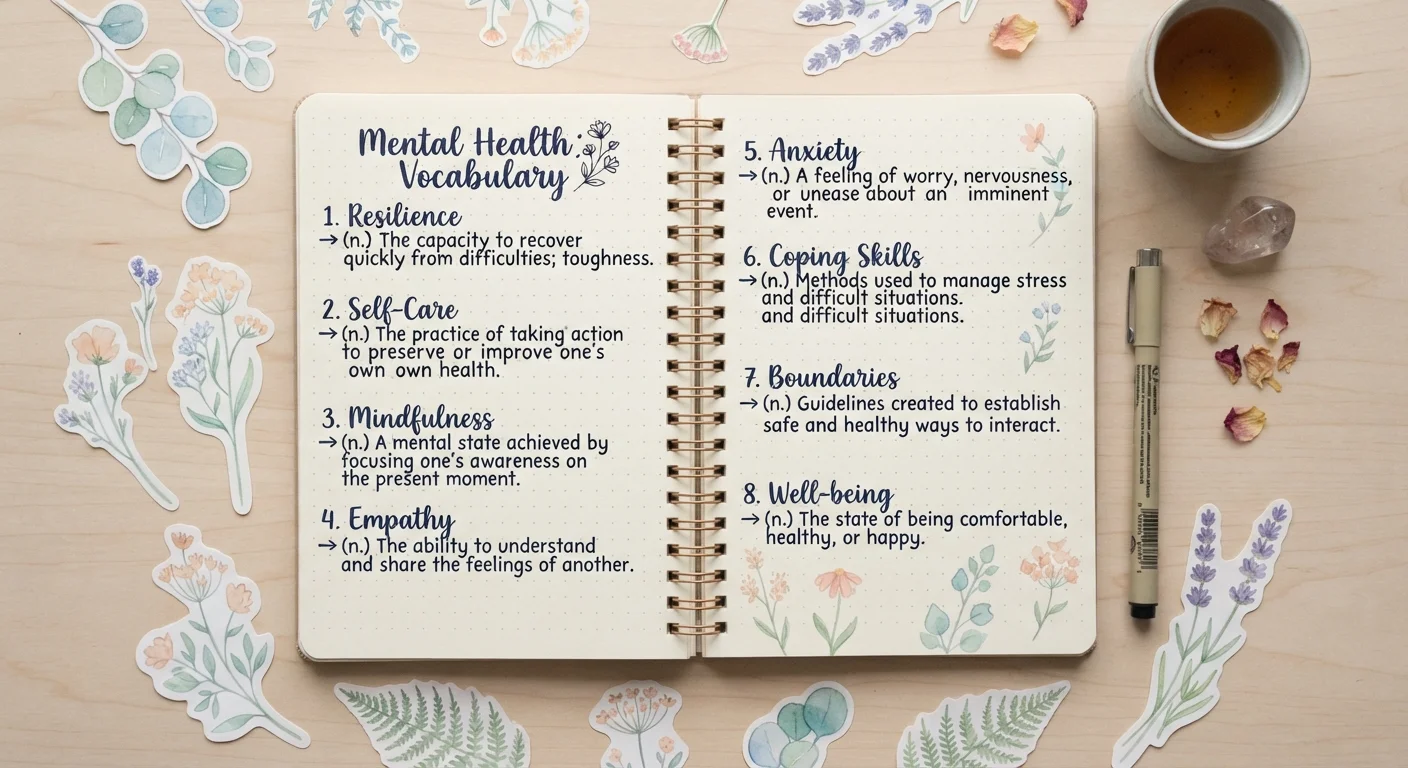
Photo: SaverSteals.com editorial
—— In This Article
Why Mental Health Vocabulary Matters
When a therapist mentions your window of tolerance, or a friend says they're ruminating, you shouldn't have to nod along and Google it later. The language of mental health has moved into everyday conversation — and understanding it helps you communicate clearly with providers, recognize patterns in yourself, and cut through misinformation.
This glossary covers the terms that come up most: in therapy sessions, on mental health platforms, in medical documentation, and in everyday discussions about emotional wellbeing. Each definition is written in plain English, without oversimplifying the clinical nuance that makes these distinctions meaningful.
Just as having a handle on financial vocabulary helps you navigate money decisions — much like our savings and debt glossary does for personal finance — understanding mental health terms helps you be a more informed participant in your own care.
This Is Education, Not Diagnosis
The definitions in this glossary are general educational information — not clinical diagnoses, treatment recommendations, or medical advice. If you recognize symptoms in yourself or someone close to you, consult a licensed mental health professional. Only a qualified clinician can evaluate and diagnose a condition.
Core Terms Defined
The entries below represent some of the most frequently encountered — and frequently misunderstood — terms in mental health settings. Use them as a reference for conversations with care providers, or to better understand what you read.
Rumination
The repetitive, passive focus on distressing thoughts or feelings without moving toward problem-solving. It's different from productive reflection — rumination loops rather than resolves.
Dysthymia (Persistent Depressive Disorder)
A form of chronic, low-grade depression lasting two or more years. Symptoms are less severe than major depression but persist long enough to significantly affect quality of life.
Nervous System Regulation
The process by which the body shifts between states of activation (fight-or-flight) and rest (parasympathetic). Skills like deep breathing support regulation by signaling safety to the nervous system.
Cognitive Distortion
An inaccurate or exaggerated thought pattern that reinforces negative emotions. Common examples include all-or-nothing thinking, catastrophizing, and mind-reading.
Dissociation
A disconnection from thoughts, feelings, surroundings, or sense of identity. Mild dissociation (like zoning out while driving) is common; severe or frequent dissociation may warrant clinical attention.
Hypervigilance
A heightened state of alertness in which a person is constantly scanning for threat. It is often associated with anxiety disorders and post-traumatic stress.
Somatic
Relating to the body. In mental health contexts, 'somatic symptoms' are physical experiences — such as muscle tension, headaches, or stomach upset — connected to emotional or psychological stress.
Affect
The outward expression of emotion, as observed in facial expression, tone, and body language. Clinicians distinguish between 'flat affect' (minimal expression) and 'labile affect' (rapidly shifting emotions).
Psychoeducation
The process of providing structured information about a mental health condition, its symptoms, and how it works. It is often a core element of therapy and helps individuals and families make sense of their experiences.
Window of Tolerance
The zone of arousal in which a person can function effectively and process emotions without becoming overwhelmed or shutting down. Developed by psychiatrist Dan Siegel, this concept is widely used in trauma-informed care.
Alexithymia
Difficulty identifying, describing, or distinguishing one's own emotions. People with alexithymia may struggle to put feelings into words, which can complicate both relationships and therapy.
Therapeutic Alliance
The collaborative relationship between a therapist and client, characterized by mutual trust, agreement on goals, and shared commitment to the work. Research consistently links a strong alliance to better therapy outcomes.
If you encounter terms related to therapy approaches, the most widely used include Cognitive Behavioral Therapy (CBT), which targets cognitive distortions and behavioral patterns; Dialectical Behavior Therapy (DBT), which emphasizes distress tolerance and interpersonal effectiveness; and EMDR (Eye Movement Desensitization and Reprocessing), used primarily for trauma processing. These are distinct modalities — each suited to different presentations and goals.
Grounding practices, which directly support nervous system regulation, are explored in depth in our companion piece on grounding techniques for anxiety. For readers who also find the fitness space filled with unexplained jargon, our fitness terms glossary applies the same plain-language format to exercise vocabulary.
1 in 5
U.S. adults with a mental illness each year
According to the National Institute of Mental Health, this figure reflects diagnosed conditions and does not capture the full range of subclinical struggles.
~50%
Of mental health conditions emerge by age 14
Research published in journals including The Lancet Psychiatry highlights the importance of early language and literacy around mental health.
At-a-Glance Reference
The following quick-reference card captures high-level facts that add useful context to the definitions above.
| Most commonly Googled mental health terms | Anxiety, depression, ADHD, OCD, PTSD |
| Adults with a diagnosable mental illness (U.S.) | 1 in 5 annually (National Institute of Mental Health) |
| Core therapy modalities you'll hear about | CBT, DBT, ACT, EMDR, psychodynamic therapy |
| Terms often confused | Affect vs. emotion, anxiety vs. panic, sadness vs. depression |
| Regulation vs. suppression | Regulation manages emotional intensity; suppression buries it |
Language shapes how we understand experience. Knowing the difference between affect and emotion, or between regulation and suppression, isn't pedantic — it's the kind of precision that helps you describe what's happening to a clinician and understand what they're telling you in return.
This article is for informational purposes only and does not constitute medical or clinical advice. Always consult a licensed mental health professional for guidance related to your individual circumstances.

Health Editorial Team
Health Editorial Team is the collective byline for our editorial team and contributor network. Articles published under this byline or an editorial pen name are researched, written, and reviewed according to our editorial standards for clarity, consistency, and independence before publication.
View author profile