
The Five Factors Behind Your Credit Score
Payment history, credit utilization, account age, credit mix, and new inquiries—here's how each one shapes your score.
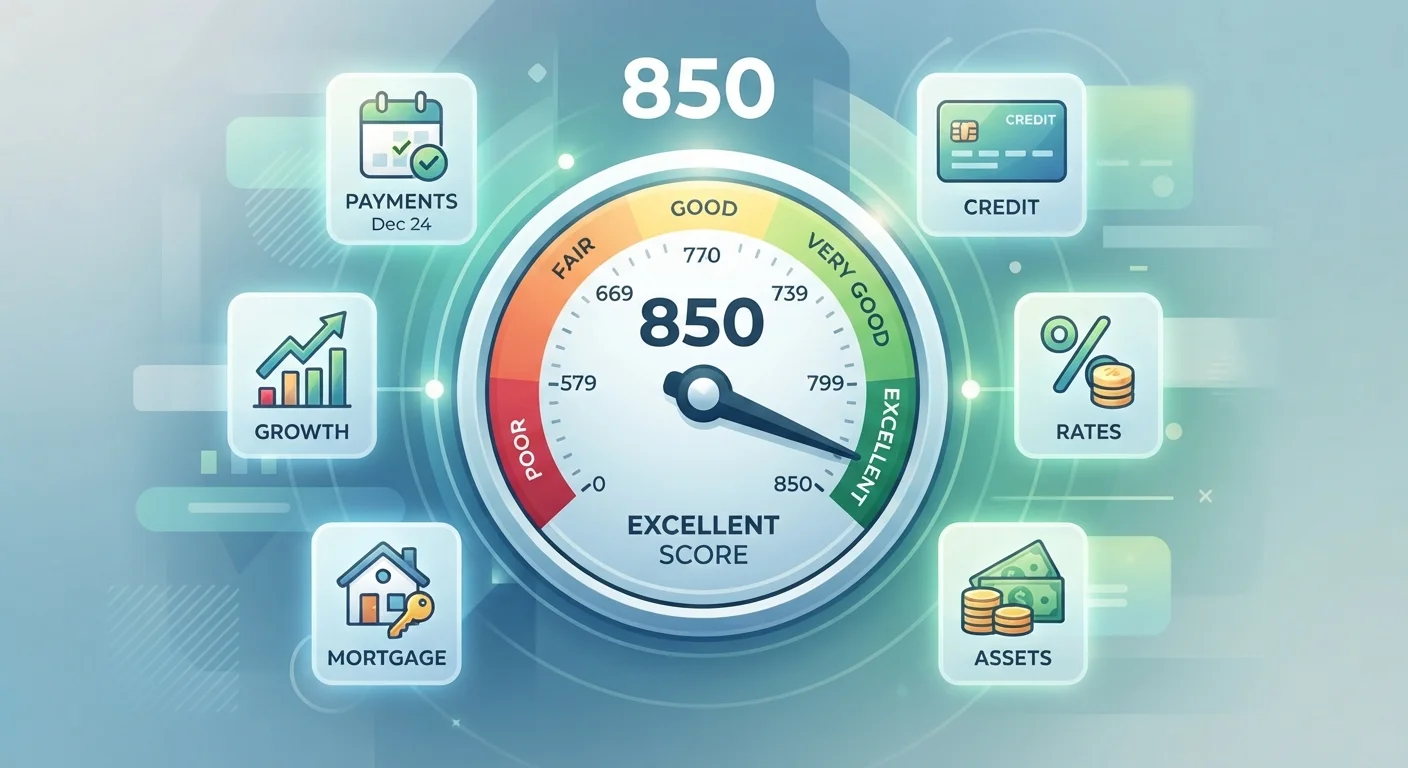
Photo: SaverSteals.com editorial
—— In This Article
What Makes Up Your Credit Score?
Your credit score—most commonly calculated using the FICO® model on a scale of 300 to 850—is not a mystery number. It is a weighted formula built from five distinct categories of information drawn from your credit report. Understanding each factor helps you make deliberate decisions rather than guessing why your score moved up or down.
| Scoring Model | FICO® (most widely used by lenders) |
| Score Range | 300–850 (FICO® scoring model) |
| Largest Factor | Payment History (35%) |
| Second Largest Factor | Credit Utilization (30%) |
| Generally Recommended Utilization | Below 30% of available credit (Consumer Financial Protection Bureau guidance) |
| Free Credit Reports | Available at AnnualCreditReport.com (Federally authorized source) |
Keep in mind that different scoring models (FICO, VantageScore) may weight these categories slightly differently. The breakdown below reflects the widely cited FICO model, which most major lenders use. This article is for general educational purposes and is not personalized financial advice—consult a licensed financial adviser for guidance specific to your situation.
The Five Factors, Explained
1. Payment History (35%)
The single largest factor. Lenders want to know whether you pay your bills on time. Even one missed payment can lower your score noticeably, and derogatory marks such as collections, charge-offs, or bankruptcies have longer-lasting effects. Consistent, on-time payments are the most reliable way to build and protect your score over time.
2. Credit Utilization (30%)
This measures how much of your available revolving credit—primarily credit cards—you are currently using. A utilization rate above 30% is generally associated with score decreases, while keeping balances low relative to limits tends to support a stronger score. Utilization is recalculated each reporting cycle, so it can change relatively quickly compared to other factors.
3. Length of Credit History (15%)
Scoring models consider the age of your oldest account, your newest account, and the average age of all accounts. Longer credit histories provide more data for lenders to assess risk. Closing old accounts or opening several new ones in a short period can lower your average account age.
4. Credit Mix (10%)
Lenders like to see that you can manage different types of credit responsibly. A mix might include revolving accounts (credit cards, lines of credit) and installment accounts (auto loans, mortgages, student loans). You do not need every type, but a diverse mix can contribute positively to your score.
5. New Credit Inquiries (10%)
When you apply for new credit, lenders typically perform a hard inquiry on your report, which can cause a small, temporary score dip. Multiple applications in a short window—except for rate-shopping on mortgages or auto loans, which most models treat as a single inquiry—can signal increased risk to lenders.
Credit Utilization Rate
The percentage of your total revolving credit limit that you are currently using. It is calculated by dividing your total revolving balances by your total revolving credit limits.
Hard Inquiry
A review of your credit report triggered when you apply for new credit, such as a credit card or loan. Hard inquiries can cause a small, temporary decrease in your score.
Installment Credit
A loan with a fixed number of scheduled payments over a set period, such as a mortgage, auto loan, or student loan.
Revolving Credit
A credit account with a reusable limit that you borrow against and repay repeatedly, such as a credit card or home equity line of credit.
Derogatory Mark
A negative item on your credit report—such as a late payment, collection account, or bankruptcy—that signals higher risk to lenders and can lower your score for several years.
Putting the Factors to Work
35%
Weight of Payment History in FICO Score
Payment history is the single most influential factor in the standard FICO credit scoring model.
~1 in 5
Americans with a credit report error
According to a Federal Trade Commission study, roughly one in five consumers had an error on at least one of their three major credit bureau reports.
30%
Commonly cited utilization threshold
Consumer finance educators generally recommend keeping revolving credit utilization below 30% to support a healthy credit score.
Each factor interacts with the others, so no single action exists in isolation. Paying down a large balance improves utilization; keeping older accounts open protects your credit history length; spacing out credit applications limits new inquiry impact. Small, consistent habits compound over time into a meaningfully higher score.
If you want to dig deeper into your credit report, you are entitled to free reports from each of the three major bureaus—Equifax, Experian, and TransUnion—through AnnualCreditReport.com, the federally authorized source. Reviewing your report regularly helps you catch errors and understand exactly where you stand.
This article is for general informational and educational purposes only and does not constitute personalized financial or credit advice. Consult a qualified financial professional for guidance tailored to your specific circumstances.

Finance Editorial Team
Finance Editorial Team is the collective byline for our editorial team and contributor network. Articles published under this byline or an editorial pen name are researched, written, and reviewed according to our editorial standards for clarity, consistency, and independence before publication.
View author profile