

Key Takeaways
Why Secondhand Wardrobes Look Better With a Strategy
Here's the honest truth about thrift shopping most people learn the hard way: wandering into Goodwill with zero plan and walking out with three blazers you'll never wear is not a wardrobe strategy - it's just a different kind of impulse buying. The pieces are cheaper, yes, but a closet full of random thrifted items that don't work together is just as frustrating as an expensive one.
The good news? Shopping secondhand with intention is genuinely one of the most rewarding style exercises you can do. Unlike fast fashion, thrift stores reward knowledge, patience, and a clear personal aesthetic. When you show up knowing exactly what you're looking for, you start finding it - almost like magic.
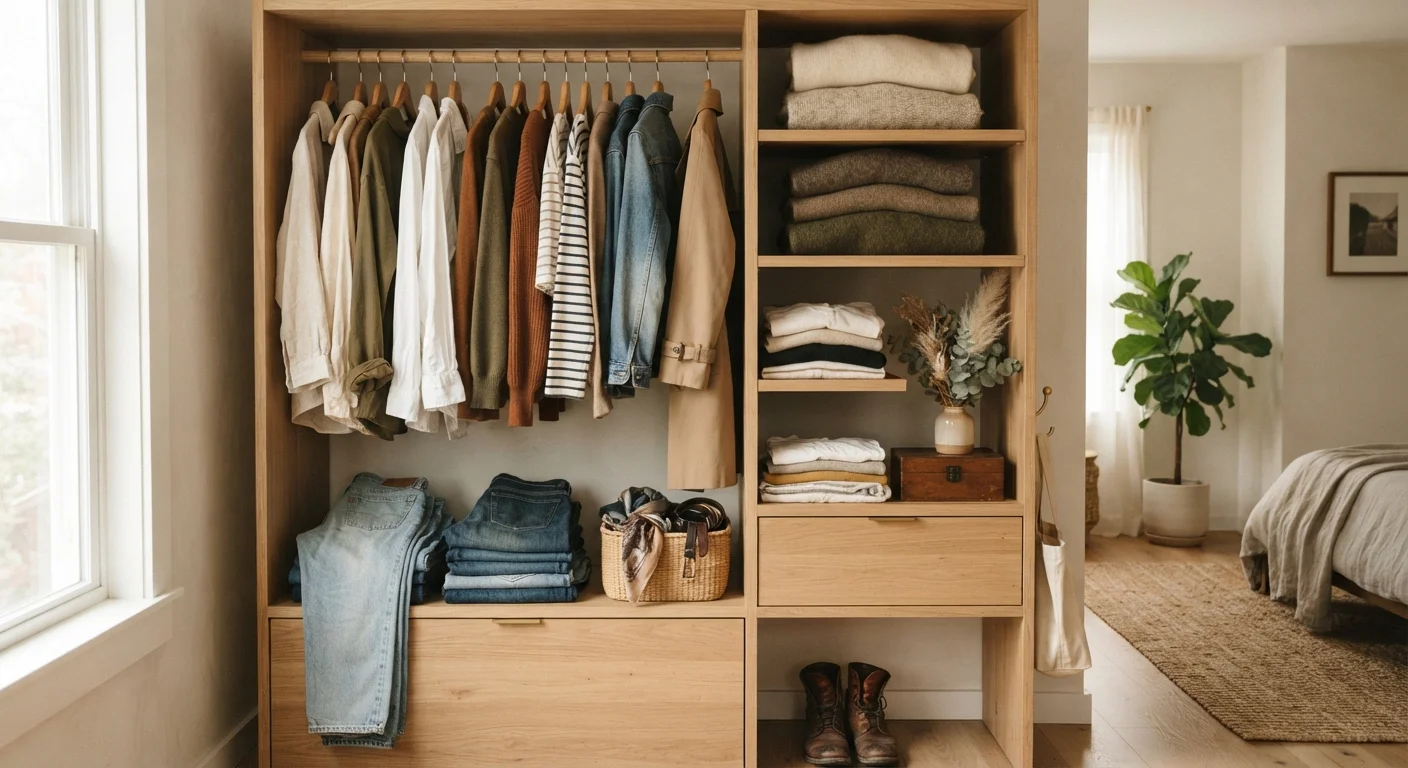
This guide walks you through building a wardrobe entirely from secondhand pieces that feels curated, cohesive, and completely you - not like a costume closet or a jumble of someone else's discards. We're talking real structure: a style signature, a color system, a shopping routine, and a ruthless editing process that makes getting dressed genuinely easy.
For context on how thrift store pricing actually signals item quality - which matters a lot when you're selecting pieces to build on - check out what thrift store pricing actually tells you about an item's value. And if you've ever watched a great find disappear into someone else's cart, this piece on thrift shopping timing and habits will change how you operate.
Tools and Resources You'll Want Before You Start
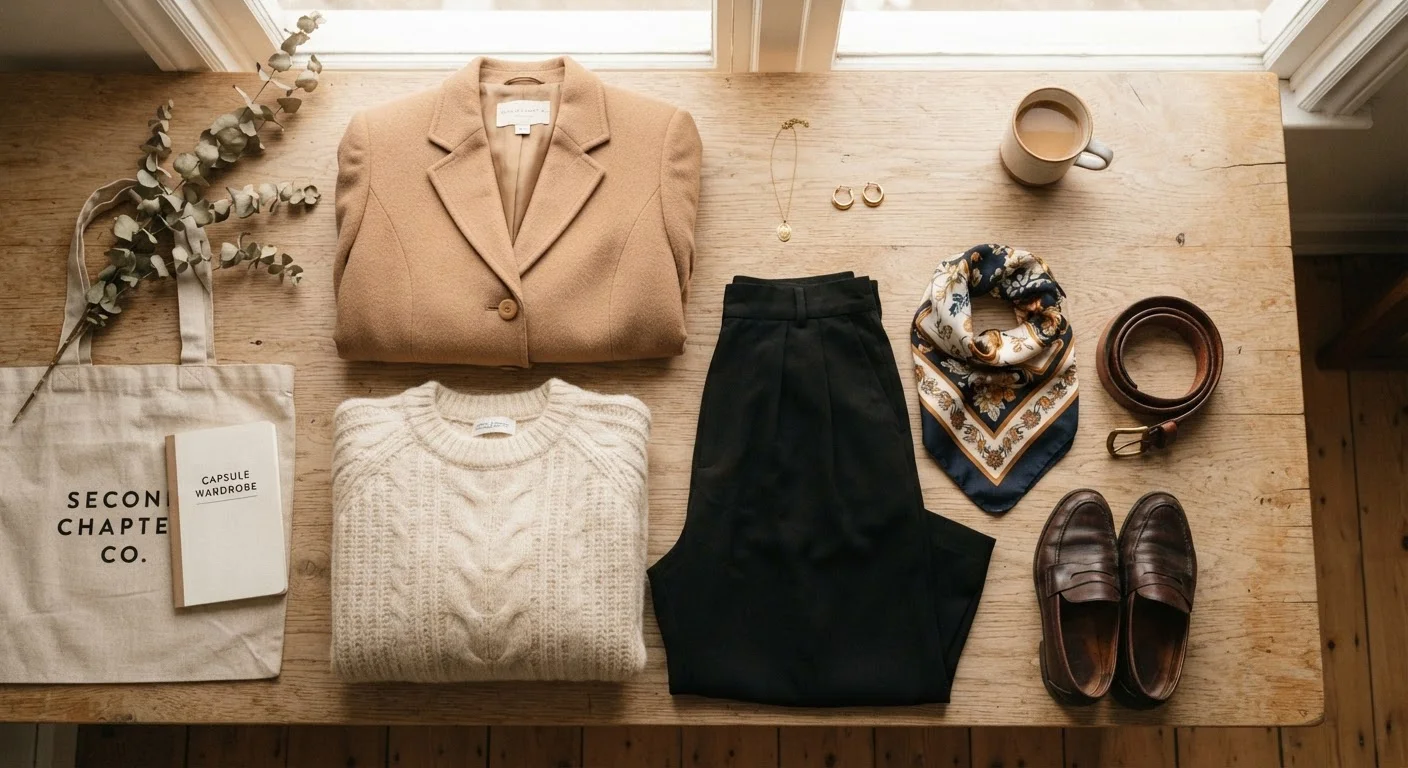
Before you hit the racks, set yourself up for success. A secondhand wardrobe build is equal parts research, planning, and physical shopping - and a few simple tools make every stage dramatically easier.
Smartphone with style reference photos
Store your written style brief, color palette, and shopping list - plus reference photos of silhouettes you're targeting - so they're accessible on the rack.
Fabric shaver (lint remover)
Quickly de-pill wool and knit pieces in-store to assess whether pilling is minor and fixable or too severe to bother with.
Handheld steamer
Refresh and de-wrinkle secondhand pieces at home before integrating them into your wardrobe - transforms the look and feel of vintage fabrics.
Tailor contact (local or online)
Handle minor alterations like hemming, taking in seams, or replacing buttons that elevate a good thrift find into a perfect fit.
Reusable tote bag
Carry potential finds around the store without committing to a cart - it forces a final edit before checkout.
Thrift store schedule / store locator
Know your local stores' restock days and locations so you can time visits for maximum fresh-inventory access.
What you will need
Step-by-Step: Building Your Secondhand Wardrobe
Follow these steps in order - they build on each other. Skipping the planning stages and jumping straight to shopping is exactly how you end up with a drawer full of tops that match nothing.
Define Your Style Signature in Writing
Before you touch a single rack, spend 20-30 minutes writing down your style signature. This isn't a Pinterest mood board (though that can help too) - it's a concrete written brief that you'll actually bring with you when you shop.
Your style signature should answer three questions:
- What 3-5 adjectives describe how I want to look? (Examples: relaxed-polished, dark-romantic, minimalist-utilitarian, playful-professional)
- What 2-3 silhouettes do I always feel good in? (Examples: wide-leg trouser + fitted top, oversized blazer + slim straight pant, wrap dress)
- What are my absolute non-negotiables? (Examples: nothing sleeveless, always ankle-length or longer, must work with sneakers)
Screenshot or photograph this brief on your phone. Refer to it every single time you pick up an item. If a piece doesn't match at least two of these criteria, put it back - even if it's exciting, even if it's $2.
Build Your Color Palette (Max 5 Colors)
A restricted color palette is the single most powerful tool for making a secondhand wardrobe look curated rather than chaotic. When every piece shares a color family, mismatched eras and fabrics suddenly look intentional - almost editorial.
Choose your palette using this structure:
- 2 neutrals that work as your base (e.g., cream + charcoal; camel + black; olive + off-white)
- 2 accent colors that you genuinely love wearing and that complement your neutrals
- 1 wild card - one unexpected pop color or pattern that appears in small doses (a scarf, a bag, a single statement top)
Write these down alongside your style signature. In the thrift store, if a piece falls outside your 5-color system, leave it - no matter how beautiful it is. Cohesion is built through discipline, and discipline here saves you from the closet chaos that makes getting dressed exhausting.
Understanding how thrift stores price items can also tell you whether a piece is worth the color compromise. Check out what thrift store pricing tells you about quality before you rationalize a purple velvet jacket that's just $3.
Audit Your Existing Wardrobe for Anchor Pieces
Before you buy a single new secondhand item, do a full audit of what you already own. Pull everything out and identify your anchor pieces - the items in your current wardrobe that already align with your style signature and color palette. These are your starting points; every new thrifted piece needs to work with at least two of them.
Create three piles:
- Keep (Anchor)
- Pieces that fit your style signature, fall within your color palette, and you reach for regularly.
- Keep (Bridge)
- Pieces that are outside your palette but are high-quality or have sentimental value. These can stay for now - but they don't count as targets for new thrift acquisitions to match.
- Remove
- Everything else. Donate, sell, or swap. Getting these out of your closet makes the building process cleaner and faster.
The goal: end up with a clear starting inventory of 10-15 anchor items that define what you're building around. Everything you thrift going forward should slot naturally into this core.
Identify Your Gaps and Set a Shopping List
With your anchor pieces laid out, identify the specific gaps in your wardrobe - not general gaps like 'more tops,' but precise ones. A shopping list for a secondhand wardrobe build might look like this:
- One structured blazer in camel or charcoal
- Two pairs of straight-leg or wide-leg trousers (black, cream, or olive)
- One quality leather or faux-leather belt, brown or tan
- Three simple knit or cotton crewnecks in my neutral colors
- One printed or textured accent piece (scarf, statement blouse, or patterned skirt)
The more specific your list, the more effectively you shop. Thrift stores reward focused searching. Experienced thrifters know exactly what they came for - that specificity is a big part of why they consistently find better pieces.
[in_content_images:3]Shop on a Schedule, Not on a Whim
Thrift stores restock on predictable cycles - typically mid-week, often on specific days designated by store policy. Shopping randomly on weekends means you're competing with the highest traffic for inventory that's been picked over. Shopping on a schedule, timed to restocking days, changes your odds dramatically.
Call your local Goodwill, Salvation Army, or independently owned thrift shop and ask: What days do new donations go out on the floor? Most staff will tell you directly. Build your thrift run around that answer.
Also consider visiting thrift stores in different neighborhoods within driving distance. Donation demographics vary significantly by area - a store in a wealthier zip code tends to receive higher-end discards. Rotate between 2-3 locations on your schedule and you'll see a noticeable difference in find quality.
If you're also exploring online resale platforms alongside physical thrift stores, resale apps vs. thrift stores lays out exactly how to use both channels strategically together.
Evaluate Fit, Condition, and Alteration Potential
At the rack, every piece goes through a three-point evaluation before it goes in your cart:
- Fit check: Does it fit your target silhouette? If it's close but not right, can it be altered? (Hem length, taking in a seam, replacing buttons - all cheap and achievable. Re-cutting a shoulder or restructuring a waist - much harder and may not be worth it.)
- Condition check: Check collar, cuffs, underarms, and seams. Surface pills on knitwear can be removed with a fabric shaver. Fading near buttons can be a dealbreaker. A missing button is a $1 fix. A pulled or fraying seam depends on the garment's construction - turn it inside out and look.
- Fabric check: Natural fibers (wool, cotton, linen, silk) last longer, press better, and feel better. Synthetic blends are fine for some pieces but avoid thin polyester - it pills, it dates, and it doesn't improve with wear.
If all three checks pass: it goes in the cart. If one fails but the piece is otherwise exceptional: make a conscious decision with clear eyes. If two fail: put it back, always.
[important_callout]Wash, Treat, and Integrate Before Adding to Your Closet
Every secondhand piece gets cleaned before it enters your wardrobe - no exceptions. Beyond hygiene, washing also reveals how the garment actually behaves: whether it shrinks, stretches, fades, or holds its shape. Better to know now than after you've built three outfits around it.
Follow the care label carefully. For delicate vintage items with no label (common with pre-1970s pieces), hand wash cold with a gentle detergent and lay flat to dry. For structured items like blazers, spot clean and steam rather than machine washing.
Once clean and dry, hold the piece up next to your anchor items and physically try the outfit combinations you imagined in the store. If they work - and they should, because you've done the planning work - hang the piece in your main wardrobe. If something feels off, isolate it on the 7-day hang hook and re-evaluate before committing it to the core.
Mixing Eras and Fits Without Looking Chaotic
One of the most exciting things about a thrifted wardrobe is that you're not locked into one decade or aesthetic. A 1970s cord blazer over a crisp 1990s white tee tucked into wide-leg trousers from a 2000s donation bag? That's not a mess - that's a look. But there's a difference between intentional era-mixing and wearing three competing vibes at once.
The One-Era-at-a-Time Rule
As a starting point, let one piece be your era anchor - the piece that carries the most distinctive decade energy - and keep everything else neutral or timeless. A vintage 80s power blazer with sharp shoulder pads reads stylish and deliberate when paired with straight-leg jeans and a white tank. The same blazer layered over a babydoll dress and chunky platform boots might be too many competing statements.
Texture Contrast Is Your Best Friend
Secondhand shopping gives you access to fabrics you simply won't find at H&M: genuine wool, silk blends, real leather, thick cotton canvas. Use that to your advantage. Pairing a slubby linen shirt with a structured wool skirt creates visual interest through texture contrast even when both pieces are the same color family. This is how thrifted outfits earn that editorial, intentional look.
Proportion Play
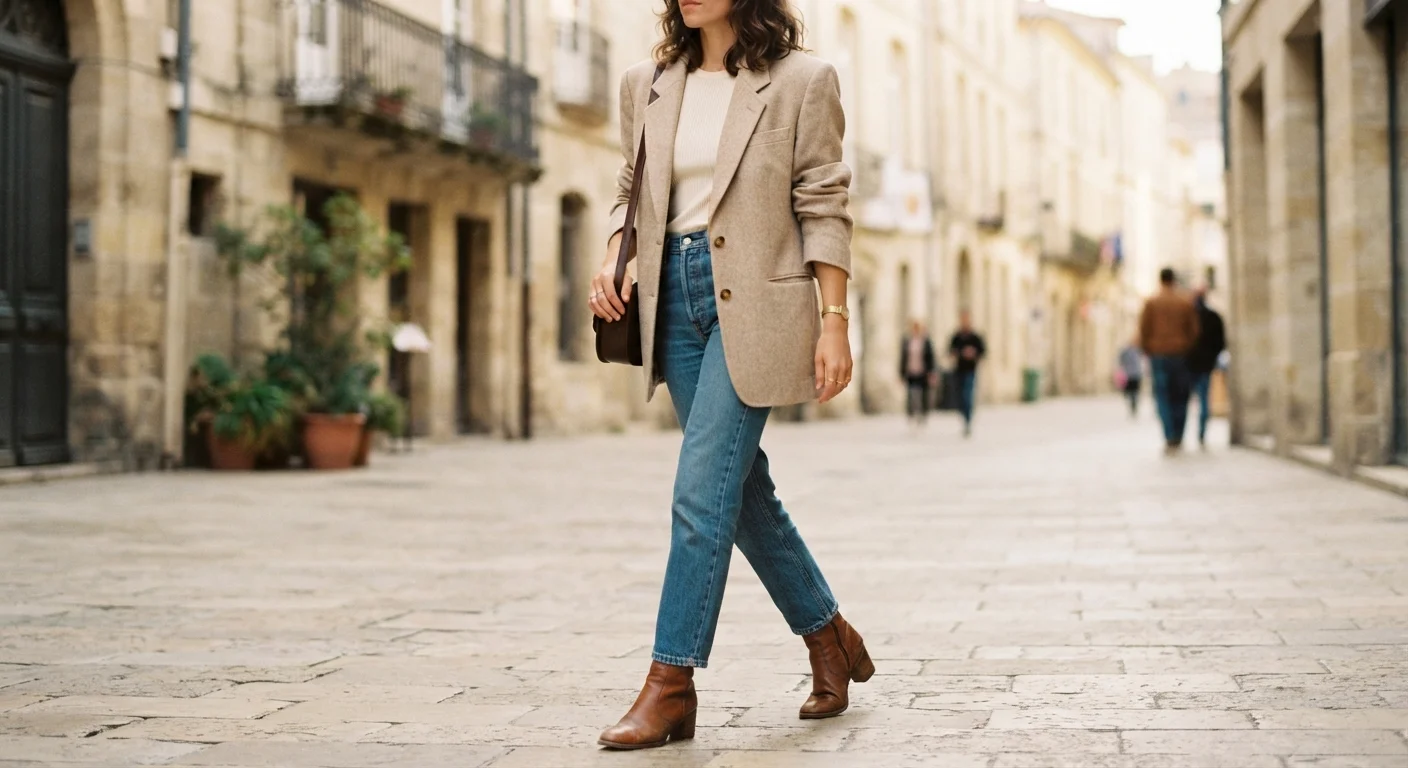
Mixing fits - oversized top with fitted bottom, or cropped top with wide trousers - is a core technique for making a secondhand wardrobe look modern regardless of when the pieces were made. A boxy 90s crewneck from 1994 reads completely current when worn with high-waisted slim pants. The proportion does the styling work for you.
Lean Into Unexpected Combinations
Some of the most striking thrifted outfits come from pairing pieces that shouldn't logically work - a masculine structured coat over a feminine slip dress, athletic-inspired track pants with a silk blouse. The key is confident proportion and a unified color story. If the colors agree, the pieces can disagree in era and formality without looking chaotic.
Steam Before You Judge a Piece
Thrift stores often fold and stack items in ways that leave permanent-looking creases. Before you evaluate whether a piece really works, steam it. A crumpled linen blazer that looks hopeless on a hanger can look absolutely remarkable with three minutes and a handheld steamer - don't let presentation bias cost you a great find.
Shop the Full Store, Not Just Clothing
The accessories, scarves, belts, and even housewares sections of thrift stores often yield incredible styling pieces at a fraction of clothing prices. A vintage silk scarf becomes a bag accent, a belt, or a hair tie. A piece of costume jewelry becomes a signature accent. Train yourself to look at every section through a styling lens.
Editing Your Haul and Maintaining Wardrobe Cohesion
Even the most disciplined thrift shopper needs a regular edit. Thrift stores are high-volume environments, and pieces that seemed perfect in store sometimes reveal themselves at home as slightly-off in color, not quite the right fit, or just not you. That's completely normal - the key is building an editing process that prevents your closet from becoming a secondhand landfill.
The 7-Day Hang Test
When you bring a new thrifted piece home, hang it on a dedicated hook or door handle. If you haven't reached for it naturally within seven days, it doesn't belong. This sounds brutal, but it works. Your instinct to grab something is the most honest signal of whether it truly fits your style - far more honest than the hopeful feeling you had in the thrift store aisle.
The Outfit Formula Check
Every piece you keep should slot into at least three different outfits using items already in your wardrobe. If you can only think of one way to wear something - even if you love it - it's a costume, not a wardrobe component. Return it to the donation cycle and keep looking.
Sentimental Keeps Will Sink Your Edit
The 7-day hang test fails when you make exceptions for pieces you feel guilty about discarding - 'but I paid $8 for it' or 'but I loved it when I bought it.' A $8 piece you never wear still costs you mental load every time you open your closet. Donate it, recoup the lesson, move on.
Don't Over-Buy at Once
It can be tempting to stock up aggressively when you're in a well-stocked thrift store. Resist the urge to buy 15 pieces in a single trip. Your ability to accurately evaluate how something fits your existing wardrobe drops sharply after the first 5-6 decisions. Shop in focused, smaller sessions for better results.
Rotate Seasonally, Donate Continuously
One of the great gifts of secondhand shopping is that re-donating pieces you've moved past costs you almost nothing and frees up closet space for better finds. Make it a habit: every time you bring in three new thrifted pieces, remove two. The wardrobe stays lean, you stay intentional, and someone else gets to discover a gem you've already enjoyed.
For a broader look at where secondhand shopping intersects with the hub of smart budget fashion decisions, explore the discount clothing resource hub - it covers everything from outlet timing to brand-specific secondhand hunting strategies. And if you ever want to compare the thrift store experience against resale apps like Poshmark or Depop, resale apps vs. thrift stores breaks down exactly which channel wins for which type of find.
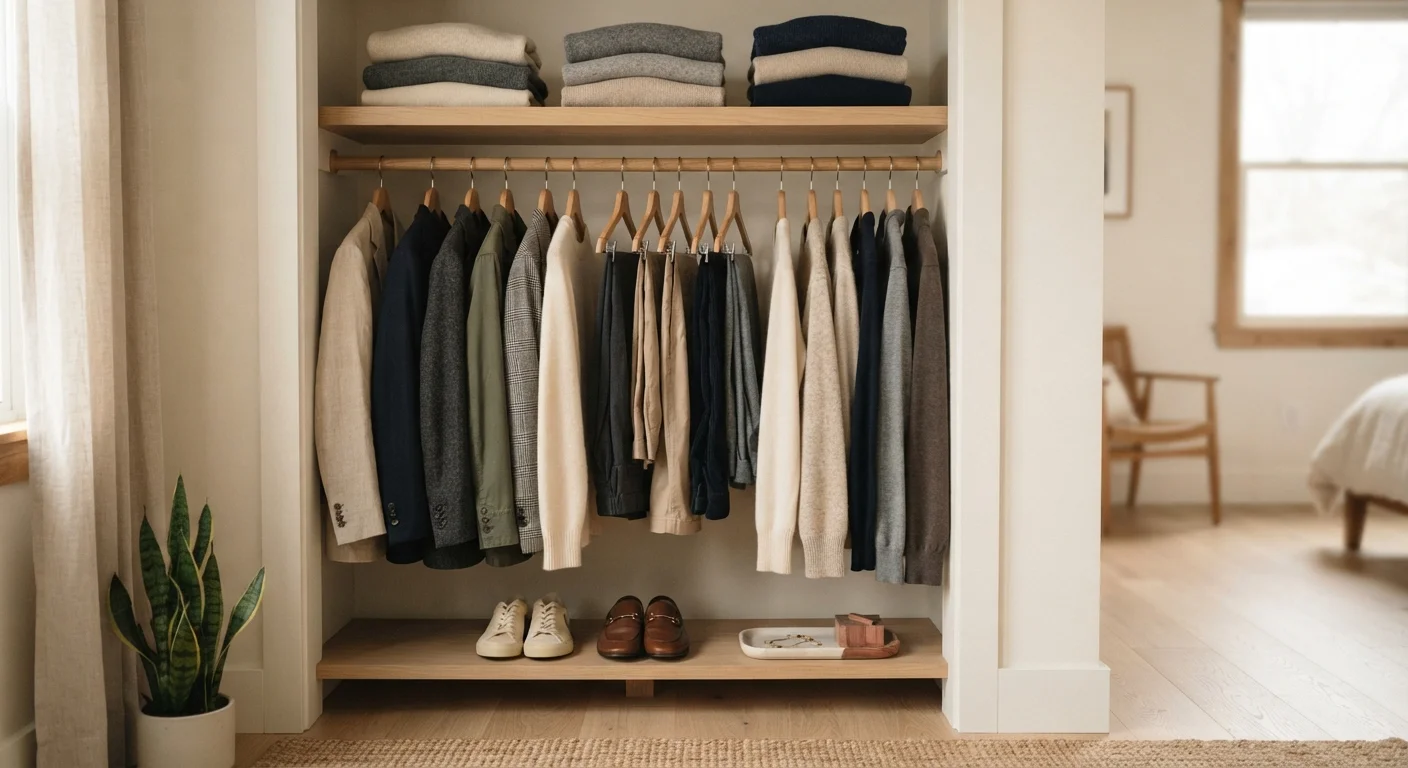
Building a cohesive secondhand wardrobe is genuinely one of the most satisfying style projects you can take on. It rewards patience and self-knowledge, it gets dramatically easier with practice, and it produces a closet that is - by definition - one of a kind. No algorithm is going to recommend the same exact combination of pieces to someone else. That's yours.
Now go find your perfect blazer. It's absolutely in there somewhere, waiting for you.