

Key Takeaways
Weekly Meal Plan (as a Spending Tool)
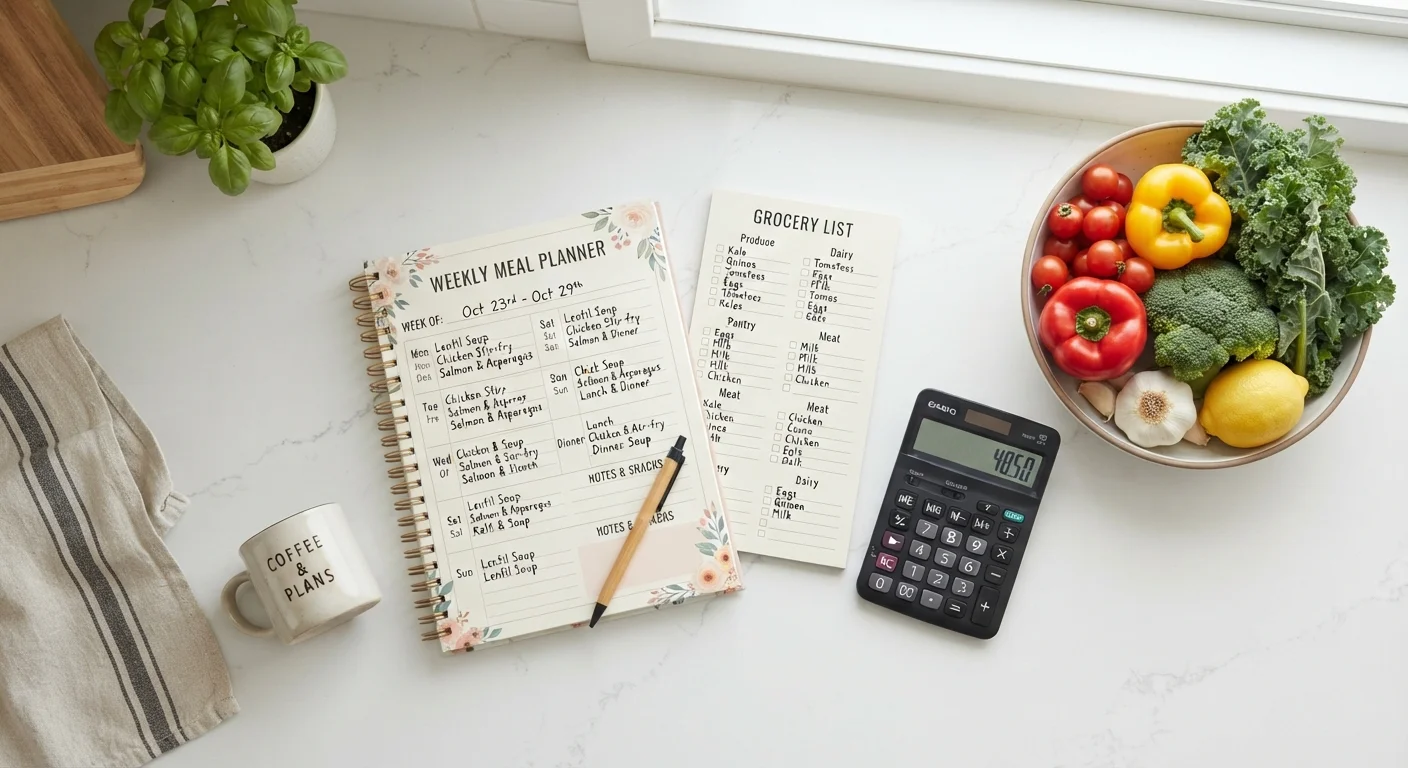
A weekly meal plan, in budget terms, is a predetermined schedule of every meal and snack your household will eat over the next seven days - paired with an ingredient-level grocery list built from that schedule. It functions as a spending tool by turning your grocery trip from a browsing session into a targeted purchase mission. Without it, every visit to the store is essentially an open invitation to spend more than you intended.
From a behavioral economics standpoint, meal planning eliminates purchase decisions made under conditions of hunger, time pressure, and environmental retail cues - all of which reliably drive impulse spending.
Why Grocery Stores Win When You're Unprepared
Let's be completely honest about something: your grocery store is not a neutral space. It is a meticulously engineered retail environment built to maximize the number of unplanned items in your cart. The bakery scent near the entrance? Deliberate. The flowers and produce positioned to signal freshness before you've even touched a product? Strategic. The end-cap "deals" that aren't actually the best price per unit? Classic.
Grocers invest heavily in retail psychology because unplanned purchases are the single biggest driver of grocery profit margins. A 2019 study found that shoppers without a list spend roughly 40% more than those who arrive with one. That gap isn't explained by better choices or quality upgrades - it's mostly impulse buys, redundant stock-ups, and "deals" on items you weren't looking for.
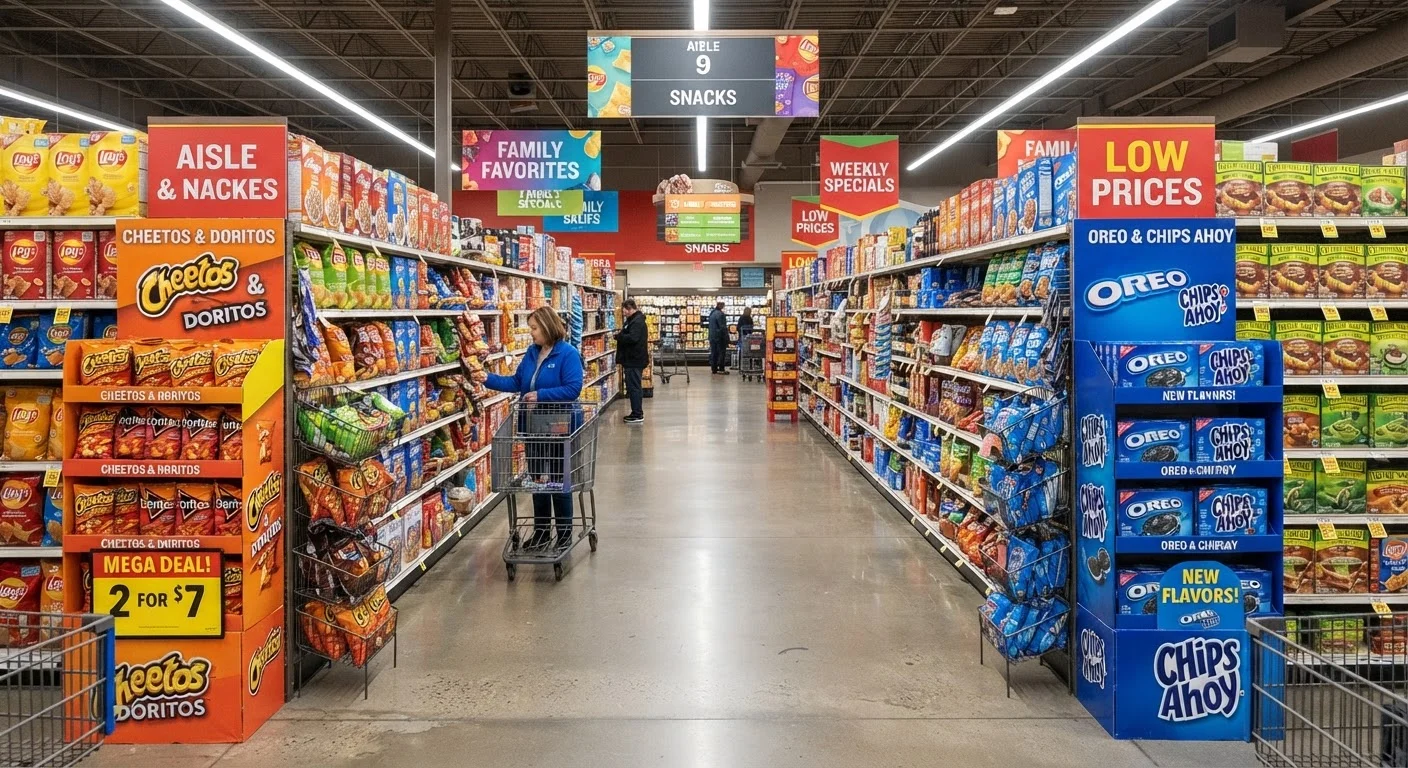
Here's what makes this particularly insidious: you leave feeling like you shopped efficiently. You found things on sale. You grabbed a few extras "just in case." But just-in-case items are where household food waste and budget overruns are born. Without a plan governing what you actually need, you're making dozens of unanchored purchase decisions under the influence of hunger, store design, and promotional messaging - exactly the conditions under which humans make their worst financial choices.
Compare that to the experience of walking in with a list built from a meal plan: you're not browsing, you're retrieving. The store's psychological architecture loses most of its power the moment you have a mission. That mission is your meal plan.
Meal Plans Don't Have to Be Rigid
A common fear about meal planning is that it locks you into a strict schedule that doesn't account for the real rhythm of life. In practice, the most effective meal plans are flexible frameworks, not ironclad contracts. You can rotate meals within the same week freely - since you already have all the ingredients - and designating one or two "flex nights" (leftovers, breakfast-for-dinner, or a simple pantry meal) keeps the plan sustainable without sacrificing the budget controls it provides.
The 80% Rule for Meal Planning Success
You don't need perfect adherence to see real budget results from meal planning. Consumer finance researchers consistently find that even following a meal plan 80% of the time - roughly five to six days out of seven - produces significant savings compared to no plan at all. The point isn't culinary discipline; it's replacing open-ended grocery decisions with intentional ones the majority of the time.
Watch Out for Healthy-Sounding Convenience Products
Pre-cut vegetables, marinated proteins, portioned snack packs, and single-serve grain pouches are among the highest-margin items in any grocery store - and they're often positioned to feel like smart, healthy choices. A meal plan that accounts for a few extra minutes of prep time at home lets you buy the whole version of these ingredients at a fraction of the cost. The price premium on convenience packaging can range from 40% to 300% compared to the whole-food equivalent.
The Real Cost of the "I'll Figure It Out" Grocery Trip
There's a particular kind of grocery shopper - and most of us have been this person - who walks into the store hungry, vaguely aware that dinner needs to happen tonight, and proceeds to make expensive, semi-random decisions. The result is a cart full of mismatched ingredients, some of which will overlap into actual meals and many of which will expire in the crisper drawer before they get a chance.
40%
Extra spending on unplanned grocery trips
Research consistently finds that shoppers without a list spend approximately 40% more per trip than those with a planned list.
$1,500
Annual food waste cost per U.S. household
According to USDA data, the average American household wastes food equivalent to roughly $1,500 per year - the majority traceable to unplanned purchasing.
$30-$50
Added cost per unplanned extra grocery trip
Consumer research shows each additional mid-week grocery trip beyond a planned main shop adds an average of $30-$50 in unintended purchases.
30 min
Average weekly meal planning time
Once the habit is established, most households can complete a functional weekly meal plan and grocery list in under 30 minutes.
25%
Additional savings from sale-aligned planning
Households that build their meal plan around the week's store sales circular report saving an additional 15-25% on top of the baseline benefits of simply having a list.
The math is brutal. The average American household throws away roughly $1,500 worth of food annually - and the majority of that waste is directly traceable to unplanned purchasing. You bought the bunch of kale because it looked good and it was on sale, but you had no plan for kale, so it wilted. You bought the big block of cheese because it was cheaper per ounce, but you only needed a small amount for one recipe you never got around to making. Every one of those decisions made perfect sense in the moment and terrible sense for your budget.
Unplanned trips also inflate your per-unit spending in ways that are harder to see. Without a plan, you're more likely to grab the branded, ready-to-cook version of something instead of the cheaper ingredient you could prep yourself. You're more likely to buy duplicates of pantry staples you already have at home because you're guessing, not checking. You're more likely to add "one or two things" that balloon into fifteen items when nothing pulls you back to the objective.
Auditing your kitchen before you write your grocery list is one of the fastest ways to confront exactly how much duplicate and wasted spending has been hiding in your routine. When you see it laid out in your pantry, it's motivating in the best possible way.
What a Meal Plan Actually Controls (and Why It's Powerful)
A weekly meal plan isn't just a dinner schedule. Used as a budget tool, it controls several financial variables simultaneously - and that's what makes it so much more effective than simply "trying to spend less."
1. It controls quantity
When you know you're making chicken stir-fry on Tuesday and chicken tacos on Thursday, you buy the exact number of chicken thighs required for both. You don't buy a family pack "because it's cheaper" and watch three portions go bad. Quantity control alone eliminates a significant portion of the average household's food waste.
2. It controls ingredient overlap
A well-built meal plan deliberately shares ingredients across multiple recipes - a technique sometimes called ingredient bridging. Buy one bunch of cilantro; use it in the taco topping, the salsa, and the grain bowl. Buy one can of coconut milk; split it between the curry on Monday and the smoothies on Wednesday. This reduces your total item count on the grocery list and dramatically cuts the number of perishables that don't make it out of your fridge.
3. It controls the grocery list
The meal plan is the source of truth for your list - and a list is your primary defense against impulse purchasing. A focused shopping list is your best defense against unplanned spending in any retail context, and the grocery store is no different. Every item on your list has a purpose; every item not on your list requires active justification before it enters the cart.
4. It controls the timing of your trips
With a plan, you shop once - maybe twice - per week with intention, instead of making small "quick trips" that almost always end up costing more per item than a planned run. Research consistently shows that each additional grocery trip adds an average of $30-$50 in unplanned spending.
Use the Sales Flyer as Your Menu Inspiration
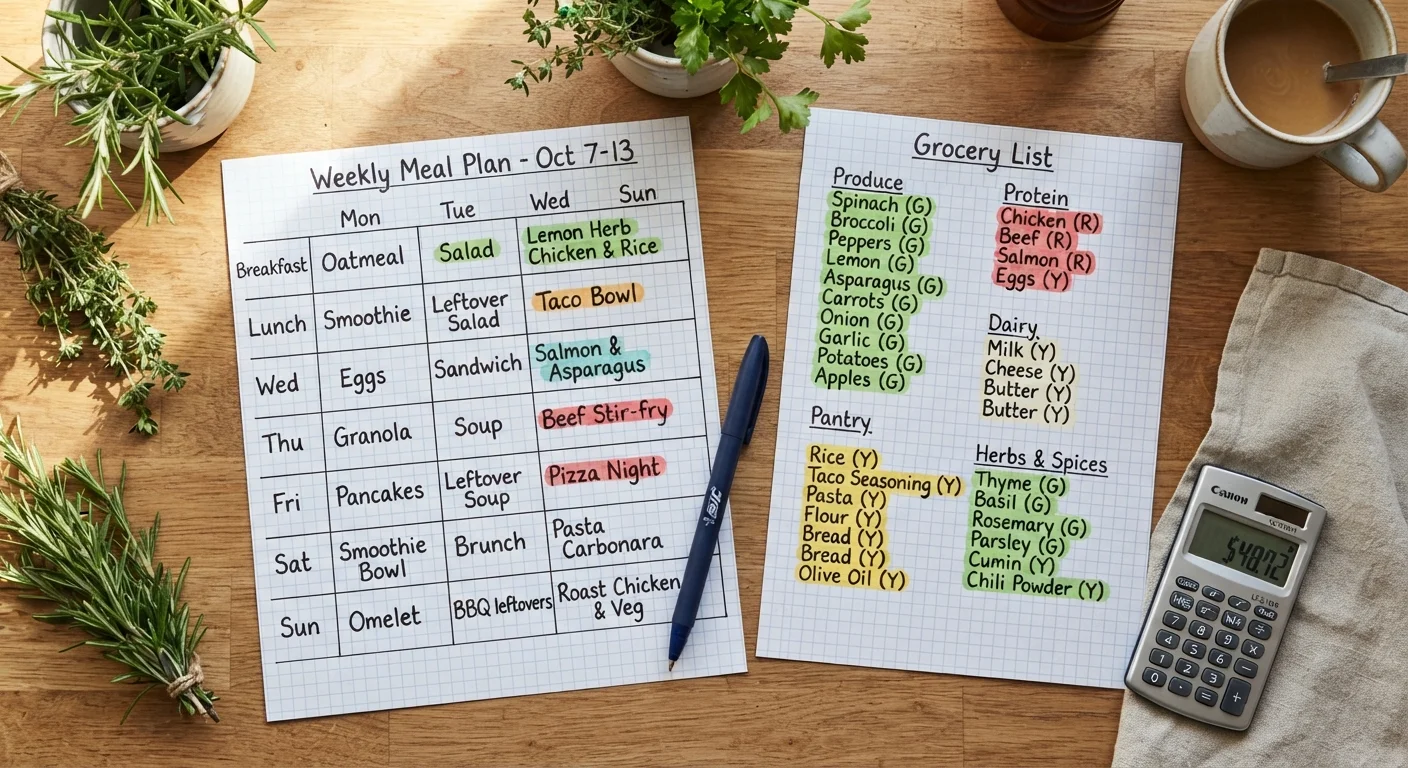
Before you open a single recipe website or meal planning app, pull up your grocery store's weekly sales circular. Let the discounted proteins and produce tell you what this week's meals will be. When chicken thighs are $1.29/lb, that's your week's protein anchor - now build around it. This one sequence change can cut your grocery spending by $20-$40 per week without any sacrifice in meal quality.
Batch-Cook One Thing Every Week
Pick one ingredient each week to cook in bulk - a big pot of grains, a tray of roasted vegetables, a batch of hard-boiled eggs. This single act dramatically reduces your dependence on convenience food throughout the week when time is short. It takes 20 extra minutes on your prep day and pays off every single busy weekday that follows.
How to Build a Meal Plan That Actually Cuts Spending
There's a right order to building a budget-optimized meal plan, and most people do it backwards. They decide what they want to eat, then go see what's on sale. Flip that sequence and you'll save significantly more.
- Check the sales flyer first. Before you plan a single meal, pull up your store's weekly ad - digitally or in print. Identify what proteins, produce, and pantry items are discounted this week. These become your meal anchors.
- Audit your pantry, fridge, and freezer. What do you already have that needs to be used? Freezer-burned chicken? Half a bag of lentils? A can of crushed tomatoes? Build meals around what you have before buying anything new. Building a meal plan around what's already in your kitchen is one of the most impactful habits you can build.
- Plan for 5-6 dinners, not 7. Leave one or two nights as "use it up" nights where you cook from leftovers and odds and ends. This flex buffer prevents the guilt spiral of a missed plan night and catches anything that didn't get used mid-week.
- Batch your breakfasts and lunches. These meals drive more unplanned spending than most people realize. Plan two or three breakfast options and two lunch options for the week - enough variety to prevent boredom, few enough to keep the grocery list tight.
- Write the ingredient-level list. Not "chicken" - "1.5 lbs chicken thighs." Not "vegetables" - "1 red bell pepper, 2 zucchini, 1 bag baby spinach." Specificity is what turns the list into a spending control mechanism.
- Set a budget before you arrive. Know your number going in. For most single adults, $50-$80/week is achievable with planning. For families of four, $100-$150/week is realistic with a solid plan and sale alignment.
Once you've done this a few times, the whole process takes under 30 minutes per week - and the return on that time investment is significant.
Layering Loyalty Programs and Coupons Onto Your Plan
A meal plan alone does heavy lifting. A meal plan combined with strategic use of loyalty rewards and coupons does even more. The key word is strategic - because coupons used without a plan can actually cost you money by steering your purchases away from your list.
Your coupons may not be saving you as much as you think if you're redeeming them on products that aren't on your meal-plan list. A 50-cents-off coupon on a product you weren't going to buy is a $2.50 loss, not a $0.50 win.
The right approach: after you've built your meal plan and grocery list, then check for coupons and loyalty offers on the items already on your list. This sequence - plan first, coupons second - is what separates coupon users who save from coupon users who spend more while feeling like they're saving.
“A coupon saves you money only when it's a discount on something you were already going to buy. Otherwise it's just a cleverly disguised purchase.”
— Erin Huffstetler, Frugal living expert and author on household budget strategies
Grocery loyalty programs add another layer of value when used with intention. Most major chains offer digital coupons that load directly to your loyalty card, personalized offers based on your purchase history, and points that convert to gas or grocery discounts. Grocery loyalty programs consistently outperform retail and brand programs for shoppers who are already buying regularly in that category - which is exactly what a weekly meal planner is.
You can also explore couponing basics and coupon stacking strategies to squeeze even more value out of your planned grocery runs without letting deals dictate what goes in your cart.
What Happens to Your Kitchen Once You Meal Plan Consistently
The downstream effects of consistent meal planning extend well beyond the weekly grocery bill. Once your purchasing becomes intentional and ingredient-led, your entire kitchen changes.
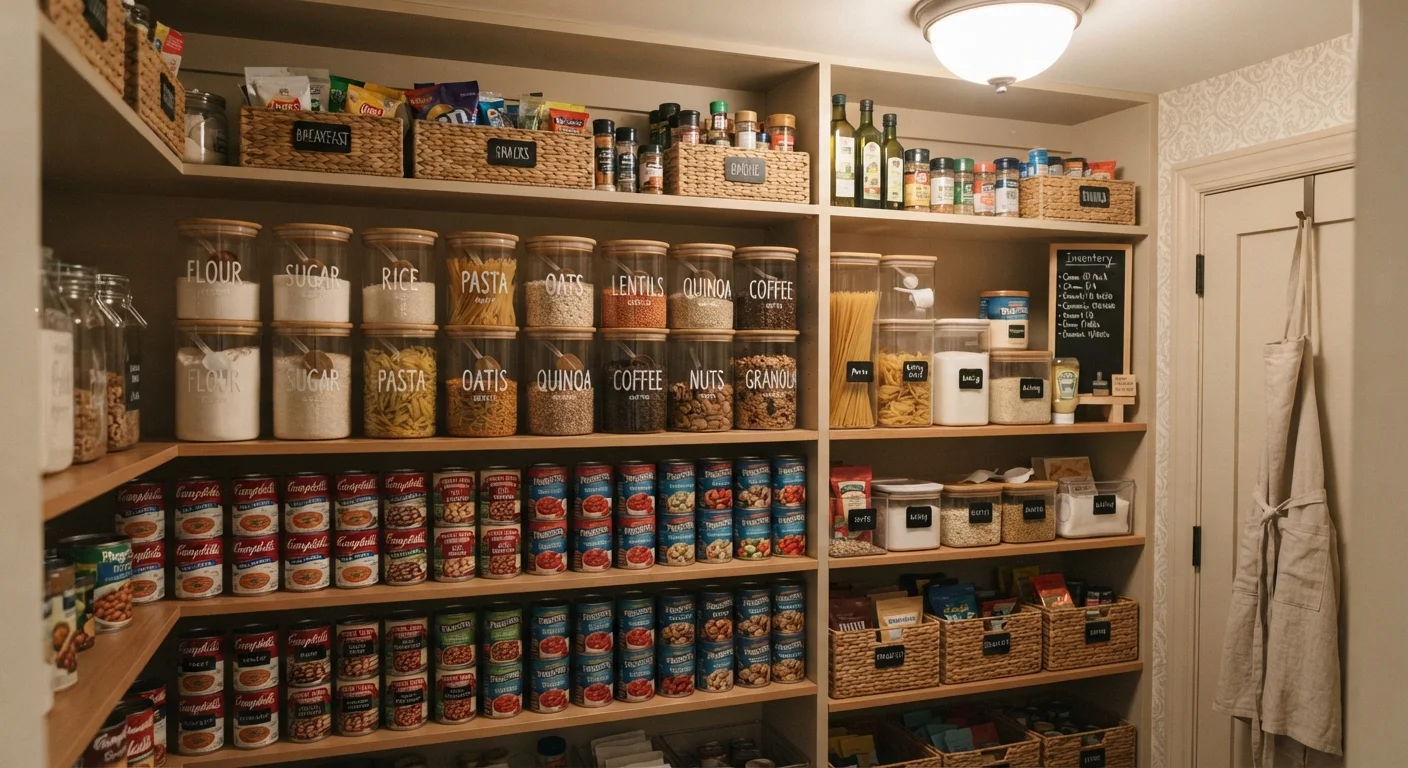
Your pantry stops being a graveyard of half-used ingredients and becomes a functional inventory you actually cook from. Your freezer becomes a strategic asset - holding proteins you bought on sale, batch-cooked grains, and soups you made in double portions. Your fridge holds what you need for the week, not a rotating cast of forgotten impulse purchases.
This is also the point at which stocking a functional kitchen without overspending becomes a meaningful goal rather than an abstract one. When you know how you cook - because your meal plan reveals your actual patterns - you know exactly which tools and staples serve you and which are marketing noise.
Beyond the physical kitchen, there's a psychological shift that regular meal planners report consistently: less weeknight stress. The "what's for dinner?" spiral costs mental energy in addition to money. A meal plan eliminates that daily decision fatigue, which is worth something real - and it makes the savings feel effortless rather than effortful.
That's the goal: not a rigid, joyless food calendar, but a spending tool that works quietly in the background to protect your budget while you actually enjoy what you eat.
Use the Sales Flyer as Your Menu Inspiration
Before you open a single recipe website or meal planning app, pull up your grocery store's weekly sales circular. Let the discounted proteins and produce tell you what this week's meals will be. When chicken thighs are $1.29/lb, that's your week's protein anchor - now build around it. This one sequence change can cut your grocery spending by $20-$40 per week without any sacrifice in meal quality.
Batch-Cook One Thing Every Week
Pick one ingredient each week to cook in bulk - a big pot of grains, a tray of roasted vegetables, a batch of hard-boiled eggs. This single act dramatically reduces your dependence on convenience food throughout the week when time is short. It takes 20 extra minutes on your prep day and pays off every single busy weekday that follows.
Common Meal Planning Mistakes That Erase the Savings
Meal planning pays off - but only if you avoid the habits that quietly undo the budget gains. Here are the most common mistakes and how to fix them fast.
Planning meals that require unique, expensive ingredients
Every recipe that calls for one specialty item you'll only use once is a budget leak. Build your rotation around a core set of flexible, affordable ingredients - beans, eggs, whole grains, seasonal produce, and the proteins that go on sale in your area. Reserve the elaborate recipes for occasional meals, not the weekly backbone of your plan.
Over-planning with no flexibility buffer
Planning seven elaborate dinners for seven nights sets you up for a Wednesday when you're exhausted and your beautiful meal plan falls apart. Build in one "fend for yourself" night or a designated leftovers night. This keeps your plan realistic and prevents the abandoned-plan takeout order from wrecking your grocery budget calculations.
Not accounting for work lunches and weekday breakfasts
The convenience-food creep during work hours is one of the sneakiest budget drains. If your meal plan doesn't account for portable, prepped lunches and quick weekday breakfasts, those gaps get filled expensively - via the office café, the gas station, or the drive-through.
Planning first, shopping sales second
As covered earlier: check the sales circular before you plan your meals, not after. This one sequence change routinely saves $20-$40 per week for households that make the switch.
Skipping the pantry audit
Buying what you already have is one of the most common - and most easily fixable - sources of grocery overspend. Spend five minutes checking your fridge, freezer, and pantry before you write a single item on your list. What needs to be used up? What do you have two of? Let that audit shape at least two or three of your planned meals.
Meal Plans Don't Have to Be Rigid
A common fear about meal planning is that it locks you into a strict schedule that doesn't account for the real rhythm of life. In practice, the most effective meal plans are flexible frameworks, not ironclad contracts. You can rotate meals within the same week freely - since you already have all the ingredients - and designating one or two "flex nights" (leftovers, breakfast-for-dinner, or a simple pantry meal) keeps the plan sustainable without sacrificing the budget controls it provides.
The 80% Rule for Meal Planning Success
You don't need perfect adherence to see real budget results from meal planning. Consumer finance researchers consistently find that even following a meal plan 80% of the time - roughly five to six days out of seven - produces significant savings compared to no plan at all. The point isn't culinary discipline; it's replacing open-ended grocery decisions with intentional ones the majority of the time.
Watch Out for Healthy-Sounding Convenience Products
Pre-cut vegetables, marinated proteins, portioned snack packs, and single-serve grain pouches are among the highest-margin items in any grocery store - and they're often positioned to feel like smart, healthy choices. A meal plan that accounts for a few extra minutes of prep time at home lets you buy the whole version of these ingredients at a fraction of the cost. The price premium on convenience packaging can range from 40% to 300% compared to the whole-food equivalent.