

Key Takeaways
Summary
32 items · 20-40 minutes
Why Your Kitchen Setup Matters More Than You Think
Here's a truth most people learn the hard way: setting up a kitchen without a plan is one of the fastest routes to buyer's remorse. You end up with a garlic rocker you use twice, three spatulas that all do the same job, and somehow still no decent colander. Meanwhile the things you actually need - a heavy-bottomed pot, a sharp knife, a proper baking sheet - are missing entirely.
The good news? Stocking a functional kitchen is genuinely cheap when you know exactly what you're buying before you hit the store. This checklist breaks every essential category down to the bare minimum you actually need, what's worth a small splurge, and where to skip entirely.
If you're setting up a first kitchen, moving, or auditing what's already in your cabinets, work through each category below. Check off what you have, flag what you're missing, and use the priority levels to decide what to grab first. Once your kitchen is sorted, your meal planning wins will follow naturally - you can only cook what your tools allow.
Before we get into the list: resist the temptation to buy everything at once. A phased approach - starting with the must-haves, then filling in the shoulds over the following weeks - keeps your initial spend low and gives you time to figure out what your actual cooking style demands.
Where to Buy (Before You Even Look at the List)
The secret weapon of every budget kitchen builder isn't a specific brand - it's knowing where to shop. Before you reach for Amazon Prime or head to a big-box housewares store, consider these options:
- Thrift stores and estate sales: Cast iron pans, stainless mixing bowls, wooden cutting boards, and baking dishes show up constantly. Quality doesn't degrade with age on most of these items - a Lodge cast iron skillet from a thrift shop is identical to a new one, just pre-seasoned.
- Restaurant supply stores: Open to the public in most cities, these places sell the same commercial-grade tools that professional kitchens use - often at lower per-unit prices than consumer brands. Sheet pans, tongs, and prep bowls are especially good buys here.
- End-of-season sales and Black Friday: Appliances and higher-ticket items (stand mixer, blender, instant pot) often hit their lowest prices during major sale events. Our guide to building a Black Friday shopping list that actually works will help you lock in those deals strategically rather than impulse-buying.
- Facebook Marketplace and Buy Nothing groups: Moving sales and kitchen downsizing yield incredible finds - full knife sets, KitchenAid mixers, and immersion blenders for a fraction of retail.
Thrift Store / Estate Sale
Source cast iron pans, mixing bowls, colanders, baking dishes, and storage containers at 80-95% below retail.
Restaurant Supply Store
Buy commercial-grade sheet pans, tongs, prep bowls, and stockpots at lower prices than consumer brands.
Facebook Marketplace / Buy Nothing Groups
Find gently used small appliances, knife sets, and specialty tools for free or near-free from local sellers.
Cashback App (e.g. Rakuten, Ibotta)
Stack cashback on new purchases from retailers like Target, Walmart, or Bed Bath & Beyond to reduce out-of-pocket costs.
Digital Kitchen Scale
Accurately measure ingredients by weight for baking and portion control - a $10-$15 model is sufficient.
Now, let's get into the actual checklist.
The Complete Budget Kitchen Checklist
Work through each category below. Items marked must are non-negotiable - you genuinely can't cook efficiently without them. Should items make a meaningful difference to daily cooking. Nice-to-have items are legitimate upgrades worth adding when budget allows, but your kitchen will function beautifully without them on day one.
Knives & Cutting
Cookware
Baking Essentials
Prep & Mixing Tools
Small Appliances
Storage & Organisation
Don't Fall for the 'Set' Trap
Pre-packaged knife sets, cookware sets, and tool sets almost always include items you'll never use - and inflate the price of the pieces you actually need. Unless you've verified every single item in a set is something you'll reach for regularly, buying individual pieces is almost always the better value. Check the per-piece price before committing to any bundle.
Non-Stick Pans Have an Expiry Date
Budget non-stick pans can feel like a win at checkout but often need replacing within 18-24 months. If you're setting up a kitchen for the long term, putting that same $30-$40 toward a cast iron skillet or a stainless pan is a much smarter investment. Keep one non-stick pan if you cook eggs daily, but don't build your whole setup around them.
Once you've ticked off your must-haves, take stock of what you're actually planning to cook in the next two weeks. That real-world context will tell you which "should" items to prioritize first. If you're baking, a hand mixer moves up the list. If you're doing a lot of meal prep, a large cutting board becomes urgent. This is also a great moment to build a meal plan around what's already in your kitchen - your tool inventory and your pantry inventory should inform each other.
Smart Splurges vs. Confident Skips
Not every kitchen item deserves equal budget consideration - and knowing the difference is genuinely the skill that separates savvy kitchen builders from people who overspend and still feel underequipped.
Worth the Extra $20-$40
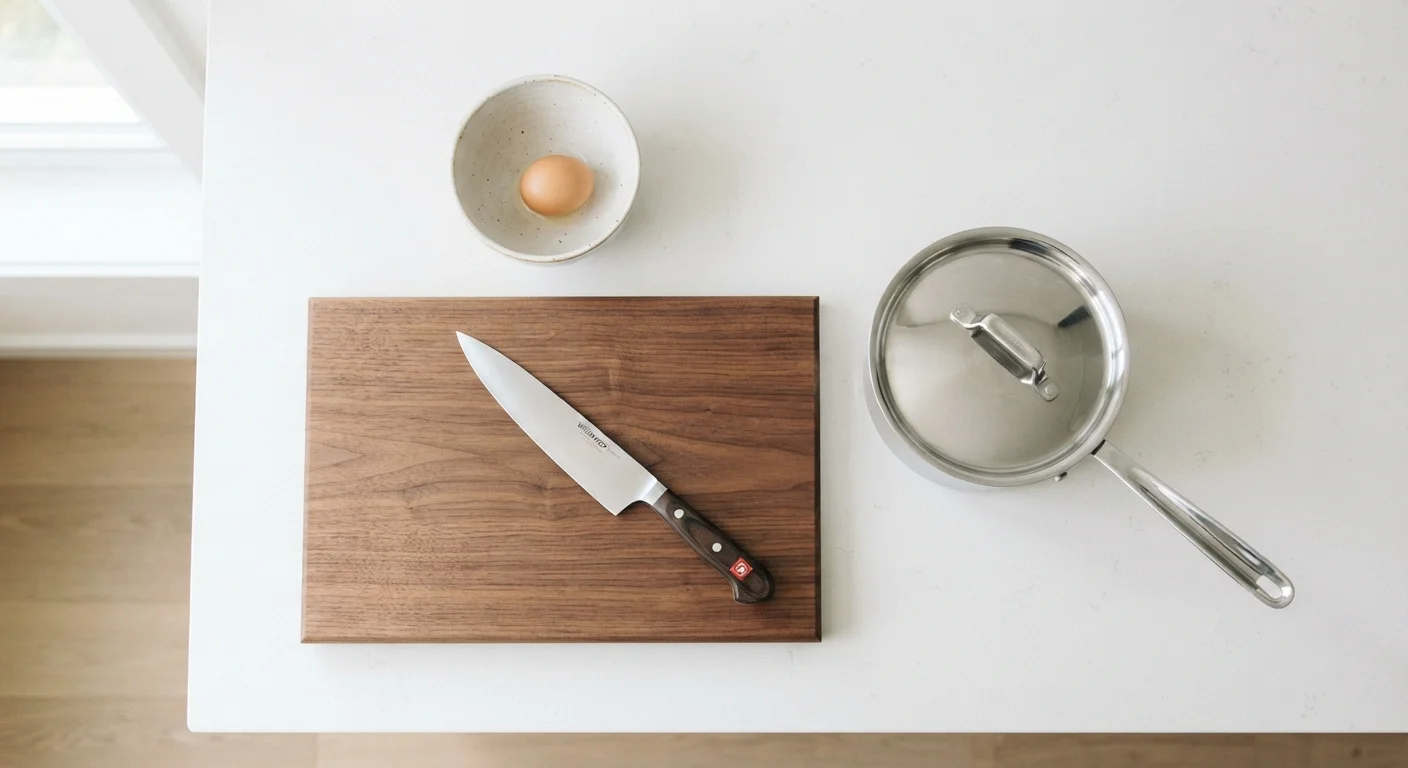
- Chef's knife: This is the one place almost every professional cook and frugal expert agrees - buy the best knife you can afford. A sharp, well-balanced 8-inch chef's knife from a reputable brand (Victorinox Fibrox is the classic budget-friendly pick at around $40) will outlast five cheap alternatives and make every single cooking task more enjoyable and safer.
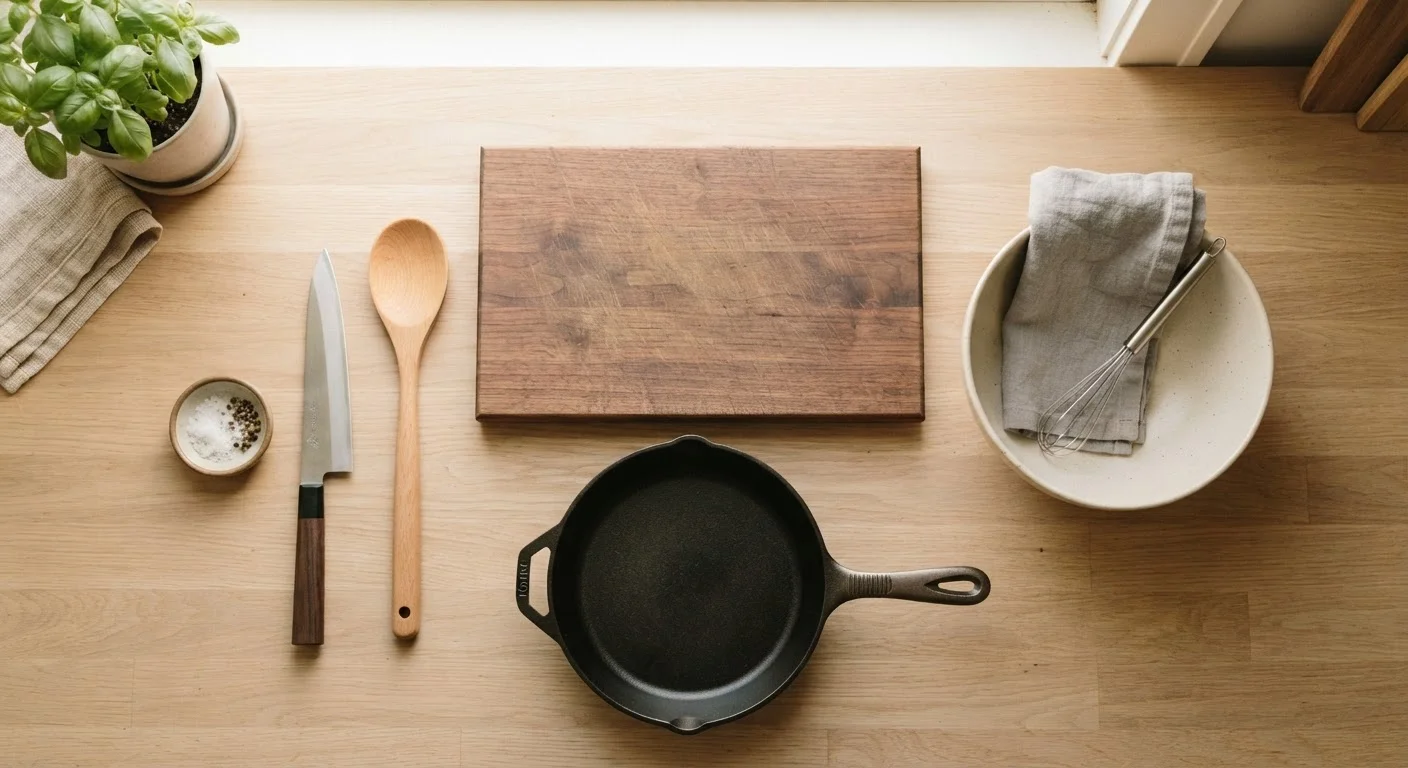
- Cast iron skillet: Expensive non-stick pans degrade within 18 months and then need replacing. A cast iron skillet from a thrift store or a Lodge new at $25-$35 will outlast you. It's oven-safe, sears beautifully, and gets better with use.
- Heavy-bottomed saucepan: Thin, cheap saucepans create hot spots that scorch sauces and burn grains. One good 3-quart saucepan is worth the step up.
Buy Cheap, Zero Regrets
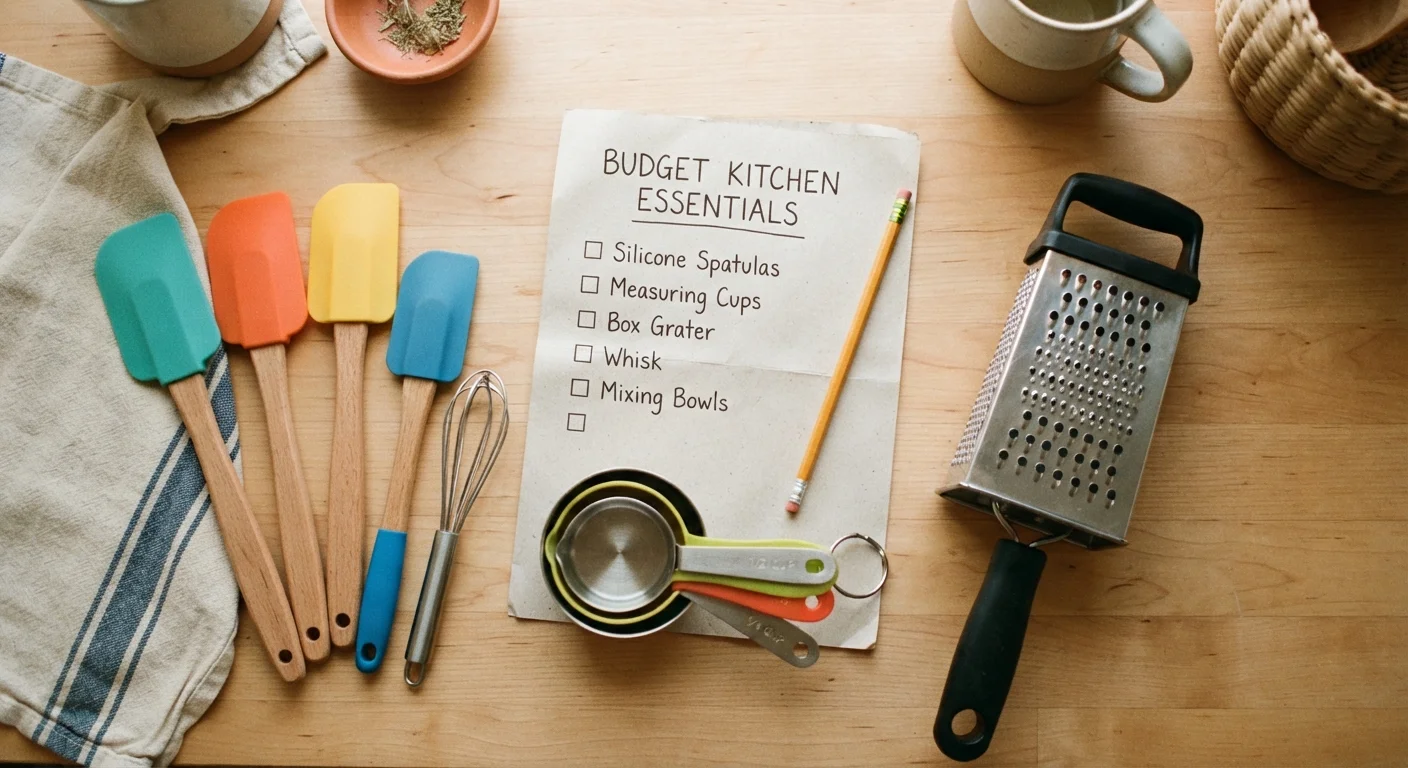
- Wooden spoons and silicone spatulas: The $2 versions are identical in function to the $15 versions. Buy cheap, buy a few.
- Sheet pans: Restaurant supply store half-sheet pans at $8-$12 each outperform most fancy bakeware brands at three times the price.
- Colander: Any sturdy colander with small enough holes works. This is a five-dollar purchase at most thrift stores.
- Mixing bowls: Stainless steel nesting bowls show up at thrift stores constantly. Function is identical across price points.
For a deeper dive into exactly which tools justify a splurge versus where to save without compromise, see our full breakdown at The Kitchen Tools Worth Spending On (And the Ones That Aren't).
Buy the Knife Last - After You've Held It
A chef's knife is the one purchase in your kitchen setup that you should try before you buy if at all possible. Grip, balance, and handle shape vary significantly between brands, and what feels perfect to one person is awkward to another. Visit a kitchen store to handle a few options before committing - even if you ultimately buy online or secondhand. A knife you love using is a knife you'll use every day for a decade.
Secondhand Doesn't Mean Unsafe - But Check These Items
Most secondhand kitchen gear is completely safe - cast iron, stainless steel, glass, and ceramic are all durable and easy to sanitize. However, avoid secondhand non-stick pans (scratched coating is a health concern), old plastic items with visible cracking or discoloration, and any appliance without a working safety switch. When in doubt, the thrift-store price isn't worth the risk.
Maintaining What You Buy (So You Don't Rebuy It)
The real budget win isn't just buying smart - it's making what you own last. A few simple habits will extend the life of your kitchen tools dramatically:
Knives
Hand-wash and dry your knives immediately after use - dishwashers destroy the edge and handle over time. A $10 honing steel used every few uses keeps your blade sharp between sharpenings. Get your knife professionally sharpened once a year (many kitchen stores do it free or for a few dollars).
Cast Iron
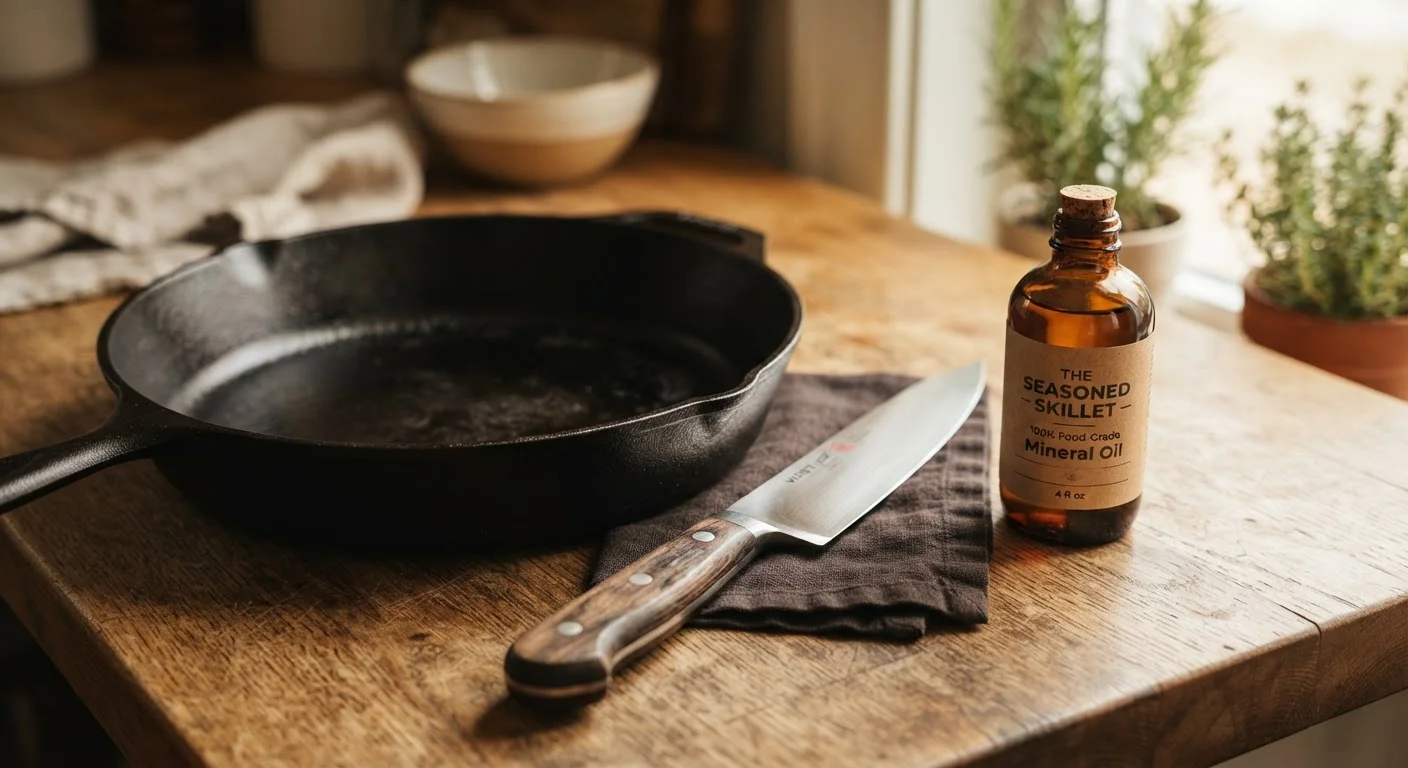
Dry immediately after washing, apply a very thin layer of oil, and store in a dry place. Never soak it. The only maintenance it needs is this 60-second habit.
Non-Stick Pans (If You Own Them)
Never use metal utensils. Hand wash only. Accept that they have a 2-3 year lifespan and factor that into your budget - or switch to cast iron and stainless to skip the replacement cycle entirely.
Cutting Boards
Oil wooden boards monthly with food-safe mineral oil to prevent cracking and warping. Plastic boards can be run through the dishwasher but should be replaced when deep knife grooves develop (they harbor bacteria).
A well-maintained kitchen also means cleaner surfaces and safer food prep. If you want to extend that frugality further, our hub on DIY cleaning supplies has excellent recipes for kitchen-safe cleaners that cost pennies per batch.
Your Next Steps: From Equipped to Empowered
You've done the audit. You know what you have, what's missing, and what to prioritize. Here's how to turn that list into action without blowing your budget all at once:
- Week 1: Source all your must-have items. Check your local thrift stores first, then restaurant supply, then big-box with coupons or cashback apps. Aim to spend under $80 total for the core kit if buying secondhand.
- Week 2-4: Add should-have items as you encounter real cooking needs. This organic approach means you only buy what you'll actually use.
- Ongoing: Keep a running wishlist of nice-to-have items and watch for them at sales events and thrift runs. Patience here pays off enormously - a KitchenAid mixer at a Black Friday price or a secondhand find costs a fraction of impulse retail.
The kitchen you build this way - deliberately, affordably, over a few weeks - will serve you far better than one assembled in a single frantic shopping trip. Every tool earns its drawer space. Nothing collects dust. And your grocery budget goes further because you can actually cook with what you have.
Ready to put your new kitchen to work? Start with a meal planning strategy that makes the most of every tool you just added to your arsenal. You've got this.