

Key Takeaways
Thrift Store Pricing
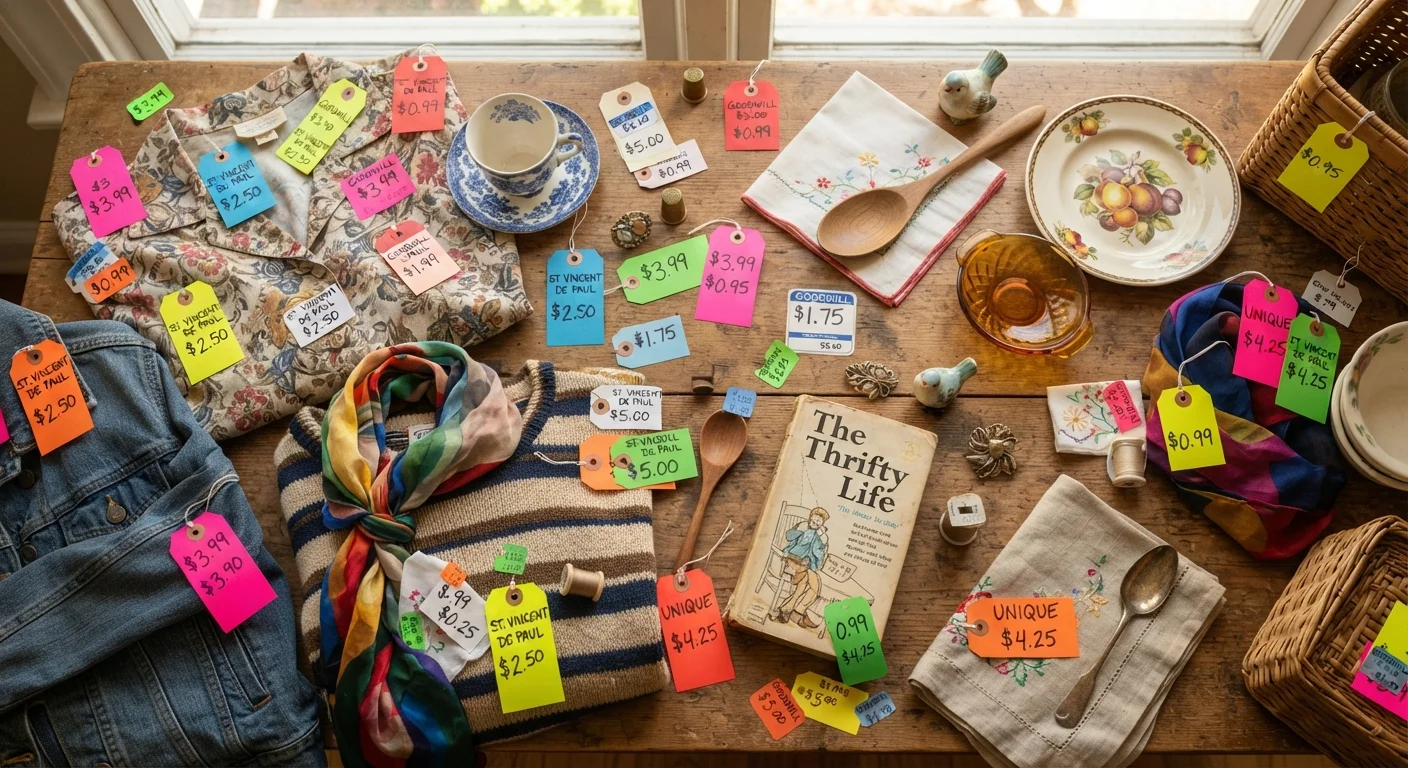
Thrift store pricing is the system secondhand retailers use to assign dollar values to donated goods. Unlike retail, prices aren't set by manufacturers or market competition - they're determined by store staff who assess condition, perceived demand, brand recognition, and local resale trends. Understanding this system helps you identify when a thrift price is a genuine steal and when it's actually close to (or above) what you'd pay elsewhere.
Many large thrift chains like Goodwill use automated pricing algorithms that cross-reference eBay sold listings and regional inventory data, making their pricing increasingly dynamic rather than purely staff-subjective.
The Pricing System You Were Never Meant to Think About
Walk into any thrift store and you're surrounded by items that arrived with no price, no invoice, and no purchase history. Someone behind the scenes had to look at each one and make a call. That process - part intuition, part training, part data - is what produces the little sticker on the tag. And once you understand how it works, every thrift run transforms from a treasure hunt into something closer to a strategy session.
Here's the core reality: thrift store pricing is not random, but it is inconsistent. The same wool coat might get tagged at $4 in a rural Goodwill and $28 at an urban location. A Le Creuset Dutch oven might be priced at $6 because a volunteer didn't recognize it, or at $45 because a trained pricer ran a quick eBay search. That inconsistency is both the challenge and the opportunity.
Understanding what drives these decisions gives you a massive edge. You'll know when to pounce without hesitation, when to walk away from something overpriced, and - this part surprises most people - when a high thrift price is actually tipping you off to hidden resale value.
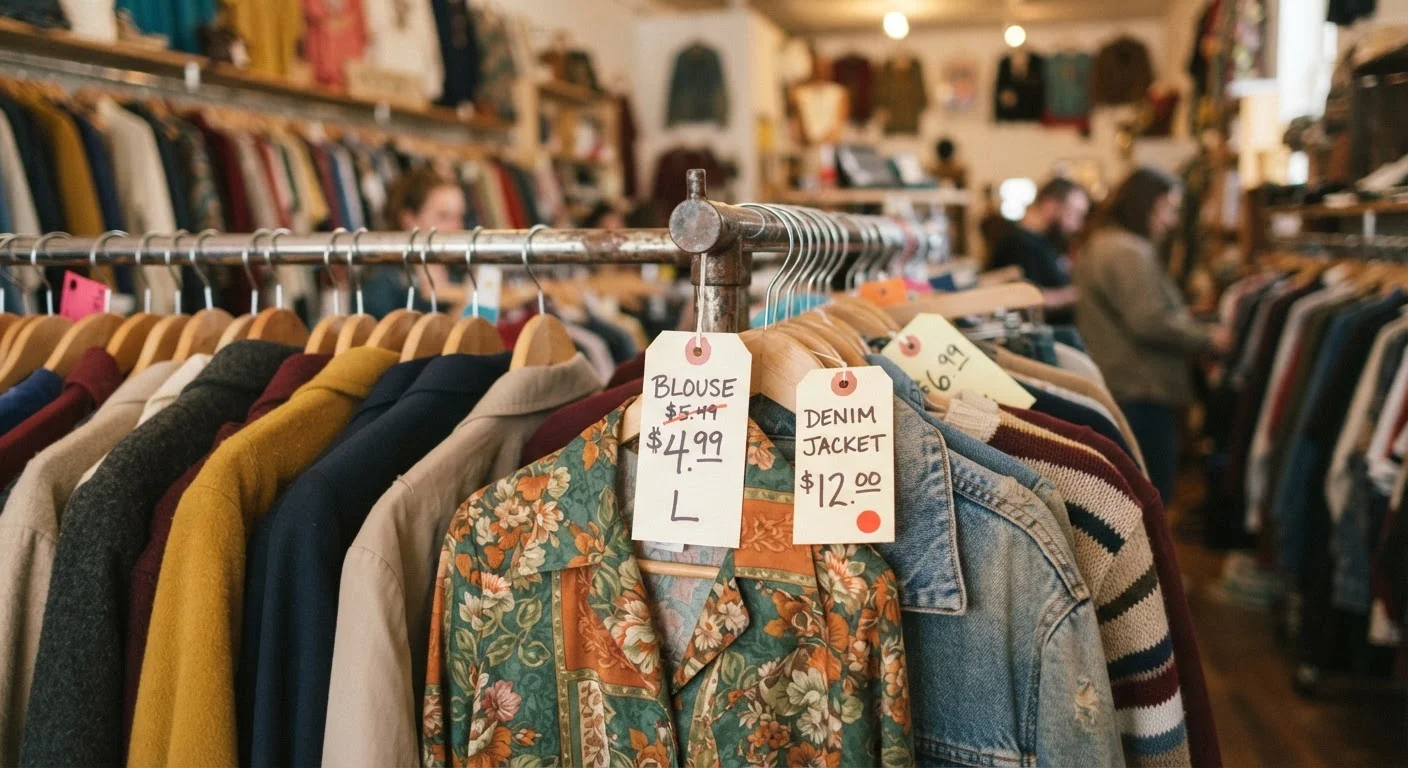
If you're also comparing where to shop secondhand in general, our breakdown of resale apps vs. thrift stores covers how each channel prices goods differently and which suits various shopping goals.
How Thrift Stores Actually Set Prices
Pricing at thrift stores generally falls into one of three models, and most stores use a blend of all three:
- Category-based flat pricing: Everything in a bin or on a rack is the same price. Shirts are $3, pants are $5, hardcovers are $1.50. This approach is fast and democratic - it doesn't reward or penalize based on brand. It's common in volunteer-run shops and church sales.
- Staff assessment pricing: A trained pricer examines each item and assigns a price based on brand, condition, functionality, and perceived demand. This is the standard at most mid-size thrift chains. The pricer's knowledge matters enormously - an expert will catch a Eileen Fisher blouse; a less experienced one might miss it.
- Algorithm-assisted pricing: Larger chains - Goodwill being the prime example - increasingly cross-reference eBay sold listings, local demand signals, and internal inventory data to set prices on recognizable items. This has made their pricing sharper (and sometimes higher) on branded goods.
Goodwill's Online Auction Platform Changes the Game
Goodwill's Shopgoodwill.com auction platform pulls higher-value items out of physical stores entirely, listing them online where bidding can push prices to or above resale market rates. If you notice a store seems light on designer or collectible finds, this is often why. The most valuable donations are increasingly captured online before they ever hit the floor.
Pricing Staff Expertise Varies Widely
The same item can receive dramatically different prices depending on who assessed it. A staff member with deep knowledge of vintage ceramics will price a signed pottery piece very differently than a generalist volunteer. This variation is most extreme at smaller, volunteer-run shops - which is precisely where the best underpriced finds tend to surface. Consistency is low; opportunity is high.
Knowing which model a particular store uses changes how you shop. At flat-price stores, condition and brand are irrelevant to the sticker - your job is just to find quality. At assessment-priced stores, you're reading the pricer's knowledge as much as the item itself.
The color-tag rotation system layers on top of all of this. Most stores operate on a weekly or bi-weekly color cycle: items tagged with this week's color sell at full price; last week's color might be 50% off; the week before might be 75% off. If you walk in knowing Tuesday is the day blue tags go on sale, you can plan your run accordingly. Many stores post their sale color schedules on their websites or Facebook pages - it takes two minutes to check and can save you real money.
Check the Sale Color Before You Go
Most Goodwill and Salvation Army locations post their weekly sale tag color on their website or social media. Spending 60 seconds checking before you leave the house means you'll know exactly which tags to prioritize the moment you walk in. On high-discount weeks, this simple habit can cut your total spend by 40-50%.
Build Your Reference Library on Sold Listings
When researching resale value for a category, always filter for 'sold' listings on eBay or Poshmark - not active ones. Active listings show what sellers are hoping to get; sold listings show what buyers actually paid. This distinction is crucial for accurately benchmarking whether a thrift price is a deal or just feels like one.
Assess Condition Before Reading the Tag
Form your own quality verdict before you look at the sticker. This prevents the anchoring effect where a low thrift price inflates your perception of an item's condition, or a higher price makes you assume quality that isn't there. Your eyes and hands are better pricing tools than the tag - use them first.
What a High Price Tag Is Actually Telling You
This is where most thrift shoppers get tripped up. They see a $25 tag on a thrift store blouse and feel cheated - that's not what thrift is supposed to cost! But that $25 sticker might be the most valuable piece of information in the store.
When a trained pricer tags something high, it usually means one of three things:
- They recognized the brand or maker. A $22 tag on a blazer likely means the pricer saw a recognizable label - Banana Republic, Theory, Patagonia. That's a cue worth following up on.
- The item has collectible or vintage status. Ceramic pieces, mid-century glassware, certain toy lines - pricers who know their categories will tag these items accordingly. High price = someone flagged this as special.
- The item is functional and in excellent condition. Electronics, small appliances, and tools get priced higher when they work. A $15 KitchenAid hand mixer at Goodwill has likely been tested. A $2 one might not have been.
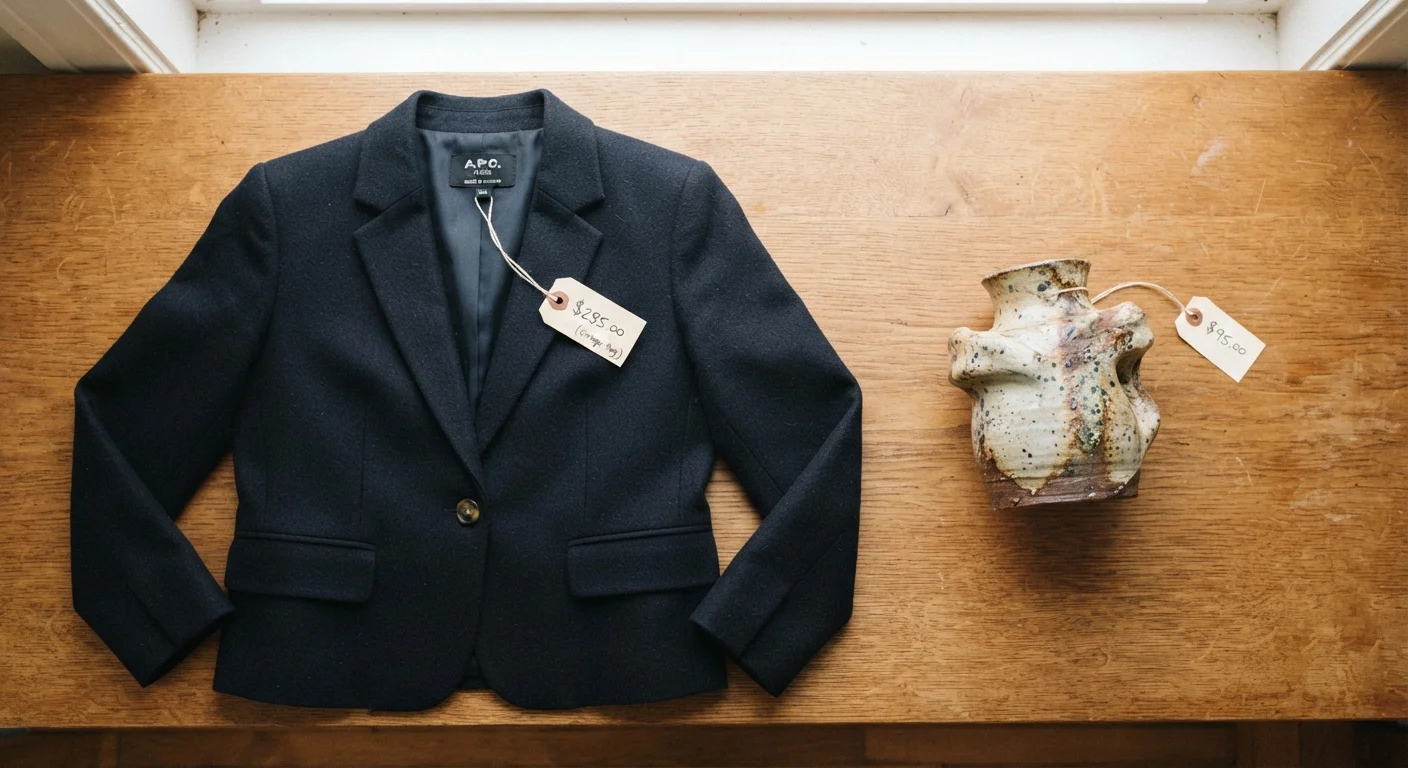
The flip side also matters: a suspiciously low price on something that looks high-quality sometimes means the pricer didn't recognize what they had. That's the classic thrift find. But it also means you need to do your own due diligence - check the item carefully for damage, missing parts, or signs of wear that explain the low tag.
“The secondhand market is no longer just about affordability - it's about intelligence. Shoppers who understand pricing signals at thrift stores are essentially getting a free course in retail economics every time they walk through the door.”
— Adele Meyer, Executive Director, National Association of Resale & Thrift Shops (NARTS)
For home goods specifically, our guide to where affordable decor actually hides explains how to read item quality signals across different sourcing channels, which pairs well with understanding thrift pricing.
Brand Recognition and the Pricing Gap
One of the most visible pricing patterns in thrift stores is the brand premium. Walk through a Goodwill in any metro area and you'll find a boutique section - sometimes roped off or in a glass case - where branded and designer items are priced significantly higher than the surrounding racks. This is intentional and tells you something important: brand recognition is a pricing trigger, not a quality guarantee.
Up to 50%
Discount on color-tagged sale items
Most Goodwill and Salvation Army locations offer weekly color-tag discounts of 50% or more on rotating inventory batches.
$4B+
Annual US thrift store revenue
According to IBISWorld industry data, the US thrift store sector generates over $4 billion in annual revenue, reflecting growing mainstream adoption.
3x
Higher resale value vs. thrift price for designer items
Analysis of Goodwill's Shopgoodwill.com listings vs. eBay sold comparables shows designer items often resell at 3x or more their thrift store price.
16-18%
Annual growth in secondhand apparel market
ThredUp's 2023 Resale Report projects the secondhand apparel market growing 16-18% annually, driving thrift stores to adopt more data-driven pricing.
70%
Shoppers who don't check resale value before buying
A 2022 consumer habits survey found roughly 70% of thrift shoppers never cross-reference thrift prices against resale app sold listings before purchasing.
Here's the nuance most shoppers miss: the presence of a brand name justifies a higher thrift price only if that brand signals reliable quality for that specific item type. A North Face puffer jacket at $35 in a thrift store? Probably worth it - that jacket retails for $200+ and holds up for years. A fast-fashion brand that happens to have name recognition? The thrift premium isn't backed by longevity.
This is why knowing your categories is so powerful. If you shop vintage kitchenware, learn which brands (Le Creuset, Pyrex, Corning Ware, Dansk) are worth the premium. If you shop outdoor gear, know which names (Patagonia, Arc'teryx, REI Co-op) justify a higher tag. Being category-fluent means you never overpay for a name that doesn't deliver - and you never walk past a gem because the price felt high.
For a useful contrast, our piece on fitness equipment pricing shows how brand premiums work in retail - a helpful comparison for evaluating whether a thrift tag is reasonable relative to original retail value.
Condition Signals and What They Mean for Value
Condition is the variable that thrift pricing handles most inconsistently - which creates real opportunity. Here's how to read condition signals independently of the price tag:
- Like New / Never Used
- Original tags still attached, no signs of wear, packaging intact (if applicable). These items often represent gifts that were never used, impulse buys, or items from estates. They're legitimately worth more and usually priced accordingly - but occasionally slip through at category pricing.
- Excellent Used Condition
- Minor signs of use but fully functional with no damage. This is the sweet spot for thrift shoppers - the item has been broken in but has significant life left. Worth paying a fair premium for.
- Good Condition with Flaws
- Small stains, minor pilling, light scratches, or cosmetic wear. If the flaw is repairable or doesn't affect function, good condition items at thrift prices are often excellent buys. If the flaw is irreversible (a broken zipper on a down jacket, a cracked ceramic glaze), factor in repair cost or walk away.
- Worn / Distressed
- Heavy use evident throughout. For clothing, this might mean a stylistic choice you love; for home goods, it almost always means diminished value. Be skeptical of any thrift price above a dollar or two for heavily worn items unless the distress is intentional and desirable.
Goodwill's Online Auction Platform Changes the Game
Goodwill's Shopgoodwill.com auction platform pulls higher-value items out of physical stores entirely, listing them online where bidding can push prices to or above resale market rates. If you notice a store seems light on designer or collectible finds, this is often why. The most valuable donations are increasingly captured online before they ever hit the floor.
Pricing Staff Expertise Varies Widely
The same item can receive dramatically different prices depending on who assessed it. A staff member with deep knowledge of vintage ceramics will price a signed pottery piece very differently than a generalist volunteer. This variation is most extreme at smaller, volunteer-run shops - which is precisely where the best underpriced finds tend to surface. Consistency is low; opportunity is high.
The key habit to build: assess condition before looking at the price. Form your own opinion of what the item is worth, then check the tag. This prevents the psychological anchoring effect where a low thrift price makes something look better than it is - and a high price makes something look worse.
Reading Prices as a Resale Signal
Here's a perspective shift that can genuinely change how you thrift: treat the price tag not just as the cost to you, but as an indicator of resale potential. This matters whether you're a casual thrifter or someone who occasionally flips finds for extra income.
When a thrift store prices something at $18-$30, they've identified it as having above-average value. That's a shortcut. Instead of scanning every rack hoping to get lucky, you can move directly to higher-priced sections and boutique displays - those items have already been vetted, at least partially, by someone with pricing training.
The math works like this: if Goodwill prices a designer blouse at $24, and comparable pieces are selling on Poshmark for $65-$85 in sold listings, you've found a flip. Even if you're keeping the piece for your own wardrobe, you're getting something with real resale value - which means you could recoup most of your cost later if your tastes change.
Why thrift store gems keep ending up in someone else's cart covers exactly this dynamic - experienced thrifters know how to read pricing signals and move fast. Timing and knowledge together are the real advantage.
To get comfortable with resale comparisons, apply the same discipline used with retail price histories: learning to read price history data translates directly to thrift shopping when you start benchmarking against eBay and Poshmark sold listings.
Building a Personal Pricing Reference System
The shoppers who consistently find the best value at thrift stores aren't luckier - they're more prepared. The single most effective thing you can do is build a mental (or literal) reference library for the categories you care about most.
Here's a practical framework to develop yours:
- Pick two or three categories to master first. It could be vintage ceramics, outdoor gear, women's blazers, or children's books. Don't try to know everything - go deep on what you actually use and love.
- Learn the brand landscape for each category. Which names signal quality? Which are overrated? Which have cult followings on resale apps? Spend an hour browsing eBay and Poshmark sold listings in each category - you'll absorb a huge amount of useful pricing data quickly.
- Know the retail price range. For each item you pick up, have a rough sense of what it cost new. This anchors your sense of what a fair thrift price is. A shirt that retailed for $30 should cost less at thrift than a shirt that retailed for $200, even if they're both in the same condition.
- Track anomalies. When you see something priced unusually high or low, make a note. Over time, you'll recognize which stores in your area price well and which consistently overprice or undervalue certain categories.
Check the Sale Color Before You Go
Most Goodwill and Salvation Army locations post their weekly sale tag color on their website or social media. Spending 60 seconds checking before you leave the house means you'll know exactly which tags to prioritize the moment you walk in. On high-discount weeks, this simple habit can cut your total spend by 40-50%.
Build Your Reference Library on Sold Listings
When researching resale value for a category, always filter for 'sold' listings on eBay or Poshmark - not active ones. Active listings show what sellers are hoping to get; sold listings show what buyers actually paid. This distinction is crucial for accurately benchmarking whether a thrift price is a deal or just feels like one.
Assess Condition Before Reading the Tag
Form your own quality verdict before you look at the sticker. This prevents the anchoring effect where a low thrift price inflates your perception of an item's condition, or a higher price makes you assume quality that isn't there. Your eyes and hands are better pricing tools than the tag - use them first.
If you're building a wardrobe this way, building a cohesive wardrobe entirely from secondhand pieces gives you the intentional shopping framework that pairs perfectly with price-reading skills. And for a comprehensive look at the thrift shopping ecosystem, explore the Thrift Style Tips hub - it's packed with practical strategies for every skill level.
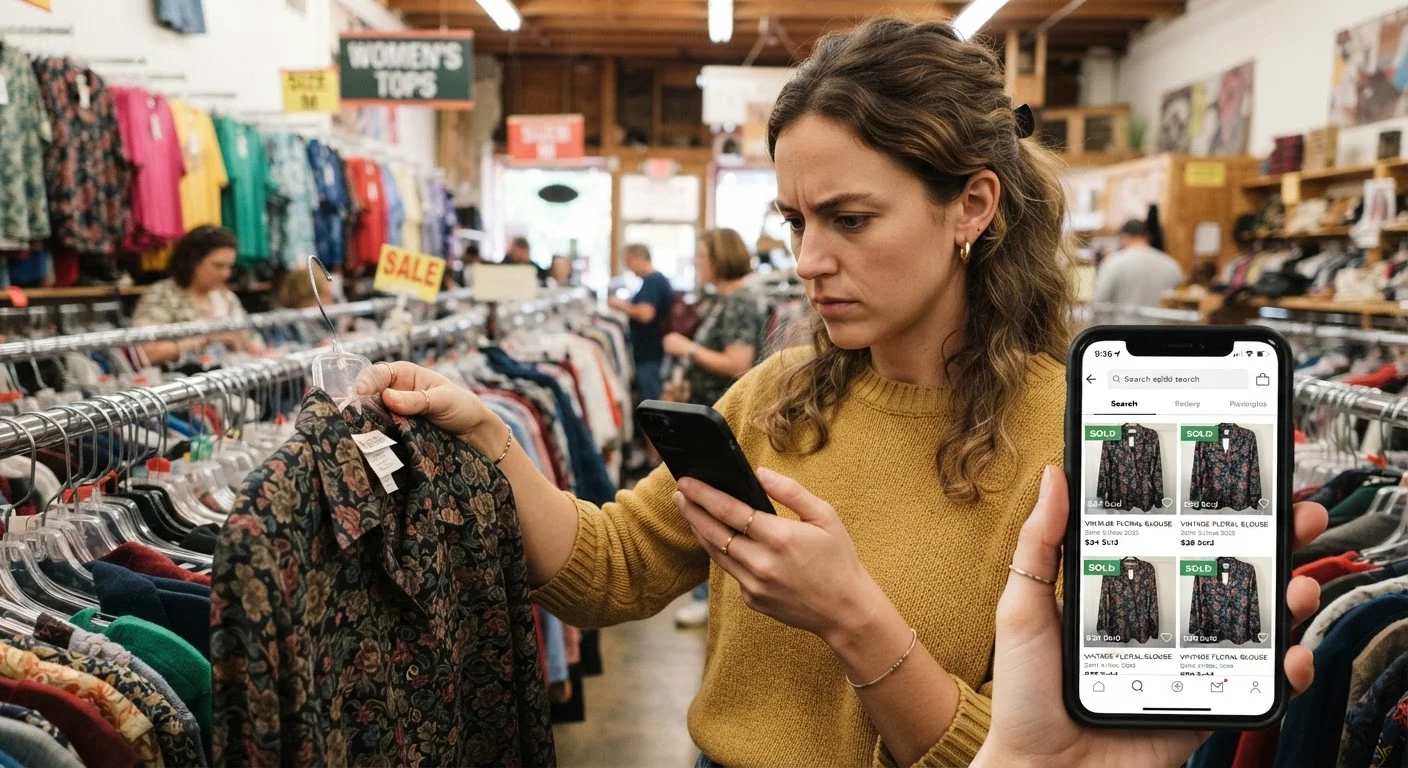
Pricing literacy is a skill that compounds. The more you practice reading thrift tags as information rather than just cost, the faster you'll move through stores and the more consistently you'll walk out with pieces that are genuinely worth what you paid - and often worth considerably more.