
Secondhand and Refurbished Toys: What Buyers Should Know
Pre-owned and refurbished toys can offer significant savings, but come with trade-offs. Here's a fair look at the advantages and risks involved.
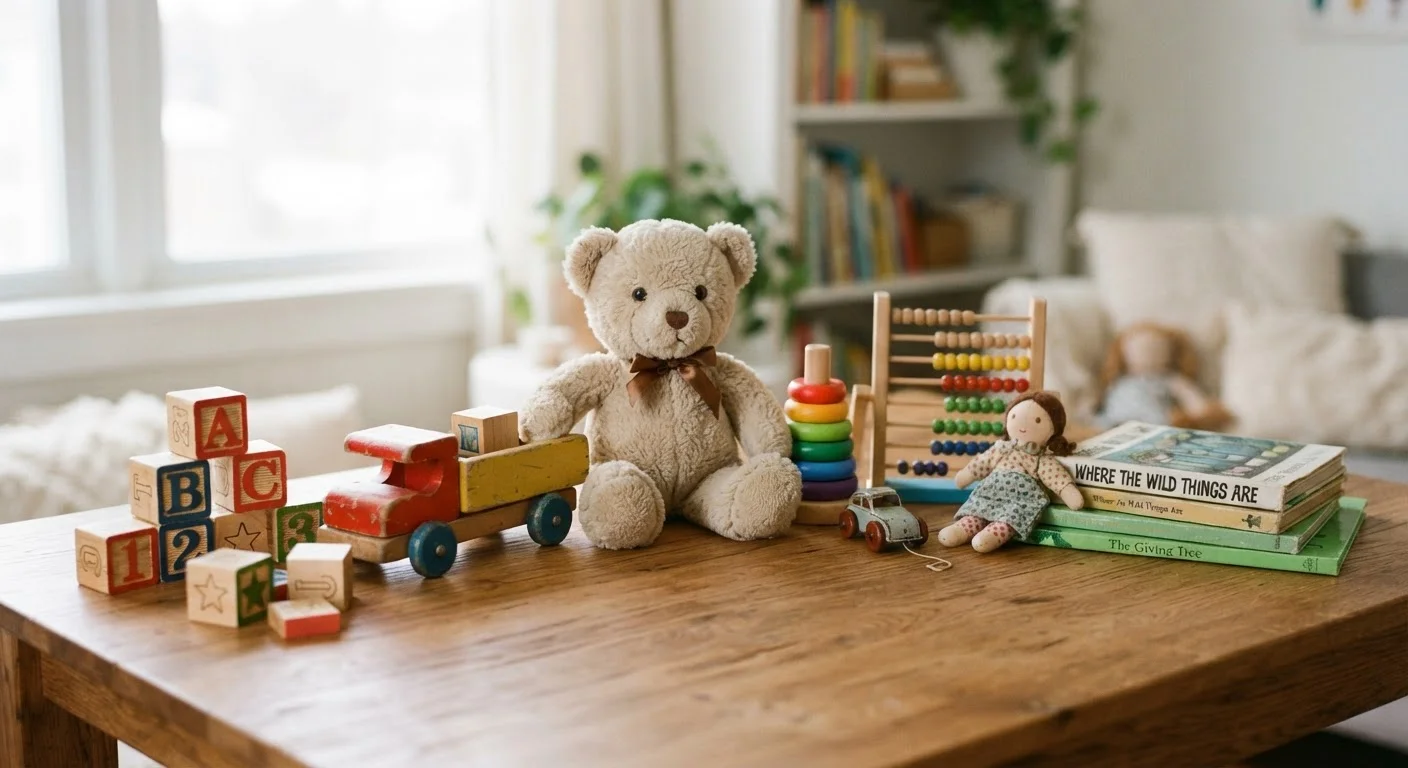
Photo: SaverSteals.com | Explore More. Shop Smarter. editorial
—— In This Article
Key Takeaways
- Secondhand toys can cost significantly less than new, but condition and safety require careful evaluation.
- Refurbished toys differ from simply 'used' — they've been inspected, cleaned, or repaired to a defined standard.
- Recalled toys may still circulate in private sales; always verify a toy's recall status before buying.
- Missing parts, worn safety labels, and non-functional features are common issues with pre-owned toys.
- Reputable resale channels and in-person inspection reduce — but don't eliminate — the risks involved.
Substantially lower cost than buying new
Toys depreciate sharply after purchase, so pre-owned prices can be 50–75% below retail for items in good condition. For fast-outgrown categories like infant toys, this gap is especially meaningful.
Reduces environmental impact
Buying secondhand extends a product's useful life and reduces the demand for new manufacturing, packaging, and shipping — a genuine benefit for durable toy categories.
Access to discontinued or hard-to-find items
Older sets, out-of-production play systems, and discontinued lines are often only available through the resale market, making secondhand the practical option for families seeking specific items.
Refurbished options offer clearer condition standards
Toys sold through refurbishing services typically come with graded condition descriptions, cleaning, and defined return policies — more structure than most private sales offer.
Recalled toys may still be in circulation
Many recalled toys continue to appear in private sales because previous owners are unaware of the recall. Buyers must independently verify recall status using the CPSC database before purchasing.
Older toys may not meet current safety standards
US toy safety regulations have tightened over time — particularly around lead, phthalates, and small parts. Toys manufactured before these thresholds may not comply, with no requirement for sellers to disclose this.
Condition descriptions are not standardized
Terms like 'gently used' carry no consistent definition in private sales, making it difficult to assess actual condition from a listing alone without additional photos or in-person inspection.
Missing parts are common and often undisclosed
Sets with components — puzzles, building systems, board games — frequently arrive incomplete, reducing play value and sometimes creating safety hazards from loose or improvised replacements.
No warranty or manufacturer support
Pre-owned toys generally fall outside original manufacturer warranties, leaving buyers with no formal recourse if a defect emerges after purchase.
Used vs. Refurbished: Not the Same Thing
The terms 'used,' 'pre-owned,' and 'refurbished' are often treated as interchangeable, but they describe meaningfully different levels of vetting. A used toy is one sold as-is by a previous owner — condition varies widely and there's no standardized inspection behind it. A refurbished toy, by contrast, has typically been reviewed, cleaned, and tested by a seller or refurbishing service, often with some form of condition grading attached.
The distinction matters practically. Refurbished listings from established resellers tend to include clearer return policies and condition disclosures. Private-sale used toys carry more uncertainty — which is reflected in the lower price, but also in the higher burden on the buyer. For a broader look at how this dynamic plays out across product categories, see how certified refurbished compares to private-sale items in the sporting goods space — the same principles apply here.
The Real Advantages of Going Pre-Owned
For many toy categories, the case for buying secondhand is straightforward. Toys depreciate quickly — a set that retailed at $60 may sell used for $15 to $25 depending on condition and completeness. For items children will outgrow in months, that gap represents genuine savings with minimal trade-off.
Substantially lower cost than buying new
Toys depreciate sharply after purchase, so pre-owned prices can be 50–75% below retail for items in good condition. For fast-outgrown categories like infant toys, this gap is especially meaningful.
Reduces environmental impact
Buying secondhand extends a product's useful life and reduces the demand for new manufacturing, packaging, and shipping — a genuine benefit for durable toy categories.
Access to discontinued or hard-to-find items
Older sets, out-of-production play systems, and discontinued lines are often only available through the resale market, making secondhand the practical option for families seeking specific items.
Refurbished options offer clearer condition standards
Toys sold through refurbishing services typically come with graded condition descriptions, cleaning, and defined return policies — more structure than most private sales offer.
Environmental impact is another legitimate reason families choose pre-owned. Extending the life of a toy keeps it out of the waste stream and reduces demand for new manufacturing. This is especially relevant for durable toy categories — wooden sets, metal ride-ons, LEGO-compatible bricks — where longevity is built in and wear is largely cosmetic.
The secondhand toy market also offers access to discontinued items and hard-to-find sets that simply aren't available new anymore, which can matter for children attached to specific play systems.
The Disadvantages You Shouldn't Overlook
The risks in this space are real and worth taking seriously, particularly for younger children. Safety is the central concern.
Recalled toys may still be in circulation
Many recalled toys continue to appear in private sales because previous owners are unaware of the recall. Buyers must independently verify recall status using the CPSC database before purchasing.
Older toys may not meet current safety standards
US toy safety regulations have tightened over time — particularly around lead, phthalates, and small parts. Toys manufactured before these thresholds may not comply, with no requirement for sellers to disclose this.
Condition descriptions are not standardized
Terms like 'gently used' carry no consistent definition in private sales, making it difficult to assess actual condition from a listing alone without additional photos or in-person inspection.
Missing parts are common and often undisclosed
Sets with components — puzzles, building systems, board games — frequently arrive incomplete, reducing play value and sometimes creating safety hazards from loose or improvised replacements.
No warranty or manufacturer support
Pre-owned toys generally fall outside original manufacturer warranties, leaving buyers with no formal recourse if a defect emerges after purchase.
Toys sold in the US are subject to Consumer Product Safety Commission (CPSC) regulations — including limits on lead content, phthalates in soft plastics, and small-part restrictions by age. A toy manufactured before certain regulatory thresholds were tightened may not meet current standards, even if it looks fine. Private sellers are not required to verify compliance, which means the burden falls entirely on the buyer.
Recalls are a parallel issue. The CPSC maintains a public recall database that's free to search, but many recalled items continue to circulate through garage sales and online marketplaces because previous owners aren't aware of the recall. Searching a toy's model name or number before purchase takes under two minutes and is worth making a habit. Our pre-purchase checklist covers this step alongside other key checks.
How to Evaluate What You're Actually Buying
Condition language in used toy listings isn't standardized. Terms like 'gently used,' 'good condition,' and 'like new' mean different things to different sellers. What these labels actually mean is worth understanding before you take a listing at face value.
Check the CPSC Recall Database Before Buying
The Consumer Product Safety Commission maintains a searchable recall database at cpsc.gov that is publicly accessible and free to use. Searching a toy's name or model number takes only a few minutes and can flag safety issues that a seller may not know about or disclose. This step is especially important for older electronic or battery-powered toys.
In-person purchases allow hands-on inspection — test moving parts, check battery contacts for corrosion, verify all pieces are present, and look for cracked or sharp edges. Online purchases rely on seller photos and descriptions, so ask for additional images if listings are sparse. Understanding how used toys are fairly priced also helps you identify listings where the discount doesn't reflect actual condition.
If you're newer to this kind of shopping, a family-friendly starting point for buying used toys walks through the process step by step. And for a fuller picture of the trade-offs involved, the real trade-offs of buying secondhand toys for children offers a balanced look at both sides.

Toys Editorial Team
Toys Editorial Team is the collective byline for our editorial team and contributor network. Articles published under this byline or an editorial pen name are researched, written, and reviewed according to our editorial standards for clarity, consistency, and independence before publication.
View author profile