
Certified Refurbished vs. Private-Sale Sports Gear
What's the real difference between gear sold by refurbishers and items listed by private sellers? Here's how the two compare on trust and value.
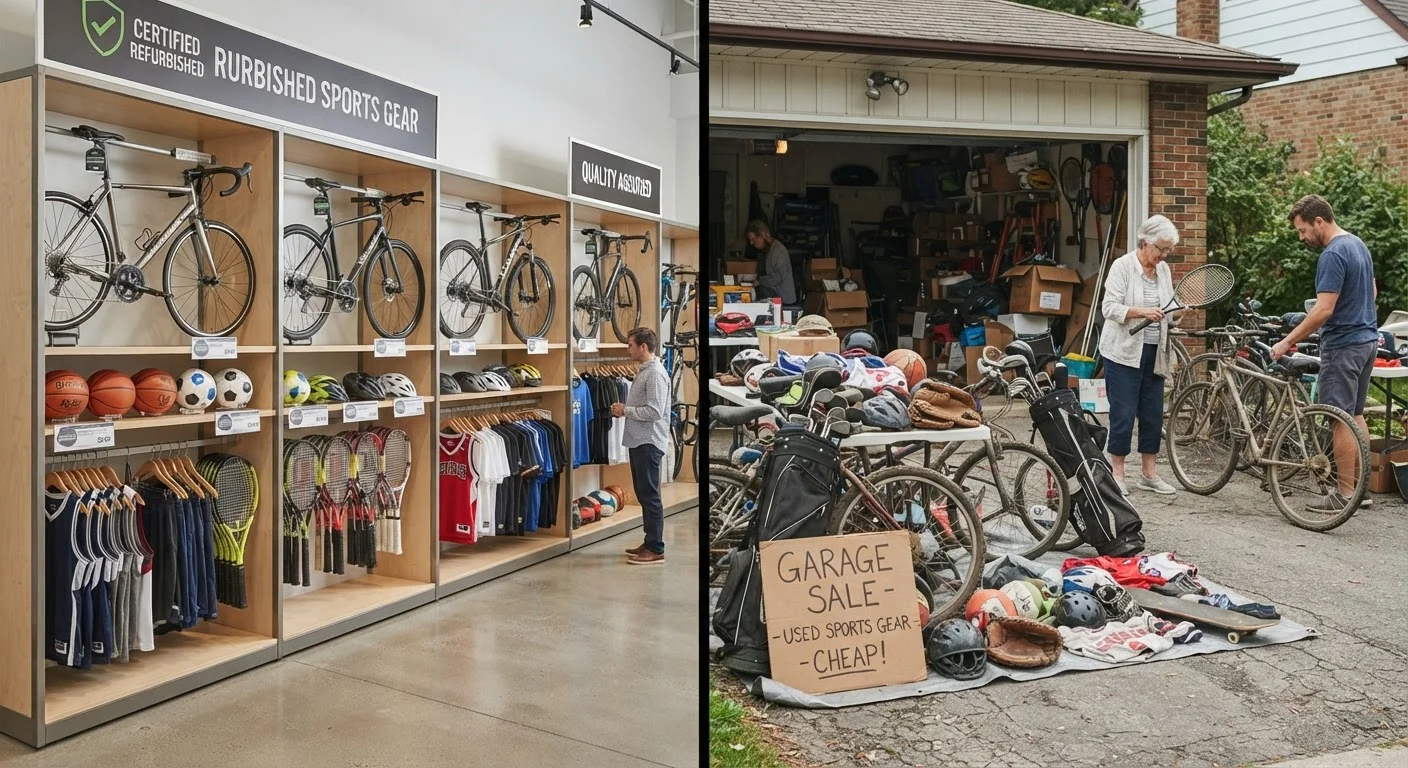
Photo: SaverSteals.com | Explore More. Shop Smarter. editorial
—— In This Article
Key Takeaways
- Certified refurbished gear goes through documented inspection; private sales carry no such guarantee.
- Private listings often price lower but shift all risk assessment to the buyer.
- Warranties or return windows are standard with certified programs but rare in private transactions.
- Safety-critical equipment like helmets warrants extra scrutiny regardless of the sales channel.
- Either route can offer genuine value when you know what to look for and what questions to ask.
What Each Channel Actually Means
The term certified refurbished in the sports gear context refers to equipment that has been assessed, cleaned, repaired if needed, and graded by a retailer or specialist reseller before resale. The word "certified" signals a documented process — not just a cosmetic once-over. Some programs issue limited warranties or return windows; others simply guarantee the item matches its listed condition grade. Understanding what's actually covered matters, much like decoding labels in electronics — see our guide to refurbished terminology for context on how these grades translate across categories.
Private-sale gear, by contrast, moves directly from one individual to another through platforms like Facebook Marketplace, Craigslist, or local classifieds. There's no standardized inspection, no condition grading authority, and typically no recourse if the item isn't as described. The seller's description and any photos provided are the entire basis for the transaction.
| Criterion | Certified Refurbished | Private Sale |
|---|---|---|
| Inspection process | Documented, standardized review | None; seller's word only |
| Condition grading | Formal grade assigned | Self-described by seller |
| Return/warranty option | Often available | Rarely available |
| Typical price point | Moderate (includes program overhead) | Lower; more negotiable |
| Safety history transparency | More likely to screen out damaged items | Impact or damage history unknown |
| Buyer recourse if misrepresented | Structured dispute or return path | Platform-dependent; inconsistent |
| Best for remote purchases | Yes | Higher risk without inspection |
Risk, Accountability, and What Happens When Something's Wrong
With certified refurbished gear, accountability sits with the seller program. If the item arrives in a condition inconsistent with its listed grade, you generally have a documented path to resolution — a return, exchange, or refund. This structure mirrors the protections discussed in our refurbished vs. new electronics comparison, where warranty terms and condition assurances are the key differentiators from buying new.
Private sales operate on a fundamentally different trust model. Most transactions are final. Misrepresentation does happen, and while dispute mechanisms exist on some platforms, enforcement is inconsistent. The practical implication: if you can't inspect the item in person before paying, you are absorbing real uncertainty. Payment methods that offer buyer protection — such as credit cards or certain digital payment services — partially offset this, but they don't eliminate it.
~30–50%
Typical used gear discount vs. new retail
Industry resale data broadly suggests secondhand sports equipment trades at 30–50% below original retail, though this varies widely by item type and condition.
No guarantee
Warranty coverage in private sales
Private-party sales are almost universally final-sale transactions with no manufacturer or seller warranty, placing all condition risk on the buyer.
For gear in the sports gear deals space, the risk profile also depends heavily on item type. A used yoga mat from a private seller carries low stakes. A used climbing harness or hockey helmet does not.
Safety-Critical Equipment: A Category That Changes the Calculus
Helmets, harnesses, protective padding, and similar items have defined safety standards and finite service lives. Many manufacturers set explicit replacement timelines — for example, most helmet makers recommend replacement after a significant impact, regardless of visible damage, and after a set number of years regardless of use. Private sellers may not disclose impact history, and even honest sellers may not know it.
Certified refurbishers are more likely to screen out structurally compromised items, though no program guarantees this uniformly. When buying safety-critical gear through any secondhand channel, research the manufacturer's replacement criteria before purchasing, and factor in that private-sale items offer no verification of that history. If you're uncertain, the item category may simply warrant buying new or through a structured program with explicit condition documentation.
The same logic applies to secondhand purchases in adjacent categories — our guide on secondhand toys addresses parallel safety considerations for products with regulatory age or condition requirements.
Price vs. Protection: Making the Trade-Off Work for You
Private sales typically price lower than certified programs — sometimes significantly. That gap reflects the absence of inspection labor, warranty overhead, and platform infrastructure. For a buyer doing a thorough in-person inspection on a low-stakes item, the savings are real and the trade-off is manageable.
Certified refurbished gear carries a price premium that pays for process accountability, not just condition. Whether that premium is worth it depends on the item's value, its safety implications, and whether you have any ability to verify condition independently before purchase.
A practical framework: reserve certified refurbished for remote purchases, high-value items, and anything where structural integrity matters. Use private-sale channels when you can physically inspect the item, understand its wear patterns, and are comfortable with a final-sale transaction. Neither channel is categorically superior — both can deliver real value when matched to the right situation and approached with clear expectations.

Sports Editorial Team
Sports Editorial Team is the collective byline for our editorial team and contributor network. Articles published under this byline or an editorial pen name are researched, written, and reviewed according to our editorial standards for clarity, consistency, and independence before publication.
View author profile