
Secondhand Toys Explained: What 'Gently Used' Actually Means
Not all used toys are equal. Learn what sellers mean by 'gently used,' 'good condition,' and other common labels before you buy.
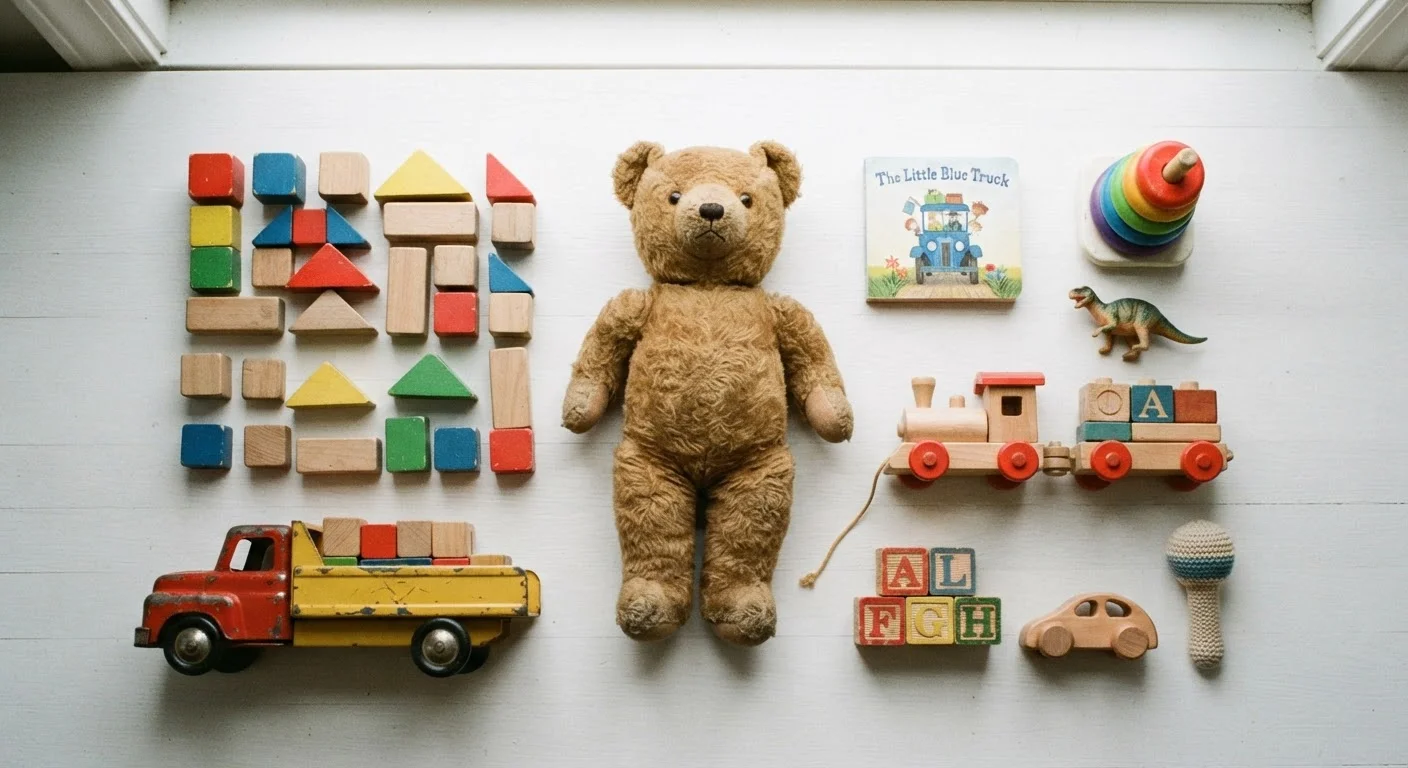
Photo: SaverSteals.com | Explore More. Shop Smarter. editorial
—— In This Article
Key Takeaways
- Condition labels like 'gently used' are self-reported and not standardized across platforms or sellers.
- "Like new" implies near-original condition, while "good" typically means functional with visible wear.
- Missing parts, recalled models, and age-inappropriate toys are the three most common secondhand safety pitfalls.
- Photos and a parts checklist from the seller are more reliable than condition labels alone.
- Cleaning protocols matter — hard plastic and fabric toys require different approaches before use.
The Condition Label Problem
When a listing says "gently used," it tells you roughly as much as a weather forecast that says "partly cloudy." The phrase exists because sellers need a shorthand, not because any authority defined it. Across the major resale platforms — whether app-based marketplaces or community buy-sell groups — condition language is entirely self-reported.
Here is how the most common labels are generally used in practice, though individual interpretation varies:
- Like new / Open box: Little to no visible use; original packaging may be present. Often means a gift that was never played with.
- Gently used / Excellent: Minimal play wear, no damage, all parts typically present. This is where most sellers overestimate their item.
- Good: Functional with some cosmetic wear — light scratches, fading, or scuffs. Pieces may or may not be complete.
- Fair / Acceptable: Noticeably worn; functionality intact but aesthetic condition is poor. Missing parts are more likely at this tier.
- Used / As-is: Seller is signaling defects exist and is declining to detail them fully. Proceed only if you can inspect in person.
The gap between what a seller calls "gently used" and what arrives at your door is one of the most common frustrations in secondhand toy shopping. Treating the label as a starting point for questions — not a conclusion — is the more reliable approach.
Platform Policies Vary on Condition Disputes
Some resale platforms offer buyer protection when an item arrives significantly different from its listed condition; others treat all sales as final. Before purchasing, check whether the platform you're using has a formal dispute process and what documentation — photos, messages — you'd need to support a claim. Local cash sales typically offer no recourse once you've accepted the item.
What to Look for Beyond the Label
Condition labels screen listings; direct evidence closes the deal. Before committing to a purchase, request or look for the following:
- Multiple photos in good light: All sides, the bottom, any battery compartment, and a close-up of any areas the seller mentions as worn.
- A parts inventory: Ask the seller to confirm completeness against the manufacturer's original list. For board games and building sets this is non-negotiable.
- Age and use history: How old is the child who used it? A toy used for six months by a toddler has experienced different stress than the same toy used for three years by a school-age child.
- Reason for selling: Outgrown, duplicate gift, or broken? Sellers who answer this clearly are generally more reliable narrators of condition.
For a deeper look at the trade-offs involved in secondhand toy purchases, see the real trade-offs of buying secondhand toys — it covers completeness and safety considerations in more depth.
Ask for a Parts Photo, Not Just a Parts Count
A seller saying "all pieces included" is helpful, but a photo of all pieces laid out next to the box is better. For sets with many small components — building kits, board games, or magnetic tiles — a visual inventory confirms completeness in a way that a verbal assurance cannot. Sellers who are willing to do this are also generally more trustworthy narrators of overall condition.
Safety Checks That Condition Labels Don't Cover
Cosmetic condition and safety are separate questions. A toy can be in "like new" physical shape and still present a hazard. Three issues stand out:
Recalls
The U.S. Consumer Product Safety Commission (CPSC) maintains a searchable recall database at cpsc.gov. Any used toy purchase warrants a quick model-name search before money changes hands. Recalled items sometimes circulate for years after the recall notice because original buyers never registered the product or didn't act on the notice.
Age-appropriateness
Age labels on toys reflect choking hazard assessments and developmental appropriateness. A toy labeled for ages 8+ sold as a secondhand item for a toddler is not made safer by its used condition. Verify the original age rating and match it to the child's actual age.
Structural integrity
Plastic fatigue, broken fasteners, exposed stuffing, and degraded battery contacts are hazards that photos may not fully reveal. Inspect in person when possible, and for items bought online, plan a thorough physical check before the toy reaches a child's hands.
For a broader overview of how secondhand toys differ from refurbished ones, secondhand and refurbished toys: what buyers should know covers the distinction clearly.
Cleaning and Preparing Used Toys
Before any secondhand toy enters a child's play space, a cleaning step is warranted regardless of how clean it looks. Practical guidelines by material:
| Material | Cleaning Method | Avoid |
|---|---|---|
| Hard plastic | Dish soap and warm water; dishwasher (top rack) if safe | Bleach on painted surfaces |
| Fabric/plush | Machine wash per care label; air dry | High heat if stuffing is foam-based |
| Wood | Damp cloth with mild soap; dry immediately | Soaking; submerging in water |
| Electronics | Dry microfiber cloth; isopropyl alcohol on casing only | Any liquid near ports or battery compartment |
If a toy arrives with an unusual odor — musty, chemical, or smoke-related — do not introduce it to a child's environment until the source is identified. Some odors indicate mold or chemical off-gassing that cleaning alone won't resolve.
If you're new to the secondhand toy market, a family-friendly starting point for first-time buyers walks through sourcing channels and inspection steps in practical detail.
Frequently Asked Questions

Toys Editorial Team
Toys Editorial Team is the collective byline for our editorial team and contributor network. Articles published under this byline or an editorial pen name are researched, written, and reviewed according to our editorial standards for clarity, consistency, and independence before publication.
View author profile