
Sourcing Used Tools: Eight Places Worth Knowing About
From estate auctions to tool libraries, explore the most reliable channels for sourcing quality secondhand tools.
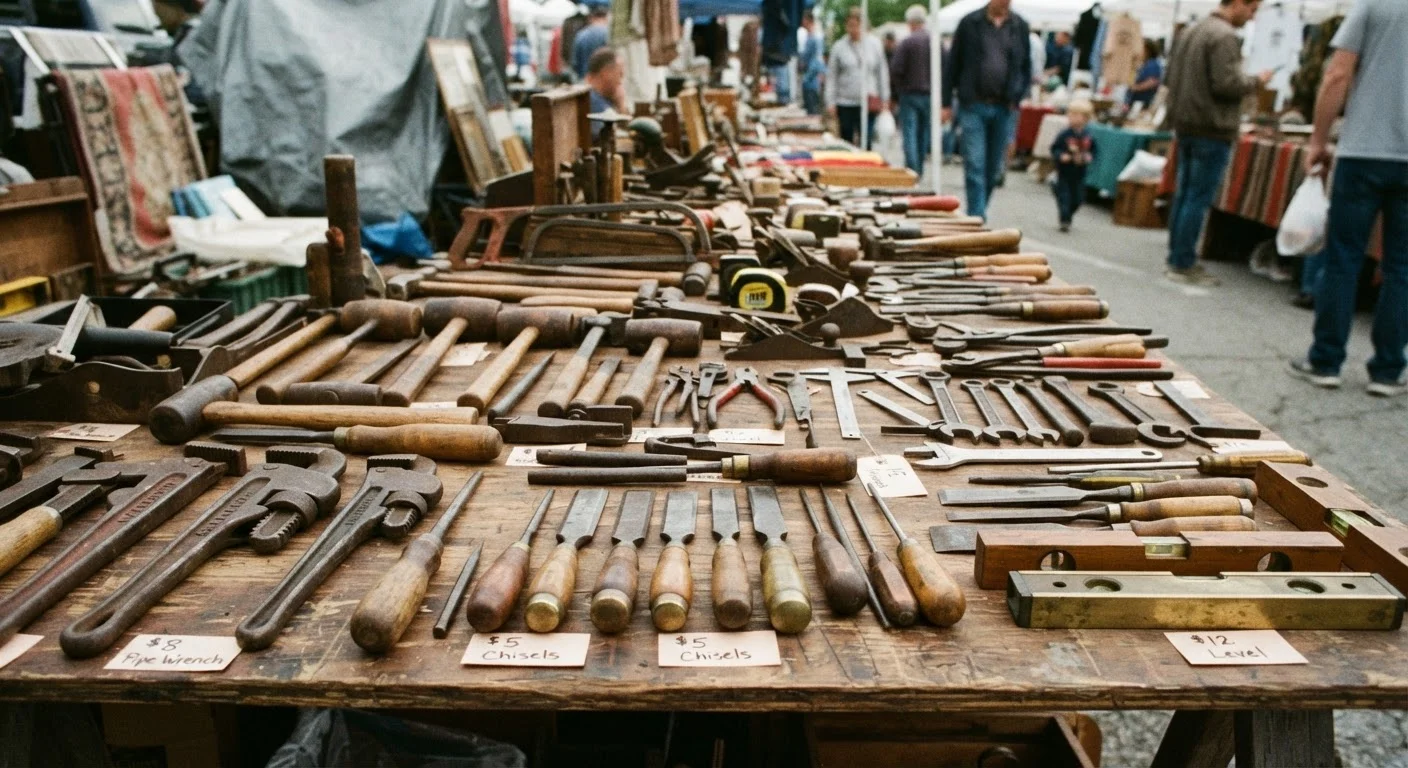
Photo: SaverSteals.com | Explore More. Shop Smarter. editorial
—— In This Article
Key Takeaways
- Estate sales and auctions frequently surface quality tools at prices well below retail.
- Online resale platforms require extra diligence on seller reputation and photo scrutiny.
- Tool libraries and community swap events are low-cost options worth checking before buying.
- Inspecting for wear, rust, and missing parts is essential regardless of where you source tools.
- Local channels often let you handle tools before purchase, reducing guesswork significantly.
Why Your Sourcing Channel Matters
Not all used-tool markets are equal. Where you shop shapes what you find, what you pay, and how much risk you're taking on. A pawn shop deal carries different trade-offs than an estate auction lot, and a peer-to-peer online listing is a different animal altogether from a municipal surplus sale. Understanding the landscape before you start spending is the practical first step — the Secondhand Tool Market overview lays out exactly how these channels connect.
The eight channels below represent the most reliable and accessible options for US buyers. Each has a distinct character: some reward patience, some reward proximity, and a few reward showing up early on a Saturday morning.
Condition Standards Vary by Channel
"Used" means something different depending on the source. A tool from a retired tradesperson's estate may be in better shape than a lightly-used item that was stored improperly. Photos, descriptions, and in-person inspection remain your primary tools for assessment regardless of the channel. Don't assume that a more formal sales setting guarantees better condition.
Eight Sourcing Channels Worth Your Time
Estate Sales
Estate sales regularly yield hand tools, power tools, and entire shop setups from lifelong hobbyists or tradespeople. Condition varies, but so-called "barn find" quality — lightly used, well-stored — is genuinely common. Show up early; serious buyers arrive at opening. Estate sale companies typically don't negotiate on the first day but will discount on the final day.
Estate sales are among the few places where an entire shop's worth of tools surfaces at once.
Live and Online Auctions
Industrial and estate auctions — both in-person and online — move large volumes of tools quickly. Online auction platforms that specialize in surplus equipment allow bidding on individual lots from anywhere in the country. Shipping costs and buyer's premiums (typically 10–20% added to the hammer price) must be factored into your math. The full picture on buying tools at auction covers what you gain and give up when bidding.
Always calculate buyer's premiums and shipping before placing a bid — the hammer price is rarely your final cost.
Peer-to-Peer Resale Platforms
Apps and websites facilitating direct seller-to-buyer transactions are a practical daily source. Listings are searchable by location, so you can filter to items within driving range. Review seller feedback before committing, request additional photos of any wear points, and meet in a public, well-lit location or at the seller's workspace where you can test the tool before exchanging money.
Requesting close-up photos of wear points before agreeing to meet can save you a wasted trip.
Pawn Shops
Pawn shops tend to carry a rotating, unpredictable inventory of tools. Prices aren't always lower than resale platforms, but you can inspect items directly and sometimes negotiate. Visit the same shop repeatedly — inventory turns over fast, and a tool that wasn't there last month may be waiting this week. Ask staff when new tool stock typically comes in.
Pawn shop inventory turns quickly — frequent, brief visits outperform a single long browse.
Garage and Yard Sales
Individual garage sales rarely offer the volume of an estate sale, but pricing is often more flexible and sellers are typically willing to negotiate. Tools are frequently underpriced because sellers just want them gone. Neighborhood apps and local classified sites often aggregate upcoming sales, letting you plan a single Saturday route across several stops rather than driving around aimlessly.
Sellers at garage sales usually prioritize a quick transaction over maximizing price — use that to your advantage.
Flea Markets and Swap Meets
Dedicated tool vendors at flea markets and swap meets often know what they have and price accordingly, but you can still find genuine bargains — especially for older hand tools and hardware. Unlike casual sellers, these vendors may offer implicit assurances about what they've tested. Some markets run weekly, making them a reliable repeat destination when you're building out a collection gradually.
Regular vendors at flea markets tend to sort and test their stock more carefully than casual sellers do.
Municipal and Government Surplus Sales
City, county, and state agencies periodically auction or sell surplus equipment, including tools from public works departments, parks maintenance, and utilities. These sales are often announced on government websites or through surplus auction services. Tools have usually seen real-world use but are also typically maintained to a professional standard. Watch for lot-based sales where tools are bundled — individual piece pricing can work out favorably.
Government surplus tools are often professionally maintained, even if heavily used — a meaningful trade-off.
Tool Libraries and Community Lending Programs
Tool libraries — community programs that lend tools for short-term use — occasionally sell off aging inventory to fund new acquisitions. This isn't a primary buying channel, but when a local library does hold a sale, the tools have usually been catalogued and basic functionality verified. Beyond sales, tool libraries are worth knowing about as a borrowing resource before you commit to a purchase you may not need long-term.
Tool library sale events are rare but reliable — libraries tend to sell only what has been verified as functional.
Bring a Simple Inspection Kit
A small flashlight, a multimeter for basic power-tool checks, and a rag for wiping down surfaces will serve you well at any in-person sourcing event. Testing before you pay is standard practice, not an imposition. If a seller won't allow basic inspection of a power tool, that reluctance is itself useful information.
Making the Most of Any Channel
Whichever source you use, a few habits transfer universally. Bring a flashlight and a battery if you're checking power tools in person. Know the going rate for what you want before you bid or haggle — a quick search of completed listings on major resale platforms gives you a reliable price floor. If you're weighing whether to pursue online auctions or stick to local venues, the online auctions vs. local resale comparison breaks down the practical trade-offs in detail.
For those just getting started with secondhand tools, the starter's roadmap for used tools walks through what to look for and how to avoid common pitfalls. The broader end-to-end guide to buying and owning secondhand tools covers inspection, cleaning, and maintenance once you've made a purchase. Used tools can deliver real value — the goal is to arrive at that value without unnecessary surprises along the way.

Tools Editorial Team
Tools Editorial Team is the collective byline for our editorial team and contributor network. Articles published under this byline or an editorial pen name are researched, written, and reviewed according to our editorial standards for clarity, consistency, and independence before publication.
View author profile