
Open-Box and Reconditioned Tools: A Practical Buying Framework
Refurbished and open-box tools can offer real savings, but grading systems differ across retailers. This guide explains what those grades mean.
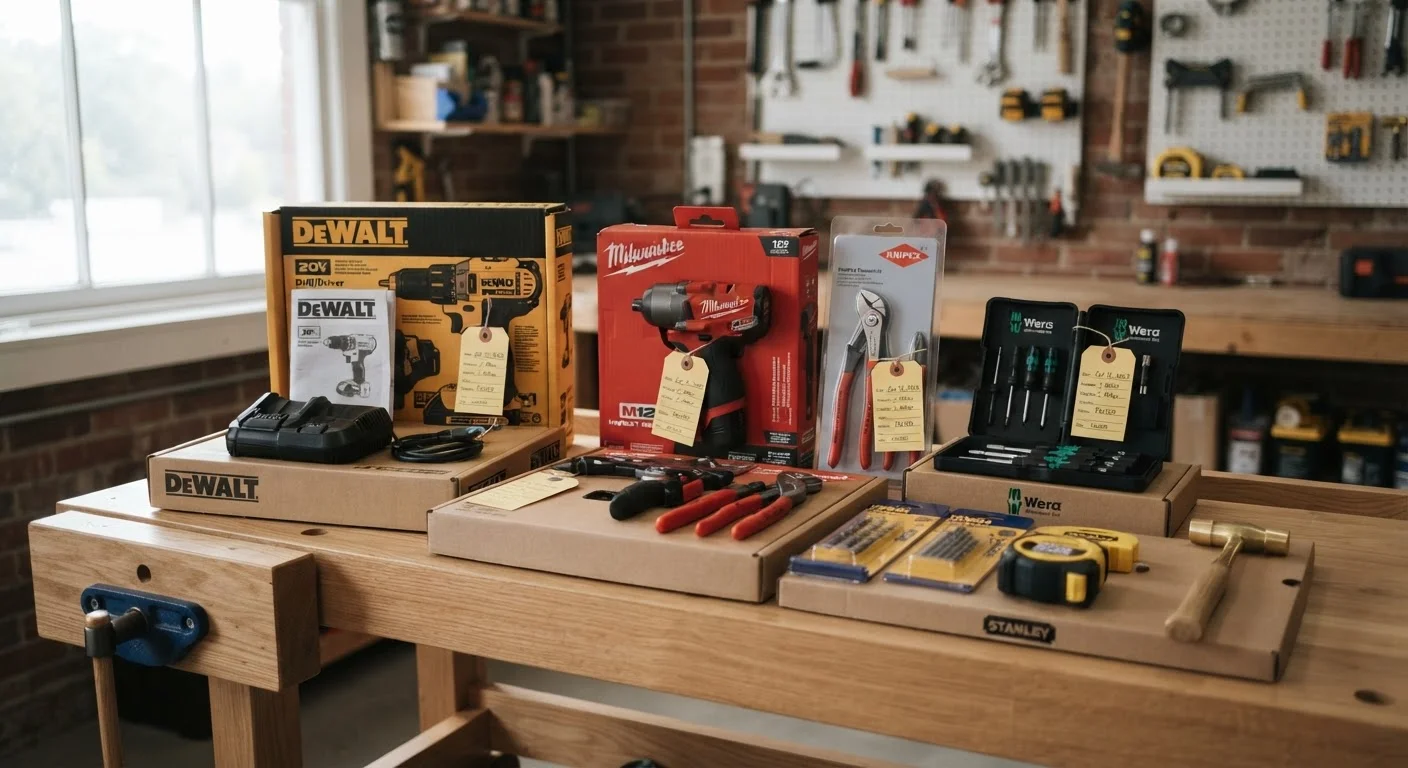
Photo: SaverSteals.com | Explore More. Shop Smarter. editorial
—— In This Article
Key Takeaways
- Open-box tools were returned unused or lightly used; reconditioned tools have been inspected and repaired to a functional standard.
- Grading labels like 'Grade A' or 'Certified Refurbished' are not standardized across retailers — always read the fine print.
- Manufacturer-reconditioned tools typically carry stronger protections than third-party refurbished ones.
- A clear return window and documented warranty are non-negotiable when buying any non-new tool.
- Physical inspection at pickup — or a prompt arrival inspection when buying online — is essential before use.
Open-Box vs. Reconditioned: The Core Difference
These two categories are often grouped together in retail discount sections, but they describe meaningfully different situations.
Open-box tools are customer returns. The packaging was opened — and the tool may have been used briefly, used for a single job, or not used at all. The key point: no systematic inspection or repair has taken place. You're buying whatever came back through the return desk.
Reconditioned (or refurbished) tools have gone through a defined process: inspection, cleaning, repair or part replacement as needed, and functional testing. The depth of that process depends entirely on who did it — a manufacturer's own service center or a third-party shop.
This distinction matters more for power tools than hand tools. A return that wasn't thoroughly inspected could have internal damage that isn't visible on the exterior. For a parallel in the electronics space, the difference between certified refurbished and open-box electronics follows the same logic.
Open-box
A product that was returned after the packaging was opened, with no formal inspection or repair performed before resale.
Reconditioned / Refurbished
A product that has been inspected, cleaned, repaired as needed, and tested to confirm it meets a functional standard before resale.
Manufacturer-certified
Reconditioned by the original manufacturer or an authorized service center, typically using original parts and following the manufacturer's own service standards.
Third-party refurbished
Reconditioned by a company other than the original manufacturer; quality and warranty terms vary significantly depending on the refurbisher.
Condition grade
A label (such as Grade A, Grade B, or 'Like New') assigned by a seller to describe a used item's cosmetic and functional state. These labels are not standardized across sellers.
Limited warranty
A warranty that covers specific defects or components for a defined period — as opposed to a full warranty that covers all failures regardless of cause.
How Grading Systems Work
Retailers use letter grades, numerical scores, or descriptive terms to communicate condition. The problem: none of these are governed by a universal standard. A retailer's 'Grade B' label is defined by that retailer alone.
Common frameworks you'll encounter:
- Manufacturer-Certified Reconditioned: Serviced by the original manufacturer or an authorized service center. Typically the highest assurance level available for used tools.
- Grade A / Like New: Usually means minimal cosmetic wear, fully functional, all original accessories included. Confirm this in the listing description — don't rely on the label alone.
- Grade B / Good: May have visible wear marks, scratches, or missing non-essential accessories. Should still be fully functional.
- Grade C / Acceptable / Fair: Cosmetic wear is significant; function should be intact but scrutinize the listing carefully.
For a plain-English breakdown of how these terms map to real-world tool conditions, the secondhand tool grades guide is a useful reference.
Where to Source These Tools
Sourcing channel matters as much as condition grade. The same 'reconditioned' label carries different weight depending on where it originates.
- Manufacturer outlet pages: Many major tool brands operate their own reconditioned or factory-serviced product sections, either on their own site or through an authorized outlet storefront. These typically offer the most consistent quality and the most clearly defined warranty terms.
- Hardware retailer open-box sections: Large home improvement retailers stock open-box and returned tools, often at a documented discount. Condition disclosure quality varies by store location.
- Online auction and resale platforms: Can yield lower prices, but seller quality is highly variable. Prioritize sellers with specific, verifiable return policies and documented condition descriptions over those with vague listings.
- Tool rental companies: Some rental chains periodically liquidate retired rental inventory. These tools have high use hours but have typically received regular maintenance.
The used tools hub covers a broader range of secondhand sourcing approaches beyond reconditioned retail channels.
Prioritize Seller-Specific Return Terms
Before committing to any open-box or reconditioned tool purchase online, locate the seller's return policy page — not just the product listing. Look specifically for whether returns are accepted for 'not as described' conditions and how long you have to initiate a return after delivery. A 30-day return window is a reasonable minimum for anything you plan to use under load.
Inspecting a Tool Before or After Purchase
If you're buying in person, ask to inspect the tool out of the box before completing the transaction. If buying online, treat the first 24–48 hours after receipt as your inspection window — document anything concerning with photos immediately.
What to check:
- Physical housing: Cracks in the body, especially near vents or handles, can indicate a drop. Superficial scratches are expected; structural damage is not.
- Guards and safety mechanisms: Blade guards, trigger locks, and safety switches must function correctly. Do not use any tool where a safety mechanism is compromised.
- Cord and battery connections: On corded tools, inspect the full cord length for cuts or fraying. On battery-powered tools, confirm the battery seats firmly and the charge indicator behaves normally.
- No-load test run: Run the tool briefly before applying it to any material. Listen for grinding, rattling, or irregular vibration.
- Included accessories: Compare what arrived to what was listed. Missing blades, chucks, or chargers affect usability and resale value.
Warranties and Return Policies
This is where open-box and reconditioned tools diverge most sharply in practical terms.
Manufacturer-reconditioned tools often include a limited warranty — commonly 90 days to one year — covering defects in parts and workmanship. Read the terms to understand whether it covers the full tool or only specific components.
Open-box tools sold by retailers are typically covered only by that retailer's standard return window, which may be as short as 15–30 days. After that window closes, you generally have no recourse unless you purchased an extended service plan.
Third-party refurbished tools are the most variable. Some third-party refurbishers offer their own 90-day warranties; others offer none. If a listing does not clearly state warranty terms, contact the seller before purchase — not after.
A practical rule: if you cannot get a clear answer about the return policy and warranty in writing before you buy, that ambiguity itself is useful information. The same due-diligence principles apply across product categories — the guide to buying refurbished tech covers warranty rights and inspection steps in comparable depth.
Don't Assume Grading Labels Are Consistent
Grading terminology is not regulated or standardized across the tools retail market. A 'Grade A' item from one seller can differ significantly from a 'Grade A' item from another. Always read the seller's own definition of their condition grades — usually found in a FAQ or condition policy page — rather than inferring meaning from the label alone.
Frequently Asked Questions

Tools Editorial Team
Tools Editorial Team is the collective byline for our editorial team and contributor network. Articles published under this byline or an editorial pen name are researched, written, and reviewed according to our editorial standards for clarity, consistency, and independence before publication.
View author profile