
Sports

Buying Used Sports Equipment Safely: What to Check Before You Commit

A practical inspection checklist covering helmets, bikes, rackets, and more—so you know exactly what to assess before handing over any money.
Buying Used Sports Equipment Safely: What to Check Before You Commit

Photo: SaverSteals.com | Explore More. Shop Smarter. editorial

—— In This Article
  1. Why a Systematic Inspection Matters
  2. The Inspection Checklist

Key Takeaways

  • Impact-absorbing gear such as helmets should be assessed against strict safety criteria before any purchase.
  • Structural damage on bikes and rackets is often hidden under grime or tape — always clean before inspecting.
  • Check for recalls on any used safety equipment using the CPSC recall database before committing.
  • Seller transparency and a clear return policy significantly reduce your risk when buying secondhand.
  • Not all used gear carries equal risk — some categories are safer to buy pre-owned than others.

Why a Systematic Inspection Matters

Used sports equipment can deliver real value, but the savings disappear fast if the gear fails mid-use or turns out to be unsafe. Unlike buying new, you're working without a manufacturer warranty and often with limited product history. A structured inspection process removes most of the guesswork.

The checks below apply whether you're shopping in person at a local sale or reviewing photos from an online listing. For a broader look at which categories are worth buying secondhand at all, see our guide on what's safe to buy used and what isn't. If this is your first time buying secondhand gear, the first-timer's complete walkthrough covers the full process from finding listings to closing a deal.

Run through each checklist group below before you commit money to any item.

Required

Flashlight or headlamp

Illuminate welds, frame interiors, and foam liners where ambient light misses hairline cracks.

Required

CPSC Recall Database (recalls.gov)

Verify whether a specific product model has an active safety recall before purchasing.

Optional

Tape measure

Confirm frame size, standover height, or other fit-critical dimensions match your requirements.

Required

Clean rag or paper towels

Wipe down surfaces to remove grime before inspecting for cracks or structural damage.

Optional

Smartphone camera

Document condition at point of inspection — useful if a dispute arises after purchase.

The Inspection Checklist

Work through the groups in order. Items marked must are non-negotiable — a single failure there should stop the purchase unless the seller can resolve it. Should items represent strong indicators of condition and value. Nice-to-have items add confidence but rarely disqualify otherwise solid gear.

Research Before You Inspect

Search the item's model number on the U.S. Consumer Product Safety Commission (CPSC) recall database to confirm it has no active safety recall. Must
Look up the manufacturer's stated lifespan for the product category — many helmets, harnesses, and padding have documented expiration windows regardless of visible condition. Must
Identify the original retail price so you can judge whether the asking price reflects genuine savings or inflated secondhand markup. Should
Request the purchase date or any documentation the seller has, such as a receipt or warranty card, to establish the item's age. Should

General Condition Checks (All Equipment)

Inspect all surfaces in good lighting — natural daylight is more reliable than indoor bulbs — looking for cracks, dents, deep scratches, or deformation. Must
Check all fasteners, buckles, straps, and closures by operating each one multiple times to confirm they engage and release cleanly. Must
Remove any tape, padding covers, or grip wrap that could conceal damage underneath. Must
Smell the item — persistent chemical odor or mildew can indicate prolonged moisture exposure that compromises structural integrity. Should
Verify that all included accessories, adjustment parts, or components listed in the product specs are present. Nice to have

Helmets and Impact-Protection Gear

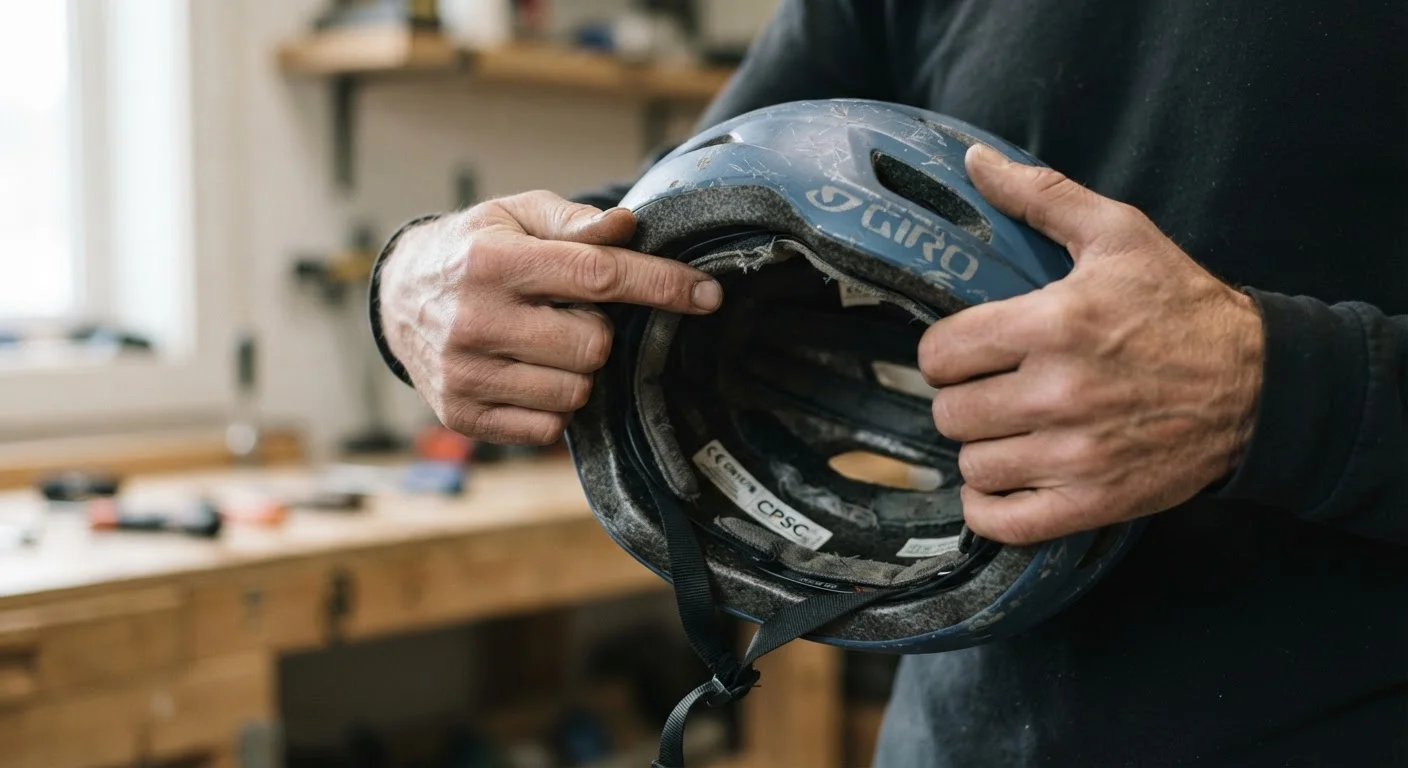
Confirm the helmet shows no visible cracks, compression marks, or deformation in either the outer shell or the inner foam (EPS) liner — any impact history is a disqualifier. Must
Check that the certification sticker (e.g., CPSC for cycling, NOCSAE for football/lacrosse) is present, legible, and matches the intended sport. Must
Verify the manufacture date printed inside the helmet — most manufacturers recommend retiring helmets 5–10 years from that date. Must
Test all retention straps and fit systems to confirm they adjust smoothly and hold position without slipping. Must

Bicycles

Inspect the frame and fork for cracks, especially at welds, the bottom bracket shell, and around the head tube — use a flashlight and wipe away grime first. Must
Spin both wheels and check for lateral wobble (more than 2–3mm suggests a wheel that needs truing or a damaged rim). Must
Test brake function by squeezing levers firmly — pads should contact the rim or rotor cleanly without excessive cable slack or spongy feel. Must
Shift through all gears while pedaling to confirm the drivetrain indexes correctly with no skipping or chain drop. Should
Check tire sidewalls for cracking, bulging, or wear indicators — tires in poor condition add immediate replacement cost. Should

Rackets, Bats, and Frame-Based Equipment

Flex the frame slightly by hand and look along its length under good lighting for hairline cracks, particularly around the throat and handle junction. Must
Check grip condition and grip tape for wear-through — excessive wear can indicate a tool used heavily and may suggest hidden frame fatigue. Should
For strung rackets, note string tension and examine strings for fraying or notching at frame contact points — restringing cost should factor into your price assessment. Nice to have

Seller and Transaction Checks

Confirm the seller's return or dispute policy in writing before completing payment — private sellers typically offer none, which raises your personal risk threshold. Must
For online purchases, use a payment method that offers buyer protection and avoid wire transfers or peer-to-peer apps with no recourse. Must
Ask the seller directly how the item was used, how it was stored, and whether it has experienced any falls, impacts, or repairs. Should

Never Skip the Recall Check on Safety Gear

Helmets, harnesses, and protective padding are occasionally recalled due to certification failures or manufacturing defects that aren't visible on inspection. A recall doesn't always mean the item looks damaged — it may have passed every visual check. Before handing over money for any impact-protection equipment, run the brand and model through recalls.gov. This takes under two minutes and has no downside.

Once you've completed a purchase, build a maintenance routine from day one. Our article on responsible habits for maintaining secondhand sports equipment covers cleaning, storage, and knowing when to retire an item.

For context on the full economics of buying secondhand, the advantages and trade-offs of buying used article gives a balanced breakdown worth reading before you shop.

Sports Editorial Team

Sports Editorial Team

Sports Editorial Team is the collective byline for our editorial team and contributor network. Articles published under this byline or an editorial pen name are researched, written, and reviewed according to our editorial standards for clarity, consistency, and independence before publication.

View author profile
The content on this site is for informational purposes only and is not a substitute for professional advice. Always consult a qualified professional for guidance specific to your situation.