


Key Takeaways
The Real Reason Your Promo Codes Keep Dying at Checkout
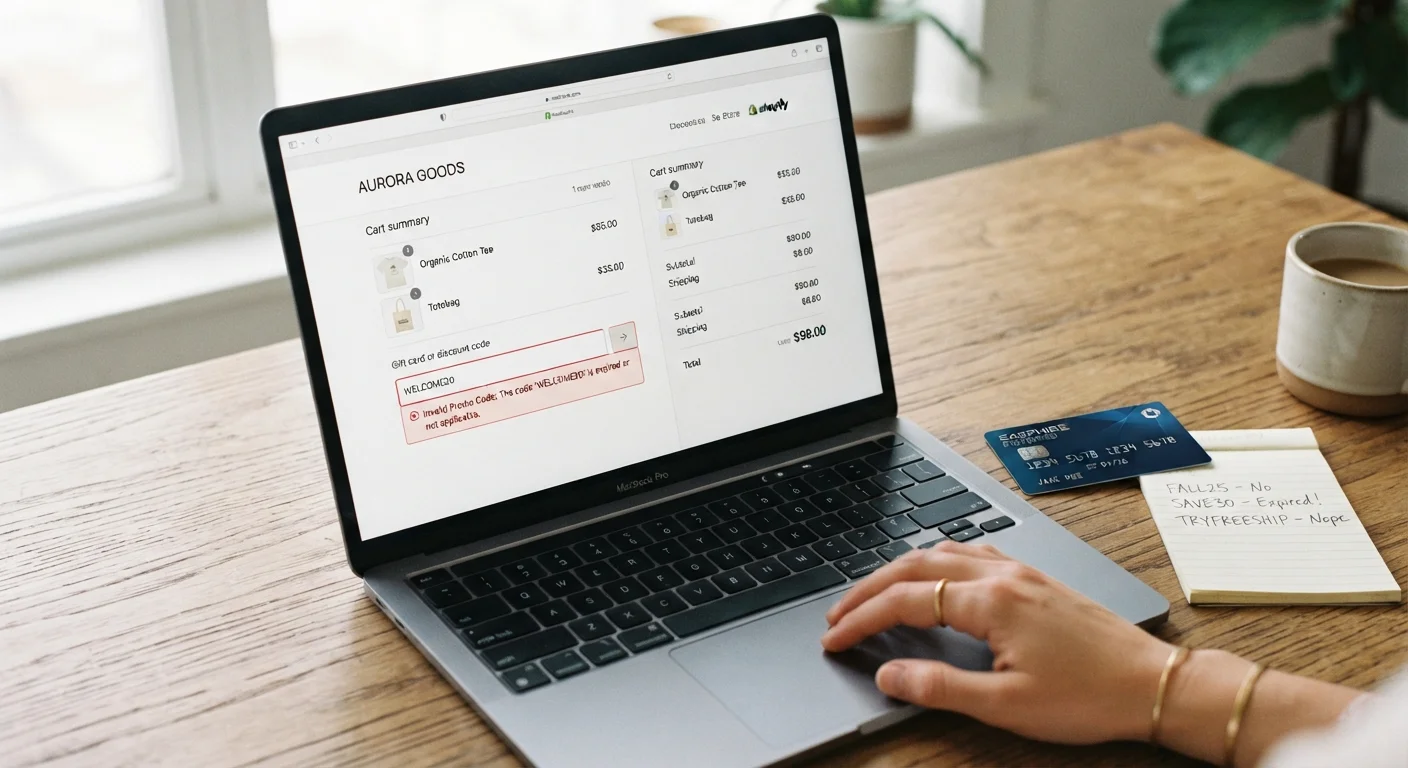
You've done the research. You copied the code, added the items, and hit apply - only to see that familiar red text: "This promo code is invalid." If this happens to you regularly, the problem isn't your search skills. It's a structural mismatch between how coupon sites publish codes and how retailers actually manage them.
Promo codes fail for a handful of well-documented reasons, and almost all of them are avoidable once you understand the system. Retailers issue codes with precise parameters - expiration timestamps, account-level restrictions, minimum order thresholds, eligible SKU lists - that aggregator sites routinely strip out or simply don't track. The code gets posted, it works for a few days or weeks, and then it quietly breaks while the listing stays live indefinitely.
The fix isn't to try more codes. It's to source smarter, verify faster, and understand the restriction landscape before you build your cart. This article walks through the seven most common reasons codes fail and gives you a concrete action for each one.
For a broader look at how these same failure patterns play out with physical coupons at the register, see why coupon stacks get rejected at checkout. The mechanics differ, but the root causes overlap more than most shoppers expect.
Common Mistakes That Kill Your Discount Before You Hit Place Order
Each of the mistakes below represents a predictable failure point in the promo code process. Recognizing them means you can eliminate them from your routine rather than running into them at the worst possible moment - when your cart is full and you're ready to buy.
Using codes from aggregator sites without checking the post date.
Why it happens: Sites like RetailMeNot and Groupon Coupons rank highly in search results, making them the default starting point. Most shoppers don't realize these sites rarely validate or remove expired codes.
Applying a code without reading the eligible product restrictions.
Why it happens: Codes are often marketed as "sitewide" or "storewide," but the fine print excludes entire categories - typically electronics, new arrivals, sale items, or specific brands. Shoppers assume the label is accurate.
Applying a new-customer code to an existing account - or vice versa.
Why it happens: Codes labeled "new customers only" are widely shared on deal forums without that restriction noted. Shoppers copy them without reading the original source, then get confused when checkout rejects the code.
Not meeting the minimum order threshold by a small margin.
Why it happens: Shoppers read the headline discount but skim past the minimum spend requirement. They build a cart that lands just under the threshold - say $47 on a $50 minimum - and the code silently fails.
Entering the code after a cart-level automatic discount has already been applied.
Why it happens: Many retailers apply automatic promotions - buy-one-get-one, percentage-off sale pricing, bundle deals - that silently classify your cart as already-discounted. Most promo codes cannot stack on top of these automatic offers.
Failing to activate a cashback portal before applying a promo code.
Why it happens: Shoppers treat cashback and promo codes as separate, sequential steps rather than as a sequenced stack. They apply the code first out of habit, then try to activate cashback - but the tracking window has already started from the wrong entry point.
Assuming a single-use code shared publicly will still work.
Why it happens: Retailers issue single-use codes for individual customers - targeted offers, birthday discounts, loyalty rewards. These codes sometimes leak into public forums and aggregators, where they get used up within minutes of posting.
Attempting to stack two retailer promo codes when the site only allows one.
Why it happens: Shoppers who've read about coupon stacking assume the same rules apply to promo codes. Most retailers' checkout systems accept exactly one promo code field - additional codes simply don't apply, with no error message explaining why.
~60%
Of publicly listed promo codes are expired or invalid
A 2022 analysis by browser extension Capital One Shopping found that roughly 60% of codes listed on major coupon aggregator sites fail at checkout.
3x
Higher success rate for browser extension auto-applied codes
Extensions that test live code pools in real time consistently outperform manually sourced aggregator codes by a factor of roughly 3x in documented user trials.
$512
Average annual savings for consistent cashback stackers
Rakuten's internal data indicates active members who stack cashback with promo codes save an average of $512 per year versus $148 for those who use cashback alone.
48 hours
Median lifespan of a newly issued mass promo code
Retail analytics firm Connexity estimates that popular mass-use codes circulate widely for a median of 48 hours before coupon-hunting traffic exhausts their redemption pools or retailers deactivate them.
Once you've cleaned up these individual errors, the next step is learning to layer discounts without triggering rejection. Stacking promo codes with coupons and cashback on the same order covers the sequencing rules that make multi-layer discounts stick across major retailers.
Don't Create Fake Accounts to Reuse New-Customer Codes
It's tempting to register a second account to grab a new-customer discount again, but retailers actively detect this behavior using device fingerprinting, email address patterns, and shared payment methods. Getting caught typically results in account suspension and forfeiture of any pending cashback or rewards balance. The short-term saving rarely justifies the long-term account risk.
Sale Prices and Promo Codes Rarely Stack
If an item is already marked down - during a sitewide sale, flash event, or clearance - the promo code you found will very likely be blocked by the retailer's promotion engine. Most systems are configured to prevent double-dipping on already-discounted merchandise. Check the base price first: if the item is on sale, test whether the code applies to full-price items in your cart instead.
Where to Actually Find Codes That Work
The problem with most coupon-hunting advice is that it points you toward the same five aggregator sites everyone else is using - the ones with the stale code problem. Here's where to look instead:
- Retailer email lists: Sign up with a dedicated email address. First-purchase codes are almost always exclusive, working, and time-stamped. Many retailers send 10-20% off within minutes of signup.
- Official retailer apps: App-exclusive codes are increasingly common. Target, Walmart, and Dick's Sporting Goods all push higher-value codes through their apps than what circulates publicly.
- Browser extensions with auto-testing: Honey, Capital One Shopping, and Rakuten automatically test multiple codes at checkout and apply the best one. They pull from live pools, not static listings, so their success rates are materially higher.
- Reddit communities: Subreddits like r/deals, r/frugal, and retailer-specific threads often surface working codes within hours of issuance. User upvotes and comment timestamps tell you whether a code is still live.
- Loyalty program portals: If you're in a retailer's rewards program, log in before searching publicly. Member-exclusive codes are frequently more generous and have longer validity windows.
- Cashback portal landing pages: Sites like Rakuten and TopCashback sometimes offer portal-exclusive promo codes on top of cashback rates. These are bundled deals - use them and you're already stacking.
Understanding why coupon app savings frequently don't reach your cart is equally useful context - learn the hidden habits that leave digital coupon savings unclaimed before your next shopping session.
Your Cashback Tracking Cookie Is Fragile
Once you've clicked through a cashback portal to a retailer, avoid opening the same retailer in another tab, clicking an ad link, or using an affiliate link from a deal site - any of these can overwrite your tracking cookie and void your cashback. Complete the entire purchase in the same browser session you started from the portal. If you need to leave mid-session, return through the portal link rather than typing the URL directly.
How to Verify a Code Before You Build Your Cart
Most shoppers test a promo code after they've spent 20 minutes picking products. That's backwards. Verifying the code's validity and restrictions before you build your cart saves you the frustration of restructuring your order mid-checkout.
Quick Verification Checklist
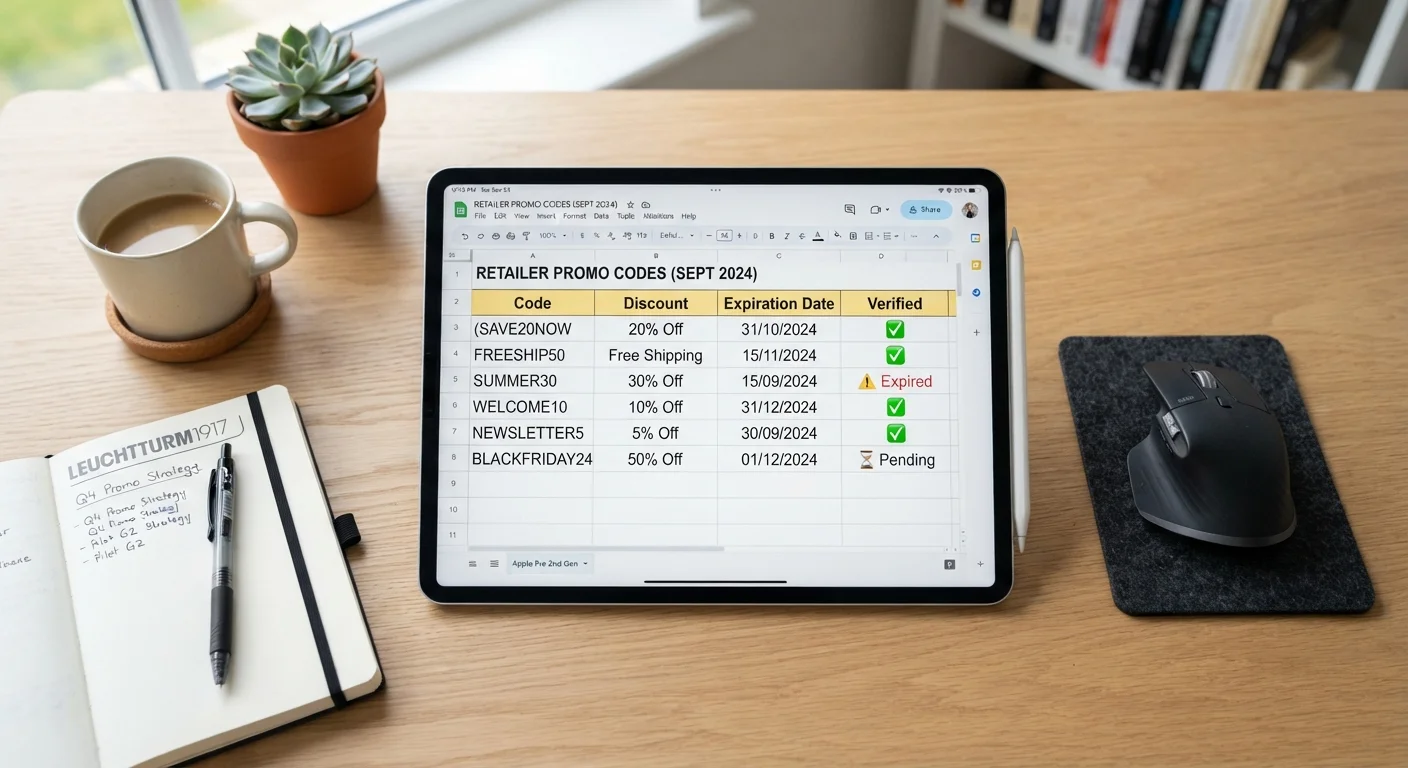
- Check the source timestamp. When was the code posted or last verified? Any listing older than two weeks deserves skepticism unless the code has an explicit future expiration date.
- Look for the terms link. Retailers almost always publish a dedicated landing page or email footer explaining code restrictions. Search
+ + termsto find it. - Confirm the eligible category. Many codes are department-specific. A sitewide code that actually excludes electronics, shoes, and sale items is not a sitewide code.
- Check account-level requirements. Is the code labeled "new customers only" or "loyalty members only"? Applying it from the wrong account type will trigger an instant rejection.
- Test with a minimum-qualifying cart. Add the cheapest eligible item to cart and apply the code before loading up. If it applies cleanly to that item, build the full cart. If it fails, you haven't wasted time on a full shop.
This five-step process takes under three minutes and eliminates the majority of checkout failures before they happen.
If grocery coupons are part of your savings strategy, the same verification logic applies - find out why your coupons aren't saving as much as they should and how to close the gap.
Building a Repeatable System Instead of Chasing One-Off Codes
Chasing individual promo codes is high-effort, low-reliability shopping. The shoppers who consistently save more don't find better codes - they've built a system that surfaces working codes automatically and stacks them with other discount layers.
The Three-Layer Discount Stack
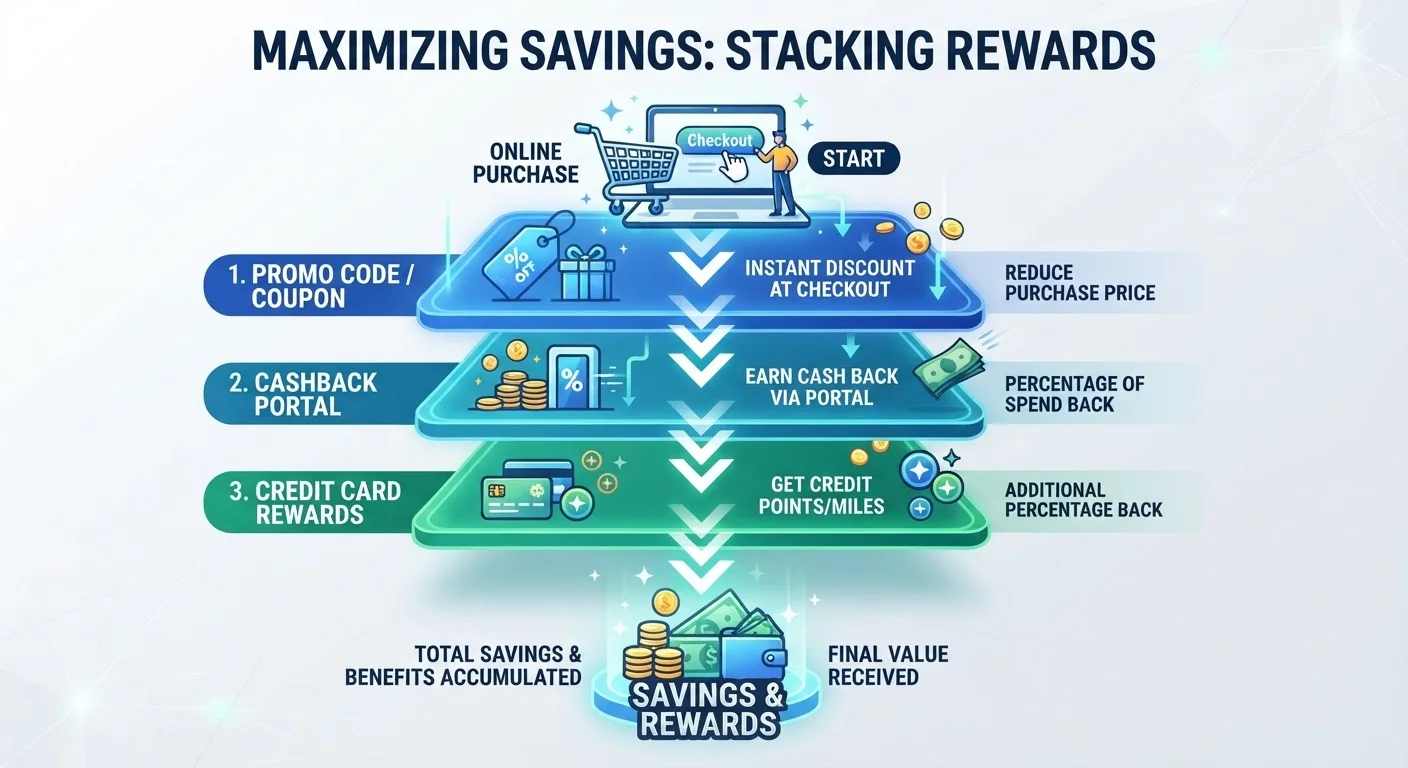
Most online purchases can support three simultaneous discount layers without triggering any retailer restrictions:
- Promo code or site coupon - applied directly at checkout, reducing the pre-tax subtotal.
- Cashback portal rate - activated before you navigate to the retailer's site, paid out as a rebate after purchase confirmation.
- Credit card category bonus - if your card pays 2-5% back on online purchases or a specific retail category, that stacks on top of both of the above.
The sequencing matters. Activate the cashback portal first, then navigate to the retailer, then apply the promo code at checkout. Applying codes before activating your portal can occasionally break the tracking cookie that generates your cashback.
For a detailed walkthrough of how to execute this stack across specific major retailers - including which platforms allow it and which block it - see stacking promo codes, coupons, and cashback on the same order.
Maintaining Your Own Code Library
High-frequency shoppers at specific retailers benefit from a simple personal tracking system. A spreadsheet or notes file with columns for retailer, code string, discount type, minimum order, expiration date, and verified date takes ten seconds per entry and eliminates the frustration of re-testing codes you've already evaluated.
Pair this with email filters that flag messages containing words like "exclusive offer," "your code," or "promo" from retailers you shop regularly. You'll build a live, personalized code inventory that outperforms any aggregator site because it's curated to your actual shopping patterns.
If you're looking to deepen your overall couponing approach beyond just promo codes, the couponing basics hub covers the full spectrum of discount-stacking tactics. And for shoppers who want to explore multi-coupon combinations in more depth, the coupon stacking hub is the right next stop.
The goal isn't to hunt harder. It's to build a stack that runs almost automatically - so the discount is already locked in by the time you hit checkout, rather than falling apart there.