
Thrift Stores, Estate Sales, and Flea Markets: A Shopper's Field Guide
Each secondhand venue operates differently. This guide explains how to approach each one to find quality home décor at lower prices.
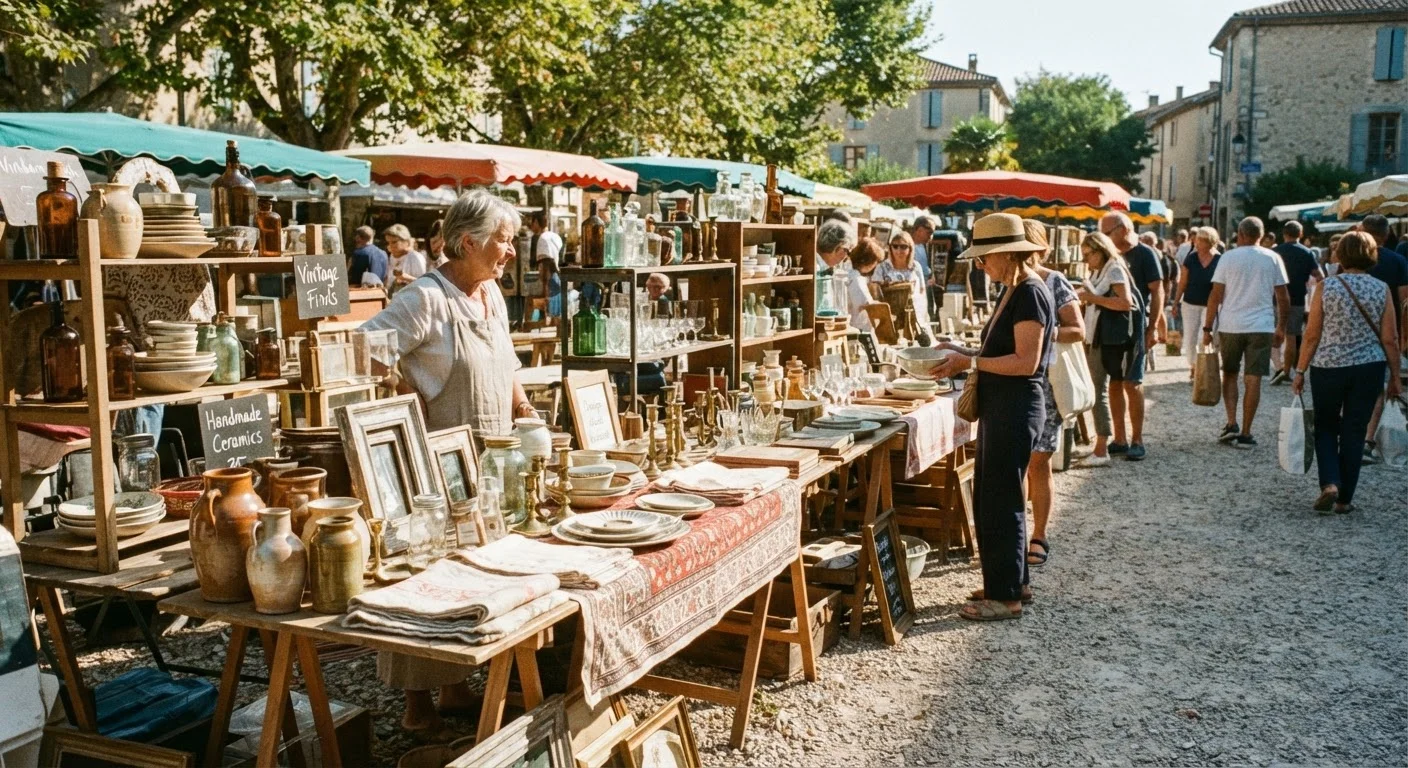
Photo: SaverSteals.com | Explore More. Shop Smarter. editorial
—— In This Article
Key Takeaways
- Thrift stores offer high-frequency inventory but require regular visits to catch good pieces.
- Estate sales typically present items in better condition and allow room for price negotiation.
- Flea markets reward relationship-building with repeat vendors over single visits.
- Knowing what each venue sources helps you predict what you'll realistically find there.
- Combining all three venues across a season covers more inventory than any single channel.
Why Venue Type Matters for Home Décor Sourcing
Budget-conscious home decorators often treat thrift stores, estate sales, and flea markets as interchangeable — places where used stuff gets sold cheap. In practice, each venue operates on its own supply logic, pricing model, and shopping rhythm. Collapsing them into a single category leads to misplaced expectations: arriving at a thrift store expecting curated, tagged antiques, or showing up at an estate sale hoping to browse casually.
Understanding each channel's structure lets you match your goals — whether that's affordable accent pieces, functional furniture, or one-of-a-kind décor — to the venue most likely to deliver. For a broader look at how secondhand supply chains work, the secondhand furniture ecosystem explained provides useful context on where inventory actually originates.
Thrift Stores: Consistency Over Curation
Thrift stores receive donated goods continuously, which means inventory turns over quickly and visits reward consistency rather than one-time luck. For home décor specifically, this translates to a steady stream of picture frames, lamps, ceramic dishware, and small decorative objects — but rarely complete sets or matched items.
Pricing at thrift stores is set in-house, often by staff with limited appraisal knowledge. This creates both opportunities and pitfalls. Common household items are usually priced well below retail, but collectibles or desirable vintage pieces are sometimes marked up to near-retail once staff recognizes demand. How thrift store pricing actually works explains the donation cycles and tag-rotation systems that affect what you pay on any given day.
Time Your Thrift Store Visits Strategically
Most thrift stores restock shelves on specific days — often mid-week after weekend donation processing. Visiting shortly after a restock cycle gives you access to the freshest inventory before other regular shoppers have picked through it. Ask staff when new donations typically hit the floor; many are happy to share this information.
For furniture hunters, thrift stores connected to national charity networks tend to carry softer goods and small items rather than large furniture. Independently operated thrift shops in residential neighborhoods are more likely to receive furniture donations and price them without commercial appraisal.
If you're new to thrift shopping entirely, what to expect on your first thrift store trip walks through how to navigate the experience without feeling overwhelmed.
Estate Sales: Depth, Condition, and Negotiation
Estate sales liquidate the contents of an entire home, which means items are presented in context — furniture staged in rooms, kitchenware still in cabinets, artwork hung on walls. This setting makes condition assessment far easier than pulling items off a thrift shelf. You can see how a piece has been stored, spot wear patterns, and evaluate whether it suits your space before committing.
Pricing at estate sales is set by professional liquidators who research comparable sales, so starting prices are generally more accurate to market value than thrift tags. However, most estate sales run two or three days and discount remaining items significantly on the final day — often 25–50%. The trade-off: first-day shoppers get first pick of inventory; last-day shoppers get lower prices on whatever remains.
At estate sales, photograph each room at the start of your visit so you can reference item placement and condition when making final decisions — it prevents the second-guessing that leads to missed purchases.
Estate sales present items in context, and that contextual information disappears once you leave the room. Photographic records let you make more deliberate decisions without rushing.
When building a flea market vendor relationship, be specific about what you're looking for rather than browsing vaguely — vendors remember shoppers who give them clear, actionable criteria.
Vendors interact with hundreds of browsers; a shopper who articulates a clear need (e.g., 'cast iron cookware' or 'mid-century ceramic lamps') is far more memorable and easier to serve with future inventory.
Negotiation is generally acceptable at estate sales, particularly on the final day or for multiple items purchased together. Arriving prepared with measurements for specific rooms and a clear sense of what you need helps you negotiate from a position of genuine interest rather than impulse.
For identifying what era a piece of furniture or décor comes from — useful for understanding whether a price is reasonable — furniture styles across decades is a practical reference.
Flea Markets: Volume, Variety, and Vendor Relationships
Flea markets aggregate independent sellers in one location, which produces enormous variety but also wide inconsistency in pricing and quality. A single market might include dealers specializing in mid-century lighting alongside general sellers moving miscellaneous household goods. Navigating this successfully means developing a feel for which vendors operate within your categories of interest.
Unlike thrift stores or estate sales, flea market vendors return regularly — weekly or monthly depending on the market. This makes relationship-building genuinely useful. Vendors who know your preferences will set aside relevant pieces before public display or alert you to upcoming inventory. Over time, a regular flea market circuit can function as a personalized sourcing network.
~16,000
Flea markets operating in the US
Industry estimates suggest roughly 16,000 flea markets operate across the United States, ranging from small weekly events to large permanent markets with hundreds of vendors.
30–50%
Typical final-day discount at estate sales
Professional estate sale liquidators commonly apply end-of-sale discounts in the 30–50% range on remaining inventory to clear items before the home is closed.
Pricing at flea markets is almost always negotiable, but the range varies dramatically by vendor. Dealers who know their inventory has collector value will hold firm; generalist sellers clearing household goods are often flexible, especially late in the day when packing up feels costly.
Comparing the Three: A Practical Framework
| Venue | Inventory Depth | Condition Predictability | Price Negotiability | Best For |
|---|---|---|---|---|
| Thrift Store | High volume, low curation | Variable | Generally fixed | Small décor, frames, ceramics |
| Estate Sale | Deep per-home inventory | High — items in situ | Moderate, especially final day | Furniture, lamps, complete sets |
| Flea Market | High volume across vendors | Variable by vendor | High | Statement pieces, vintage finds |
This framework is a starting point, not a rule. Regional variation matters: a thrift store in an affluent suburb may consistently surface higher-quality furniture donations than a flea market in the same area. The used furniture hub covers additional sourcing channels worth layering in alongside these three.
Cross-Venue Shopping Habits That Pay Off
The most effective secondhand home shoppers treat all three venues as a complementary circuit rather than competing options. A practical rotation might look like weekly thrift store visits for small finds, estate sale attendance when listings match your neighborhood or target categories, and monthly flea market trips to build vendor relationships and scan for larger pieces.
Before any sourcing run, having a short mental list — or a notes-app reference — of the specific items, measurements, and color palettes you're working with prevents impulse purchases that don't fit your space. This is especially important at flea markets and estate sales where volume and variety can quickly cloud judgment.
For those applying similar habits to furniture specifically, the secondhand furniture sourcing playbook outlines the consistent practices that experienced buyers use to surface quality pieces reliably. And if secondhand shopping extends to clothing as well as home goods, the complete secondhand clothing handbook covers that adjacent territory in depth.
Each venue rewards a slightly different mindset: patience and frequency at thrift stores, preparation and timing at estate sales, and consistency and conversation at flea markets. Bringing the right approach to the right venue is what separates frustrating browsing from genuinely useful finds.

Home & Garden Editorial Team
Home & Garden Editorial Team is the collective byline for our editorial team and contributor network. Articles published under this byline or an editorial pen name are researched, written, and reviewed according to our editorial standards for clarity, consistency, and independence before publication.
View author profile