
How Thrift Store Pricing Actually Works
Thrift store prices aren't random. Understanding donation cycles, colour-tag rotations, and regional variation helps you shop smarter.
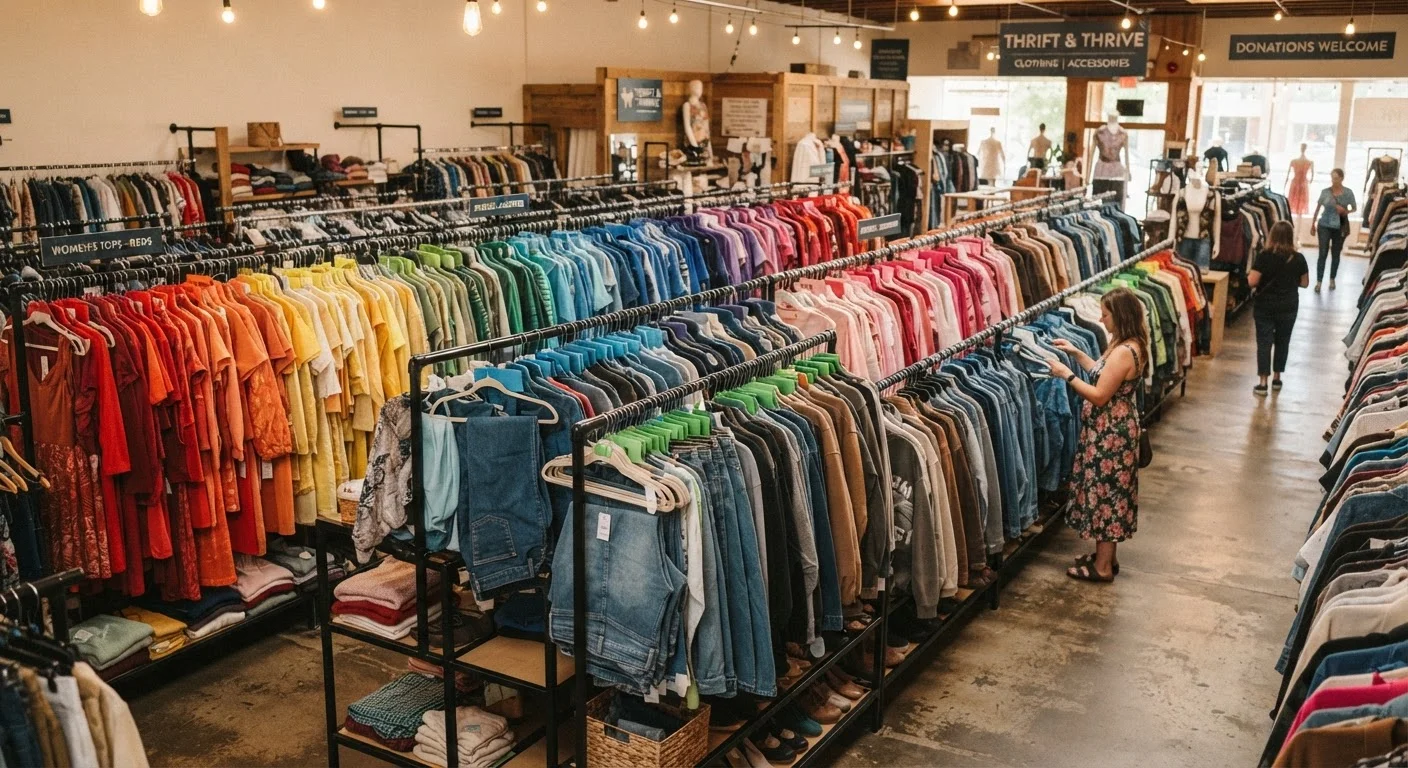
Photo: SaverSteals.com | Explore More. Shop Smarter. editorial
—— In This Article
Key Takeaways
- Thrift prices are set by staff, not market algorithms - condition and category matter most.
- Color-tag rotation systems discount items on a predictable weekly or biweekly cycle.
- Donation surges after holidays and seasonal transitions increase both selection and pricing pressure.
- Regional cost-of-living differences cause significant price variation between thrift locations.
- Knowing a store's markdown schedule can meaningfully reduce what you pay.
How Items Get Priced in the First Place
When a donated item arrives at a thrift store, it goes through a sorting and pricing process handled by store staff. There's no universal pricing database - workers assess each piece based on category, visible condition, and sometimes brand recognition. A lightly worn winter coat gets a different treatment than a worn-out t-shirt, even if both came from the same donation bag.
Most stores use internal pricing guidelines or laminated reference sheets to keep things roughly consistent within a location. That said, individual judgment creates natural variation: two stores in the same chain can price similar items differently depending on their local donation volume and what's been selling.
Understanding this helps set realistic expectations. Thrift pricing isn't arbitrary, but it also isn't precise. The goal is to move donated inventory at a price point that's clearly below retail while still generating revenue for the store's operating costs or charitable mission. See our guide to what resale and secondhand labels actually mean for context on how thrift fits into the broader secondhand landscape.
Color-Tag Rotation and Markdown Cycles
One of the most practical things to understand about thrift store pricing is the color-tag system. Most donation-based chains attach a specific colored tag to each item when it's put out on the floor. Each week (or every two weeks, depending on the store), one tag color goes on markdown - typically 50% off. Items that don't sell during their discount window are usually pulled, donated again, or recycled.
50%
Typical markdown on rotating tag-color items
Most donation-based thrift chains discount a specific tag color by half price on a weekly or biweekly rotation schedule.
~1-2 weeks
Average item floor time before markdown
Items at many thrift chains spend roughly one to two weeks at full price before entering a markdown cycle, though this varies by store policy.
January & April
Peak donation surge months
Post-holiday and spring-cleaning periods typically produce the highest clothing donation volumes at most nonprofit thrift operations.
The rotation schedule is often posted near the register or entrance. Learning the current discount color before you browse can change what you prioritize. An item priced at $8 becomes $4 on its markdown week - that's a meaningful difference across a full shopping trip.
Not every store uses this system. Smaller independently run thrift shops may use sticker prices without any rotation. But at larger nonprofit chains, color-tag rotation is standard practice and worth learning before you shop.
Check the Discount Schedule Before You Browse
Many thrift chains post their weekly tag-color discount schedule near the entrance or on their website. Checking which color is on markdown before you start shopping lets you prioritize those items first - especially useful for higher-priced categories like outerwear or denim.
Donation Cycles and Inventory Timing
Thrift store inventory isn't static - it moves in waves tied to donation behavior. The post-holiday period (typically January) sees a significant spike in clothing donations as people clear out closets after receiving new gifts. The same happens in early spring and during back-to-school transitions in late summer.
When donation volume is high, staff can afford to be more selective, and pricing may edge slightly higher on clearly desirable items. Conversely, slower donation periods mean less selection but also less competition from other shoppers for quality finds.
The practical implication: visiting a store one to two weeks after a known donation surge - once the new inventory has been sorted, priced, and put out - tends to give you the widest selection before other shoppers have picked through it. If you shop the same store regularly, you'll start to recognize when new stock has hit the floor based on tag colors and rack density.
This same timing logic applies beyond clothing. If you're sourcing secondhand home goods or décor, the field guide to thrift stores, estate sales, and flea markets covers how each venue manages inventory differently.
Regional Pricing Variation
Thrift store prices vary more by geography than most shoppers expect. Stores in high cost-of-living urban areas typically charge more for comparable items than stores in smaller cities or rural areas. This reflects local operating costs, real estate, and the higher baseline demand for secondhand goods in densely populated markets.
It also means that if you're traveling or live near a regional boundary, it can be worth checking stores in adjacent areas. The same brand of denim jacket may carry a noticeably different price tag twenty miles away. This isn't a guaranteed strategy, but it's a factor worth keeping in mind if you shop secondhand consistently.
Chain thrift stores sometimes allow regional managers to adjust pricing bands, which means two locations of the same organization can operate with meaningfully different price floors. Visiting a few different locations - even within the same chain - builds a clearer sense of what counts as a strong price in your area versus an outlier.
For shoppers also sourcing secondhand toys or children's items, regional pricing patterns apply there too - the secondhand toys hub covers what to look for when buying used toys at lower prices.
Frequently Asked Questions

Clothing Editorial Team
Clothing Editorial Team is the collective byline for our editorial team and contributor network. Articles published under this byline or an editorial pen name are researched, written, and reviewed according to our editorial standards for clarity, consistency, and independence before publication.
View author profile