
The Secondhand Furniture Ecosystem: Thrift Stores, Marketplaces, and Estate Sales Explained
From charity shops to online listings, understand where used furniture actually comes from and which channels suit different needs.
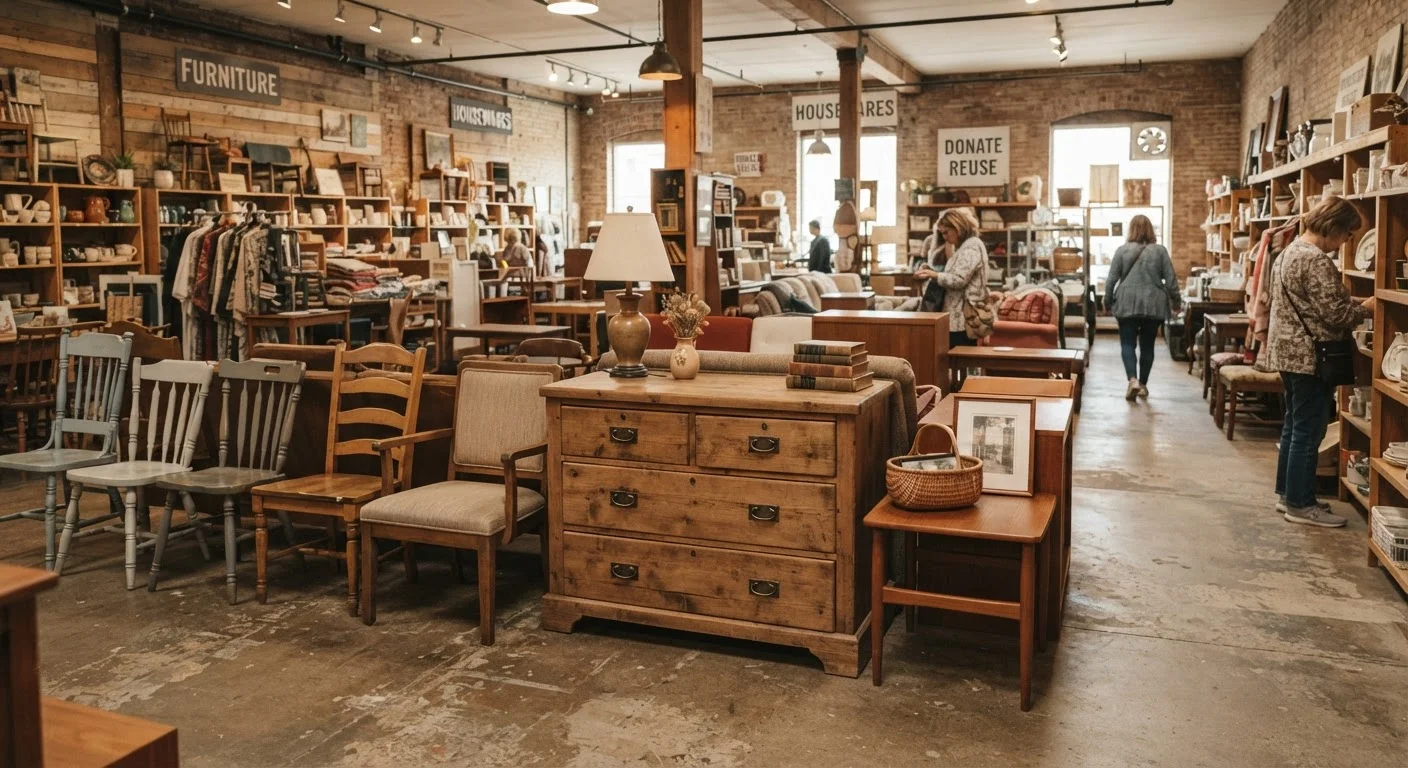
Photo: SaverSteals.com | Explore More. Shop Smarter. editorial
—— In This Article
Key Takeaways
- Thrift stores offer consistent inventory but limited negotiation; prices reflect donation volume, not market value.
- Online peer-to-peer marketplaces allow direct negotiation but require more vetting of condition and seller claims.
- Estate sales typically include higher-quality pieces and are often priced by professional liquidators.
- Consignment shops pre-screen furniture quality, which reduces risk but usually means higher prices.
- Each channel rewards different shopper behaviors - patience, inspection skill, or timing.
How Secondhand Furniture Actually Enters the Market
Used furniture reaches resale channels through a handful of predictable paths. Estates and downsizing households generate the largest volume - when someone moves into a smaller space or passes away, entire rooms of furniture become available at once. Renovation projects push out older pieces even when they're still functional. And everyday decluttering sends individual items to donation bins or listing apps.
Where that furniture ends up depends largely on perceived value and the seller's urgency. High-quality pieces from recognized eras or makers often get routed to consignment shops or estate sales where liquidators can price them more accurately. Everyday functional furniture - bookshelves, dressers, basic dining sets - tends to flow to thrift stores or peer-to-peer listings. Understanding this sorting process tells you where to look based on what you need.
~$15B
U.S. used furniture market estimated size
Industry research firms have estimated the U.S. secondhand furniture and home goods resale market in the tens of billions of dollars, reflecting sustained growth in resale across all home categories.
2-3 days
Typical estate sale duration
Most professionally run estate sales span two to three days, with markdowns commonly applied on the final day to clear remaining inventory.
30-60%
Typical consignment seller commission retained by shop
Consignment shops commonly retain between 30 and 60 percent of the final sale price, which factors into why consignment pricing is higher than thrift store equivalents.
Thrift Stores: Volume, Inconsistency, and Fixed Pricing
Charity thrift stores (run by organizations that fund social services with retail revenue) accept donated furniture and price it through a relatively blunt process - staff assign values based on condition and general category, not detailed market research. That creates both opportunity and frustration. You might find a solid hardwood dresser priced well below comparable retail simply because the pricer didn't recognize the construction quality. You might also find particleboard pieces priced too high relative to their remaining lifespan.
The key discipline at thrift stores is consistent, frequent visits. Inventory rotates rapidly and unpredictably. Pieces that weren't there Monday may appear Thursday. Most thrift stores do not hold items or accept reservations, so acting the same day you find something is usually necessary. Negotiation is rarely possible at chain thrift operations; pricing is generally fixed.
Set a Restock Alert Routine
Most thrift chains restock furniture on specific days of the week - ask staff at your local store when new donations hit the floor. Building a weekly visit habit around those days dramatically increases what you encounter. Some locations also post new arrivals on social media, which is worth following if you're actively searching.
Online Peer-to-Peer Marketplaces: Negotiation and Verification
Platforms where private sellers list directly to buyers have become one of the dominant secondhand furniture channels. Inventory is enormous and geographically filtered, which makes it practical for larger items. Sellers set their own prices, which means both genuine underpricing (motivated movers, quick-clearance situations) and significant overpricing (inflated vintage claims, cosmetic-damage concealment).
Effective use of these platforms requires a vetting mindset. Ask sellers directly: how old is the piece, why are you selling, does it have any odors or hidden damage, has it been in a smoking or pet household? Request additional photos of joints, underside, and any wear areas. For upholstered pieces, odor and infestation risk are the primary concerns that photos cannot fully communicate - inspect in person before committing. Pricing is negotiable in most cases; sellers expect it.
For a structured approach to the full buying process - from listing research through transport - see our complete first-time used furniture buyer's guide.
Estate Sales and Consignment: Higher Quality, Different Rules
Estate sales are professionally organized liquidation events, typically spanning two to three days. A liquidator inventories, researches, and prices everything in a household - including furniture. Because liquidators are incentivized to maximize total sale revenue and have market knowledge, prices at estate sales tend to be more research-grounded than thrift store pricing. That means less accidental underpricing, but also more accurate representation of genuine value for quality pieces.
Arriving early on day one gives access to the full inventory. Arriving on the final day (or final hours) often yields markdowns as liquidators clear remaining items rather than haul them away. Items are typically sold as-is, so bring a flashlight, physically open drawers, check structural joints, and look for signs of past repairs.
Consignment shops occupy a middle ground: they accept furniture from private sellers, pre-screen for condition, and split the sale price. That curation reduces the risk of buying damaged goods but narrows selection and raises prices. They're a reasonable choice for shoppers who value quality assurance over the thrill of discovery. The thrift stores and estate sales field guide covers how to navigate each venue format in more detail.
Matching Your Needs to the Right Channel
No single secondhand channel suits every situation. A shopper furnishing an apartment quickly on a tight budget does better with thrift stores and online listings - high volume, fast turnover, lower prices. A shopper looking for a specific period piece (mid-century credenza, Victorian side table) should focus on estate sales and consignment shops where quality is vetted and provenance is more traceable. Someone comfortable with repair work may find the most financial upside in peer-to-peer platforms where cosmetic damage often drops prices disproportionately to actual structural condition.
Recognizing construction quality across all these channels is a foundational skill. Our plain-language reference on furniture joints and finishes gives you the vocabulary to evaluate what you're actually looking at. And if you're curious how this compares to other secondhand categories, the dynamics of the secondhand tool market follow a similar channel logic with different category-specific risks.
Frequently Asked Questions

Furniture Editorial Team
Furniture Editorial Team is the collective byline for our editorial team and contributor network. Articles published under this byline or an editorial pen name are researched, written, and reviewed according to our editorial standards for clarity, consistency, and independence before publication.
View author profile