
Decorating a Room on a Tight Budget: A Realistic Starting Point
New to budget decorating? This guide covers the core principles of affordable room styling without sacrificing comfort or personality.
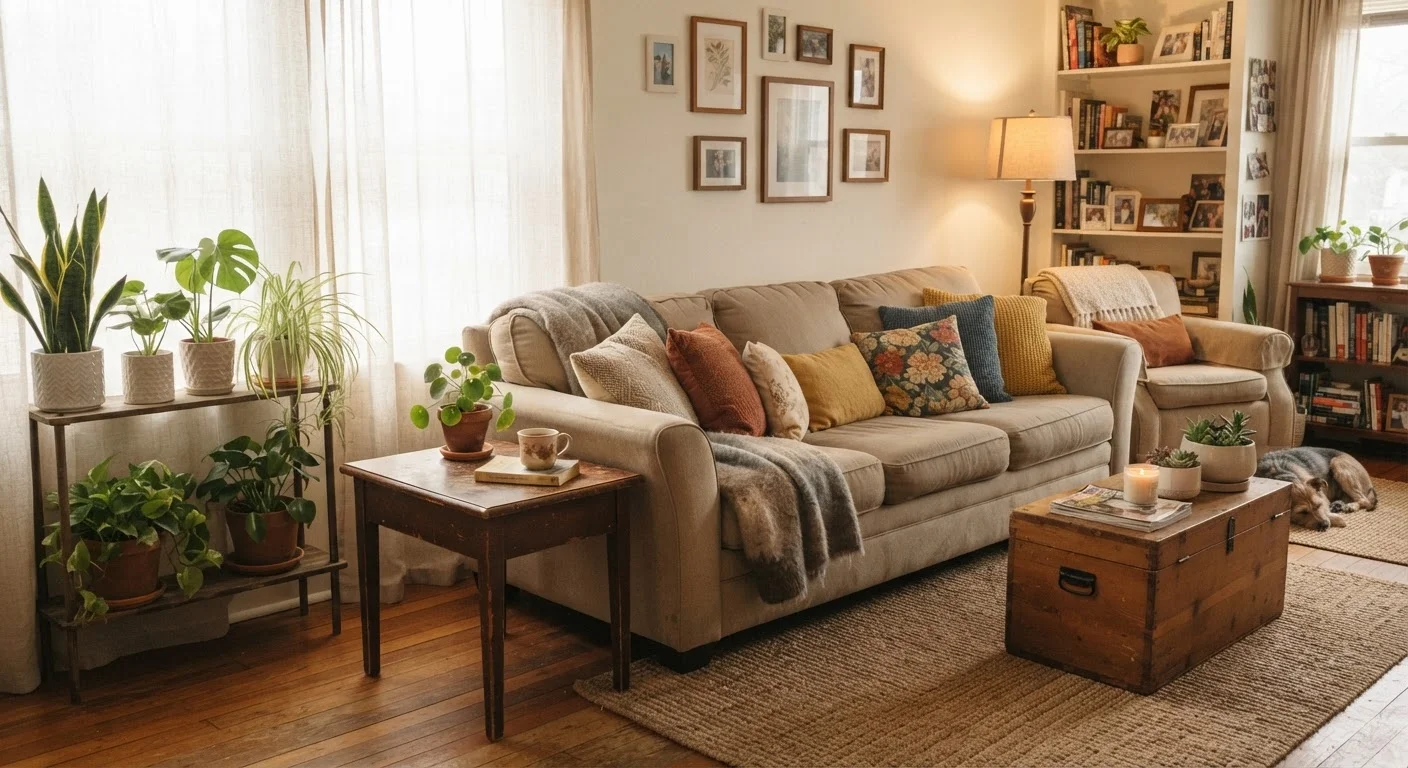
Photo: SaverSteals.com | Explore More. Shop Smarter. editorial
—— In This Article
Key Takeaways
- Planning before purchasing is the single most effective way to avoid wasted spending on décor.
- Secondhand markets, discount retailers, and seasonal clearance are reliable sources for affordable pieces.
- Small changes — lighting, textiles, and arrangement — often deliver more visual impact than large purchases.
- A neutral color foundation keeps pieces versatile and reduces the cost of updating a room over time.
- Budget decorating works best as a phased process, not a single shopping trip.
Why Budget Decorating Feels Overwhelming (And How to Reframe It)
Walking into a room you want to transform — with limited funds and no clear starting point — is one of the more frustrating experiences in home improvement. The problem usually isn't a lack of ideas. It's an overload of them. Décor inspiration is everywhere, and much of it assumes an unlimited budget or a complete room overhaul.
The more useful reframe: budget decorating isn't about doing everything cheaply. It's about spending selectively on the changes that matter most and holding off on everything else. That shift in mindset, from "how do I make this room look finished" to "what would make the biggest difference right now," is what separates successful budget decorators from those who spend without visible progress.
Before any shopping, it helps to acknowledge that most rooms can be significantly improved without buying a single new item. Our guide on rearranging what you already own covers exactly that — and it's the natural first step before any spending begins.
Color palette
A limited set of two to three colors chosen to repeat across a room's elements — walls, textiles, and accents — to create a unified, intentional look.
Accent piece
A decorative item — such as a pillow, vase, or small artwork — that adds personality or color without serving a primary functional purpose.
Overstock merchandise
Surplus inventory that retailers need to clear, often sold at reduced prices through discount channels. These items are typically new but may be from past seasons.
Phased decorating
An approach to home styling where purchases are spread out over time rather than made all at once, allowing for more deliberate choices and better budget control.
Scale
The size of a piece of furniture or décor relative to the room and surrounding items. An item that is too large or too small for its space can make a room feel unbalanced.
Start Before You Shop: Planning That Prevents Wasted Money
Impulse purchases are the leading cause of budget overruns in home decorating. A throw pillow that doesn't match, a lamp that's the wrong scale, a print that seemed perfect in the store — these small missteps accumulate quickly. A simple planning process prevents most of them.
Before buying anything, measure your room and note its fixed elements: wall color, flooring, and any furniture you're keeping. Identify the room's actual pain points — is it dim? Cluttered? Lacking warmth? This distinction matters because it tells you where spending will have real impact.
Our room-by-room planning checklist gives you a structured framework to work through before purchasing anything. It also helps you set a realistic total budget and divide it across categories — so you don't accidentally spend everything on accent pieces before addressing larger needs like seating or lighting.
Write Down Your Budget Before You Browse
Setting a total number — and dividing it loosely across categories like lighting, textiles, and furniture — before you start shopping helps prevent overspending on early finds. Even a rough allocation acts as a guardrail. Revisit and adjust it as your priorities become clearer, but always start with a number.
Where to Find Affordable Décor Without Compromising Style
Once you know what you need, the question becomes where to find it without overspending. Several reliable source categories are worth knowing:
- Thrift stores and estate sales regularly carry frames, vases, mirrors, lamps, and occasional furniture at a fraction of retail prices. Quality varies, but consistent visits build familiarity with what each location typically stocks.
- Online resale platforms — including local buy-sell-trade groups and marketplace apps — are particularly useful for larger items like rugs, side tables, and accent chairs that are expensive new but widely available secondhand.
- Discount home goods retailers offer new items at reduced prices, often because they carry overstock or slightly irregular merchandise. These stores refresh inventory frequently, so it pays to check back regularly rather than expecting a specific item to be available on demand.
- Seasonal clearance at mainstream retailers typically happens after major holidays and at seasonal transitions. End-of-season markdowns on outdoor furniture, holiday textiles, and seasonal décor can reach significant percentages off original prices.
For larger furniture needs, our guide on buying furniture on a budget covers timing and trade-offs in more depth.
High-Impact Changes That Cost Very Little
Some of the most effective room transformations involve relatively low-cost adjustments rather than new furniture. Understanding which changes deliver the most visual return helps you allocate a small budget wisely.
Lighting has an outsized effect on how a room feels. Replacing a cold overhead bulb with a warmer-toned option or adding a secondhand floor lamp can shift a room's entire atmosphere. Lighting adjustments are often the cheapest improvement with the most immediate impact.
Textiles — throw blankets, pillow covers, and curtains — add warmth and color without permanent commitment. Curtains hung higher and wider than the actual window frame make a room feel taller and more spacious, a technique that costs only the price of the curtain panels.
Mirrors reflect light and visually enlarge smaller rooms. A secondhand framed mirror is among the most practical thrift-store finds for decorating purposes.
For a broader look at these types of adjustments, see our article on small décor changes that make a measurable difference.
Building Toward a Cohesive Look Over Time
Budget decorating rarely happens all at once, and that's not a limitation — it's actually an advantage. Phased decorating gives you time to evaluate each addition before committing to the next, which results in fewer regrettable purchases and a more intentional final result.
Anchoring your choices in a consistent color palette is the most reliable way to make pieces from different sources look like they belong together. A palette of two to three tones — applied across walls, textiles, and accent pieces — creates cohesion even when individual items have different origins or styles.
The decision between a neutral-leaning palette and trend-driven pieces also has budget implications worth understanding. Our comparison of neutral vs. trend-led décor breaks down which approach tends to stretch a budget further over the long term.
When you're ready to think beyond individual rooms and toward a consistent aesthetic across your whole home, the principles in our guide to building a cohesive home aesthetic without overspending offer a useful framework for that next stage.
Room-by-Room Planning Checklist
A structured checklist for measuring, prioritizing, and budgeting before buying anything. Reduces impulse purchases and helps you identify which changes will have the most impact per dollar.
No-Cost Room Refresh Guide
A practical walkthrough of layout and styling techniques that improve how a room feels without adding any new items — the ideal starting point before any spending begins.
Frequently Asked Questions

Home & Garden Editorial Team
Home & Garden Editorial Team is the collective byline for our editorial team and contributor network. Articles published under this byline or an editorial pen name are researched, written, and reviewed according to our editorial standards for clarity, consistency, and independence before publication.
View author profile