
Reducing Garden Waste: Saving Money Through Better Planning
Dead plants, unused seed packets, and neglected tools represent real money lost. These planning habits help you buy only what your garden will use.
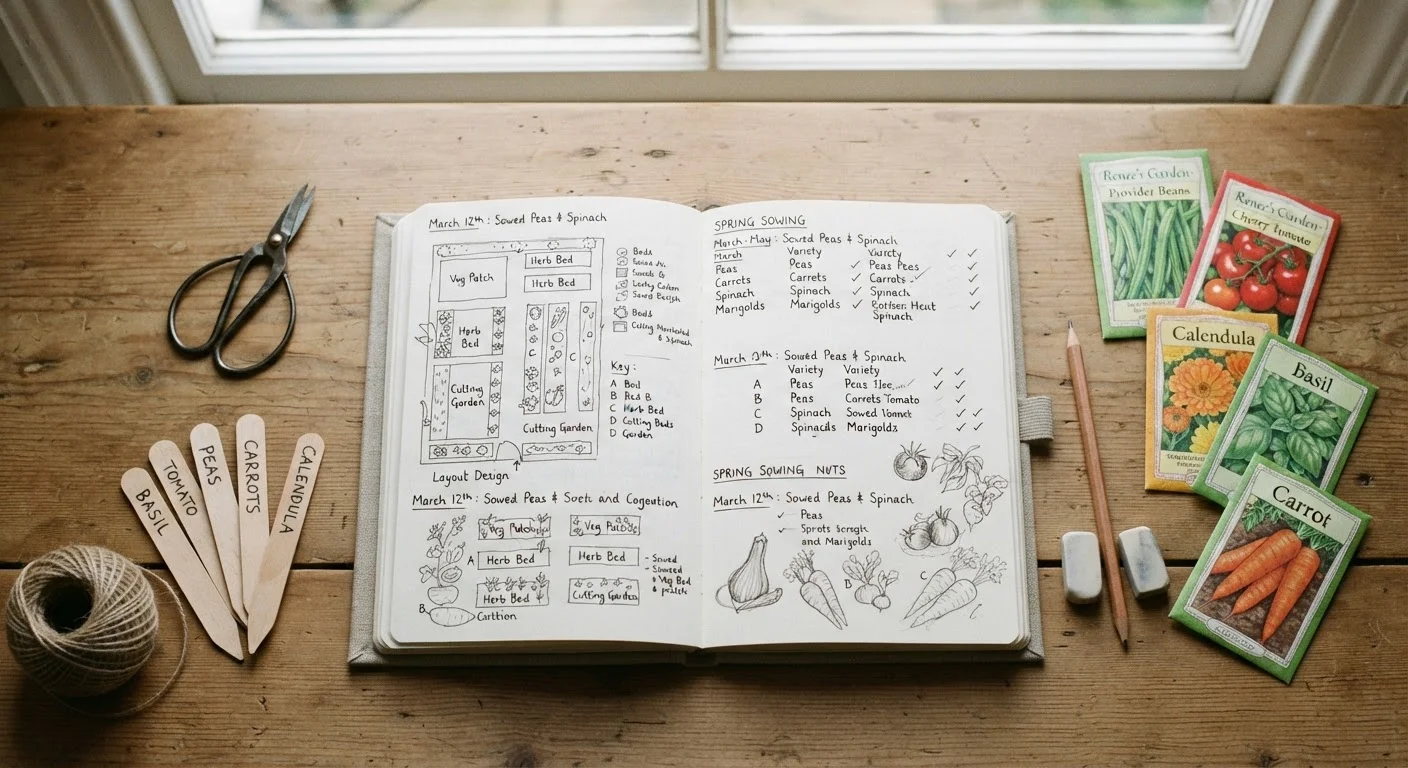
Photo: SaverSteals.com | Explore More. Shop Smarter. editorial
—— In This Article
Key Takeaways
- Most garden waste starts before a single seed is planted — in the planning phase.
- Mapping your space before buying prevents duplicate purchases and mismatched plant quantities.
- Tracking what you used last season gives you a reliable baseline for next year's shopping list.
- Staggered planting schedules reduce die-off from overcrowding or mistimed purchases.
- A written inventory of tools and supplies prevents buying what you already own.
Why Planning Is a Budget Strategy
Most gardeners focus their cost-cutting efforts at the point of purchase — hunting for discounts or waiting for end-of-season sales. That approach has merit, but it misses the larger problem: money lost on supplies, plants, and seeds that were never going to succeed in your specific garden in the first place.
Dead plants aren't just disappointing. Each one represents a purchase that didn't need to happen. The same applies to a half-used bag of fertilizer left to harden, seeds started too early that bolt before they can be transplanted, or a tool bought in a spring rush that duplicates something already in the shed.
Good planning doesn't require elaborate spreadsheets. It requires the habit of deciding what you need before you shop rather than figuring it out as you go. That shift alone tends to reduce garden spending noticeably — not because you're being deprived of anything, but because you're no longer paying for things that don't fit your garden's actual conditions.
For a broader look at how spending patterns add up season after season, see our article on common ways gardeners overspend without realising it.
Practices That Prevent Waste Before It Starts
The following practices address the most common points where garden budgets leak — each grounded in the simple principle of buying only what your garden will actually use.
Map your available growing space before purchasing any plants or seeds.
Without a space map, it's easy to overbuy for areas you don't have, or to buy plants that won't fit your conditions — sun exposure, soil depth, or moisture levels. This mismatch is one of the most common causes of plant loss.
Keep a season-end record of what you planted, what succeeded, and what you discarded unused.
Memory is unreliable across a six-month off-season. Without written records, gardeners tend to repeat the same mismatches — overbuying seeds for vegetables that didn't perform well in their conditions or underestimating what actually worked.
Create a written shopping list from your plan before visiting any garden center or website.
Impulse purchases account for a significant share of garden overspending. A specific list — with quantities — acts as a decision boundary that's much easier to maintain than relying on in-the-moment judgment among appealing displays.
Plan for succession planting rather than buying everything at once.
Buying all your seedlings in one trip means they must all be planted at once or risk sitting too long. Staggering purchases by a few weeks aligns planting with actual readiness and reduces the number of plants that deteriorate before going into the ground.
Audit your tool and supply inventory before each season.
Duplicate tools are a common and invisible budget drain. When items are stored in different locations or poorly organized, it's easy to buy a second trowel or an extra pair of gloves without realizing you already own one.
Match plant quantities to realistic use, not aspirational plans.
It's tempting to plan for a bumper harvest or a full border in the first year. Buying for that scale when you're still learning your space leads to more failures and more waste than buying conservatively and expanding once you understand what works.
Quick Actions You Can Take Right Now
You don't need to wait until next season to apply better planning habits. Several of these adjustments take less than an hour and can meaningfully shape what you spend going forward.
If you're working with a genuinely tight budget and want a structured starting point, our guide to growing a garden on a tight budget covers where to put your first dollars and where to hold back.
Connecting Planning to Smarter Purchasing
Once you know exactly what your garden needs, purchasing decisions become much more straightforward. You're comparing like for like rather than guessing quantities or grabbing extras "just in case."
~30%
Estimated share of garden purchases never fully used
Garden industry observers and extension educators commonly note that a significant portion of seeds, transplants, and amendments go unused or fail due to planning mismatches rather than growing conditions.
3–5x
Potential multiplier on plant cost from impulse buys vs. planned purchases
Behavioral purchasing research broadly shows that unplanned in-store decisions cost significantly more per item than purchases made from a predefined list in any retail environment.
Planning also helps you take advantage of timing. When you know in advance that you'll need a particular type of mulch or a certain quantity of seeds, you can purchase at lower-cost periods rather than in peak spring urgency. Our garden pricing calendar explains when those windows typically occur.
Similarly, knowing your exact needs before you shop makes bulk purchasing decisions clearer. Buying in bulk can lower per-unit costs, but only when you have a realistic sense of what you'll actually consume before storage degrades quality.
Planning is ultimately a form of respect for your own time and money. It converts gardening from a series of reactive purchases into a process you control — one that leaves you with fewer dead plants, less cluttered storage, and more growing success per dollar spent. For a complete picture of where savings are possible across your whole garden, see our comprehensive spending guide.

Home & Garden Editorial Team
Home & Garden Editorial Team is the collective byline for our editorial team and contributor network. Articles published under this byline or an editorial pen name are researched, written, and reviewed according to our editorial standards for clarity, consistency, and independence before publication.
View author profile