
Buying Gardening Supplies in Bulk: The Advantages and the Pitfalls
Bulk compost, mulch, and seeds can lower your per-unit cost — but storage, spoilage, and over-buying can erase those savings. Here's what to consider.
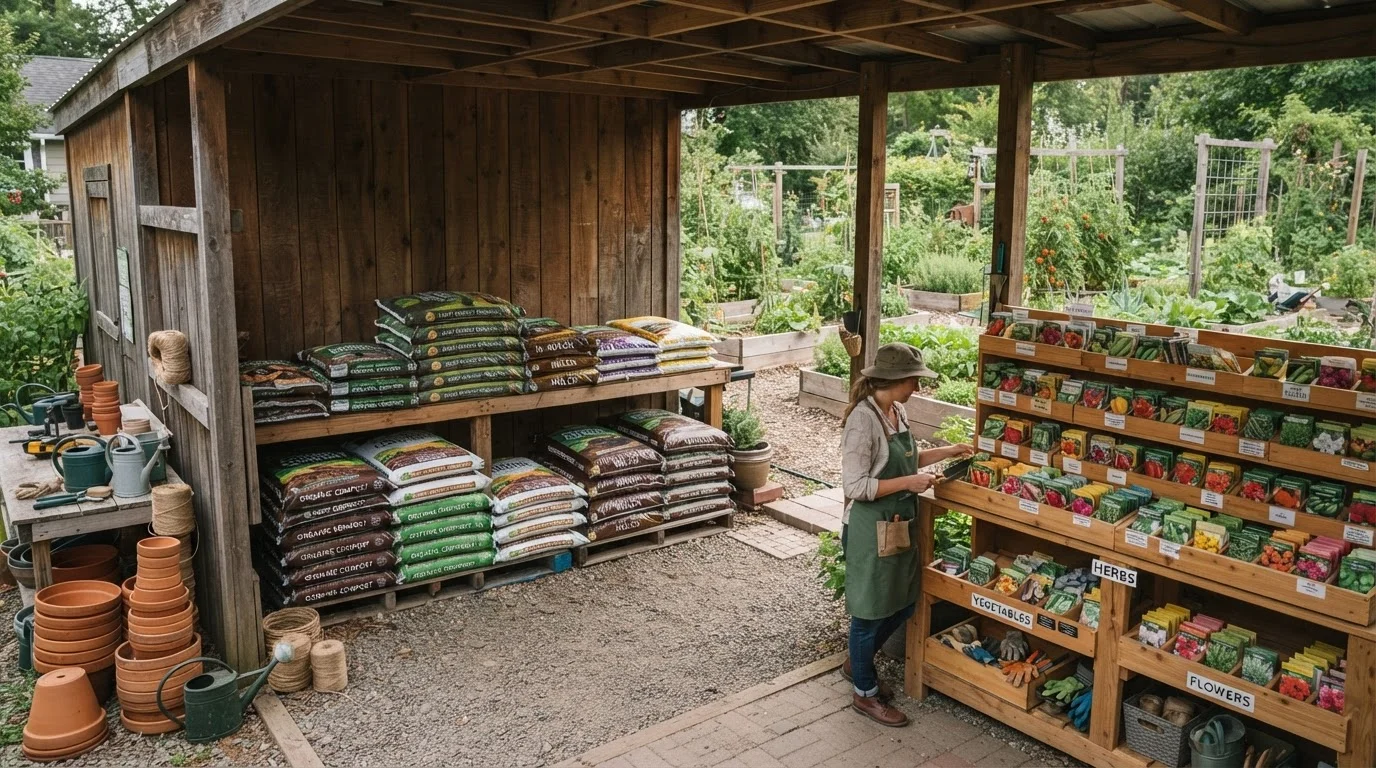
Photo: SaverSteals.com | Explore More. Shop Smarter. editorial
—— In This Article
Key Takeaways
- Bulk purchases lower the per-unit cost of staples like compost, mulch, and fertilizer.
- Poor storage conditions can degrade bulk materials before you use them, erasing any savings.
- Over-buying is one of the most common budget leaks in home gardening.
- Splitting bulk orders with neighbors or fellow gardeners reduces waste and upfront cost.
- Some supplies — especially seeds and soil amendments — have limited shelf lives to consider.
Lower cost per unit on staple supplies
Buying compost, mulch, or fertilizer in larger quantities typically reduces the per-unit price compared to individual bags. For gardeners with consistent, predictable needs, this margin adds up meaningfully across a full growing season.
Fewer shopping trips and restocking delays
Having materials on hand means you can act when planting conditions are right rather than waiting on a supply run. This is especially valuable early in spring when timing matters for transplants and soil preparation.
Easier to share costs with other gardeners
Bulk quantities create a natural opportunity to split orders with neighbors or community gardeners, spreading both the cost and the volume across more than one household.
Reduces packaging waste over time
Loose bulk deliveries of compost or mulch generate far less plastic waste than purchasing the same volume in individual bagged form — a practical benefit for gardeners who prioritize sustainability alongside cost.
Storage space requirements are often underestimated
A single cubic yard of mulch occupies the equivalent of a 3×3×3-foot space. Without a dry, covered area to store bulk materials, quality degrades quickly and the practical cost of the purchase rises.
Seed viability declines with time and poor storage
Most vegetable seeds have a germination window of one to three years, and that window shortens in warm, humid, or fluctuating storage conditions. Buying more seed than one season requires risks low germination rates and replanting costs.
Bulk fertilizers can clump or lose potency
Granular fertilizers absorb moisture if not stored in airtight, waterproof containers. Once clumping occurs, even distribution becomes difficult and nutrient content can be compromised.
Upfront cost is higher, straining seasonal budgets
Even when the per-unit price is lower, the total outlay for a bulk order is larger. For gardeners on tight seasonal budgets, this lump sum can crowd out spending on other necessary items.
Over-buying is easy without accurate usage data
Without records from previous seasons, it's easy to overestimate how much compost, mulch, or fertilizer a garden actually requires. Unused material that degrades before the next season represents a direct financial loss.
Why Bulk Buying Appeals to Gardeners
The logic behind bulk purchasing is straightforward: buying more of something at once typically lowers the cost per unit. For gardening staples — compost, mulch, topsoil, fertilizer, and seeds — the difference between a single bag price and a bulk yard or bulk-seed rate can be substantial. A cubic yard of compost delivered loose often costs significantly less per volume than buying the equivalent in bagged form from a garden center.
This approach also cuts down on repeated shopping trips, which saves both time and fuel. For gardeners who follow a consistent annual planting plan, knowing you have materials on hand allows you to start earlier in the season and respond to planting windows without delays. See how timing intersects with pricing in our seasonal garden pricing guide.
Lower cost per unit on staple supplies
Buying compost, mulch, or fertilizer in larger quantities typically reduces the per-unit price compared to individual bags. For gardeners with consistent, predictable needs, this margin adds up meaningfully across a full growing season.
Fewer shopping trips and restocking delays
Having materials on hand means you can act when planting conditions are right rather than waiting on a supply run. This is especially valuable early in spring when timing matters for transplants and soil preparation.
Easier to share costs with other gardeners
Bulk quantities create a natural opportunity to split orders with neighbors or community gardeners, spreading both the cost and the volume across more than one household.
Reduces packaging waste over time
Loose bulk deliveries of compost or mulch generate far less plastic waste than purchasing the same volume in individual bagged form — a practical benefit for gardeners who prioritize sustainability alongside cost.
The Real Pitfalls of Buying in Bulk
Savings on paper don't always translate to savings in practice. The most common problem is buying more than you can realistically use before the material degrades. Bagged fertilizers can clump or lose efficacy if stored in damp conditions. Seed packets, even sealed ones, have viability windows — many vegetable seeds lose germination rates noticeably after one to three years, depending on the variety. Mulch left in an uncovered pile can compact, mold, or blow away before it reaches your beds.
Storage space is often the limiting factor that gardeners underestimate. A cubic yard of mulch is roughly 27 cubic feet — a sizeable physical footprint that requires a dry, accessible location. Without that, what looked like a deal becomes a logistical problem. Overpurchasing is also one of the most common ways gardeners leak money without realizing it until the season is over.
Storage space requirements are often underestimated
A single cubic yard of mulch occupies the equivalent of a 3×3×3-foot space. Without a dry, covered area to store bulk materials, quality degrades quickly and the practical cost of the purchase rises.
Seed viability declines with time and poor storage
Most vegetable seeds have a germination window of one to three years, and that window shortens in warm, humid, or fluctuating storage conditions. Buying more seed than one season requires risks low germination rates and replanting costs.
Bulk fertilizers can clump or lose potency
Granular fertilizers absorb moisture if not stored in airtight, waterproof containers. Once clumping occurs, even distribution becomes difficult and nutrient content can be compromised.
Upfront cost is higher, straining seasonal budgets
Even when the per-unit price is lower, the total outlay for a bulk order is larger. For gardeners on tight seasonal budgets, this lump sum can crowd out spending on other necessary items.
Over-buying is easy without accurate usage data
Without records from previous seasons, it's easy to overestimate how much compost, mulch, or fertilizer a garden actually requires. Unused material that degrades before the next season represents a direct financial loss.
What Bulk Buying Actually Works For
Not all supplies carry equal bulk-buying risk. Some materials are well-suited to larger purchases; others are not. Here's a practical breakdown:
- Mulch and wood chips: High volume, low spoilage risk if kept dry and covered. Well-suited to bulk delivery for gardeners with multiple beds.
- Compost: Can be bought in bulk cubic yards, but should be used within a season. Quality can vary by supplier.
- Granular fertilizers: Stable when stored sealed and dry. Bulk purchasing makes sense if you use them annually and have airtight containers.
- Seeds: Bulk seed purchases work well for high-use varieties like beans, squash, or sunflowers. Smaller quantities are usually wiser for slow-germinating or specialty seeds. Our article on seeds vs. transplants covers the cost trade-offs in more detail.
- Potting mix and topsoil: Prone to compaction and moisture issues in long-term storage. Buy only what you'll use within a single season.
1–3 years
Typical seed viability window by variety
Germination rates for most common vegetable seeds decline measurably after one to three years, with onions, parsnips, and sweet corn on the shorter end of that range.
27 cu ft
Volume of one cubic yard of bulk material
One cubic yard — a standard bulk delivery unit for compost or mulch — occupies roughly 27 cubic feet of storage or ground space, equivalent to a 3×3×3-foot cube.
Smarter Ways to Approach Bulk Purchases
The most effective strategy for bulk buying isn't simply buying more — it's buying deliberately. Before committing to a large quantity, calculate your actual consumption from previous seasons. If you mulched four beds and used roughly three cubic yards, that's your baseline, not a reason to order six.
Splitting orders with a neighbor or community garden member is one of the most underused options available. It preserves the per-unit savings while halving the storage burden and the upfront outlay. This approach works particularly well for seeds, fertilizer, and compost.
Planning your purchases around what you'll genuinely use also connects directly to broader waste-reduction habits. Our guide on reducing garden waste through planning goes deeper on how to match buying to actual need. And if you're newer to gardening on a budget, starting without overspending offers a solid foundation before scaling up to bulk orders.
Consider Home Composting as an Alternative
If your main reason for buying compost in bulk is cost, home composting may reduce that need significantly over time. Setup costs vary, but ongoing inputs are largely free. Our article on home composting and soil amendment savings walks through realistic setup costs and what you can expect to save year over year.

Home & Garden Editorial Team
Home & Garden Editorial Team is the collective byline for our editorial team and contributor network. Articles published under this byline or an editorial pen name are researched, written, and reviewed according to our editorial standards for clarity, consistency, and independence before publication.
View author profile