
Growing a Garden on a Tight Budget: Where to Start and What to Skip
A practical introduction to building a productive garden without overspending on equipment, plants, or soil amendments from day one.
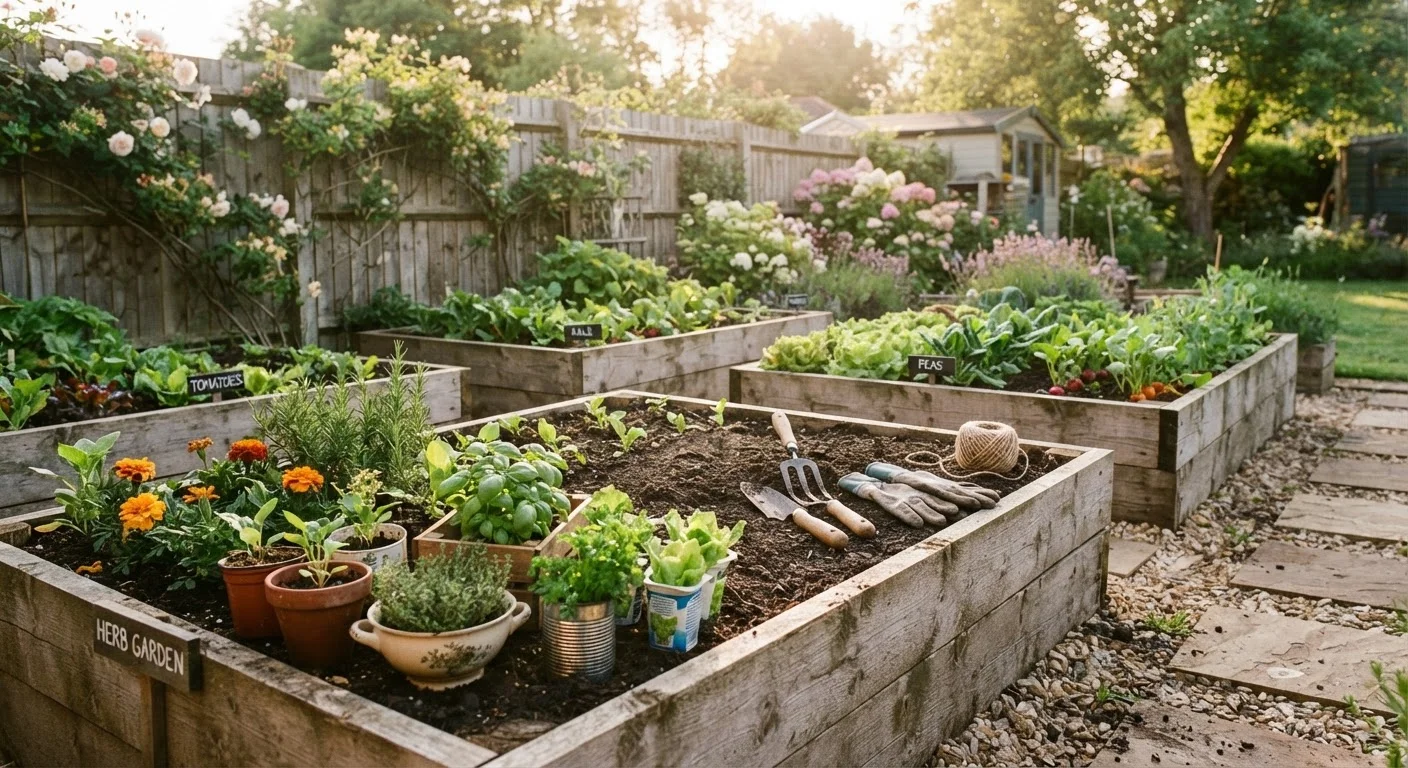
Photo: SaverSteals.com | Explore More. Shop Smarter. editorial
—— In This Article
Key Takeaways
- Starting small reduces upfront costs and makes it easier to learn without wasting money.
- Seeds cost a fraction of transplants and are the smarter buy for most vegetables.
- A handful of durable hand tools is all a beginner garden genuinely requires.
- Improving native soil gradually beats buying large quantities of bagged amendments.
- Many popular gardening accessories add cost without meaningfully improving results.
Start With What Your Space Actually Needs
The most expensive gardening mistake is scaling up before you understand what your specific space requires. Before spending anything, observe your yard or balcony for a few days. Note how many hours of direct sun each area receives, whether water pools after rain, and what the soil texture feels like when squeezed.
These observations determine what will actually grow — and prevent you from buying plants suited to conditions you don't have. A shady corner can't support tomatoes regardless of how much you spend on fertilizer. Starting with a realistic picture of your space is free, and it's the single most valuable step a beginner can take.
Begin with a planting area no larger than 4×4 feet for your first season. A small plot is easier to manage, requires far less soil amendment, and teaches you more than a large neglected one ever could. Once you know how your space behaves through a full season, you can expand with confidence rather than guesswork. See our guide to reducing garden waste through better planning for how seasonal planning prevents costly mistakes.
Seeds vs. Transplants: Where Your Money Goes Further
Seed packets typically cost $2–$4 and contain enough seeds to fill a small garden multiple times over. Nursery transplants for the same crop often run $3–$6 per individual plant. For direct-sown crops — beans, carrots, radishes, lettuce, cucumbers, squash — seeds are clearly the better financial choice.
Transplants earn their cost for crops that need a long head start: tomatoes, peppers, and eggplant all benefit from being started 6–10 weeks before the last frost, which requires indoor grow lights or a heated space most beginners don't have. For those crops in your first year, one or two nursery transplants is a reasonable compromise.
Look Into Local Seed Libraries
Seed swaps, community garden programs, and local library seed libraries are worth researching in your area. Many municipalities offer free or low-cost seeds as part of community gardening initiatives — a resource that experienced gardeners regularly overlook.
Seed swaps, community garden programs, and local library seed libraries are worth researching in your area. Many municipalities offer free or low-cost seeds as part of community gardening initiatives — a resource that experienced gardeners regularly overlook.
The Short List of Tools Worth Buying
A beginner garden needs three hand tools: a trowel for planting and digging, a hand fork for loosening soil, and a watering can or hose with an adjustable nozzle. That's a complete working toolkit for a small plot. Everything else — specialized weeders, soil blockers, broadforks, dibbers — can wait until you've identified a genuine need for it.
Buy tools made with metal heads and solid wood or fiberglass handles. Cheap plastic-handled tools break under real use and end up costing more in replacements. Second-hand tools in good condition are often available at estate sales, thrift stores, and online marketplaces and can be restored with light sanding and linseed oil.
Tool Purchases Add Up Quietly
For insight into the specific tool purchases that quietly drain gardening budgets, our overview of how gardeners overspend without realising it covers duplicate tools and impulse buys in detail.
For insight into the specific tool purchases that quietly drain gardening budgets, our overview of how gardeners overspend without realising it covers duplicate tools and impulse buys in detail.
Soil on a Budget: What Matters and What Doesn't
Healthy soil is the foundation of a productive garden, but you don't need to buy expensive pre-mixed blends to get there. Native soil improved gradually with homemade compost performs well for most vegetables. Start a compost pile using kitchen scraps (vegetable peelings, coffee grounds, eggshells) and dry yard material like leaves or straw. Within a few months, you'll have a free soil amendment that outperforms many bagged products.
When you do buy soil products, a single bag of balanced compost worked into your planting area is usually sufficient for a first-year plot. Resist the impulse to layer on multiple amendments — adding fertilizer, lime, peat, perlite, and compost simultaneously without testing your soil first is a common and avoidable expense. A basic soil pH test (available for a few dollars) tells you precisely what, if anything, your soil actually needs.
For a broader view of cost-saving strategies across every gardening category, the complete guide to spending less across every part of your garden is a useful reference as you grow past the beginner stage.
Direct sowing
Planting seeds directly into the ground or growing container rather than starting them indoors first. Most fast-growing vegetables are direct sown.
Transplant
A young plant started in a nursery or greenhouse and sold ready to move into your garden. Transplants save time but cost more than seeds.
Soil amendment
Any material mixed into soil to improve its texture, drainage, or nutrient content. Examples include compost, perlite, and lime.
Compost
Decomposed organic material — vegetable scraps, leaves, grass clippings — that improves soil structure and provides slow-release nutrients. It can be made at home for free.
Soil pH
A measure of how acidic or alkaline your soil is, on a scale from 1 to 14. Most vegetables grow best in soil with a pH between 6.0 and 7.0.
Annual
A plant that completes its full life cycle — germination, growth, flowering, and seed production — within a single growing season.
What to Skip in Your First Season
Certain products are marketed heavily to new gardeners but deliver limited benefit in a beginner plot. Decorative trellises, elaborate drip irrigation kits, electric tillers, cold frames, and specialty fertilizer blends all fall into this category. Each has a legitimate use case — but not necessarily yours, not yet.
The same logic applies to plant selection. Exotic vegetables, perennial edibles, and fruit trees all require more time, space, or patience than a first garden season allows. Stick to fast-growing annuals that reward you with visible results quickly: green beans, zucchini, lettuce, and herbs. Early success builds the knowledge and motivation that makes future seasons more productive.
Ornamental garden décor is another area where first-year spending rarely adds value. If you're drawn to improving how your outdoor space looks on a budget, budget-friendly home décor ideas may offer more satisfying options while your garden matures.
Frequently Asked Questions

Home & Garden Editorial Team
Home & Garden Editorial Team is the collective byline for our editorial team and contributor network. Articles published under this byline or an editorial pen name are researched, written, and reviewed according to our editorial standards for clarity, consistency, and independence before publication.
View author profile