
Raised Beds vs. In-Ground Planting: Setup and Ongoing Costs Compared
Raised beds offer control and drainage, but they carry real upfront costs. In-ground planting has its own expenses. See how they stack up.
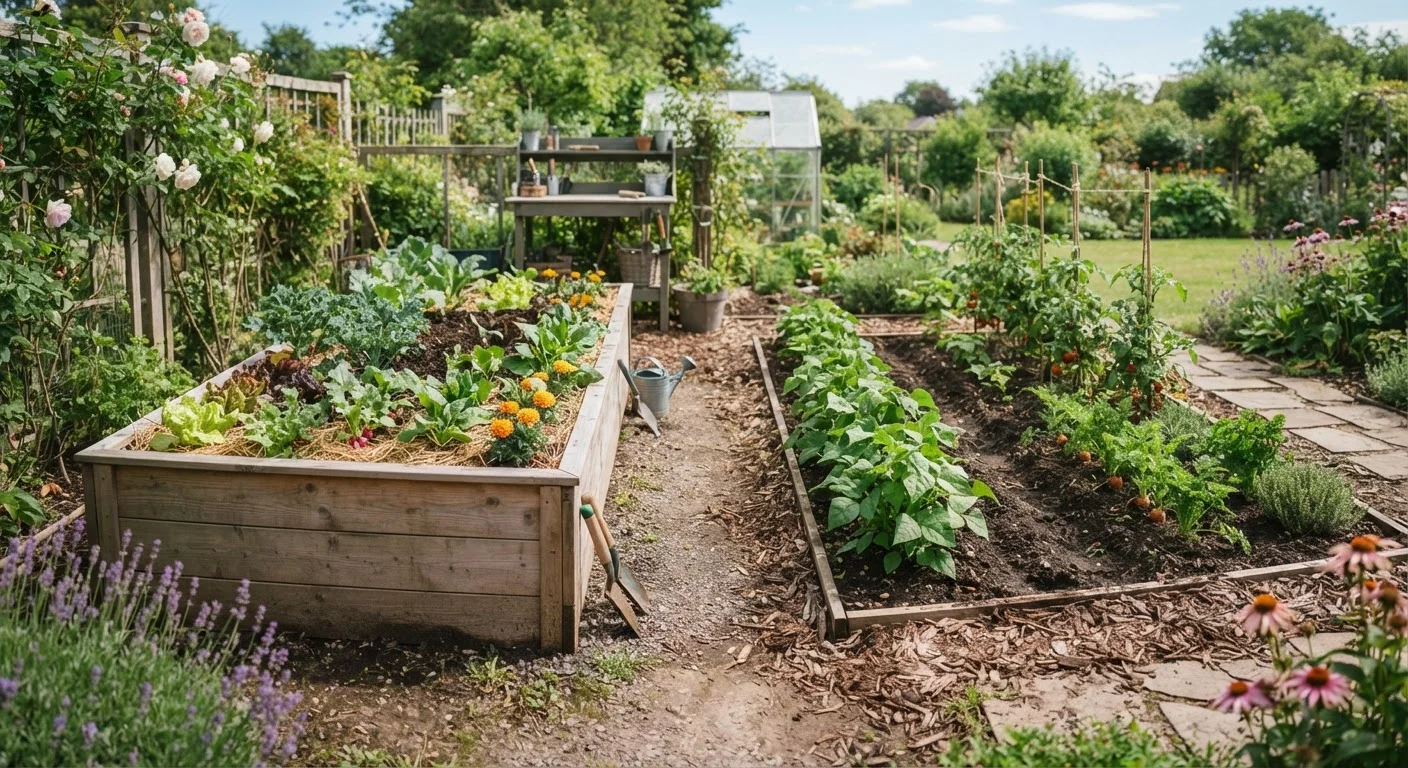
Photo: SaverSteals.com | Explore More. Shop Smarter. editorial
—— In This Article
Key Takeaways
- Raised beds typically require a higher upfront investment in materials and imported soil than in-ground plots.
- In-ground planting has lower initial costs but may require soil amendment, tilling, and ongoing weed management.
- Raised beds can reduce some annual costs like weeding labor and watering, depending on design and location.
- Both methods have ongoing costs — fertilizer, compost, seeds, and irrigation — that accumulate over time.
- The more productive option long-term depends heavily on your existing soil quality and local growing conditions.
Upfront Setup Costs: What Each Method Actually Requires
The most visible financial difference between raised beds and in-ground planting shows up before a single seed goes in the ground.
Raised beds require materials for the bed frame — commonly untreated cedar, pine, or galvanized metal — plus enough soil to fill the entire volume. A standard 4×8-foot cedar bed can cost anywhere from $50 to over $150 in lumber alone, depending on wood type and thickness. Fill soil is a significant added expense: a mix of topsoil, compost, and a structural amendment like perlite or coarse sand is commonly recommended. Filling that same 4×8 bed to a 12-inch depth requires roughly 32 cubic feet of material — a cost that adds up quickly if purchased in bags. Ordering in bulk from a local landscape supplier can reduce per-cubic-foot costs considerably. See our guide to buying gardening supplies in bulk for what to watch out for when ordering compost and soil by the yard.
In-ground planting starts cheaper. If your existing soil is reasonably loamy and well-draining, basic preparation — loosening compaction with a fork or tiller, adding a bag or two of compost, and clearing weeds — may cost under $30 for a comparable area. The tradeoff is that many US gardeners don't have ideal native soil. Clay-heavy or sandy soils often need repeated amendment over multiple seasons before they perform consistently.
| Criterion | Raised Bed Gardening | In-Ground Planting |
|---|---|---|
| Typical setup cost (4×8 ft area) | $100–$250+ (frame + fill soil) | $15–$50 (amendments only) |
| Soil quality control | Full control — you choose the mix | Dependent on native soil quality |
| Annual compost needs | 1–2 inches per season | 1–2 inches per season |
| Weed pressure | Generally lower | Typically higher |
| Drainage | Excellent by design | Varies by soil type |
| Scalability cost | High — each new bed adds cost | Low — expand with minimal spend |
| Long-term soil improvement | Requires ongoing inputs | Can become self-sustaining |
Ongoing Annual Costs: Where the Numbers Shift Over Time
Year one is rarely the whole story. Both methods carry recurring costs that can tip the long-term calculation in either direction.
Raised beds lose organic matter as soil biology breaks it down, meaning compost top-dressing is needed each season — typically 1 to 2 inches per year. However, because raised beds have defined, weed-free growing zones, many gardeners report spending less time and money on herbicides and manual weeding compared to in-ground plots. Watering efficiency also tends to be higher in raised beds when paired with drip irrigation, since water is directed precisely to the root zone.
In-ground plots require ongoing weed management as a genuine cost — either in labor, mulch materials, or both. Annual compost additions are also recommended to maintain soil structure. That said, in-ground soil develops a self-sustaining biology over time if managed with organic practices, potentially reducing amendment needs in later years.
32 cu ft
Fill soil needed for one standard raised bed
A 4×8-foot bed filled to 12 inches depth requires approximately 32 cubic feet of growing medium, based on standard volume calculations.
~$30
Estimated first-year amendment cost, in-ground
Gardeners with reasonably workable native soil can often prepare a 4×8-foot in-ground plot for under $30 in compost and basic amendments.
3–5 years
Typical raised bed payback horizon
Gardening educators generally suggest raised beds begin to show cost parity with in-ground plots after several seasons of productive use.
Both systems also share costs unrelated to growing method: seeds or transplants, tools, pest control, and irrigation supplies. For a closer look at how plant sourcing decisions affect your seasonal spend, see our breakdown of seed packets vs. nursery transplants.
For a fuller picture of where gardening dollars go — from tools to soil prep — the complete guide to spending less across every part of your garden covers the entire process systematically.
Making the Right Choice for Your Situation
No single method is universally more economical. The right choice depends on what you're starting with and what you want to grow.
If your yard has workable, loamy soil and you're planting a wide variety of vegetables or perennials across a large area, in-ground planting will almost always cost less to establish and expand. If your soil is a genuine obstacle — heavy clay, caliche, or contaminated urban fill — raised beds can save you from years of costly remediation attempts.
A middle path worth considering: start with one or two raised beds for crops that benefit most from controlled conditions (like carrots, radishes, and salad greens), while using in-ground space for larger, less soil-sensitive crops like squash or tomatoes. This hybrid approach lets you manage startup costs while gaining hands-on experience with both systems.
Whatever method you choose, pairing it with smart plant sourcing makes a measurable difference. Our article on growing a garden on a tight budget walks through where to focus your first dollars for the most productive return.

Home & Garden Editorial Team
Home & Garden Editorial Team is the collective byline for our editorial team and contributor network. Articles published under this byline or an editorial pen name are researched, written, and reviewed according to our editorial standards for clarity, consistency, and independence before publication.
View author profile