
Upholstered Pieces Worth Considering — and the Ones That Rarely Recover Well
Not all upholstered secondhand furniture cleans up equally. Learn which fabric types and constructions tend to hold up versus deteriorate.
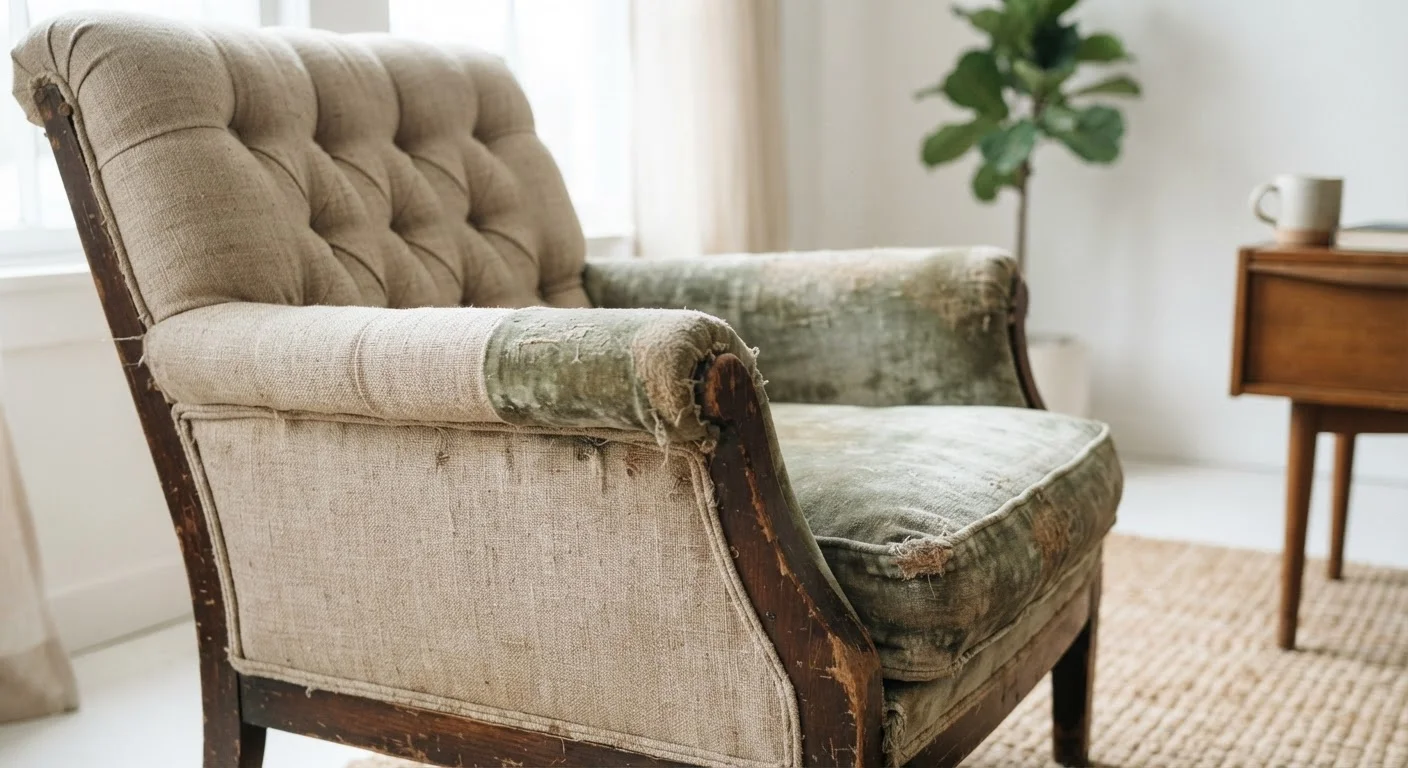
Photo: SaverSteals.com | Explore More. Shop Smarter. editorial
—— In This Article
Key Takeaways
- Tight-woven fabrics like canvas and wool blends tend to survive secondhand use far better than delicate weaves.
- Removable, washable cushion covers are one of the most reliable signals that a used piece is worth pursuing.
- Foam density and cushion resilience deteriorate in ways that cleaning alone cannot fix — always sit-test before buying.
- Velvet, silk-blend, and loosely woven fabrics rarely recover well from stains, matting, or heavy use.
- Frame construction quality ultimately determines whether reupholstering a worn piece is financially worthwhile.
Why Fabric Type Defines the Secondhand Equation
Buying upholstered furniture secondhand introduces a variable that solid wood pieces don't carry: fabric degrades in ways that aren't always visible at a glance. A structurally sound frame underneath worn-out upholstery can still be a worthwhile purchase — if the fabric type is forgiving or the piece is a strong reupholstery candidate. But plenty of upholstered pieces are essentially past recovery by the time they reach the resale market, regardless of how clean they look in photos.
The core question isn't just whether a piece looks presentable. It's whether the fabric construction is durable enough to have aged well, whether the cushion fill still has meaningful resilience, and whether any remediation costs are proportionate to what you'd pay for a comparable new piece. For a full pre-purchase framework, see what to check before buying a used sofa. The list below breaks down specific upholstered categories by how reliably they hold up — and which ones tend to disappoint.
Bring a UV flashlight when inspecting
A small UV flashlight (widely available at hardware stores) reveals biological stains — pet urine in particular — that look clean under normal light. This is especially useful on lighter-colored upholstery where surface cleaning may have masked rather than eliminated the source of odors. Run it across seat cushions, armrests, and along the base.
Upholstered Pieces: What Holds Up vs. What Rarely Recovers
Canvas and cotton-duck sofas
Tightly woven canvas and cotton-duck upholstery is among the most forgiving fabric types in the secondhand market. The dense weave resists snagging, holds shape after repeated washing, and shows surface soiling rather than embedding it deep in fibers. Stains on canvas are typically removable with standard upholstery cleaners, and the fabric doesn't mat or pill the way looser weaves do.
Look for even color across the seating surface — fading concentrated at cushion edges or arm tops signals heavy UV or friction exposure. Canvas pieces with removable slipcovers are particularly strong candidates, as covers can be machine-washed or replaced affordably.
Canvas upholstery shows surface soiling rather than trapping it — stains are usually addressable rather than permanent.
Wool and wool-blend accent chairs
Wool upholstery is naturally resilient, has some inherent stain resistance due to lanolin content, and tends to maintain its structure through years of use. Wool-blend accent chairs — particularly those used as occasional rather than primary seating — often reach the secondhand market in surprisingly good condition.
Check for pilling along seating surfaces and armrests, which is cosmetically fixable with a fabric shaver but signals wear level. Avoid pieces with any musty or animal odor, as wool absorbs and retains moisture-related smells more stubbornly than synthetic blends. Flat color rather than mottled or faded patches is a reliable sign the piece wasn't left in direct sun.
Wool's natural resilience means well-kept accent chairs often reach resale in genuinely usable condition.
Leather and bonded-leather sofas — a sharp divide
Genuine leather ages in ways many buyers find acceptable or even appealing — a patina develops rather than simply deteriorating. Secondhand genuine leather sofas with surface scratches or minor scuffs can often be conditioned back to a presentable state. The key test: press your thumbnail gently into an inconspicuous spot. Real leather bounces back; bonded leather (a layered composite material) shows cracking or flaking at stress points and rarely recovers from even minor peeling.
Bonded leather is one of the hardest materials to remediate and should generally be avoided in the secondhand market unless the price accounts for near-certain reupholstering. Check the back panels and underseat edges first — these areas show peeling earliest.
Bonded leather peeling is irreversible — avoid secondhand pieces showing any flaking unless reupholstering is already your plan.
Microfiber sectionals
Microfiber is one of the more practical fabrics in the secondhand market because it's highly stain-resistant when it hasn't been overwashed, and its texture holds up well under regular use. Many microfiber sectionals enter resale looking reasonably clean because the material wipes down easily. The risk area is pile — overwashing or scrubbing can flatten microfiber permanently, changing texture and sheen in visible patches.
Brush the fabric in multiple directions under good light. If the pile runs consistently, the piece has been maintained correctly. Shiny or matted patches indicate abrasive cleaning, which cannot be reversed. Smell the seating surface and cushion undersides carefully; microfiber's tight weave can trap pet dander and odors that aren't apparent until the piece is in your home.
Matted or shiny patches in microfiber mean abrasive cleaning damage — no amount of conditioning will restore the pile.
Velvet and velvet-blend upholstery
Velvet is among the hardest upholstery fabrics to rehabilitate secondhand. The pile flattens under sustained pressure, and crushed areas — especially on seat cushions and armrests — don't reliably recover even with steaming. Stains on velvet are notoriously difficult to address without leaving tide marks or altering the pile direction, and any attempt at spot-cleaning risks making the visible problem worse.
Decorative velvet pieces — an accent ottoman used lightly, a headboard — can be reasonable secondhand finds if the pile is even and clean. A velvet sofa that has been used as a primary seating piece for years is rarely worth pursuing unless reupholstering is already budgeted in.
Crushed velvet pile on secondhand sofas doesn't reliably recover — approach primary-use velvet seating with caution.
Foam-core cushions: the invisible dealbreaker
Fabric condition is visible. Foam degradation is not. High-density foam cushions — typically found in better-constructed pieces — retain their shape and support for a decade or more under normal use. Low-density foam, which is common in budget-tier furniture, compresses permanently within a few years and cannot be restored through cleaning or surface treatment.
The sit-test is non-negotiable: sit on every cushion and stand up. A cushion that doesn't spring back noticeably within a few seconds has lost meaningful density. Replacing cushion foam typically runs $50–$150 per cushion depending on size and foam grade — factor this in against the asking price before committing.
A cushion that doesn't spring back after you sit is telling you the foam is spent — cleaning won't fix that.
Reupholstering isn't always a fallback
Professional reupholstering on a sofa typically costs more than the price of many mid-range new sofas. It makes financial sense primarily on pieces with solid hardwood frames and good spring systems — the kind of construction worth preserving. Before committing to a "project piece," get a reupholstering quote first, not after. A frame worth keeping is a real asset; everything else is a cost center.
Factoring in Remediation Before You Commit
Even pieces in the "worth considering" category carry potential costs — professional cleaning, cushion foam replacement, or minor reupholstering on arm areas can add up quickly. Before committing to any upholstered secondhand piece, run a rough total on what remediation would actually cost. Hidden costs can erase secondhand savings faster than most buyers anticipate. If a piece needs $200 in cleaning and new foam to be genuinely comfortable and clean, that needs to be built into the price you're willing to pay — not treated as a post-purchase surprise.
Frame quality is the deciding factor when reupholstering is on the table. Solid wood frames justify reupholstering costs in a way that particleboard-based construction simply doesn't. If you're serious about secondhand upholstered furniture as a longer-term strategy, furnishing a full room with secondhand pieces is a worthwhile read for setting realistic expectations.

Furniture Editorial Team
Furniture Editorial Team is the collective byline for our editorial team and contributor network. Articles published under this byline or an editorial pen name are researched, written, and reviewed according to our editorial standards for clarity, consistency, and independence before publication.
View author profile