

Key Takeaways
Summary
28 items · 30-60 minutes
Why a Room-by-Room Audit Actually Works
Most water-saving advice sounds something like: "Take shorter showers!" Great tip. But if your toilet is silently leaking 150 gallons a day in the background, no amount of shower discipline is going to move the needle on your bill. That's exactly why a room-by-room audit is so much more powerful than individual tips - it forces you to look at the whole picture at once.
The average U.S. household uses about 80-100 gallons of water per person, per day. That means a family of four could be consuming 300+ gallons daily - and if even 20% of that is going to leaks, inefficient fixtures, or avoidable habits, you're essentially flushing roughly $150-$300 extra down the drain every year. This checklist is your tool to find and close those leaks, room by room, in a single afternoon.
And here's what I love about water audits specifically: unlike cutting your electricity bill, where some of the biggest wins require expensive appliance upgrades, the best water fixes are almost always cheap. We're talking $5 aerators and $8 flappers, not $1,200 HVAC tune-ups. The ROI is almost instant.
Before you grab your tools and start working through the checklist below, make sure you run through the Whole-Home Checks section first - especially the overnight meter test. Knowing whether you have an active hidden leak changes everything about how you prioritize the rest of your audit. For a deeper look at where household water waste most commonly hides, check out where most households quietly waste water and money - it pairs perfectly with this checklist.
Do the Meter Test Before Anything Else
Before you change a single fixture or habit, do the overnight meter test: read your water meter, avoid using any water for 8 hours (overnight works perfectly), then read it again. If the numbers changed, you have an active hidden leak - and it needs to be found before any efficiency upgrades will meaningfully move the needle on your bill. This one step could be worth more than every other item on this checklist combined.
What You'll Need to Get Started
Good news: this audit requires almost no specialized equipment. Most of what you need is either already in your home or available for under $10 at any hardware store. Here's what to gather before you begin walking through the rooms.
Faucet Aerator (1.0-1.5 GPM)
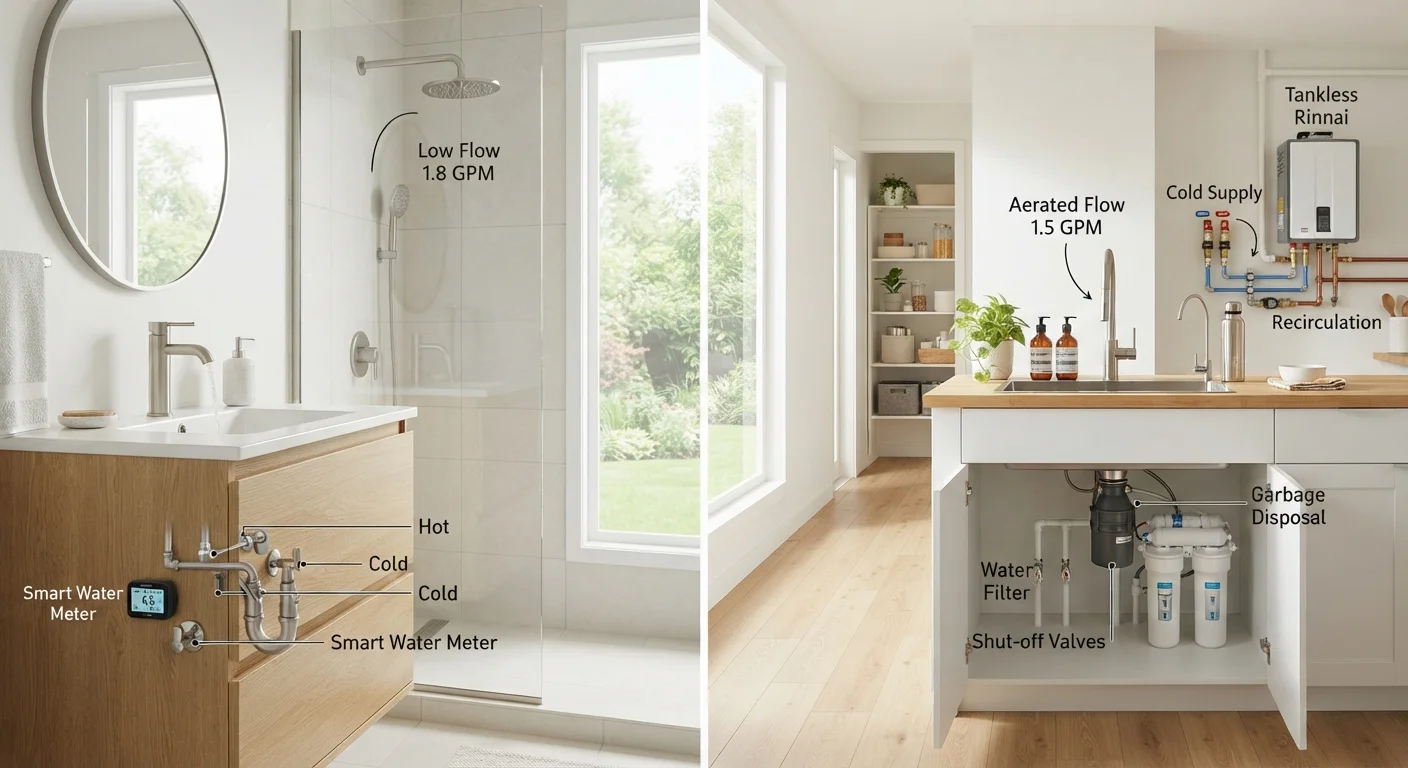
Screw onto bathroom and kitchen taps to instantly reduce water flow without affecting pressure.
Low-Flow Showerhead (2.0 GPM or less)
Replaces standard showerheads to deliver significant per-shower water savings.
Toilet Leak Detection Dye Tablets or Food Coloring
Drop into the toilet tank to reveal silent flapper leaks without professional equipment.
Shower Timer or Waterproof Clock
Keeps showers under your target length so habit changes actually stick.
Adjustable Toilet Flapper Kit
Fixes the most common cause of silent toilet leaks - inexpensive and DIY-installable in minutes.
Rain Barrel
Collects rainwater from roof gutters for use on gardens and lawns instead of treated tap water.
Pipe Insulation Foam Wrap
Insulates exposed hot-water supply lines to reduce wait time for hot water and avoid cold-water waste.
Hose Nozzle with Shutoff Valve
Prevents water running idle while you move around the yard during outdoor watering.
Grab everything on this list before you start - it's much more efficient to work through the whole audit in one pass than to stop mid-room because you don't have a part. If you're already in budget-audit mode, this kind of preparation mindset is the same one that helps with pre-purchase deal audits - a little upfront organization saves a lot of backtracking later.
The Full Room-by-Room Checklist
Work through each group below in order - I recommend starting indoors and finishing with outdoors, since indoor fixtures tend to account for the largest dollar impact. Check off each item as you go, and make a quick note of anything that needs a follow-up fix so nothing slips through the cracks.
Bathroom
Kitchen
Laundry Room
Outdoor & Garden
Whole-Home Checks
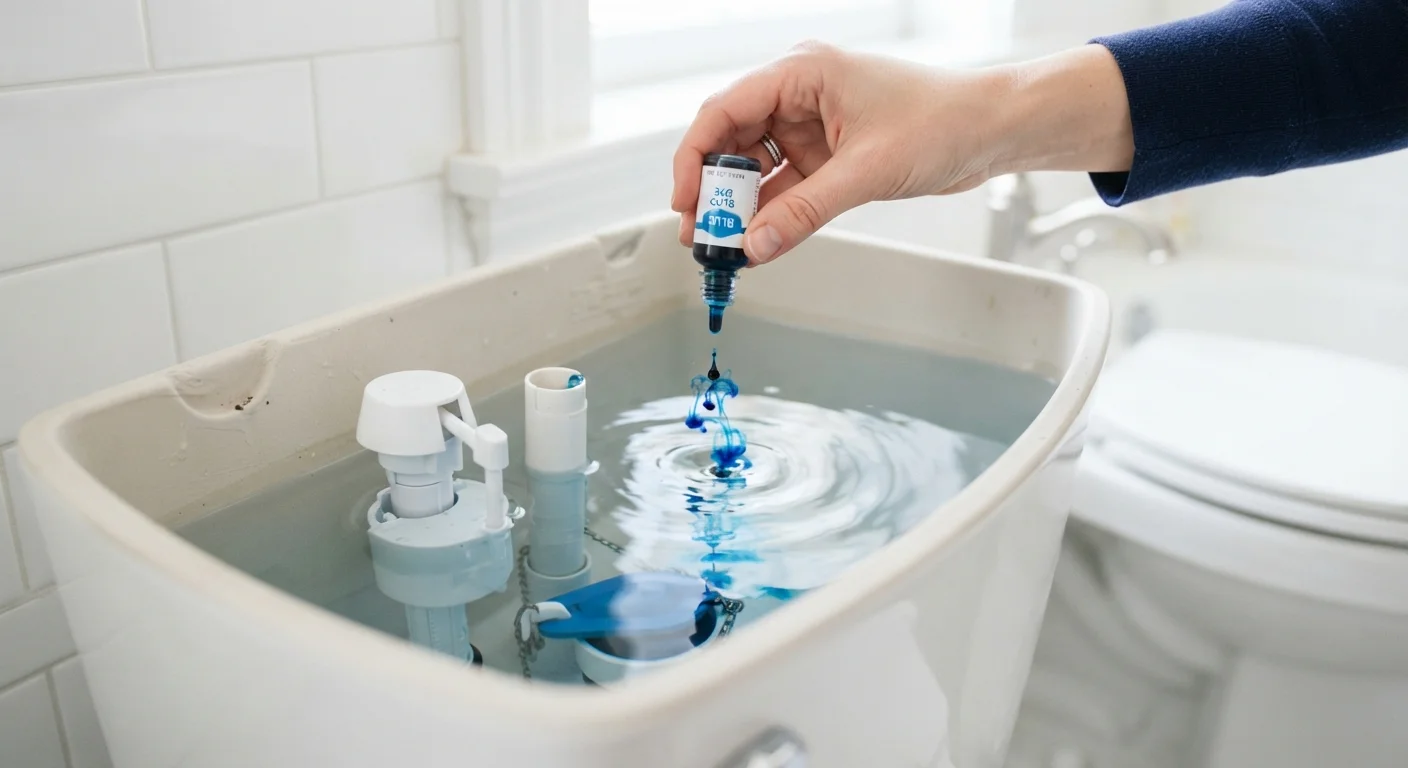
The bathroom section is where most households find their biggest wins. The toilet alone can be responsible for 25-30% of indoor water use, and a leaking flapper is so common - and so cheap to fix - that it should be your very first stop. Don't skip the dye test just because your toilet seems fine. Silent leaks don't announce themselves.
Don't Ignore a Silent Toilet Leak
A worn flapper valve can waste up to 200 gallons of water per day - completely silently and invisibly. Because there's no puddle or dripping sound, most households go months without noticing. Run the dye test on every toilet in your home, not just the one you use most often.
Outdoor Irrigation Is a Bigger Drain Than You Think
Many households assume their lawn care habits are harmless, but irrigation can account for 30-50% of total household water use in warmer months. Even a single sprinkler left running for an extra hour can negate weeks of indoor savings. Pair your outdoor adjustments with a simple weekly schedule to keep consumption in check.
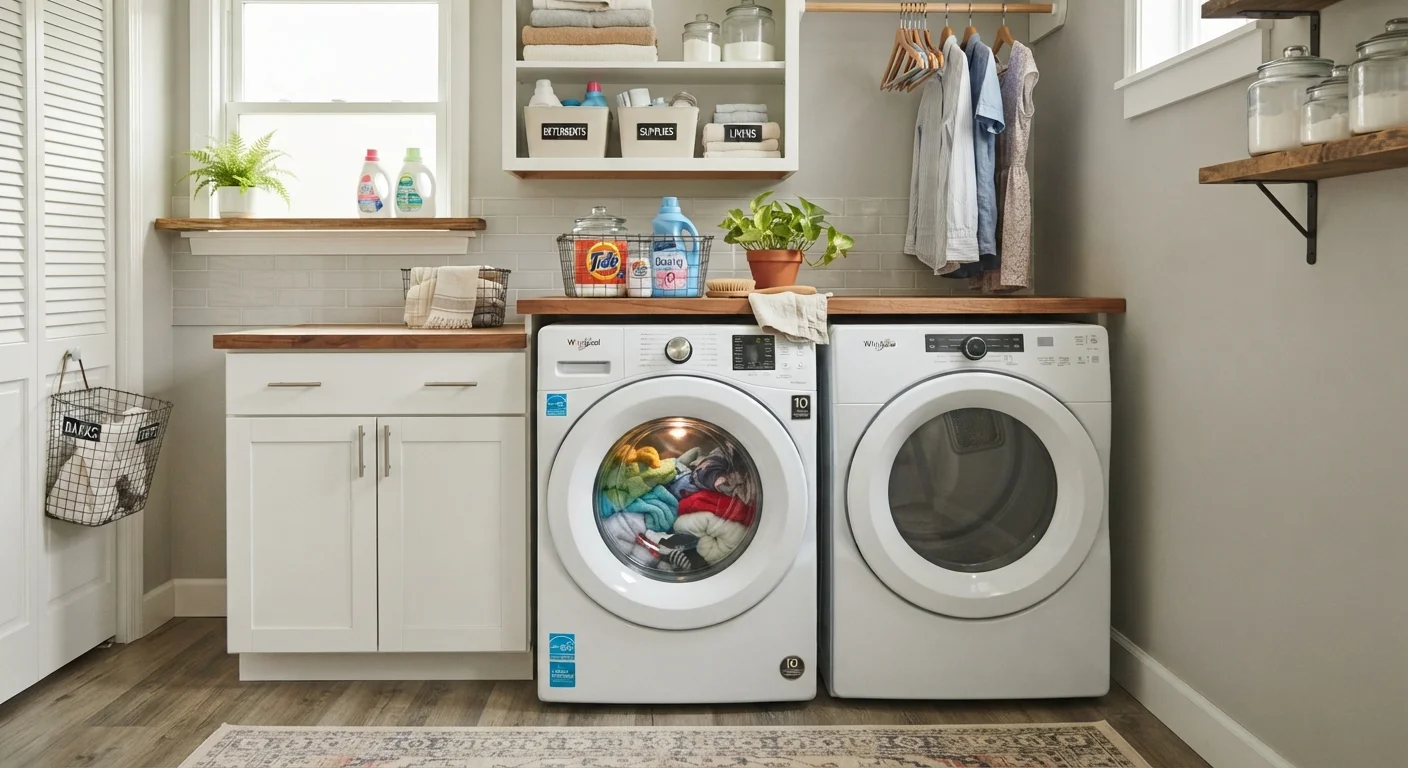
In the laundry room, behavior changes cost literally nothing. If you're currently running half-loads out of convenience, simply waiting until the drum is full is one of the highest-impact adjustments in this entire checklist. Pair that with cold-water cycles and you're also shaving off a meaningful chunk of your energy bill - a nice double win.

After the Audit: Turning Findings Into Savings
Once you've walked the whole house, you should have a clear list of action items sorted into two buckets: zero-cost behavioral fixes (turn off tap while brushing teeth, run full loads, water garden in the morning) and low-cost hardware fixes (replace aerators, fix flappers, install a showerhead). Tackle the behavioral changes today - they're free. Then plan your hardware fixes in order of impact and cost.
Here's a quick-reference priority order based on typical household savings potential:
- Fix any leaking toilet flappers - up to $70+/month saved per leaking toilet
- Install low-flow showerheads - saves 2,000-4,000 gallons per person per year
- Add aerators to all faucets - typically $5-$8 each, saves up to 700 gallons/year per tap
- Adjust outdoor irrigation - timing and targeting changes cost nothing
- Insulate hot-water pipes - cuts cold-water waste while waiting for heat and reduces energy use simultaneously
If you want to build on this energy of home optimization, the same audit mindset applies beautifully to other household costs. Explore the DIY cleaning supplies hub for ways to stop overpaying for products that cost pennies to make at home, or take on the pantry-first meal planning approach to reduce food waste and grocery spend with the same systematic thinking. The goal is the same across every category: find what's leaking - money, water, food - and close the gap. One audit at a time, it adds up to something genuinely exciting.
For a broader look at reducing home utility costs overall, the Energy Efficiency hub is a great next stop - especially if your electricity bill has been stubbornly high despite your best efforts.