

Key Takeaways
Our Verdict
Kitchen spending is not one-size-fits-all. Tools you reach for every single day - knives, skillets, sheet pans - justify a meaningful investment because quality directly affects how food tastes and how much you enjoy cooking. Single-use gadgets and basic prep tools, on the other hand, rarely justify a price premium and can be sourced cheaply without any sacrifice in performance.
| Best for | Recommended |
|---|---|
| Home cooks who cook daily and want lasting tools | Invest in chef's knife, cast iron, and Dutch oven |
| Budget-conscious beginners setting up a first kitchen | Buy cheap versions of peelers, graters, and single-use gadgets |
| Secondhand shoppers willing to hunt for deals | Thrift stores and Facebook Marketplace for premium cookware |
| Occasional home cooks with limited counter space | Skip specialty gadgets entirely, save across the board |
Why Kitchen Tool Budgeting Is Actually a Strategy
Here's the thing nobody tells you when you're standing in the housewares aisle: spending more on kitchen tools is sometimes the smartest budget move you can make - and sometimes it's a complete waste of money. The trick is knowing which category each tool falls into before you swipe your card.
Think about it this way. A $10 chef's knife dulls in weeks, slips on vegetables, and makes every single prep task harder and slower. A $60-$80 knife stays sharp for years, makes cooking feel effortless, and could genuinely change your relationship with home cooking. That's a direct return on investment. But a $40 avocado slicer? It does exactly one thing - and a $2 version at the dollar store does it just as well.
The same logic that applies to fitness equipment - where price signals quality for some categories but not others - works beautifully for kitchen gear. Just like decoding fitness gear pricing, kitchen tool shopping rewards people who know why prices differ, not just that they do.
Two questions cut through the noise every time:
- How often will I use this? Daily use tools earn their keep. Once-a-month tools rarely do.
- Does material quality affect the result? For knives and pans, yes. For a garlic press, not really.
Let's break it all down by category - no fluff, just the real breakdown.
Worth Every Penny: The Tools That Justify a Bigger Budget
These are the tools where spending more doesn't just feel better - it actually performs better, lasts longer, and changes what's possible in your kitchen. Don't skimp here.
Chef's Knife
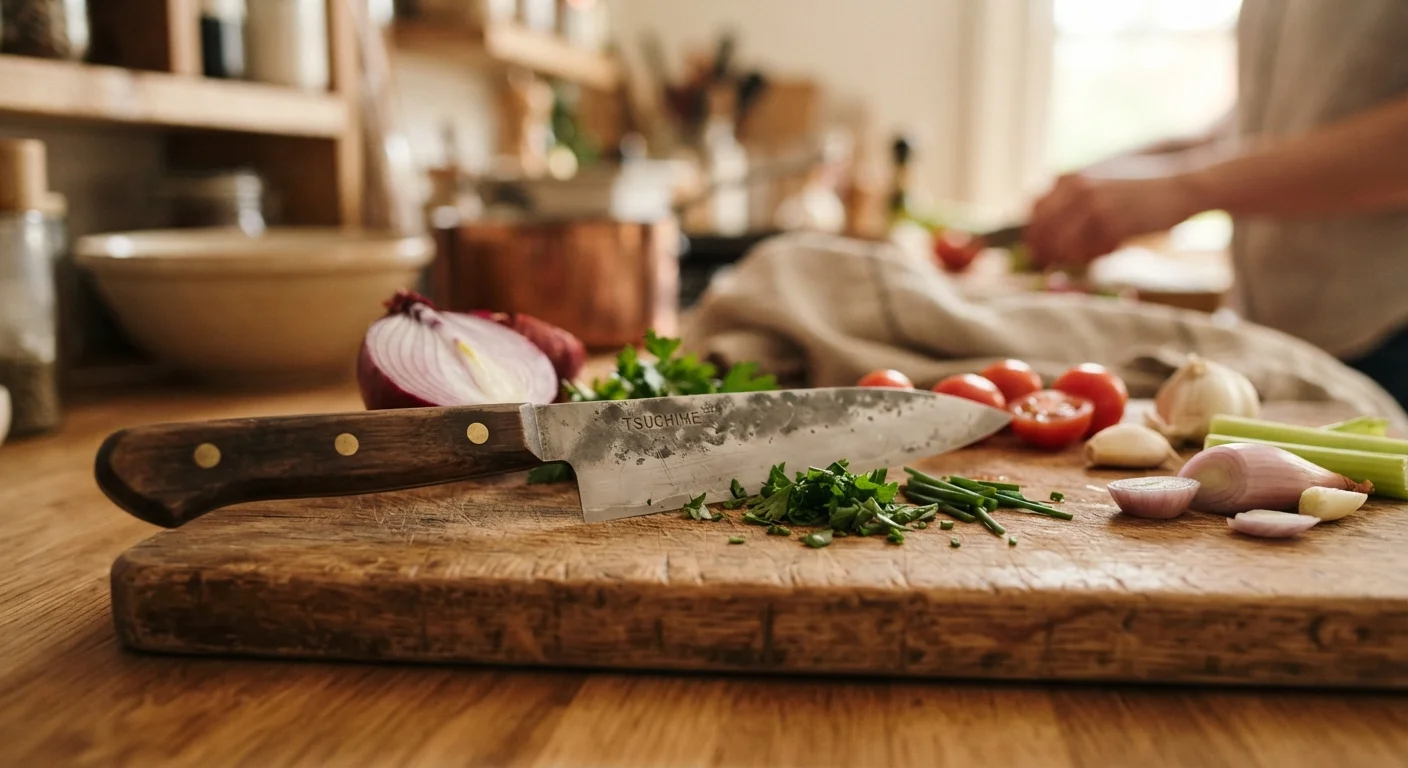
If you cook even three times a week, a quality chef's knife is non-negotiable. The difference between a $12 knife and a $65-$90 knife is not subtle: blade retention, balance, comfort during extended prep, and - critically - safety. Dull, cheap knives require more force and are far more likely to slip. Look for brands like Victorinox Fibrox (the beloved budget-premium sweet spot at around $40-$50) or Wüsthof Classic if you're ready to invest for life.
Cast Iron Skillet
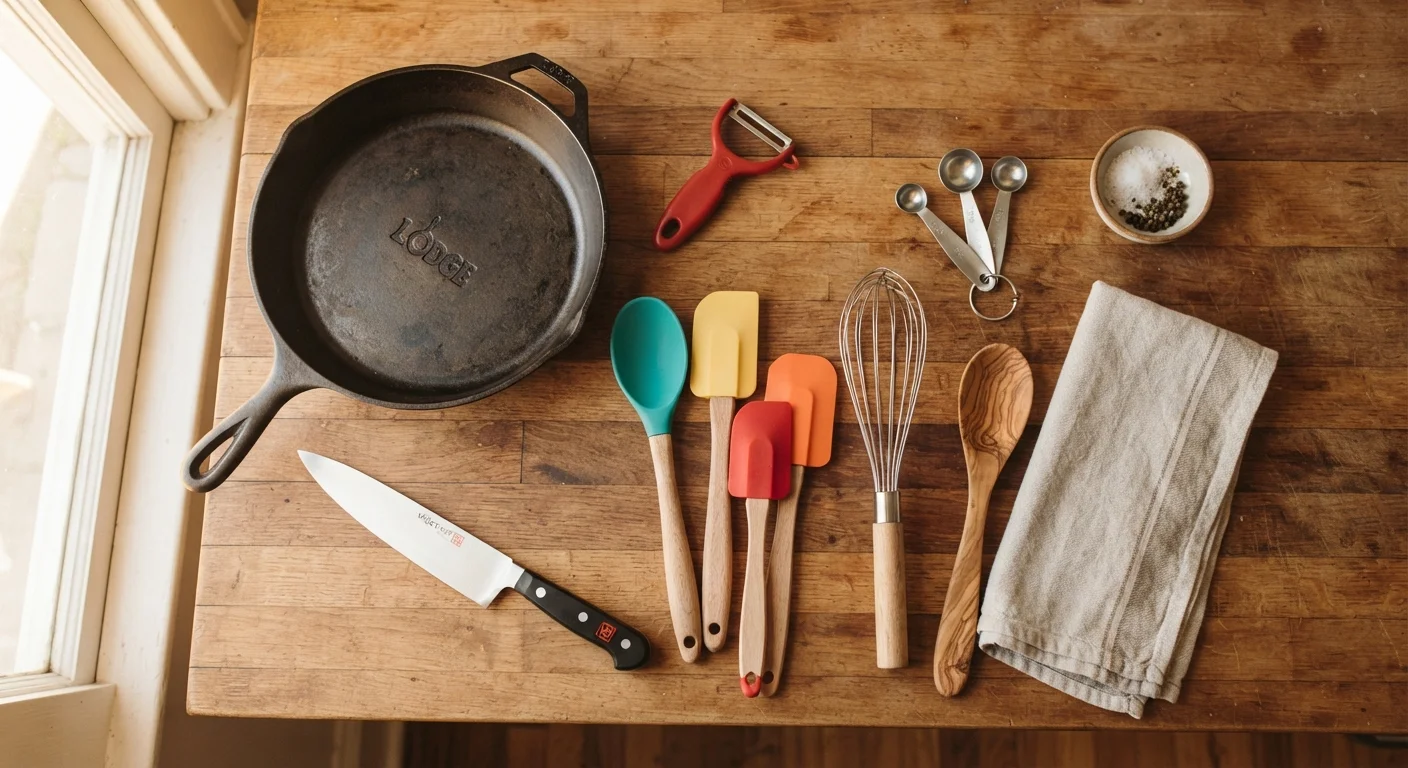
A good cast iron skillet - Lodge being the gold standard at around $30-$45 - will outlast every non-stick pan you'll ever buy. Non-stick coatings degrade. Cast iron, properly seasoned, just keeps getting better. It goes from stovetop to oven, sears like a dream, and costs far less per year of use than any coated pan you replace every 18 months.
Dutch Oven
For soups, stews, braises, and even bread baking, a quality enameled Dutch oven is transformative. Le Creuset is the dream - but a Cuisinart or Lodge enameled Dutch oven in the $50-$80 range performs nearly identically for everyday cooking. The enamel coating matters here: cheap versions chip and rust. This is one category where the $25 option really does let you down.
Half-Sheet Baking Pans
Cheap, thin sheet pans warp in a hot oven - and once warped, they never sit flat again. A quality aluminum half-sheet pan (Nordic Ware is the classic choice, around $15-$25) distributes heat evenly, resists warping, and lasts for decades. Since these are used almost every time you bake or roast vegetables, the upgrade pays off fast.
73%
Home cooks who cook daily
According to a 2023 Statista consumer survey, nearly three-quarters of American adults report cooking at home at least five days per week, making daily-use tool quality a significant factor in their experience.
$0.23
Cost per use - quality chef's knife
A $70 chef's knife used roughly 300 times per year yields a cost-per-use under $0.25 in year one - and effectively zero thereafter, illustrating the true value of durable investments.
18 months
Average non-stick pan lifespan
Consumer Reports testing and kitchen industry data suggest most non-stick coated pans lose effective performance within 12-18 months of regular use, making repeated replacement costs significant over time.
50% off
Typical January cookware discount
Major retailers including Target, Williams-Sonoma, and Amazon routinely discount Dutch ovens, sheet pans, and knife sets by 30-50% during January post-holiday clearance sales.
$5-$20
Thrift store cast iron average price
Cast iron skillets - including premium brands - regularly appear at secondhand stores for a fraction of retail, according to resale platform data from ThredUp and Goodwill's online marketplace.
For a deeper look at how to prioritize your kitchen setup from scratch, the guide on stocking a functional kitchen without overspending is a fantastic companion to this breakdown.
The Victorinox Fibrox Is Your Cheat Code
If you want the performance of an expensive chef's knife without the designer price tag, the Victorinox Fibrox Pro 8-inch chef's knife is the open secret of the cooking world. Priced around $40-$50, it's used in professional kitchens worldwide and consistently outperforms knives costing three times as much in blind tests. Buy this before you consider anything fancier - it may be the only knife you ever need.
Season a Secondhand Cast Iron Back to Life
Found a crusty, rusty cast iron at a thrift store for $4? Don't walk away. Scrub it with steel wool and dish soap, dry it thoroughly, rub it with a thin layer of vegetable oil, and bake it upside down at 450°F for an hour. That's it - you've just restored a piece of cookware that will outlast you. This is one of the best dollar-for-dollar wins in budget home cooking.
Set a Sale Alert Before You Buy Any Major Appliance
Before purchasing a stand mixer, blender, or food processor at full price, spend two minutes setting up a price drop alert via tools like CamelCamelCamel (for Amazon) or Google Shopping. Major kitchen appliances cycle through significant discounts multiple times per year. Waiting 4-8 weeks can easily save you $50-$100 on the exact model you want.
Save Your Money: Tools Where Cheap Versions Win
Now for the fun part - the long list of things you absolutely do not need to spend serious money on. These tools either don't benefit from premium materials, get used so rarely that durability doesn't matter, or can be replaced entirely by tools you already own.
Vegetable Peeler
A $3 Y-peeler from any grocery store peels vegetables. A $20 OXO Good Grips peeler also peels vegetables. Both work fine. Replace the cheap one when it gets dull - it'll cost you $3. This is a save.
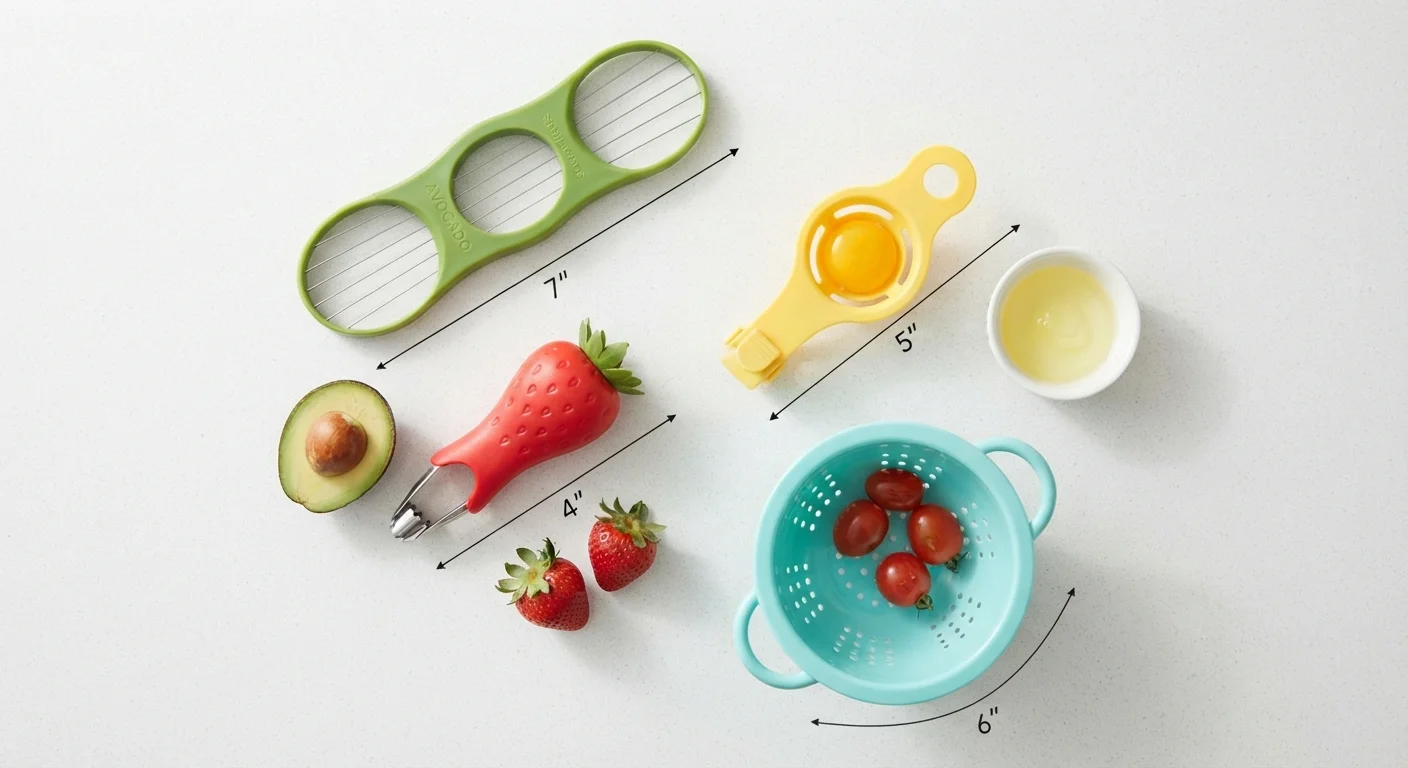
Single-Use Gadgets (Avocado Slicer, Strawberry Huller, Mango Splitter)
These are the impulse-buy trap of the kitchen world. They're cute. They're specific. And you will use them four times before they move to the back of a drawer. A knife does everything these do. If you truly love your avocado slicer, grab the dollar store version guilt-free - just don't spend $18 on one.
Colander / Strainer
Plastic or cheap stainless steel colanders do the job perfectly. You're literally just draining water. Unless you need a fine-mesh strainer for sauces or stocks (where mesh quality does matter slightly), the $6 version is completely adequate.
Mixing Bowls
Stainless steel mixing bowls in a $15-$20 set of three? Absolutely fine. They nest, they're light, they don't stain, and they'll last forever. No need to spend $60 on a ceramic set that chips and takes up more cabinet space.
Wooden Spoons and Silicone Spatulas
These are pure commodity items. A four-pack of silicone spatulas for $8 works identically to a single $22 designer spatula. Buy the cheap ones in bulk, and if one melts or stains, you won't feel a thing.
Kitchen Timer
Your phone. Done. Next.
Never Buy a Glass Cutting Board
Glass cutting boards look sleek and seem hygienic - and they will ruin your knives faster than almost anything else in your kitchen. The hardness of glass rolls and chips knife edges on contact, undermining any investment you've made in quality blades. Stick to wood or plastic, always.
Cheap Non-Stick Pans Are a False Economy
A $12 non-stick pan seems like a win until it warps on your first high-heat cook, releases coating flakes within months, and ends up in landfill by year two. If you want non-stick, invest in a mid-range option ($30-$50) or switch entirely to cast iron or stainless steel - both of which you only ever have to buy once.
The Middle Ground: It Depends on How You Cook
Some tools land firmly in "it depends" territory - and that's not a cop-out, it's genuinely useful information. Your cooking habits determine whether these justify the spend.
| Tool | Buy Cheap | Buy Quality | Best Budget Move | |
|---|---|---|---|---|
| Chef's Knife | Dulls fast, unsafe | Lasts years, safer | Invest $50-$90 | |
| Cast Iron Skillet | Skip - Lodge is already affordable | Lasts a lifetime | Buy Lodge at $35-$45 | |
| Sheet Pan | Warps in oven | Even heat, no warp | Nordic Ware at $20-$25 | |
| Vegetable Peeler | Works fine, replace when dull | No real benefit | Dollar store or $3 pick | |
| Stand Mixer | Hand mixer works for occasional bakers | Essential for frequent bakers | Buy used KitchenAid | |
| Blender | Fine for occasional blending | Essential for daily smoothies | Match to your frequency | |
| Single-Use Gadgets | Dollar store is perfect | Complete waste at premium | Dollar store or skip | |
| Dutch Oven | Chips and rusts - avoid | Game-changing for braises | Lodge enamel at $60-$80 | |
| Cutting Board | Plastic works, hard on knives | Wood protects knife edge | Mid-range wood at $30-$40 | |
| Silicone Spatulas | Identical performance | No benefit over cheap | Bulk pack for $8-$12 |
Stand Mixer
If you bake bread, cakes, or cookies more than twice a month, a KitchenAid is one of the best appliance investments you can make - it lasts decades and genuinely changes what you can bake. If you occasionally make cookies at Christmas? A $25 hand mixer does the job. Don't buy a stand mixer to feel like a baker. Buy one when you've outgrown the hand mixer.
Blender
For daily smoothie makers or people who blend soups and sauces, a Vitamix or Blendtec is genuinely life-changing - the motor power is not comparable to budget models. But for occasional use? A $35-$50 mid-range blender (Ninja, Oster) handles basic tasks just fine. This one is entirely frequency-dependent.
Instant-Read Thermometer
If you cook meat, a quality instant-read thermometer is a safety and quality tool that earns its $25-$30 price tag (Thermoworks Thermapen is the gold standard). A $7 dial thermometer from the dollar bin is slower and less accurate - fine for candy making, frustrating for checking a chicken breast.
Cutting Board
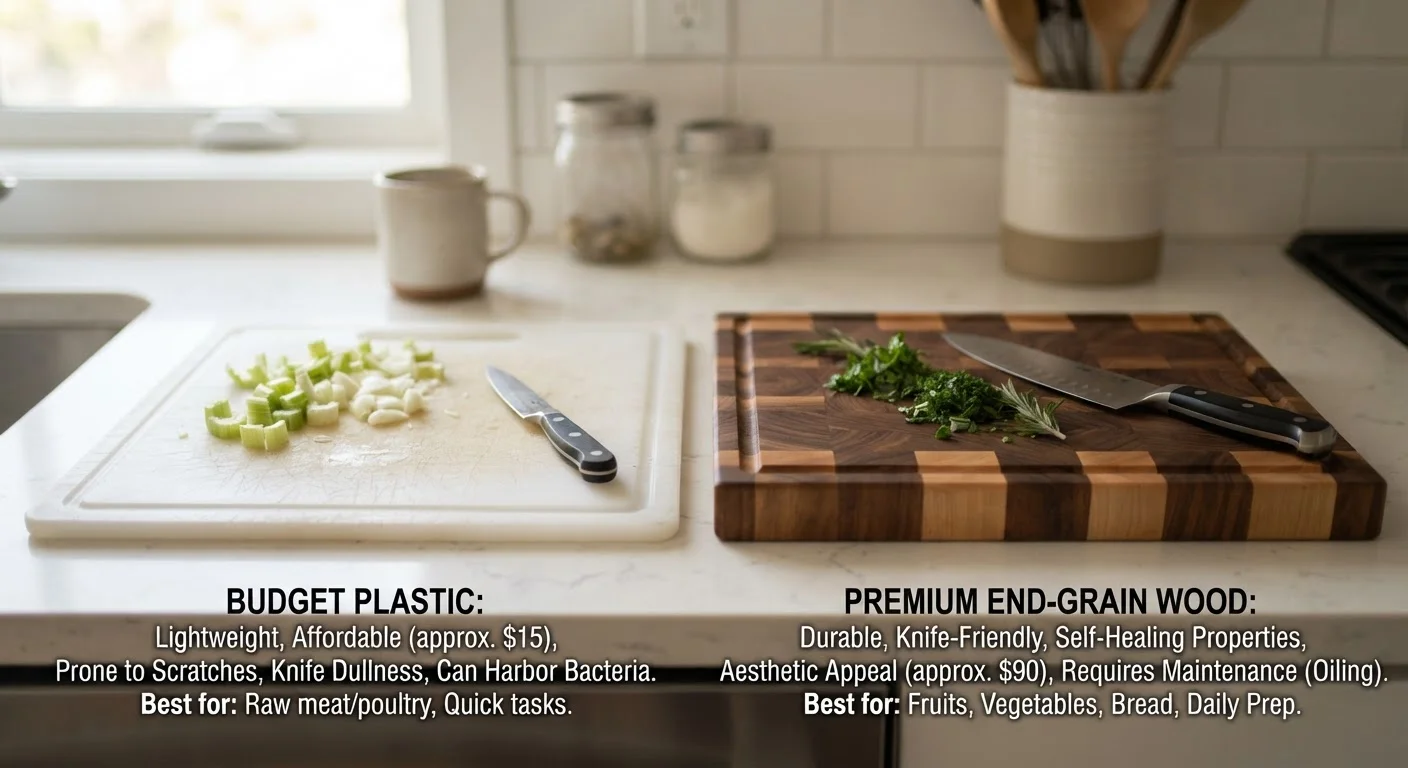
Plastic boards are cheap and dishwasher-safe but hard on knives. Wood boards are gentler on blades and look beautiful. End-grain wood boards can cost $80-$150 - probably overkill unless you're a serious home cook. A mid-range edge-grain board at $30-$40 hits the sweet spot. Avoid glass cutting boards entirely - they ruin knife edges fast.
How to Shop Smart for Kitchen Tools
Once you know what's worth spending on, the next move is finding the best price for those items. Here's how to stretch even your "invest here" budget further.
Thrift Stores Are a Gold Mine for Cookware
Cast iron skillets, Dutch ovens, sheet pans - these show up at Goodwill, Salvation Army, and estate sales constantly, often for a fraction of retail. A Lodge cast iron for $5? A Le Creuset Dutch oven for $20? Both are real finds that happen every week. Since these items are virtually indestructible, buying them used is genuinely smart shopping, not a compromise.
Facebook Marketplace and OfferUp
People who got a KitchenAid as a wedding gift and never used it sell it for $80-$120 all the time. That's a $400+ appliance at a steep discount. Same with quality knife sets and stand mixers. Set up search alerts and check weekly.
Know the Sale Cycles
Major kitchen appliances and cookware go on deep discount around Black Friday, Memorial Day, and - surprisingly - January, when retailers push post-holiday housewares clearance. Waiting for the right moment to buy a Dutch oven or quality knife set can save 30-50%.
The "Cost Per Use" Mental Model
Before any kitchen purchase, ask yourself: if I divide this price by the number of times I'll use it, what's my cost per use? A $70 chef's knife used 300 times a year costs about $0.23 per use in year one - and essentially nothing after that. A $40 avocado slicer used 10 times a year costs $4 per use. The math makes the decision obvious.
This same principle applies across categories - it's exactly why some beauty products justify splurging while others are pure marketing. Cost-per-use thinking cuts through category after category.
The Victorinox Fibrox Is Your Cheat Code
If you want the performance of an expensive chef's knife without the designer price tag, the Victorinox Fibrox Pro 8-inch chef's knife is the open secret of the cooking world. Priced around $40-$50, it's used in professional kitchens worldwide and consistently outperforms knives costing three times as much in blind tests. Buy this before you consider anything fancier - it may be the only knife you ever need.
Season a Secondhand Cast Iron Back to Life
Found a crusty, rusty cast iron at a thrift store for $4? Don't walk away. Scrub it with steel wool and dish soap, dry it thoroughly, rub it with a thin layer of vegetable oil, and bake it upside down at 450°F for an hour. That's it - you've just restored a piece of cookware that will outlast you. This is one of the best dollar-for-dollar wins in budget home cooking.
Set a Sale Alert Before You Buy Any Major Appliance
Before purchasing a stand mixer, blender, or food processor at full price, spend two minutes setting up a price drop alert via tools like CamelCamelCamel (for Amazon) or Google Shopping. Major kitchen appliances cycle through significant discounts multiple times per year. Waiting 4-8 weeks can easily save you $50-$100 on the exact model you want.
The Verdict by Tool Category
Let's make this as actionable as possible. Here's the full breakdown of where your kitchen dollars should - and shouldn't - go, all in one place.
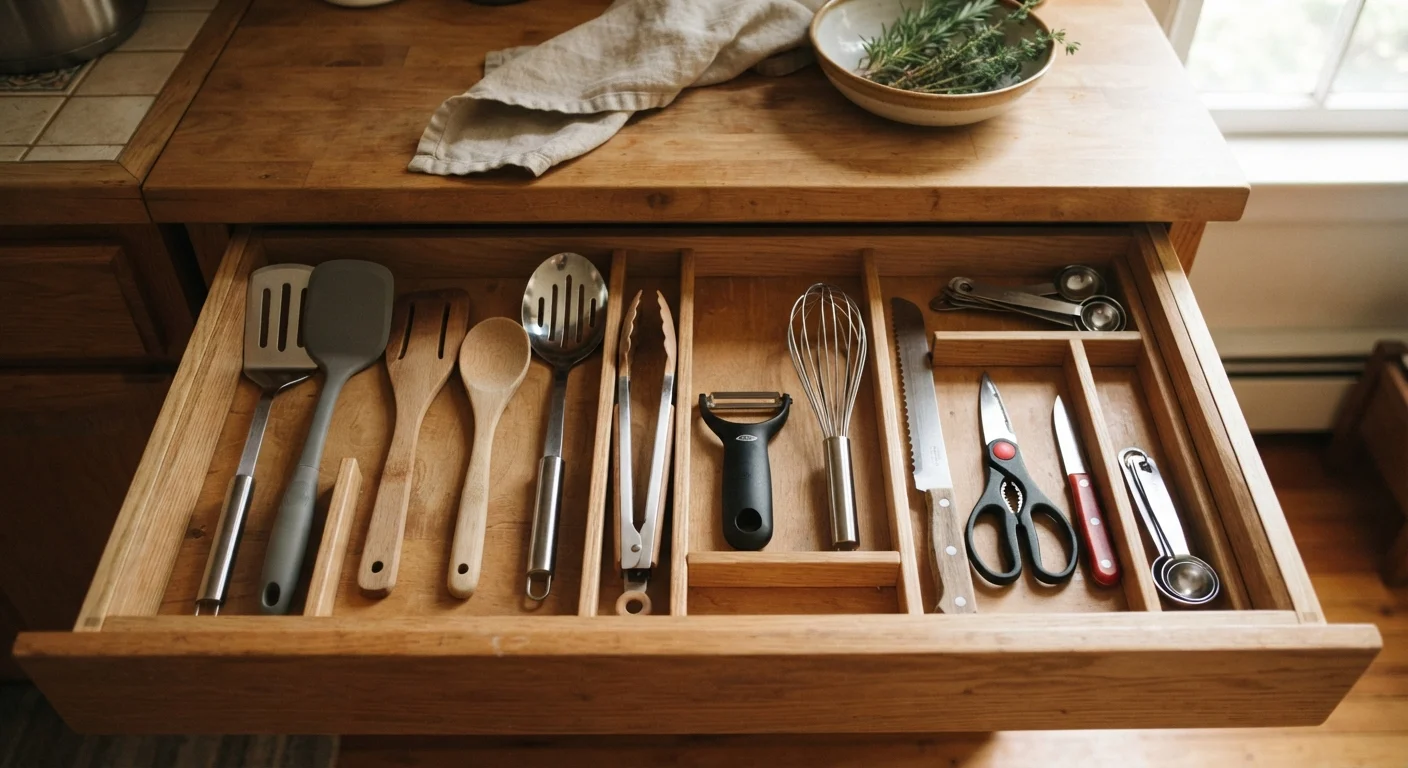
The biggest mistake first-time kitchen shoppers make is treating all tools as equal - buying a premium garlic press while using a dollar-store peeler that actually works fine, or skimping on a knife they'll use twice a day for years. Intentional spending beats both extremes.
And remember: you don't have to build your ideal kitchen all at once. Start with the high-impact investments - a good knife, a cast iron skillet, quality sheet pans - and fill in the rest over time, buying cheap where cheap works and hunting secondhand for the expensive stuff. Your kitchen (and your budget) will thank you for it.
For the complete room-by-room budgeting mindset, cheap doesn't have to look or perform cheap - the same principles that apply to home decor apply perfectly to kitchen tools.