
Borrowing vs. Buying: A Realistic Cost Breakdown for Readers
Libraries and digital lending services cost nothing upfront — but buying has its place too. Here's when each approach makes financial sense.
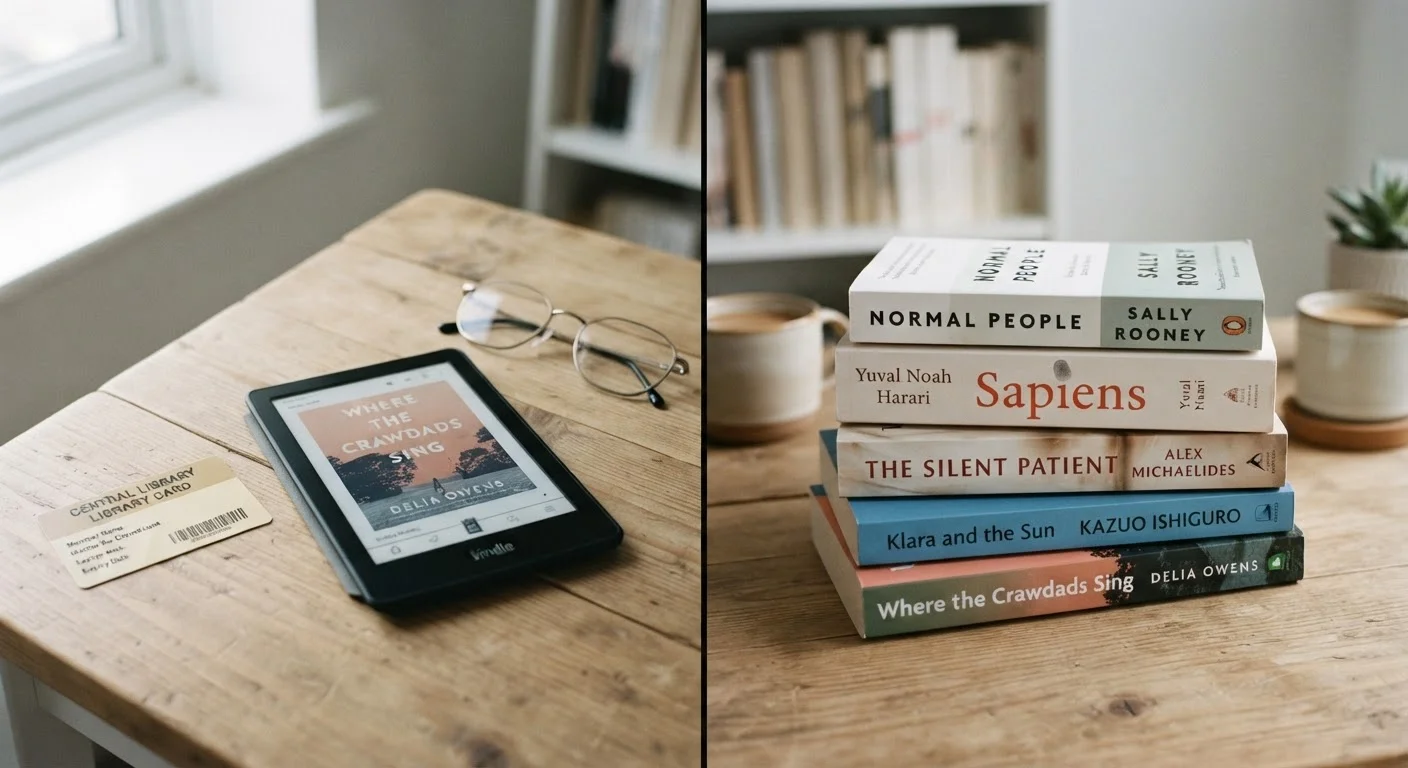
Photo: SaverSteals.com | Explore More. Shop Smarter. editorial
Key Takeaways
- Borrowing from public libraries costs nothing upfront and covers most casual reading needs.
- Buying makes financial sense primarily for books you will re-read, reference repeatedly, or collect.
- Digital lending apps like Libby and Hoopla expand free access far beyond physical library shelves.
- Wait times and catalog gaps are the main practical drawbacks of borrowing over buying.
- A hybrid approach - borrowing first, buying selectively - typically produces the lowest annual reading cost.
The Real Cost of Borrowing
For most US residents, a public library card is genuinely free. There are no subscription fees, no per-book charges, and no late fees at a growing number of systems. Physical loans cost nothing beyond transportation to the branch - and digital borrowing through apps like Libby or Hoopla costs nothing at all once your card is active.
The hidden costs of borrowing are time-based, not financial. Popular new releases on Libby routinely carry waitlists of several weeks. If you read impulsively or prefer to start a book the moment you hear about it, that friction has a real effect on your reading life - even if it doesn't affect your bank balance. Comparing Libby and Hoopla side by side can help you navigate those tradeoffs more effectively.
Catalog gaps are another factor. Library systems vary widely in their digital holdings, and niche titles, self-published works, or books from smaller publishers may simply not be available. Borrowing works best when your reading list skews toward mainstream fiction, popular nonfiction, and titles with some age on them.
| Borrowing (Library) | Buying New | Buying Used | |
|---|---|---|---|
| Upfront cost per book | $0 | $8-$35 | $1-$5 |
| Annual cost (2 books/month) | ~$0 | $192-$840+ | $24-$120 |
| Availability of new releases | Waitlists common | Immediate | Delayed or unavailable |
| Catalog breadth | Wide, some gaps | Complete | Variable |
| Ability to annotate/keep | No | Yes | Yes |
| Environmental footprint | Low (shared copy) | Higher (new production) | Low (reuse) |
The Real Cost of Buying
A new hardcover typically runs $28-$35. A new trade paperback falls in the $16-$22 range. Mass market paperbacks are cheaper at $8-$12, but for a reader who finishes two books per month, even that modest price adds up to roughly $192-$288 per year at minimum - before factoring in any impulse purchases.
Buying secondhand changes the math considerably. Used copies from thrift stores, library sales, and secondhand marketplaces often cost $1-$5 per title. If you're open to used books and patient enough to search, your per-book cost can drop close to borrowing territory. A practical guide to buying on a tight budget covers the most reliable channels for finding discounted physical copies.
The format question also affects cost. Digital purchases often carry lower sticker prices than print, but unlike library ebooks, purchased ebooks are typically locked to a platform and can't be freely transferred. Ebook vs. print cost comparisons break down how those long-term numbers actually stack up.
Try Before You Buy
If you're considering purchasing a book - especially a longer nonfiction title - check your library's digital catalog first. Reading the first few chapters on loan can confirm whether the book is worth owning before you spend anything. Many readers find this simple habit eliminates a significant share of regretted purchases.
When Each Approach Makes Sense
Borrowing wins on pure cost efficiency for any book you'll read once and move on from. It's also the clear choice when you're exploring a new author or genre and aren't yet sure you'll enjoy the material. Reading a borrowed copy before committing to a purchase is a sound filtering strategy.
Buying makes sense when you know you'll re-read a book, annotate it, lend it to others, or display it as part of a collection. Reference books, cookbooks, and field guides - materials you dip into repeatedly rather than read cover-to-cover - are strong candidates for ownership. Sentimental value and gift-giving are also legitimate reasons to buy.
A hybrid approach suits most readers best: borrow first by default, then buy only titles that prove they deserve a permanent shelf spot. This strategy doesn't require discipline so much as a simple mental rule. For readers who want to go further, combining library apps with open-access archives can stretch the borrowing side of the equation even further, covering formats and catalogs most readers never discover.

Books Editorial Team
Books Editorial Team is the collective byline for our editorial team and contributor network. Articles published under this byline or an editorial pen name are researched, written, and reviewed according to our editorial standards for clarity, consistency, and independence before publication.
View author profile