
Ebook vs. Print: Which Format Saves More Over Time?
The cheapest format depends on your reading habits. Compare the real long-term costs of digital and physical books side by side.
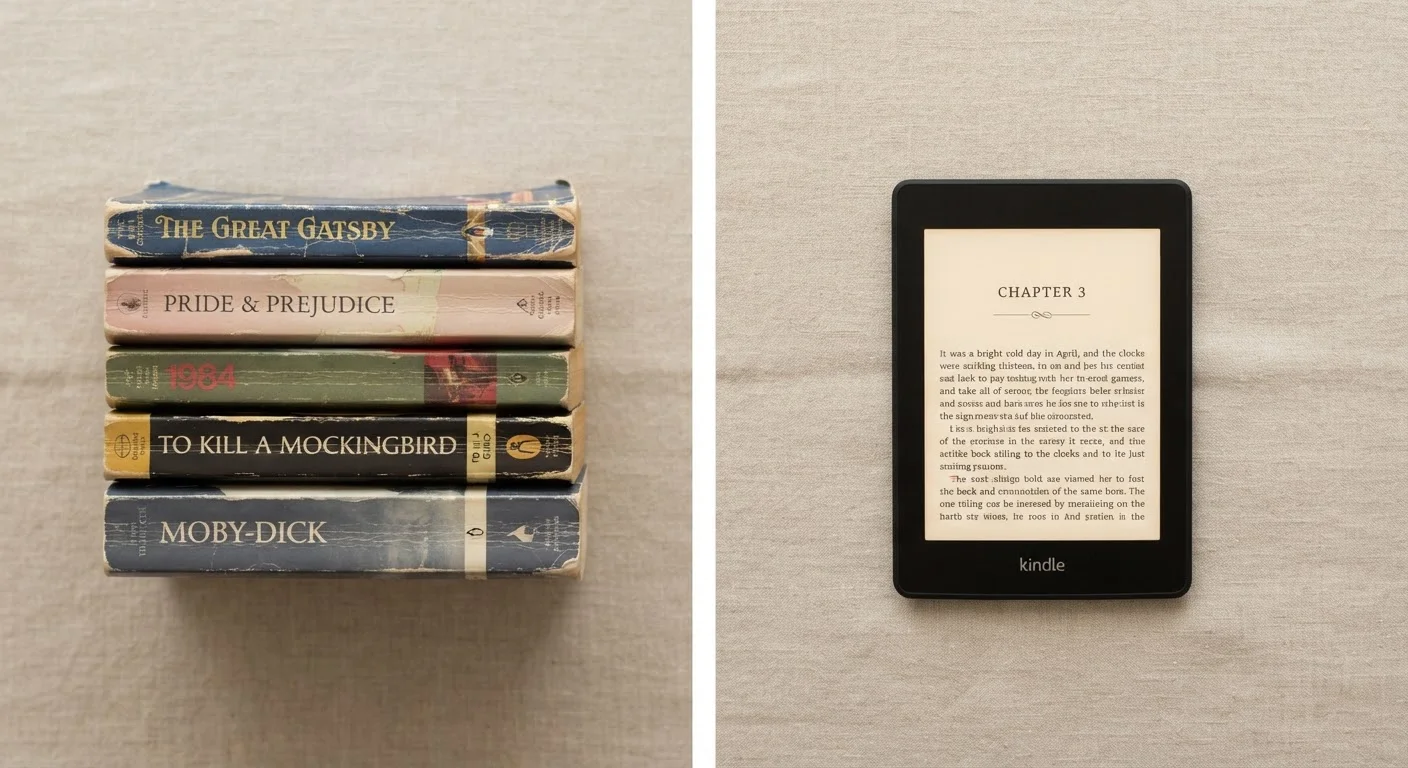
Photo: SaverSteals.com | Explore More. Shop Smarter. editorial
—— In This Article
Key Takeaways
- Ebooks often cost less per title, but the upfront device cost can take months or years to offset.
- Print books can be resold or donated, which partially recovers your original purchase price.
- Free digital lending through public libraries can make ebooks nearly free for heavy readers.
- Used print books frequently undercut even sale-priced ebook versions of the same title.
- Your reading volume is the single biggest factor in determining which format saves more over time.
The Real Cost Comparison: Device, Title Price, and Volume
The ebook-vs-print debate isn't settled by sticker price alone. Three variables interact to determine which format actually costs less over time: the upfront hardware investment, what you pay per title, and how many books you consume annually.
Ebooks require a compatible device - a dedicated e-reader or a phone or tablet you already own. If you're buying a dedicated e-reader, that fixed cost needs to be spread across every book you read on it before you break even. A reader who finishes 50 books a year absorbs that hardware cost far faster than someone who reads 10.
Per-title prices tell a similar story. New ebook releases often carry prices comparable to discounted print editions, but older and backlist titles frequently drop significantly in digital formats - and public domain works are free. Used print copies of the same books sometimes undercut those prices entirely. See how these tradeoffs stack up in the comparison table below.
| Criterion | Ebooks | Print Books |
|---|---|---|
| Upfront hardware cost | Required (device needed) | None |
| Average new release price | Comparable to print | Comparable to digital |
| Older/backlist titles | Often $1-$5 or free | Used copies often under $5 |
| Free borrowing options | Library apps (with wait times) | Library physical copies |
| Public domain titles | Free via Project Gutenberg etc. | Cheap print editions available |
| Resale / transfer value | None - license not transferable | Can resell or donate |
| Storage cost | None (device-based) | Physical space required |
| Best savings strategy | Library lending + free platforms | Used copies + library borrowing |
For a deeper look at what you actually give up when buying used copies versus new ones, check out New vs. Used Books.
Where Each Format Finds Its Steepest Discounts
Both formats have discount channels - they're just different ones. Knowing where to look matters more than the format itself.
Ebook Discount Channels
- Public library digital lending (via apps like Libby): Free with a library card. Wait times apply for popular titles, but patient readers pay nothing.
- Publisher and retailer price drops: Ebook prices fluctuate more dynamically than print; titles regularly drop to $1-$3 for limited periods.
- Subscription reading services: Flat-fee access to large catalogs works out cheaply for high-volume readers, though catalog gaps exist.
- Free platforms: Project Gutenberg and Standard Ebooks offer thousands of public domain titles at no cost. The honest tradeoffs of free ebook platforms covers what you gain and give up with these services.
Print Discount Channels
- Used bookstores and thrift shops: Physical copies routinely sell for $1-$4. Condition varies, but most are perfectly readable.
- Library book sales: Annual sales often price paperbacks at $0.25-$1.
- Resale platforms: Online marketplaces allow peer-to-peer sales of used copies, often with shipping factored in.
- Borrowing: Print borrowing from libraries is free and has no wait-list issue for older titles held in physical collections.
77%
U.S. public libraries offering digital lending
According to the American Library Association, the vast majority of U.S. public libraries provide access to digital ebook lending programs.
$0-$3
Typical price range for used paperbacks at library sales
Library Friends groups commonly price donated paperbacks between $0.25 and $3 at annual or semi-annual public sales.
Watch out for costs that quietly erode savings on either side - hidden costs that make cheap books expensive covers what to watch for.
Which Format Wins - and When?
Neither format universally wins on cost. The answer depends on your habits.
Ebooks save more if you read frequently, use library digital lending regularly, or primarily read older and public domain titles. The per-book cost drops toward zero when you leverage free channels, and there's no physical storage cost or clutter.
Print saves more if you read selectively, primarily buy used, or want to recoup costs by reselling. Print books are also the better choice if you lack a compatible device and don't want to buy one.
One underappreciated advantage of print: resale value. A used paperback bought for $3 can be resold or traded, partially recovering the cost. Ebook licenses are non-transferable - you pay, and that's that.
For readers who want to minimize outlay entirely, borrowing beats both formats outright. See the full breakdown in Borrowing vs. Buying: A Realistic Cost Breakdown for Readers.
The pragmatic approach: use library ebooks for new releases, buy used print for books you want to keep or resell, and treat free digital platforms as a supplementary source for classic and public domain reading.

Books Editorial Team
Books Editorial Team is the collective byline for our editorial team and contributor network. Articles published under this byline or an editorial pen name are researched, written, and reviewed according to our editorial standards for clarity, consistency, and independence before publication.
View author profile