
The Overlap Between Drugstore and High-End Formulas
Luxury and affordable beauty products sometimes share the same key ingredients. Understand where formulations genuinely diverge.
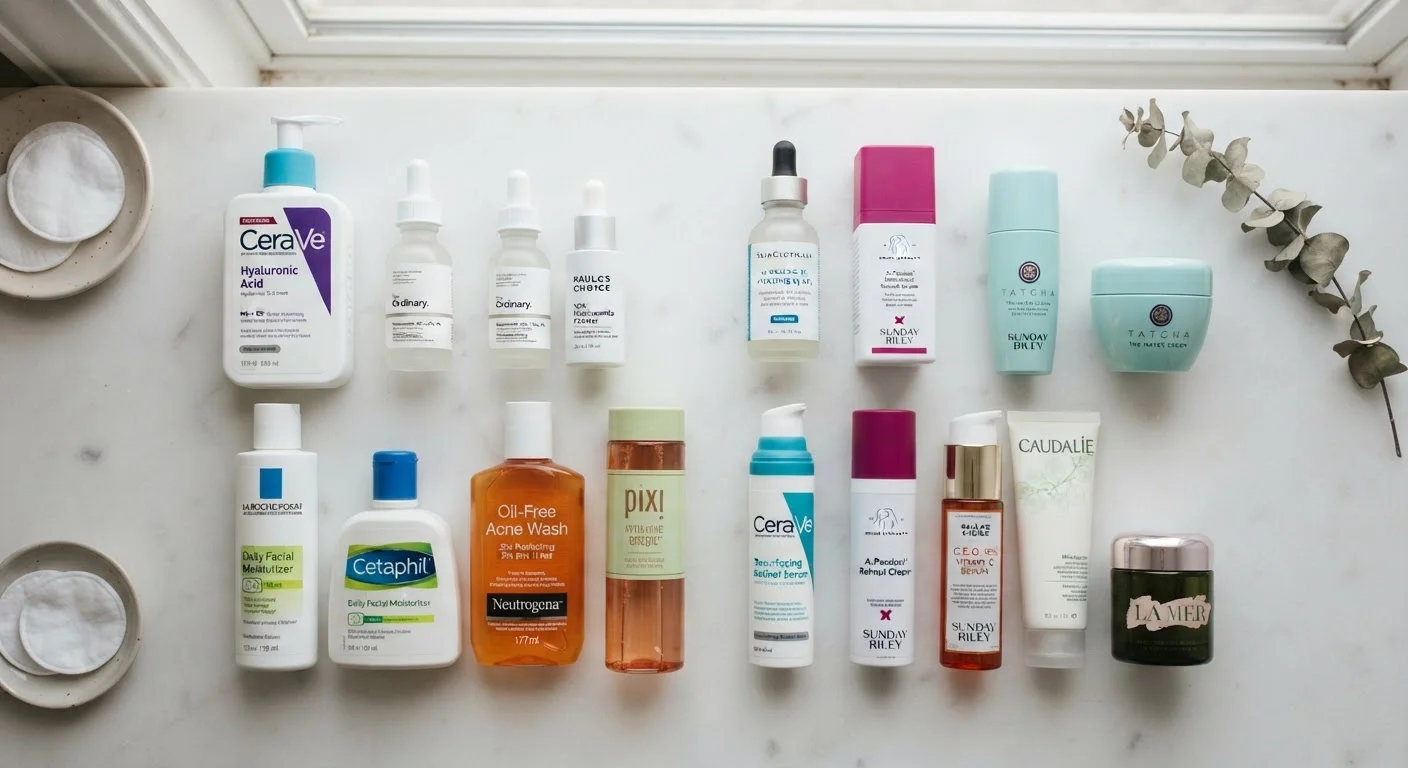
Photo: SaverSteals.com | Explore More. Shop Smarter. editorial
—— In This Article
Key Takeaways
- Many drugstore and luxury products share identical active ingredients listed under the same standardized INCI names.
- Price differences often reflect packaging, fragrance, brand marketing, and texture rather than formula efficacy.
- Concentration of active ingredients - not just their presence - determines how a product performs.
- Some categories, like prescription-strength actives and complex emulsions, may justify higher spending.
- Reading ingredient lists is a practical, accessible skill that helps shoppers evaluate real product value.
- Overlap is most common in categories like moisturizers, cleansers, and single-active serums.
What the Ingredient List Actually Reveals
Cosmetic ingredient lists in the US are regulated by the FDA and must follow a standardized naming system called INCI (International Nomenclature of Cosmetic Ingredients). This means that "niacinamide" on a $9 drugstore serum is chemically identical to "niacinamide" on a $75 prestige product. The same logic applies to hyaluronic acid, glycerin, retinol, vitamin C derivatives, and many other widely used actives.
Ingredients are listed in descending order of concentration - so the first five ingredients typically make up the bulk of the formula. When comparing two products, focusing on where key actives appear in both lists gives you a rough sense of relative concentration. A drugstore moisturizer with glycerin listed second is likely delivering a meaningful dose of that humectant. Budget moisturizers can perform well precisely because of this kind of formulation overlap.
~80%
Cosmetic actives shared across price tiers
Industry formulation experts frequently note that the vast majority of functional cosmetic actives - like humectants and emollients - are available to manufacturers across all market segments at comparable raw material quality.
Top 5
Ingredients that determine most of a product's function
Cosmetic chemists widely observe that the first five ingredients by weight typically account for the majority of a formula's functional performance, regardless of how long the full ingredient list is.
30-50%
Estimated share of luxury product cost tied to non-formula factors
Packaging, marketing, and retail distribution are frequently cited by industry analysts as accounting for a substantial portion of prestige beauty product pricing, independent of raw ingredient cost.
Where Price Differences Actually Come From
If the core actives are often the same, what accounts for the price gap? Several factors contribute - and most of them aren't about formula efficacy. Packaging design, glass vessels, magnetic closures, and premium labeling all add cost without changing what the product does to skin. Fragrance complexity, brand licensing deals, influencer campaigns, and retail markup layers each play a role in the final sticker price.
That said, some premium products do invest in meaningful formulation differences: advanced emulsification technology that improves how actives penetrate skin, patented stabilization systems that extend the activity of sensitive ingredients like vitamin C, or clinical testing at higher concentrations. These distinctions are real but category-specific - they don't apply uniformly across all luxury beauty.
Compare Ingredient Lists Side by Side
When evaluating a potential dupe, pull up both ingredient lists on your phone before purchasing. Focus on the first ten ingredients and check whether key actives appear in similar positions. Free resources like the INCI decoder can help you identify what each ingredient does and whether concentrations seem comparable.
Where Overlap Is Strongest - and Where It Breaks Down
Formula overlap is most reliable in simpler, well-established product categories. Single-active serums (niacinamide, hyaluronic acid), basic cleansers, and straightforward moisturizers tend to show the most genuine convergence between drugstore and prestige. These formulas don't require complex engineering, and the actives themselves are widely sourced at comparable quality grades across price tiers.
Overlap becomes less reliable in more complex formulations. Long-wear foundations, waterproof eye products, and advanced sunscreens with newer UV filter technology can show real performance differences at higher price points. The emulsion structure, film-forming agents, and filter combinations in these products require more sophisticated development. For a closer look at one specific category, our article on how foundation formulas vary by price examines where the gaps are meaningful and where they aren't.
Understanding this distinction matters practically: it suggests a tiered approach where shoppers allocate more budget to categories where formulation complexity genuinely affects results, while spending less in categories where ingredient overlap is strong. Our broader guide to when premium products earn their price offers a category-by-category view of this question.
Putting Ingredient Literacy to Work
Reading ingredient lists is a learnable skill that quickly pays dividends. Start with a short list of commonly overlapping actives - glycerin, hyaluronic acid, niacinamide, ceramides, panthenol, and retinol - and look for them near the top of ingredient lists across price points. This is the foundation of identifying a genuine dupe rather than a superficially similar product.
Be mindful that ingredient presence alone doesn't guarantee equivalent performance. Formulation context - pH, preservative system, emulsifier choice, and packaging that protects actives from oxidation - all influence how well a product delivers results. Before building a routine around multiple products with similar actives, it's worth checking for ingredient overlaps that could cause redundancy or irritation. And for a comprehensive foundation on navigating affordable beauty with realistic expectations, The Full Picture on Budget Beauty is a useful starting point.
Frequently Asked Questions

Beauty Editorial Team
Beauty Editorial Team is the collective byline for our editorial team and contributor network. Articles published under this byline or an editorial pen name are researched, written, and reviewed according to our editorial standards for clarity, consistency, and independence before publication.
View author profile