
Splurge vs. Save: Which Beauty Categories Are Worth the Premium?
Not every beauty purchase deserves the same budget. See which product types tend to show meaningful differences at higher price points.
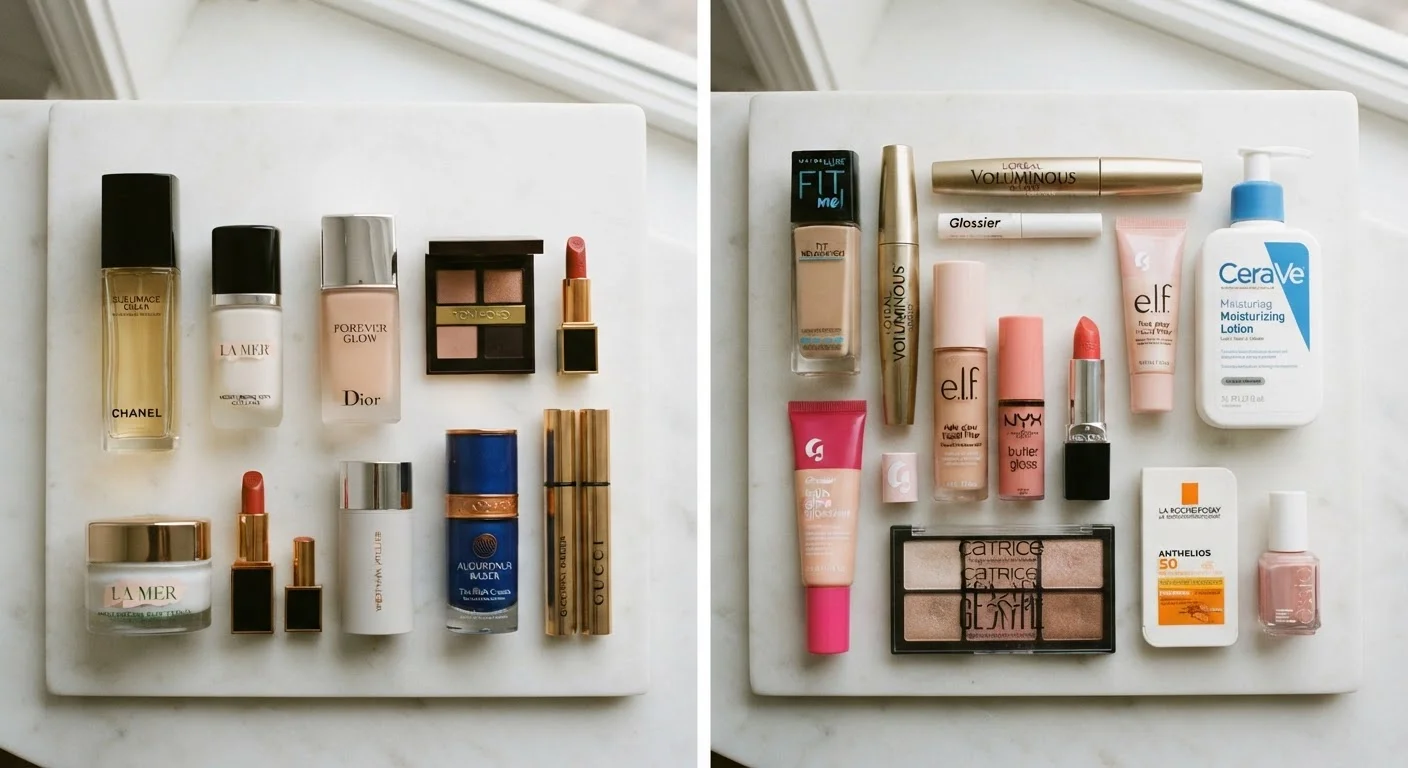
Photo: SaverSteals.com | Explore More. Shop Smarter. editorial
—— In This Article
Key Takeaways
- Skincare actives and treatments tend to show more meaningful performance differences at higher price points.
- Many color cosmetics - especially eyeshadow and lipstick - have strong drugstore alternatives with comparable pigmentation.
- Packaging, fragrance, and brand prestige often account for a significant portion of a premium product's cost.
- Knowing which categories to save on can free up budget for the products where quality genuinely matters.
- Individual skin type and concerns play a large role in whether a premium formula is worth it for you.
Higher actives concentration in premium skincare treatments
Prestige serums often use more stable forms of actives - such as encapsulated retinol or ascorbyl glucoside - which can mean better ingredient delivery and fewer formulation compromises.
Better texture engineering in long-wear complexion products
Some premium foundations use polymer technology or skin-identical oils that improve oxidation resistance and wear time, though this advantage is not universal across all brands or skin types.
Elegant sunscreen formulas that encourage consistent use
A sunscreen with a comfortable, non-greasy finish is more likely to be applied daily, which matters more for skin health than marginal differences in SPF rating.
More rigorous stability and compatibility testing in some lines
Established prestige brands sometimes invest more heavily in clinical testing and preservative systems, which can matter for sensitive skin or active-heavy formulations.
Significant price premium for packaging and brand prestige
A large share of a luxury product's retail cost can be attributed to packaging, marketing spend, and retailer margins - none of which affect what your skin actually receives.
Drugstore color cosmetics often match prestige pigmentation
Eyeshadow, blush, and lip color from affordable ranges have closed the formulation gap substantially, with many independent comparisons finding similar color payoff and wear time.
Basic moisturizers rely on low-cost, widely available ingredients
Glycerin, hyaluronic acid, and ceramides are inexpensive commodity ingredients; a moisturizer built around these can perform similarly whether it costs $8 or $80.
Premium pricing does not guarantee skin-type compatibility
An expensive formula can still cause breakouts, irritation, or poor wear on your specific skin - price is not a reliable proxy for suitability.
Trend-driven launches inflate perceived value
Limited-edition packaging and influencer collaborations can add to a product's price without improving its formulation, making it easy to overpay for novelty.
Why Not Every Beauty Product Deserves Equal Budget
Beauty marketing works hard to make every launch feel essential. But a structured approach to your spending - one that matches budget to actual performance differences - tends to serve your skin and wallet far better than brand loyalty alone. The key question to ask before any purchase is whether the price gap between a premium and affordable option reflects a meaningful formulation difference, or whether you're largely paying for packaging and prestige.
To understand how pricing is constructed in the first place, see our article on what you're really paying for in beauty. With that context in mind, it becomes much easier to identify which categories genuinely reward a higher spend.
Higher actives concentration in premium skincare treatments
Prestige serums often use more stable forms of actives - such as encapsulated retinol or ascorbyl glucoside - which can mean better ingredient delivery and fewer formulation compromises.
Better texture engineering in long-wear complexion products
Some premium foundations use polymer technology or skin-identical oils that improve oxidation resistance and wear time, though this advantage is not universal across all brands or skin types.
Elegant sunscreen formulas that encourage consistent use
A sunscreen with a comfortable, non-greasy finish is more likely to be applied daily, which matters more for skin health than marginal differences in SPF rating.
More rigorous stability and compatibility testing in some lines
Established prestige brands sometimes invest more heavily in clinical testing and preservative systems, which can matter for sensitive skin or active-heavy formulations.
Where Splurging Can Be Justified
Certain beauty categories show more consistent performance variation across price points. Skincare treatments - particularly serums containing high concentrations of actives like retinoids, vitamin C derivatives, or peptides - often differ meaningfully in ingredient stability, delivery technology, and concentration between drugstore and prestige lines. A poorly stabilized vitamin C serum, regardless of price, will oxidize quickly and lose efficacy. In this case, the formulation matters more than the label.
Sunscreen is another category where formula quality has direct skin-health implications. Elegant textures that encourage daily use, broad-spectrum coverage, and skin compatibility can influence whether you actually apply the product consistently - which is arguably more important than any single ingredient.
Long-wear foundations and complexion products that interact with your skin's chemistry over an entire day also tend to show more differentiation. Oxidation resistance, skin-type compatibility, and finish longevity are harder to replicate at lower price points, though exceptions absolutely exist. For a nuanced look at where formulas actually converge, see where drugstore and high-end formulas genuinely diverge.
Where Saving Makes Sense
Color cosmetics - especially those that sit on the surface of skin rather than interacting with it over time - are frequently a strong area for budget picks. Eyeshadow, eyeliner, and lipstick from drugstore ranges have improved dramatically in pigmentation and wear, and the gap between affordable and prestige options is narrower than marketing suggests.
Significant price premium for packaging and brand prestige
A large share of a luxury product's retail cost can be attributed to packaging, marketing spend, and retailer margins - none of which affect what your skin actually receives.
Drugstore color cosmetics often match prestige pigmentation
Eyeshadow, blush, and lip color from affordable ranges have closed the formulation gap substantially, with many independent comparisons finding similar color payoff and wear time.
Basic moisturizers rely on low-cost, widely available ingredients
Glycerin, hyaluronic acid, and ceramides are inexpensive commodity ingredients; a moisturizer built around these can perform similarly whether it costs $8 or $80.
Premium pricing does not guarantee skin-type compatibility
An expensive formula can still cause breakouts, irritation, or poor wear on your specific skin - price is not a reliable proxy for suitability.
Trend-driven launches inflate perceived value
Limited-edition packaging and influencer collaborations can add to a product's price without improving its formulation, making it easy to overpay for novelty.
Makeup remover, cotton pads, and other consumable tools are also categories where premium pricing rarely translates to a meaningfully better experience. Single-use products in particular deserve scrutiny - as explored in our piece on the cumulative cost of single-use beauty products. Spending more per unit adds up without proportionate benefit.
Basic moisturizers without active ingredients - think simple hydrators that use humectants like glycerin or hyaluronic acid - are also well-represented at lower price points. The core ingredients are inexpensive and widely available; premium pricing here is more often attributable to branding than to superior hydration outcomes.
Building a Smarter Beauty Budget
A workable framework is to treat your beauty routine as having two tiers: performance-critical products (where formulation directly affects skin health or long-term results) and surface or cosmetic products (where the main outcome is color, scent, or immediate texture). Reserve more of your budget for the first tier, and look for alternatives in the second.
Loyalty Tiers Can Shift the Math
Many beauty retailers operate tiered rewards programs that offer meaningful perks - including discounts, early access, and free samples - at higher spend levels. Before deciding a premium product is out of reach, it's worth calculating whether points or tier rewards bring the effective price closer to a drugstore alternative. See whether climbing a rewards tier is worth the spend for a closer look at how these programs are structured.
Loyalty programs and coupons can shift the calculation further - a prestige product acquired through stacked rewards or a sale may cost the same as a drugstore option at full price. See how to use beauty coupons and loyalty programs to stretch your budget on both tiers. And be aware of the common triggers that inflate spending without improving outcomes, covered in our guide to overspending traps in the beauty aisle.
Ultimately, no single rule applies universally. Individual skin type, specific concerns, and how a formula performs on your skin are always the most reliable guide - more so than price alone.

Beauty Editorial Team
Beauty Editorial Team is the collective byline for our editorial team and contributor network. Articles published under this byline or an editorial pen name are researched, written, and reviewed according to our editorial standards for clarity, consistency, and independence before publication.
View author profile