
Overspending Traps in the Beauty Aisle
From influencer-driven launches to 'limited edition' packaging, here are the common spending triggers that inflate your beauty budget quietly.
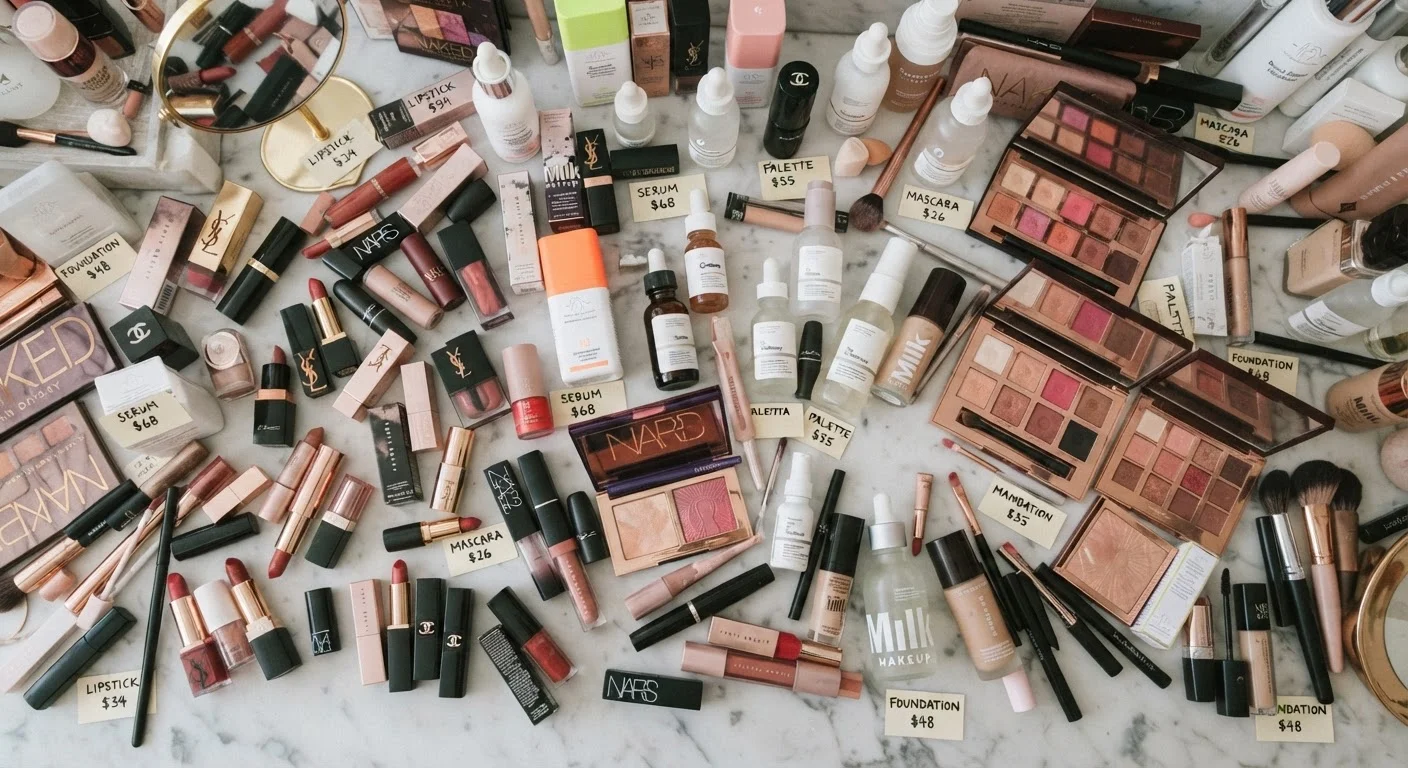
Photo: SaverSteals.com | Explore More. Shop Smarter. editorial
—— In This Article
Key Takeaways
- Influencer-driven launches and limited-edition packaging are primary drivers of impulse beauty spending.
- Many drugstore formulas share active ingredients with prestige counterparts at a fraction of the cost.
- Loyalty programs and coupons can meaningfully reduce beauty spend when used strategically rather than reactively.
- Buying multiples 'just in case' often leads to expired, wasted product before you finish what you own.
- Comparing cost-per-use rather than sticker price reveals where real value lies in beauty purchases.
Why Beauty Budgets Quietly Inflate
The beauty aisle - whether physical or digital - is among the most psychologically optimized retail environments a shopper encounters. Products are tiered, launches are orchestrated, and loyalty programs are engineered to reward frequency of purchase rather than considered spending. The result: many shoppers consistently spend more than they intend to, often without a clear sense of where the money went.
Understanding the specific triggers that inflate beauty budgets is more useful than generic advice to "spend less." Most overspending in this category comes from a handful of repeatable patterns - and each one has a straightforward counter-strategy.
Packaging Is Not a Performance Indicator
Premium packaging - heavy glass bottles, magnetic closures, minimalist labels - signals luxury but says nothing about formula efficacy. Cosmetic chemists routinely note that the same active ingredients appear at similar concentrations in both drugstore and prestige products. Before paying a premium for aesthetics, check the ingredient list, not the box.
Common Mistakes That Drive Up Your Beauty Spend
The mistakes below account for the majority of unplanned beauty spending. Each one reflects a real cognitive pattern - not a failure of willpower - which is why naming them clearly is the first step toward spending more intentionally.
Buying products based on influencer hype before a launch settles.
Why it happens: Social media creates urgency around new releases, making a product feel essential before real-world reviews exist. FOMO (fear of missing out) compresses decision time, bypassing the pause that leads to better purchasing choices.
Assuming a higher price signals a better formula.
Why it happens: Price-quality associations are deeply embedded in consumer psychology. In beauty, prestige branding, fragrance, and packaging costs account for a large share of a product's retail price - not necessarily its active ingredient load.
Stockpiling products during sales events beyond what you can realistically use.
Why it happens: Percentage-off promotions make buying multiples feel financially rational in the moment. Most shoppers underestimate how slowly they move through skincare and makeup, particularly for targeted treatments used a few times per week.
Purchasing limited-edition versions of products you already own in a standard shade.
Why it happens: Limited-edition packaging activates scarcity thinking - the sense that passing on a product means losing access to something irreplaceable. Reformulations are rare; the difference is almost always cosmetic.
Ignoring cost-per-use when comparing affordable and prestige options.
Why it happens: Shoppers typically compare sticker prices, which can make a $12 product look like an obvious win over a $40 alternative. But a concentrated formula used in small doses may outlast a larger, less efficient one by months.
Duplicating products that perform identical functions in your routine.
Why it happens: Beauty marketing presents each new product as solving a distinct problem, even when the active ingredients significantly overlap with something already in your cabinet.
For a broader look at how these habits play out across your routine, making budget beauty purchases that actually last offers a practical framework for evaluating any new buy before committing.
Building a Smarter Beauty Shopping Habit
Correcting individual mistakes matters, but the more durable fix is a decision framework you can apply consistently. Before adding any product to your cart, consider three questions: Does this replace something I've already finished or nearly finished? Have I seen consistent reviews across multiple independent sources? And does the cost-per-use make sense relative to what I already own?
~$313
Average annual U.S. beauty spend per person
Statista consumer market data estimates the average American spends several hundred dollars annually on personal care and beauty products.
60-70%
Share of beauty purchases that are unplanned
Industry research consistently finds that a majority of beauty purchases are made on impulse rather than as part of a planned shopping trip.
Up to 40%
Potential savings using coupons and loyalty programs
Combining manufacturer coupons with retailer loyalty rewards can substantially reduce out-of-pocket beauty costs according to coupon aggregator analyses.
Coupons and retailer loyalty programs can meaningfully reduce beauty spend when used with intention rather than as a reason to buy. The Beauty Coupons hub is a useful starting point for stacking available offers on purchases you've already decided to make - not for discovering new purchases to justify.
Loyalty Points Can Encourage Overspending
Retailer loyalty programs are genuinely useful when you redeem rewards on purchases you already planned. However, spending extra to reach a points threshold or unlock a gift-with-purchase is a net loss if those items don't fit your routine. Track redemptions separately from regular spending to stay clear-eyed about actual savings.
If you're reassessing your routine from the ground up, The Full Picture on Budget Beauty covers formulation basics, realistic expectations, and the shopping habits that actually translate to long-term savings.

Beauty Editorial Team
Beauty Editorial Team is the collective byline for our editorial team and contributor network. Articles published under this byline or an editorial pen name are researched, written, and reviewed according to our editorial standards for clarity, consistency, and independence before publication.
View author profile