
Price vs. Performance: How Beauty Products Are Actually Priced
Packaging, marketing, and brand prestige all factor into a product's price tag. Learn what you're really paying for in beauty.
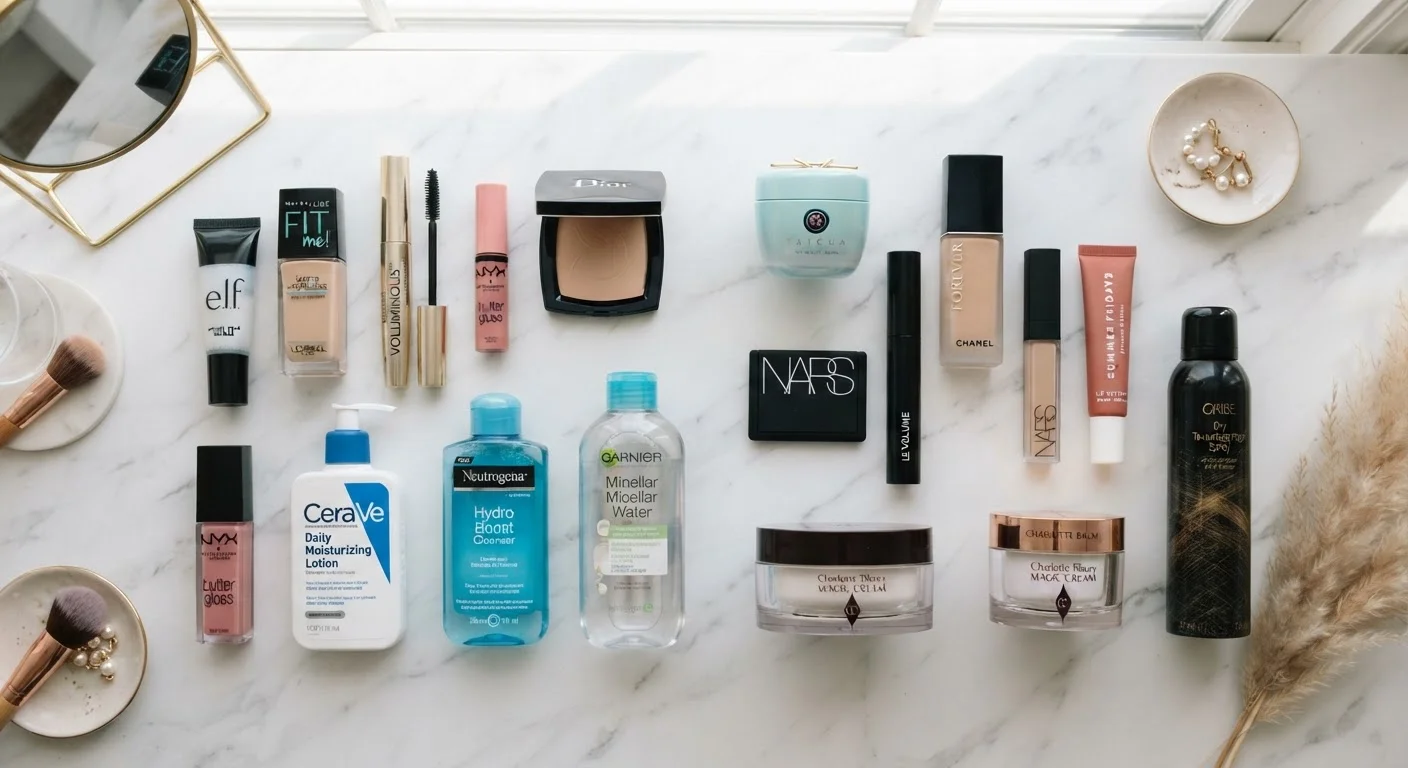
Photo: SaverSteals.com | Explore More. Shop Smarter. editorial
—— In This Article
Key Takeaways
- Ingredients alone rarely explain the full price difference between drugstore and prestige beauty products.
- Packaging, marketing budgets, and brand prestige are major drivers of retail cost.
- Many drugstore formulas share active ingredients with higher-priced counterparts.
- Knowing what you're paying for helps you decide when to splurge and when to save.
- Some product categories show more meaningful performance differences at higher price points than others.
What Actually Goes Into a Beauty Product's Price
When you pick up two moisturizers with nearly identical ingredient lists - one at a drugstore for $12, another at a department store counter for $85 - the gap can feel baffling. The reality is that a beauty product's retail price is built from several cost layers, only one of which is the formula itself.
The main components of pricing typically include:
- Raw ingredients: The actual formulation - emollients, actives, preservatives - often represents a modest share of total cost.
- Packaging: Glass jars, magnetic closures, custom molds, and foil embossing carry significant manufacturing costs that are passed directly to consumers.
- Marketing and advertising: Major prestige brands spend heavily on campaigns, celebrity partnerships, and influencer programs. Those costs are built into the price you pay at checkout.
- Brand equity: A brand's perceived status commands a premium independent of formula quality. Consumers are, in part, paying for an image.
- Retailer margins: Luxury retailers typically take a higher margin than mass-market chains, which further inflates the shelf price.
None of this makes premium products inherently dishonest - some genuinely invest in higher-grade raw materials or more stable delivery systems. But understanding the breakdown helps shoppers ask the right questions before assuming price equals performance.
~10-20%
Estimated ingredient cost share of retail price
Industry analysts broadly estimate that raw formulation costs represent roughly 10-20% of a beauty product's retail price, with packaging, marketing, and margins making up the remainder.
$100B+
U.S. beauty and personal care market size
The U.S. beauty and personal care market is valued at over $100 billion, with prestige and mass-market segments both growing, according to industry market research.
2-3x
Typical markup from manufacturer to retail
Beauty products commonly carry a retail markup of two to three times the manufacturer's cost, with prestige retail channels commanding margins at the higher end of that range.
Where Drugstore Formulas Actually Compete
The beauty industry has a long history of drugstore formulas matching or closely approximating the active ingredient profiles of prestige products. This is especially true in a few key categories.
Cleansers and basic moisturizers are among the most straightforward cases. A gentle foaming cleanser relies on a short list of surfactants and humectants - ingredients that cost roughly the same at every price tier. If the active components are comparable, spending more rarely changes results for most skin types.
SPF products are regulated by the FDA, which standardizes active sunscreen ingredients and required testing. A broad-spectrum SPF 50 from a drugstore shelf must meet the same regulatory requirements as one from a prestige line.
Pigment-based color cosmetics - blushes, eyeshadows, lip products - can also show strong drugstore performance, particularly from manufacturers who supply both mass-market and prestige brands under different labels.
For a deeper look at which product categories are more likely to show real performance differences at higher price points, see our guide to splurging vs. saving in beauty.
Compare Ingredient Lists Before You Buy
Pull up both the drugstore and prestige product on the retailer's website and compare their ingredient lists side by side. Focus on the first five to ten ingredients - these are present in the highest concentrations and most influence how the product performs. If the key actives match, the formulas are likely functionally similar.
How to Evaluate a Product Beyond the Price Tag
Comparing price to performance starts with the ingredient list. In the U.S., cosmetic ingredients are listed in descending order of concentration. If two products share the same key actives in similar positions on the list, they're likely to perform comparably - regardless of price tier.
A few practical approaches:
- Read the active ingredient panel for SPF and acne products, where the FDA requires actives to be disclosed separately.
- Look past the first five ingredients to identify meaningful actives. High-profile ingredients listed last may be present in trace amounts - a marketing decision, not a formulation one.
- Consider packaging function over aesthetics. For ingredients sensitive to light or air (vitamin C serums, retinol), protective packaging genuinely matters. Decorative glass jars on a vitamin C product may actually reduce its stability.
- Account for cost-per-use. A larger, simply packaged drugstore product may deliver more uses per dollar than a prestige option in elegant but small packaging.
Being an informed label-reader is one of the most reliable ways to avoid overspending. For a broader look at the spending patterns that quietly inflate beauty budgets, see our piece on overspending traps in the beauty aisle.
And if you're building a routine around affordable picks, our guide to making budget beauty purchases that actually last covers how to evaluate shelf life, formulation fit, and long-term value. You can also find savings opportunities through beauty coupons and loyalty programs once you know which products you want.
Frequently Asked Questions

Beauty Editorial Team
Beauty Editorial Team is the collective byline for our editorial team and contributor network. Articles published under this byline or an editorial pen name are researched, written, and reviewed according to our editorial standards for clarity, consistency, and independence before publication.
View author profile