
Digital vs. Paper Beauty Coupons: Which Format Actually Saves You More?
Digital and paper coupons each have distinct strengths and limitations. Here's a clear breakdown to help you use both effectively.
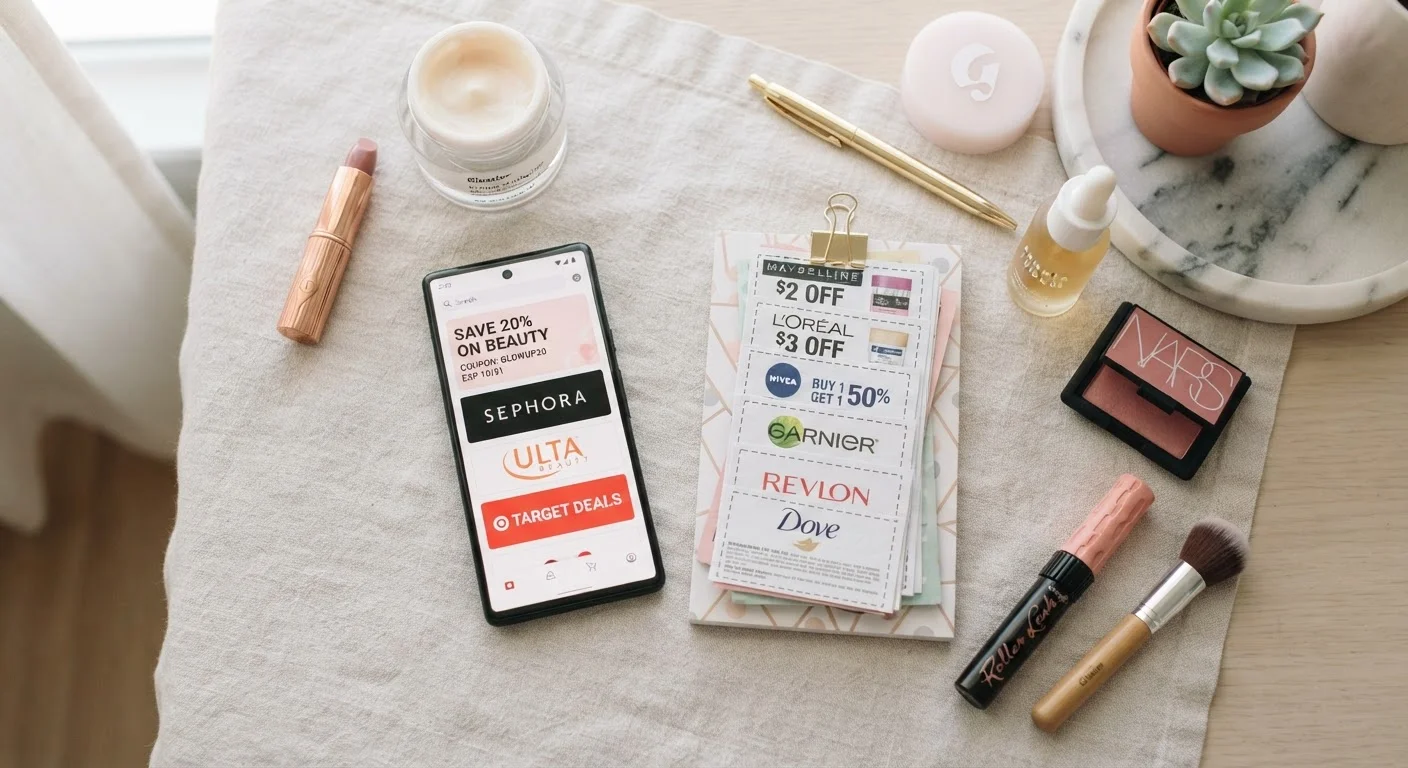
Photo: SaverSteals.com | Explore More. Shop Smarter. editorial
—— In This Article
Key Takeaways
- Digital coupons load directly to loyalty accounts, reducing friction but limiting stackability in some programs.
- Paper coupons, especially manufacturer coupons, often carry higher face values and are more widely stackable.
- Neither format consistently outperforms the other - the best savings come from knowing when to use each.
- Expiration windows differ significantly: digital offers frequently expire faster than their paper counterparts.
- Combining both formats strategically - where store policy allows - can maximize total checkout savings.
How Each Format Works at Checkout
Digital beauty coupons are loaded to a shopper's loyalty account - typically through a retailer's website or app - and deducted automatically when the qualifying product scans at checkout. There's no physical document to produce, which reduces checkout friction considerably. Paper coupons, by contrast, are presented manually: either as clipped inserts from weekly circulars, printed from brand or aggregator websites, or occasionally mailed directly from manufacturers.
The mechanics matter because they affect how each format interacts with other promotions. Digital coupons are tied to a single account, meaning they typically apply once per transaction and sometimes once per household. Paper manufacturer coupons carry a barcode that registers the coupon's origin - store vs. manufacturer - and cashiers (or automated registers) use that to determine what can stack. Understanding this distinction is foundational to building a smarter savings approach. For a closer look at how manufacturer and store-issued coupons differ regardless of format, see our breakdown of manufacturer vs. store coupons.
| Criterion | Digital Coupons | Paper Coupons |
|---|---|---|
| Redemption method | Auto-applied via loyalty account | Presented manually at register |
| Typical face value | Moderate; retailer-driven | Often higher for manufacturer coupons |
| Stacking potential | Limited; usually one per item | Higher; can combine with store offers |
| Expiration window | Short - days to weeks | Longer - typically weeks to months |
| Organization required | Minimal; stored in app or account | High; physical clipping and tracking |
| Availability | Retailer ecosystems and apps | Circulars, mailers, printable sites |
| Risk of loss or forgetting | Low | Moderate to high |
Face Value, Stacking, and Where Each Format Wins
Paper manufacturer coupons distributed through newspaper inserts or brand mailers often carry higher face values than their digital counterparts - this is partly because manufacturers use high-value paper coupons to drive trial of new products. Digital coupons, particularly those issued directly by retailers, are more likely to represent a modest percentage off or a smaller fixed discount, though retailer-app-exclusive digital offers during promotional events can rival or exceed typical paper values.
Stacking - using more than one coupon on a single item - is where the format divide becomes most consequential. Many retailers allow a paper manufacturer coupon to be combined with a store digital coupon on the same item, effectively layering both discounts. However, combining two digital coupons or two manufacturer coupons on a single product is rarely permitted under standard coupon policies. Knowing a store's specific stacking rules before you shop is essential; policies vary meaningfully across drugstore chains, grocery-beauty aisles, and mass-market retailers.
Check the Store's Coupon Policy First
Stacking rules vary significantly between retailers. Some major drugstore chains explicitly allow one manufacturer coupon and one store coupon per item, while others restrict digital and paper combinations. Reviewing a retailer's published coupon policy - usually available on their website - before checkout prevents declined coupons and checkout-lane confusion.
For shoppers who prefer to skip the coupon hunt altogether, loyalty tiers and price-match strategies can deliver comparable value without any clipping.
Expiration, Availability, and Practical Limitations
Digital beauty coupons often have shorter validity windows - sometimes as brief as a week or tied to a specific promotional event. Paper coupons, especially those from manufacturer inserts, commonly run for four to twelve weeks, giving shoppers more flexibility to time their purchase around a sale or stock-up moment.
Availability also differs by channel. Digital coupons are concentrated in retailer ecosystems, meaning you need accounts at multiple platforms to access the full landscape of offers. Paper coupons are distributed more broadly - through circulars, brand mailers, and printable coupon sites - but require physical management and can expire unnoticed in a junk drawer.
60%+
Share of US coupon redemptions that are digital
According to Statista, digital coupon redemptions have consistently outpaced paper redemptions in the US in recent years, reflecting broader app adoption.
4-12 weeks
Typical validity window for paper manufacturer coupons
Industry coupon policy guides generally note that newspaper insert coupons carry validity windows ranging from one to three months, compared to shorter digital windows.
Before redeeming any coupon, it's worth running through a pre-checkout checklist to confirm eligibility, size requirements, and stacking permissions. The Before You Clip checklist covers the most common pitfalls. And if you regularly shop both in-store and online, understanding how redemption rules shift between channels is equally important - the in-store vs. online redemption guide explains the key differences. For a comprehensive end-to-end savings strategy that incorporates both formats, the complete beauty coupon and loyalty playbook is a useful next step.

Beauty Editorial Team
Beauty Editorial Team is the collective byline for our editorial team and contributor network. Articles published under this byline or an editorial pen name are researched, written, and reviewed according to our editorial standards for clarity, consistency, and independence before publication.
View author profile