
In-Store vs. Online Beauty Coupon Redemption: Key Differences to Know
The same coupon can behave differently depending on where you redeem it. Understand the rules for both channels before checkout.
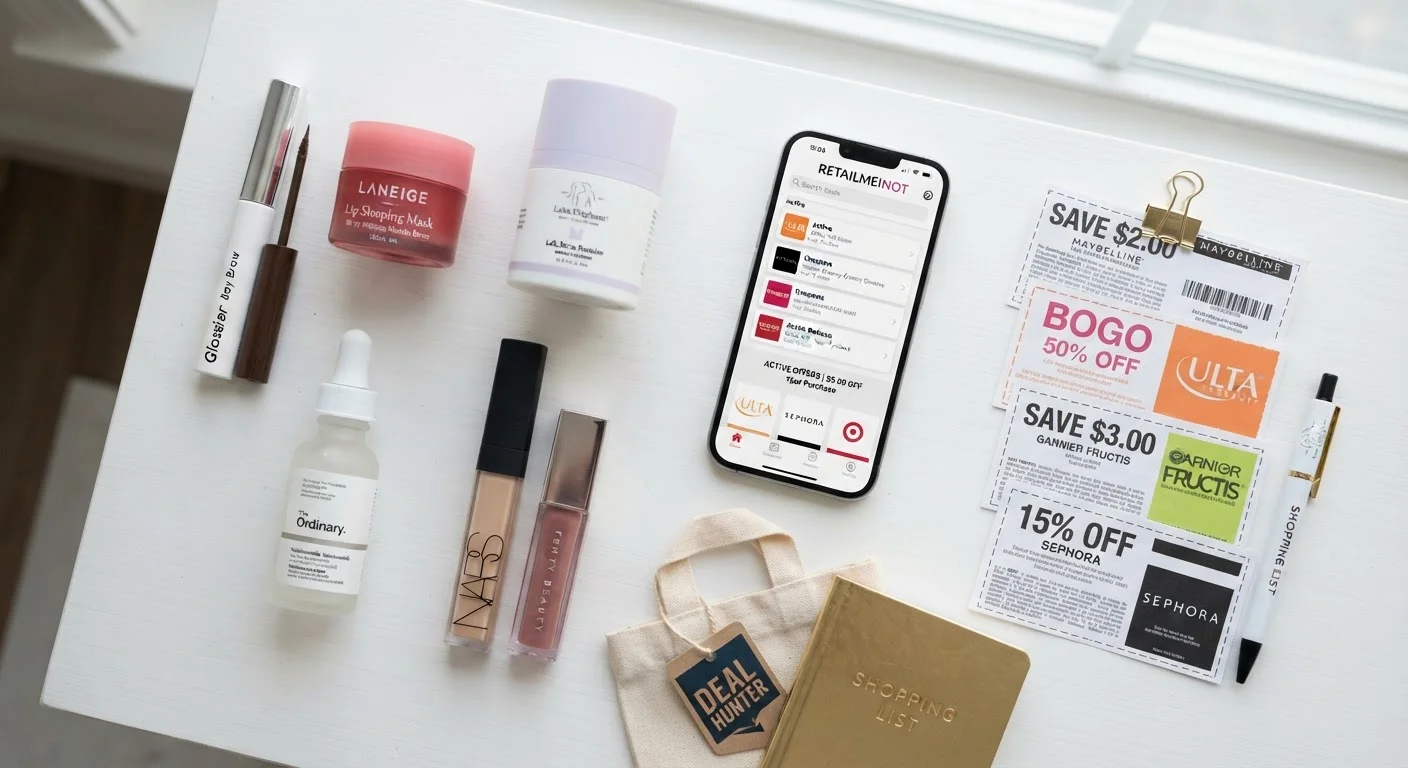
Photo: SaverSteals.com | Explore More. Shop Smarter. editorial
—— In This Article
Key Takeaways
- The same coupon can have different restrictions depending on whether you redeem it in-store or online.
- Online redemption often involves promo codes, cart minimums, and automatic exclusions enforced at checkout.
- In-store redemption relies on cashier overrides and physical or app-based coupon presentation, which introduces human variability.
- Stacking rules - combining multiple coupons or loyalty rewards - differ significantly between channels.
- Reading the fine print before you shop, not at checkout, prevents most redemption failures.
Why the Redemption Channel Matters
A beauty coupon doesn't exist in isolation. Its actual value depends heavily on where and how you use it. The same dollar-off offer can be accepted without issue at a store register, silently rejected during online checkout, or trigger an exclusion you didn't anticipate either way. Understanding the structural differences between in-store and online redemption helps you plan purchases with fewer surprises.
For a quick reference on the terminology used throughout this guide - including terms like "stackable," "threshold discount," and "one-per-transaction" - see the Beauty Coupon Glossary.
| In-Store Redemption | Online Redemption | |
|---|---|---|
| Validation method | Cashier scan + possible override | Automated system, no overrides |
| Manufacturer coupon support | Generally accepted | Rarely supported |
| Stacking flexibility | Often more permissive | Typically one code per order |
| Exclusion enforcement | Inconsistent, varies by store | Consistent and automatic |
| Loyalty point combination | Frequently available | Depends on retailer rules |
| Channel-specific coupons | "In-store only" offers apply | "Online only" offers apply |
| Error transparency | Cashier may explain issue | Generic error messages common |
How Online Coupon Redemption Works
Online beauty coupon redemption is largely system-driven. When you enter a promo code at checkout, the retailer's platform automatically validates it against a set of programmed rules - eligible SKUs, minimum cart value, one-use-per-account limits, and expiration dates. If any condition fails, the discount won't apply, often with a generic error message that doesn't explain why.
This automation has one clear benefit: exclusions are enforced consistently. You won't accidentally apply a coupon to an ineligible product and only discover the error after paying. However, it also means there's no human override. A cashier can sometimes manually honor a coupon that's slightly outside normal parameters; an algorithm cannot.
Stacking online is also more restricted. Most beauty retailers allow only one promo code per transaction, though loyalty reward points or site-wide percentage discounts may apply simultaneously depending on how the retailer structures its promotions. Always check whether the offer field accepts multiple codes before assuming you can combine them.
Test Your Code Before Finalizing Your Cart
When shopping online, enter your promo code as soon as items are in your cart - before you've committed to the purchase. This lets you adjust your cart, swap ineligible items, or meet a minimum threshold without pressure. Waiting until the payment screen leaves less room to respond if the code fails.
How In-Store Coupon Redemption Works
In-store redemption introduces human judgment into the process, for better and worse. A cashier scans a physical or digital coupon barcode, and the register either accepts or flags it. When a flag occurs, a manager override is sometimes possible - a flexibility that doesn't exist online. This can work in your favor, but it also means the outcome may vary by location or staff.
Manufacturer coupons - those issued by the product's brand rather than the retailer - are almost exclusively redeemed in-store. Retailers submit these to a clearinghouse for reimbursement, a backend process that only applies to physical transactions. For more on how manufacturer and store coupons differ structurally, see Manufacturer Coupons vs. Store Coupons.
In-store stacking can be more permissive. Some beauty retailers allow a manufacturer coupon and a store coupon to be used on the same item in a single transaction - a combination that's typically not supported online. Loyalty program points are also more flexibly combined with coupons at the register in many cases.
Fine Print That Behaves Differently by Channel
Several common coupon terms produce different outcomes depending on where you redeem:
- "One per transaction": Online, this is enforced strictly by the code field. In-store, it may be interpreted as one per item rather than one per order, depending on the cashier or store policy.
- "Excludes sale items": Online checkout will automatically remove the discount if a sale item is in your cart. In-store, this exclusion is only caught if the register is programmed to flag it - which isn't always the case.
- "Valid in-store only" or "Valid online only": Channel-specific coupons are common in beauty retail. Using the wrong channel will result in rejection, and this restriction is often buried in the fine print rather than prominently displayed.
- Minimum purchase thresholds: Online, these are calculated on your post-discount subtotal in some cases, which can catch shoppers off guard. In-store calculation methods vary by retailer.
Before redeeming any coupon, read the terms and conditions carefully to understand how these clauses apply to your specific situation.
Avoiding Rejection in Both Channels
Coupon rejection most often stems from mismatched expectations - the shopper assumes a coupon applies broadly when the terms restrict it narrowly. Understanding why coupons get rejected is the first step toward preventing it.
Practically speaking: verify channel eligibility before you shop, not at the register or checkout screen. Confirm that every item in your cart is eligible. For online purchases, test the promo code before finalizing your cart in case adjustments are needed. For in-store purchases, have your coupon - whether paper or digital - ready to present before the transaction is processed.
Use the pre-redemption checklist to run through the key validation steps for any coupon before you commit to a purchase. Small preparation steps eliminate most of the friction that makes coupon use frustrating.

Beauty Editorial Team
Beauty Editorial Team is the collective byline for our editorial team and contributor network. Articles published under this byline or an editorial pen name are researched, written, and reviewed according to our editorial standards for clarity, consistency, and independence before publication.
View author profile