
Manufacturer Coupons vs. Store Coupons: Understanding the Difference in Beauty Retail
Not all beauty coupons come from the same source. Learn how manufacturer and store coupons differ and when each applies.
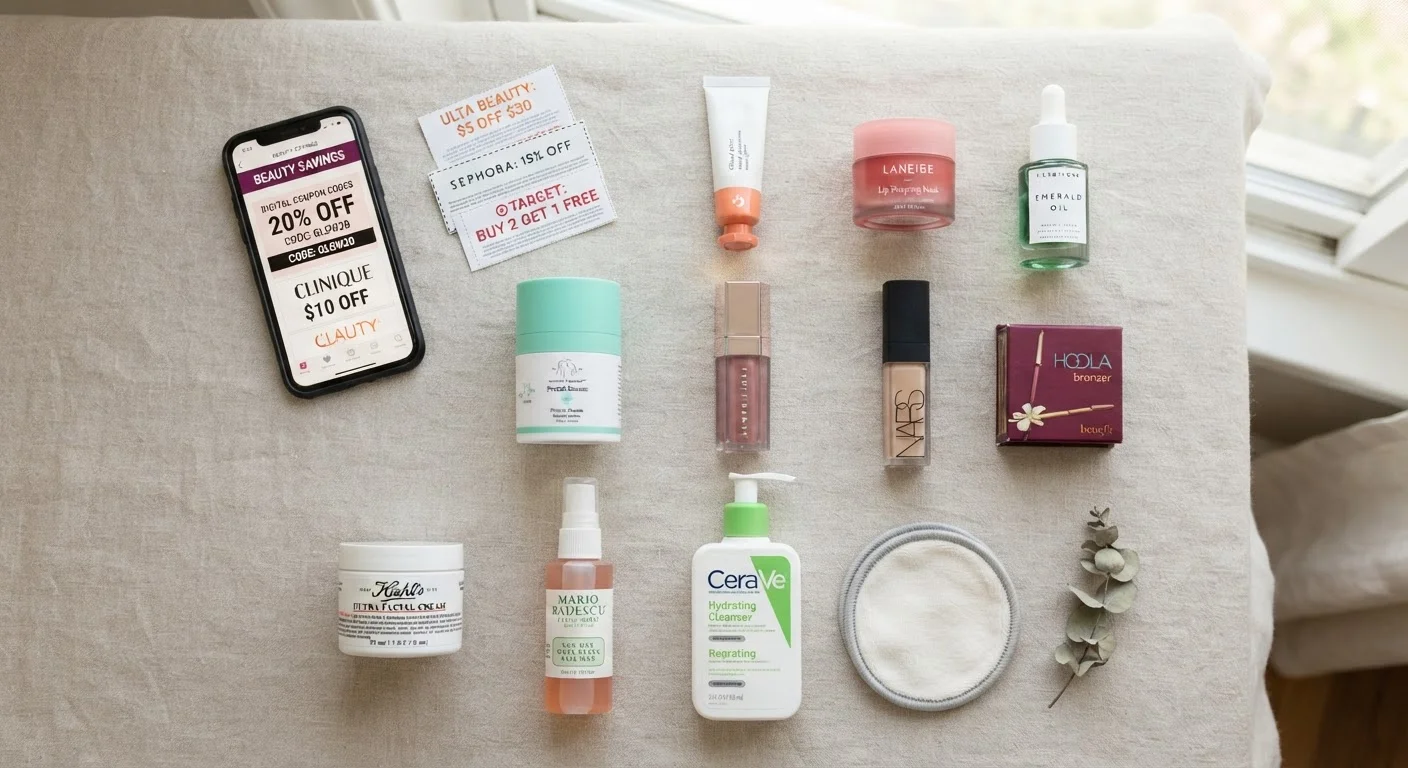
Photo: SaverSteals.com | Explore More. Shop Smarter. editorial
—— In This Article
Key Takeaways
- Manufacturer coupons originate from the product brand and are typically accepted at any participating retailer.
- Store coupons are issued and funded by a specific retailer, limiting redemption to that chain.
- Many beauty retailers allow one manufacturer coupon and one store coupon on the same item - a strategy called stacking.
- Both coupon types carry expiration dates and product-specific restrictions listed in the fine print.
- Understanding coupon origin helps you plan where to shop for maximum savings on beauty products.
Where Each Coupon Actually Comes From
The single most important thing to understand about beauty coupons is their issuer, because the issuer determines the rules. A manufacturer coupon is created and funded by the company that makes the product - think of the brand behind a mascara or a moisturizer. The retailer who accepts it submits a reimbursement claim and is paid back by the manufacturer. This funding structure is why manufacturer coupons can, in principle, be accepted at any store carrying that product.
A store coupon, by contrast, is issued and funded entirely by the retailer itself. The discount comes directly out of the store's own promotional budget. Because the retailer carries all the cost, they limit redemption to their own locations or website. You cannot take a store coupon from one chain and use it at a competitor.
For a deeper breakdown of coupon terminology - including terms like "stackable," "threshold discount," and "rain check" - see the Beauty Coupon Glossary covering key terms used across beauty retail.
Head-to-Head: How They Compare Across Key Criteria
Comparing these two coupon types side by side clarifies when each one adds value.
| Criterion | Manufacturer Coupons | Store Coupons |
|---|---|---|
| Issued by | Product brand / manufacturer | Retailer |
| Where redeemable | Any participating retailer | Issuing store only |
| Who funds the discount | Manufacturer reimburses retailer | Retailer absorbs the cost |
| Stackable with the other type | Yes, where store policy allows | Yes, where store policy allows |
| Common formats | Paper inserts, brand apps, printable PDFs | Loyalty account, app, store mailer |
| Tied to loyalty program | Rarely | Frequently |
| Expiration flexibility | Fixed; set by manufacturer | Fixed; set by retailer |
One nuance worth noting: manufacturer coupons issued for a specific retailer (sometimes labeled "Redeemable only at ") behave more like store coupons in practice. Always read the fine print before assuming a coupon is universally accepted.
Stacking: Using Both Together
Stacking refers to applying more than one coupon to a single item in the same transaction. Many beauty retailers - particularly drugstore chains and mass-market retailers - explicitly allow one manufacturer coupon and one store coupon on the same product simultaneously. This is where understanding coupon origin pays off most directly.
The mechanics work like this: the store coupon reduces the item's price first (or last, depending on the retailer's system), and the manufacturer coupon is applied separately. Both discounts can apply to the same product, compounding your savings without violating any policy.
When Stacking Is Explicitly Prohibited
Some retailers restrict stacking to specific product categories or exclude items already marked down. Clearance beauty products, gift sets, and prestige brand items are common exclusions. A store's coupon policy page - not the coupon itself - is the authoritative source for what can and cannot be combined. When in doubt, ask a cashier or customer service representative before reaching the register.
Stacking policies vary by retailer and can change. It's worth checking a store's current coupon policy - usually posted on its website - before building a stacking strategy around it. Run through a pre-redemption checklist to avoid common stacking pitfalls before you get to the register.
Where You Redeem Matters Too
Even when you have the right coupon, the channel - in-store versus online - affects how it behaves. Some manufacturer coupons are only available as paper inserts and cannot be applied to online orders. Conversely, some store coupons exist only as digital codes loadable to a loyalty account, making them inaccessible in a physical checkout lane without a phone or membership card.
Understanding the format of each coupon type adds another layer of planning. Our guide on digital vs. paper beauty coupons covers the practical differences between formats. And if you're deciding where to redeem, in-store vs. online coupon redemption explains how the same coupon can behave differently across channels.
For shoppers building a broader beauty budget strategy, the Beauty on a Budget hub offers additional context on stretching spending across categories - including how drugstore dupes can reduce your baseline price before coupons are even applied.

Beauty Editorial Team
Beauty Editorial Team is the collective byline for our editorial team and contributor network. Articles published under this byline or an editorial pen name are researched, written, and reviewed according to our editorial standards for clarity, consistency, and independence before publication.
View author profile