
Beauty Coupon and Loyalty Savings: The Complete Strategic Playbook
From finding valid coupons to stacking rewards at checkout, this end-to-end guide covers everything you need to spend less on beauty.
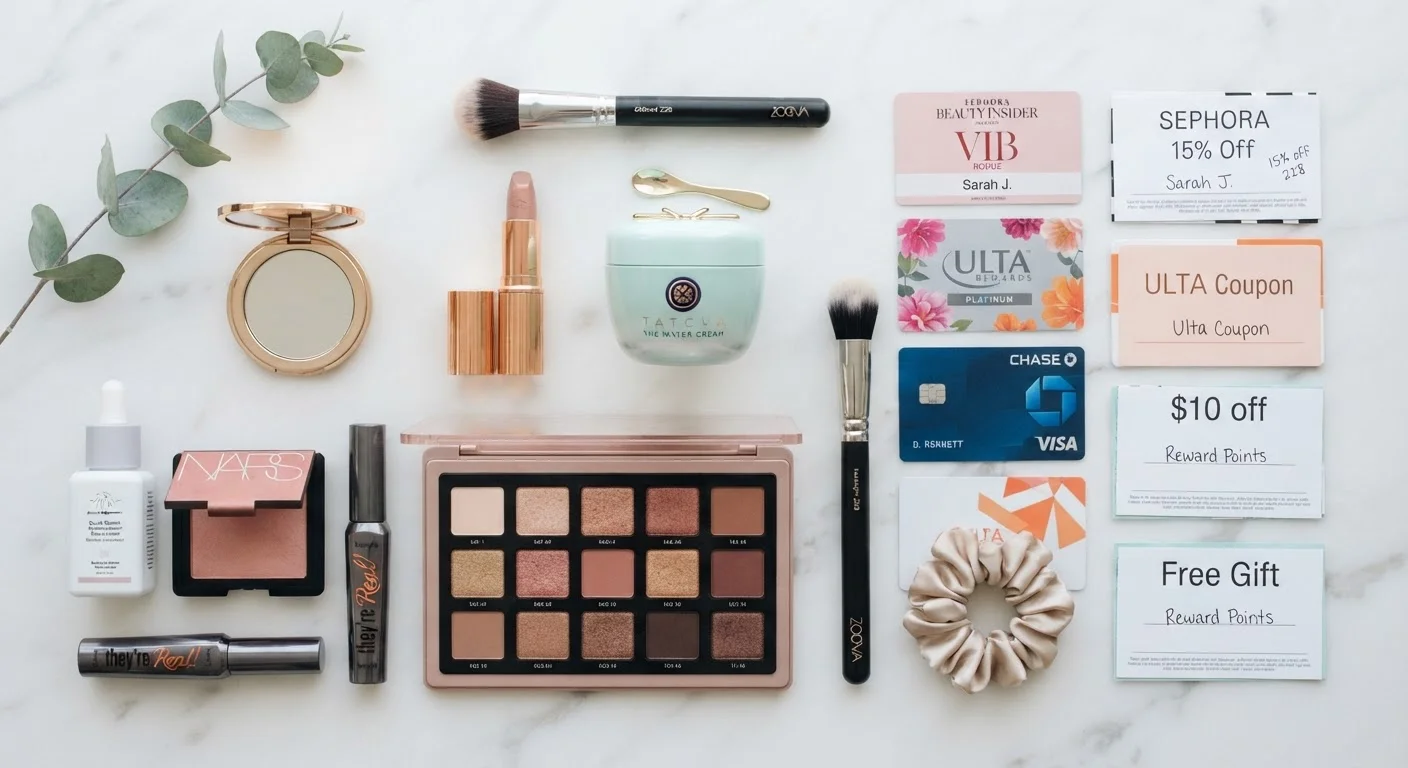
Photo: SaverSteals.com | Explore More. Shop Smarter. editorial
—— In This Article
Key Takeaways
- Combining loyalty rewards with valid coupons at checkout is the highest-leverage savings move in beauty.
- Retailer programs and manufacturer coupons follow different rules - knowing the difference prevents checkout surprises.
- Expiry dates and category restrictions are the most common reasons savings go unclaimed.
- A simple tracking habit prevents unused points and expired coupons from eroding your strategy.
- Stacking doesn't always work - retailer policies vary and must be checked before you shop.
Why a System Beats Sporadic Couponing
Most shoppers clip a coupon here, earn a few points there, and rarely connect those pieces into a coherent savings approach. The result: expired vouchers, forgotten reward balances, and missed stacking windows. A deliberate system - even a lightweight one - consistently outperforms opportunistic clipping because it treats beauty spending as a category to optimize, not a series of one-off transactions.
If you're just getting started, the first-timer's roadmap to beauty coupons and loyalty programs covers foundational steps before you build toward the advanced strategies here. For a broader view of affordable beauty, the Beauty on a Budget hub is a useful companion resource.
2-5%
Typical points-back rate in beauty loyalty programs
Most standard beauty loyalty programs return between 2% and 5% of spend as redeemable points, though bonus events can temporarily raise this.
~30%
Loyalty points that go unredeemed annually
Industry estimates suggest a significant share of loyalty points expire or go unused each year, representing real lost value for enrolled members.
Where to Find Valid Beauty Coupons
Beauty coupons originate from two distinct sources, and conflating them causes frustration. Manufacturer coupons are issued by the brand itself and are typically redeemable at any participating retailer. Retailer coupons are issued by a specific store and can only be applied at that outlet - in-store or online, depending on terms.
Reliable coupon sources include: retailer apps and email newsletters (which often carry exclusive digital offers), Sunday newspaper inserts, loyalty program portals, and dedicated coupon aggregator websites. Browser extensions that automatically surface and apply discount codes at checkout can also surface retailer offers you might otherwise miss.
Link Your Accounts Before You Shop
Always ensure your loyalty account is linked or your loyalty card is scanned before the transaction closes - most retailers cannot retroactively apply points or digital coupons to a completed purchase. Take thirty seconds at checkout to confirm the account is active on the transaction.
One important nuance: digital coupons clipped to a loyalty account are usually tied to that account, not the device, so they apply whether you shop in-store or online - provided the account is linked at checkout.
Understanding Loyalty Program Structures
Beauty loyalty programs generally fall into two models. Points-per-dollar programs award a set number of points for every dollar spent, redeemable for discounts, free products, or gift cards once a threshold is reached. Tiered programs add escalating perks - free shipping, birthday gifts, early access to sales - as annual spend climbs.
Some retailers operate hybrid models that combine both. Understanding which model a program uses helps you decide whether to consolidate spending at one retailer to unlock tier benefits or spread purchases across multiple programs for maximum point accumulation. It also helps you weigh beauty loyalty against programs in adjacent categories - though the structure is different, the underlying logic of maximizing discount memberships applies broadly.
Before a major purchase, check whether your loyalty program is running a bonus-point event in the next 30 days - waiting a short period can double or triple your point return without changing what you buy.
Beauty retailers regularly schedule bonus-multiplier windows tied to seasonal events or new launches; aligning big purchases with these windows is one of the easiest high-return moves available.
When a retailer offers a 'spend $X, get $Y in rewards' promotion, calculate whether the incremental spend to hit the threshold costs less than the reward value - if not, don't stretch your basket to reach it.
Threshold-reward promotions are designed to increase basket size; they only generate net savings when the reward value genuinely exceeds the cost of reaching the spend tier.
Stacking Coupons, Sales, and Rewards
Stacking - applying a coupon on top of a sale price while simultaneously earning loyalty points - is the highest-return move in beauty savings, but it requires knowing what each retailer permits. Many major beauty retailers allow a manufacturer coupon and a store sale to coexist; fewer allow two store coupons on the same item. Point earning during promotional periods varies: some programs award points on the pre-discount price, others on the final amount paid.
Before building a stacking strategy around a specific retailer, review the current terms of their coupon and rewards policy - these change more often than shoppers expect. For a deeper look at what's fact versus myth in stacking, see the truth behind beauty promo stacking myths.
Staying Organised Year-Round
The single biggest drain on beauty savings isn't a bad coupon - it's a good coupon that expired before it was used. A practical system doesn't need to be elaborate: a notes app folder for digital codes, a recurring calendar reminder to check loyalty point balances before they expire, and a quick seasonal audit of what you've accumulated versus what you've used.
Seasonal sales cycles (holiday gifting periods, mid-year clearance, brand anniversary events) tend to repeat annually, making them predictable once you've tracked them for one full year. The guide to keeping your beauty coupon strategy organised throughout the year offers structured habits for exactly this kind of tracking.
Common Mistakes and How to Avoid Them
Several patterns consistently undermine otherwise solid savings strategies:
- Buying something solely because a coupon exists. A 20% discount on a product you wouldn't otherwise purchase isn't savings - it's spending prompted by a coupon.
- Ignoring category exclusions. Many beauty coupons exclude prestige brands, clearance items, or specific subcategories. Reading the fine print before checkout prevents disappointment.
- Letting points sit idle. Most loyalty points carry expiry dates or devalue after long periods of account inactivity. Redeeming strategically - rather than hoarding indefinitely - captures more actual value.
- Overlooking non-coupon savings routes. Loyalty tiers, price-match policies, and purchase timing can deliver comparable savings without a single coupon. Saving on beauty without a single coupon explores these alternatives in depth.
A well-run beauty savings strategy isn't about maximizing every possible discount - it's about spending intentionally on products you need, at the lowest price your planning makes possible.

Beauty Editorial Team
Beauty Editorial Team is the collective byline for our editorial team and contributor network. Articles published under this byline or an editorial pen name are researched, written, and reviewed according to our editorial standards for clarity, consistency, and independence before publication.
View author profile