
A First-Timer's Roadmap to Using Beauty Coupons and Loyalty Programs
New to beauty discount strategies? This guide walks through finding coupons, joining rewards programs, and understanding the rules.
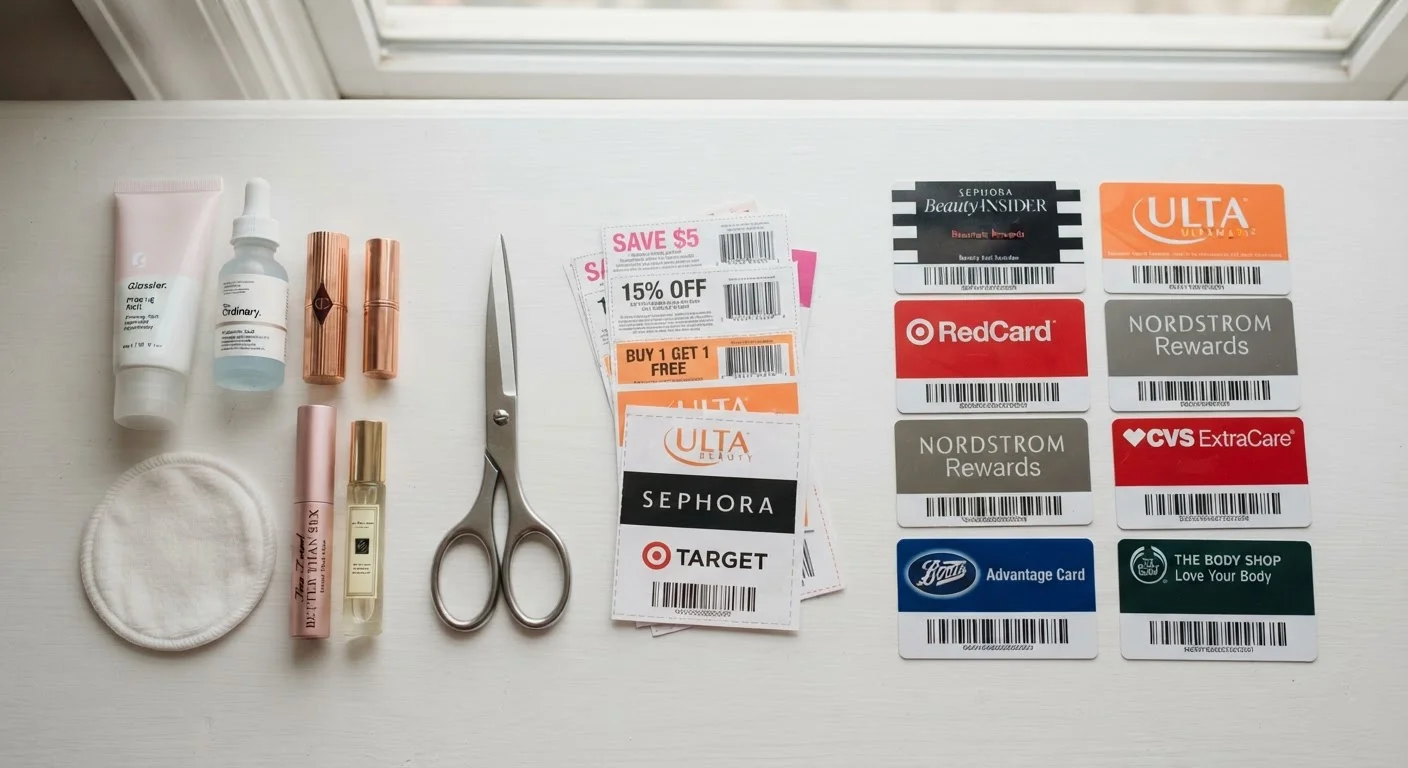
Photo: SaverSteals.com | Explore More. Shop Smarter. editorial
—— In This Article
Key Takeaways
- Beauty coupons come in several types - manufacturer, store, and digital - each with distinct rules.
- Loyalty programs reward repeat purchases with points, tier perks, and members-only promotions.
- Validating a coupon before checkout prevents wasted time and checkout-line surprises.
- Stacking a store coupon with a loyalty discount is often permitted, but manufacturer coupons have stricter limits.
- Keeping track of expiry dates is the single most important habit for consistent savings.
How Beauty Coupons Actually Work
A beauty coupon is a documented discount - physical or digital - that reduces the price of a specific product or order when presented at checkout. Before you can use one strategically, it helps to understand the three main types:
- Manufacturer coupons: Issued by the brand itself, accepted at most retailers that carry the product, and governed by strict usage rules - usually one per transaction.
- Store coupons: Issued by a specific retailer, valid only at that store or site, and often more flexible about combining with other offers.
- Digital coupons: Loaded to an account or app rather than printed. They're clipped with a tap and apply automatically or at checkout entry.
Every coupon carries terms: an expiry date, eligible products, a minimum purchase threshold, and sometimes a limit on the number of identical items per transaction. Skimming these conditions is the fastest way to avoid a rejected discount at checkout. Our Beauty Coupon Glossary breaks down the specific terminology you'll encounter across beauty retail.
Stackable offer
A discount that can be combined with one or more other discounts on the same purchase, such as a store coupon used alongside a loyalty redemption.
Threshold discount
A coupon or promotion that only activates when the cart reaches a minimum dollar amount, such as '$5 off a $30 purchase.'
Digital coupon
A paperless discount loaded to a retailer account or app that applies automatically or via a code at checkout, rather than being physically clipped.
Points redemption
The act of converting accumulated loyalty points into a discount or reward, typically at a rate set by the retailer's program terms.
Loyalty tier
A status level within a rewards program, usually reached by spending a set amount within a period, that unlocks additional perks or higher point earn rates.
Expiry date
The deadline after which a coupon or accumulated points are no longer valid and cannot be redeemed.
Joining Loyalty Programs: What to Expect
Loyalty programs let you earn points or rewards on every qualifying purchase, which can be redeemed for discounts, free products, or exclusive access. Most beauty retailers structure their programs in tiers - the more you spend over a calendar period, the higher the tier and the better the perks.
When evaluating whether to join a program, consider these factors:
- Point earn rate: How many points do you earn per dollar spent? A higher earn rate means faster accumulation.
- Redemption value: What is one point actually worth when redeemed? A program with a high earn rate but low redemption value may be less useful than it appears.
- Tier benefits: Upper tiers often include free shipping thresholds, birthday gifts, or early access to sales events.
- Point expiry: Understand when points lapse so you can plan redemptions accordingly.
For a detailed breakdown of how points and tiers work across common program structures, see Beauty Loyalty Programs Explained.
Finding and Validating Coupons
The most reliable coupon sources are the ones closest to the retailer or brand: official websites, loyalty dashboards, and brand email newsletters. These channels offer verified, current offers rather than the outdated or region-restricted codes sometimes circulated on third-party aggregator sites.
Practical places to check:
- Retailer app - digital coupons are often loaded here first and may require in-app activation.
- Brand website - manufacturers occasionally run direct-to-consumer promotions separate from retailer offers.
- Loyalty program inbox - personalized offers based on your purchase history are commonly distributed here.
- Weekly retailer circulars - both print and digital versions contain store coupons tied to current promotional cycles.
Activate Before You Shop
Digital coupons almost always require activation before they apply at checkout. Open the retailer's app or loyalty dashboard while building your shopping list - not at the register - so you have time to clip offers and confirm they cover your intended items.
Before finalizing any purchase, always verify that a coupon code is active and applies to the exact items in your cart. Test the code early in the checkout process rather than at the payment step.
Stacking Offers: The Basics
Stacking refers to combining more than one discount on a single purchase. For first-timers, the most accessible stack is a store coupon applied alongside a loyalty point redemption - retailers generally permit this combination. A more advanced stack might involve a manufacturer coupon, a store coupon, and a loyalty reward, though not all retailers allow all three simultaneously.
Key rules to internalize:
- One manufacturer coupon per item is the standard limit - you cannot use two manufacturer coupons on one product.
- Store coupons can typically be layered with manufacturer coupons on the same item.
- Promotional sale prices usually coexist with coupons unless the coupon terms explicitly exclude sale items.
- Some loyalty redemptions are restricted during certain sale events - check the program's terms before assuming.
If you want to go beyond the basics, the complete strategic playbook covers end-to-end stacking tactics. For an alternative approach that doesn't depend on coupons at all, saving on beauty without coupons outlines timing- and tier-based methods.
Common First-Timer Mistakes to Avoid
Most early missteps in beauty coupon use come down to skipping the fine print or misjudging timing. The following patterns come up repeatedly:
- Using an expired coupon
- Coupons are date-sensitive. An expired code or printed slip will be declined. Always check the expiry before you shop.
- Buying something solely because of a coupon
- A coupon on a product you wouldn't otherwise buy is not a saving - it's a spend. Only apply discounts to purchases you'd planned to make.
- Ignoring minimum spend thresholds
- Many coupons activate only when the cart reaches a specified total. Falling short means the discount won't apply, and rushing to reach the minimum with unnecessary items defeats the purpose.
- Forgetting to activate digital coupons
- Digital coupons typically require activation - clipping them to your account - before they apply at checkout. A coupon you've seen but not activated won't work.
Building a simple tracking habit - a notes app, a spreadsheet, or a dedicated folder - keeps expiry dates and active offers visible at a glance. The guide on keeping your beauty coupon strategy organised covers practical systems in detail. Before your next shopping trip, run through the pre-redemption checklist to make sure nothing slips through the cracks.
Frequently Asked Questions

Beauty Editorial Team
Beauty Editorial Team is the collective byline for our editorial team and contributor network. Articles published under this byline or an editorial pen name are researched, written, and reviewed according to our editorial standards for clarity, consistency, and independence before publication.
View author profile