
Common Myths About Toy Sales That Can Cost You More
From 'Black Friday always has the lowest toy prices' to 'buying early saves money' — we separate toy-deal fact from fiction.
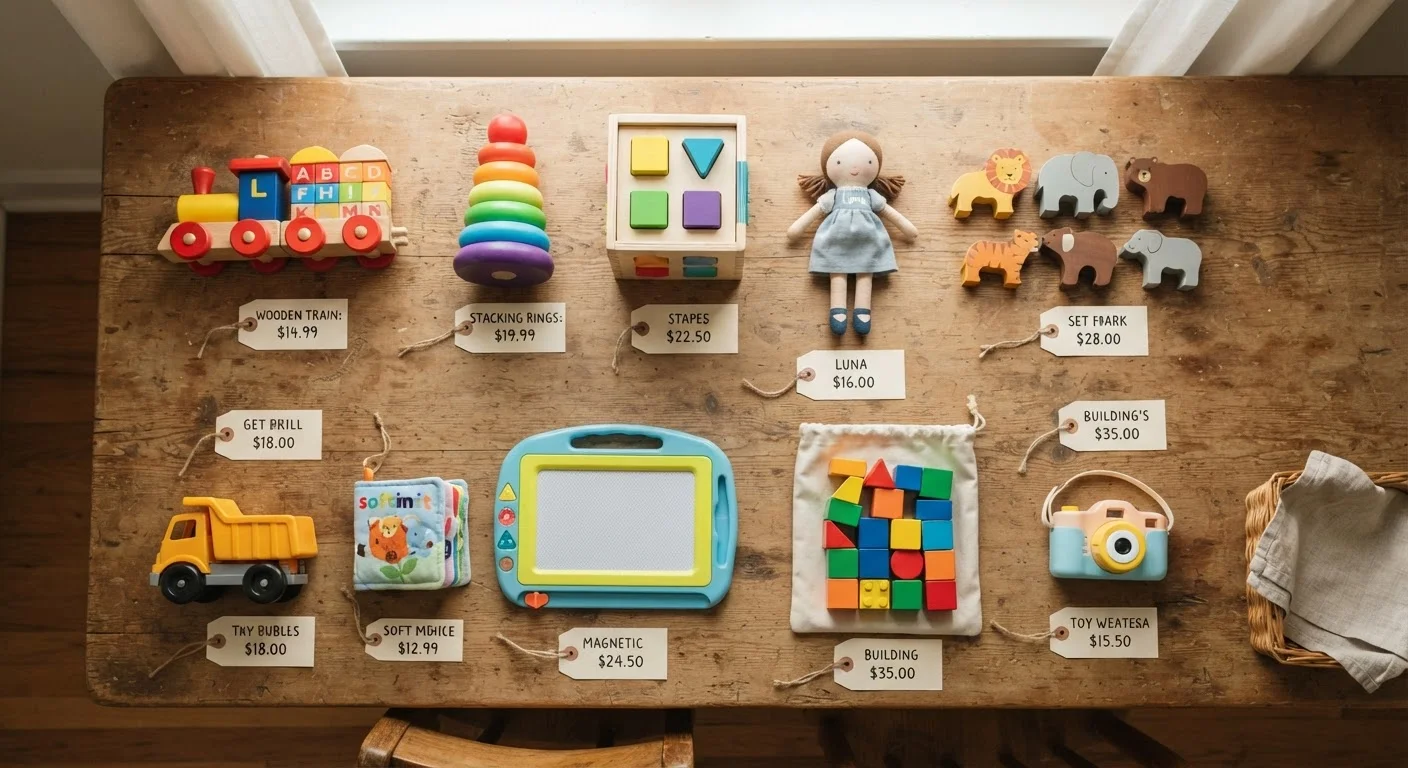
Photo: SaverSteals.com | Explore More. Shop Smarter. editorial
—— In This Article
Key Takeaways
- Black Friday is not always the lowest point for toy prices throughout the year.
- Buying toys early doesn't guarantee savings — prices often drop closer to the holidays.
- Clearance labels don't automatically mean a toy is at its lowest possible price.
- Secondhand toys, when sourced carefully, can offer real value without sacrificing safety.
- Price-tracking tools give a more reliable picture of a toy's true discount depth.
Why Toy Sale Myths Persist
Toy pricing is genuinely complex. Retailers use dynamic pricing, manufactured scarcity, and staggered promotions across channels — which makes it easy for shoppers to rely on rules of thumb that don't always hold up. Myths about toy deals tend to spread because they contain a grain of truth, enough to feel credible, but not enough to consistently save you money.
The patterns below show up year after year in shopper behavior. Understanding what's actually behind toy pricing cycles can help you make decisions based on evidence rather than assumption. For a parallel look at how these same misconceptions play out in another product category, see our piece on assumptions about discounted electronics.
Myth
Black Friday always has the lowest toy prices of the year.
Fact
Black Friday promotions on toys are often matched or undercut by sales in late November through December, and again in post-holiday clearance in January.
Retailers time some of their strongest toy promotions around Black Friday to capture early shoppers, but inventory management and competition push additional markdowns throughout December and into January. Price-tracking data consistently shows that specific toy items hit their annual lows at different points across this window — not exclusively on Black Friday. Shoppers who wait for the right item-specific low often do better than those who buy everything in late November.
Myth
Buying toys early in the season guarantees you'll pay less.
Fact
Early-season toy prices are frequently at or near full retail; promotional pricing typically accelerates as the holiday deadline approaches.
The logic behind buying early — avoiding stock-outs and panic purchases — is sound, but it doesn't reliably translate to price savings. Many popular toys are priced at full retail through October and only see meaningful discounts in November and December as retailers compete for share. The risk of stock-outs on specific hot-ticket items is real, but for the broader toy market, early buying is more about peace of mind than price advantage.
Myth
A clearance tag means you're getting the item at its lowest price.
Fact
Clearance pricing reflects a retailer's need to move inventory, not necessarily a rock-bottom market price — the same item may be available for less elsewhere.
Clearance designations are set at the store level based on that retailer's inventory position. A toy marked 40% off clearance at one store may be selling at 50% off at a competitor, or at full price online where stock is still available. Clearance is a meaningful signal that a discount exists, but it's not a cross-market guarantee of the lowest price. A quick price check across two or three sources takes under a minute and is worth the effort.
Myth
Online toy prices are always lower than in-store prices.
Fact
The channel with the deeper discount varies by item, retailer, and time of year — neither online nor in-store consistently wins across all categories.
Online retail does offer structural advantages — lower overhead, easier price comparison — but in-store clearance events, particularly in January and at the end of a season, can produce markdowns that aren't replicated online. Retailers sometimes use in-store exclusives to drive foot traffic, and physical shelf space constraints push steeper clearance pricing that doesn't appear on a website. Checking both channels before purchasing is a straightforward habit that can occasionally produce a meaningful price difference.
Myth
Popular toys never go on sale, so there's no point waiting.
Fact
Most toys — including high-demand items — see at least one meaningful price reduction within 12 months of release, often following the initial holiday cycle.
Retailers and manufacturers calibrate initial pricing to capture early demand, but sustained full-price sales for more than one holiday cycle are uncommon. Even items with strong first-year demand typically see promotional pricing in the following year as newer products compete for shelf space. If a child's interest in a specific toy is durable rather than trend-driven, patience tends to be rewarded with a lower price.
How to Build a More Reliable Toy-Deal Strategy
Once you've shed the myths, the practical question is: what actually works? A few concrete habits make a meaningful difference.
~30%
Typical post-holiday toy markdown depth
Retail analysts have observed average clearance discounts on toys of roughly 30% or more in the weeks following the December holiday season, though individual items vary significantly.
3–5 weeks
Window when January toy clearance peaks
Industry observers generally note the first three to five weeks of January as the period when brick-and-mortar toy clearance is most aggressive before spring inventory arrives.
- Track prices over time. Free browser extensions and price-history tools log a toy's price trajectory across major retailers. A week of price history can reveal whether a "sale" represents a genuine drop or a return to normal after a temporary markup.
- Watch January clearance. After the holiday season, many brick-and-mortar stores aggressively reduce toy inventory. This window — roughly the first three weeks of January — often produces deeper discounts than the pre-holiday rush, particularly on items that didn't sell through.
- Compare channels before purchasing. Discount depth varies significantly between online and in-store retail. Our article on online vs. in-store toy sales breaks down where each tends to run deeper promotions.
- Consider the secondhand market seriously. Gently used toys are frequently dismissed based on safety assumptions that don't reflect reality when purchases are made through reputable channels. The secondhand toys hub is a useful starting point for families open to pre-owned options. More on that in our piece on secondhand toy myths.
Verify Safety Before Buying Any Toy
Whether purchasing new or secondhand, always confirm a toy meets current U.S. Consumer Product Safety Commission (CPSC) standards and has not been subject to a recall. The CPSC maintains a publicly searchable recall database at cpsc.gov. Age-appropriateness guidelines on packaging are based on safety testing, not just developmental suitability — take them seriously regardless of price or source.
The same critical thinking applies across product categories. The myths around sports gear pricing and furniture pricing myths articles reveal how retail pricing tactics repeat across verticals — toy shoppers aren't uniquely targeted, but they are reliably affected.

Toys Editorial Team
Toys Editorial Team is the collective byline for our editorial team and contributor network. Articles published under this byline or an editorial pen name are researched, written, and reviewed according to our editorial standards for clarity, consistency, and independence before publication.
View author profile