
Secondhand Toy Myths That Stop Families From Saving Money
Used toys are dirty, unsafe, or missing pieces — or are they? We separate common misconceptions from the reality of the secondhand toy market.
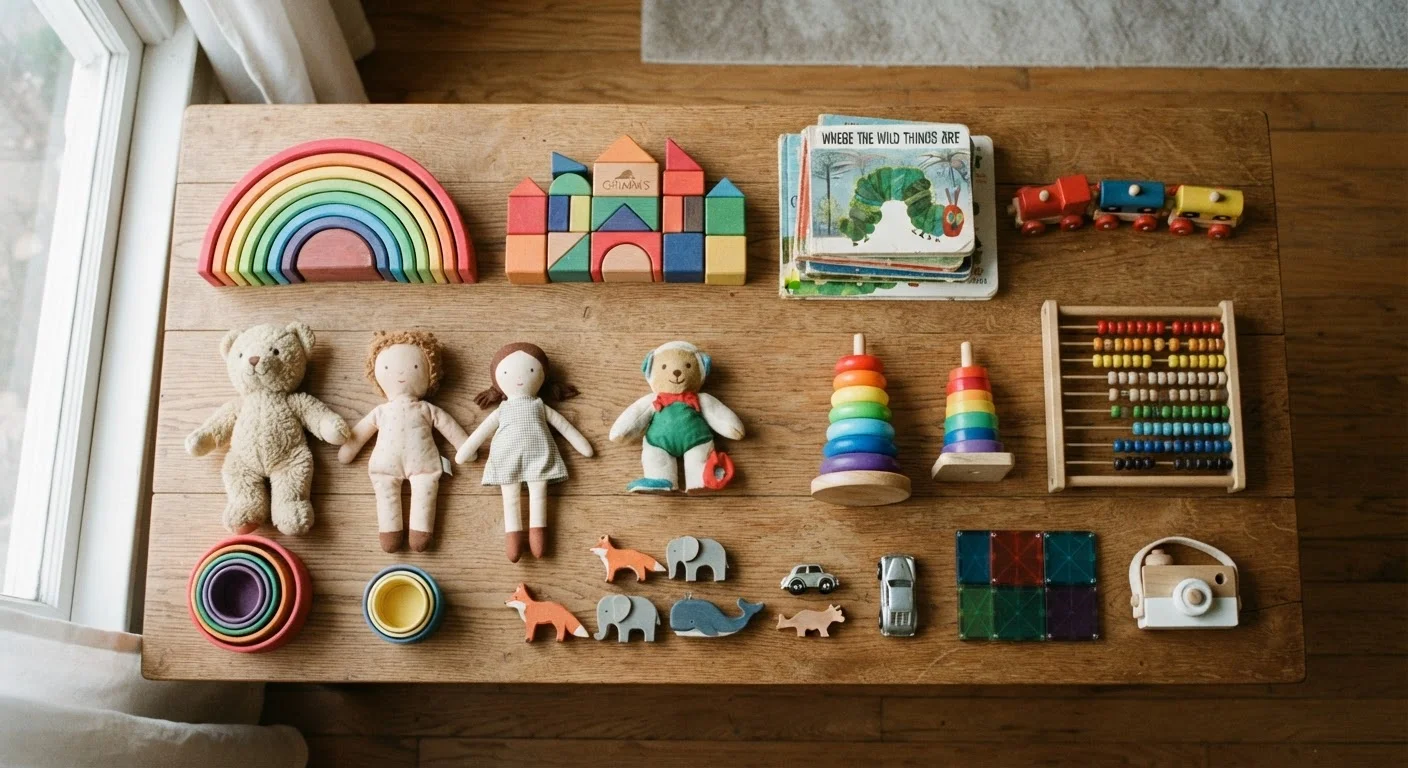
Photo: SaverSteals.com | Explore More. Shop Smarter. editorial
—— In This Article
Key Takeaways
- Most secondhand toys can be safely cleaned and inspected before use with minimal effort.
- Recalled toys can be checked against free government databases before any purchase.
- Many used toys are donated or sold with most or all original pieces still intact.
- Secondhand toys frequently represent significantly lower cost than retail equivalents.
- Resale value and safety are not mutually exclusive — informed buyers can find both.
Why These Myths Persist
Hesitation around secondhand toys is understandable. Parents are cautious about what children put in their mouths, play with unsupervised, or rely on for developmental engagement. But a lot of that caution gets channeled into assumptions that don't hold up when examined closely.
The secondhand toy market has matured considerably. Online marketplaces require seller accountability, community swap groups apply social trust, and thrift retailers often inspect donations before shelving them. Yet the myths persist — and they're costing families real money. If similar misconceptions apply to clothing, they're just as prevalent here: see our look at why secondhand clothes aren't always dirty or worn out for a parallel perspective.
Below, we address the most common misconceptions directly.
Myth
Used toys are unsanitary and impossible to clean properly.
Fact
The vast majority of hard-surface and fabric toys can be effectively cleaned with common household methods.
Hard plastic components — the material most toys are made from — clean well with warm water and mild dish soap. Many fabric or plush toys are machine-washable. The concern about embedded germs is real for some materials, but it applies equally to new toys that travel through warehouses and store shelves. Condition at point of sale matters more than whether an item is new or used.
Myth
Secondhand toys are likely to have been recalled and are therefore unsafe.
Fact
Recalled toys can be identified and filtered out using free, publicly available government databases.
The U.S. Consumer Product Safety Commission publishes a searchable recall database that covers decades of product history. Any buyer can check a specific toy before purchasing. In practice, recalled items represent a small fraction of the overall secondhand market, and sellers who are aware of a recall typically remove items. That said, buyers should verify independently rather than assume sellers always know.
Myth
Secondhand toys always have missing pieces, making them worthless.
Fact
Many used toys are sold with complete or near-complete piece counts, particularly those from careful households.
Incompleteness varies widely by toy category and seller. Board games and construction sets carry more risk of missing components than ride-on toys or push-along items. Sellers listing on reputable platforms often document piece counts explicitly because incomplete listings sell poorly. Asking a seller directly about completeness before purchase is a straightforward way to verify, and many will recount if asked.
Myth
You can't save meaningful money on secondhand toys — the savings aren't worth the hassle.
Fact
Secondhand toys routinely sell at 40–70% below retail price for comparable condition, with minimal sourcing effort for informed buyers.
The actual price gap between new and used toys depends on category, age, and demand, but discounts in the 40–70% range are common across resale platforms and community markets. The perceived hassle — searching, inspecting, communicating with sellers — is often overstated for buyers who know where to look. For families spending several hundred dollars per year on toys, that percentage translates to a meaningful dollar amount.
Myth
Buying secondhand means accepting lower safety standards than new toys.
Fact
Age and condition determine safety risk more than new-versus-used status; many older toys meet or exceed current standards.
Toy safety standards in the U.S. have evolved, and some categories of older toys were subject to stricter testing requirements than their modern counterparts. Age-appropriateness labels, choking hazard warnings, and material standards are the factors to evaluate — not whether a toy came in original packaging. A well-maintained toy from a reputable category bought five years ago can be as safe as a new equivalent, while a poorly designed new toy can present real risks.
Myth
Reselling used toys is complicated and rarely worth the effort.
Fact
Sellers who invest modest effort in accurate descriptions and fair pricing typically move items within reasonable timeframes.
The primary reasons secondhand toy listings fail are vague descriptions, poor photos, and inaccurate pricing — not the secondhand nature of the item itself. Platforms with established buyer communities create real demand for quality used toys, especially for discontinued or hard-to-find items. Sellers who document condition clearly and price relative to current market comparables generally see faster results.
How to Shop Secondhand Toys Confidently
Debunking myths is only useful if it translates into practical habits. Here's what informed secondhand toy shoppers actually do:
- Check recalls before buying. The U.S. Consumer Product Safety Commission (CPSC) maintains a free, searchable recall database at cpsc.gov. A quick search by product name takes under two minutes.
- Inspect before committing. For in-person purchases, check for cracks, sharp edges, missing safety labels, and obvious wear. For online purchases, ask the seller for additional photos and a piece count if relevant.
- Clean on arrival. Hard plastic toys wipe down with mild soap and water. Fabric toys can typically be machine-washed. Neither process requires specialized products.
- Know what to avoid. Soft foam toys with heavy wear, items without visible age or safety markings, and anything with peeling paint on surfaces children contact are reasonable categories to skip regardless of price.
For guidance on where to find quality inventory in the first place, our article on where families actually find good secondhand toys covers the most reliable channels. And if you're selling toys you no longer need, why your used toy listing isn't selling walks through the most common listing mistakes.
Categories That Warrant Extra Caution
Certain toy categories carry higher inspection requirements secondhand: infant toys with soft foam or fabric that shows heavy wear, painted wooden toys with visible flaking, and anything intended for children under three with detachable small parts. These aren't automatic disqualifiers, but they require closer evaluation than a ride-on toy or a board game.
For a fuller picture of what used toys do and don't trade off against new ones, the real trade-offs of buying secondhand toys offers a balanced breakdown worth reading alongside this piece.

Toys Editorial Team
Toys Editorial Team is the collective byline for our editorial team and contributor network. Articles published under this byline or an editorial pen name are researched, written, and reviewed according to our editorial standards for clarity, consistency, and independence before publication.
View author profile