
Spotting a Genuine Markdown: What Real Tool Discounts Look Like
Not every percentage-off tag reflects a true reduction from regular retail price. Learn to verify the baseline before deciding a deal is real.
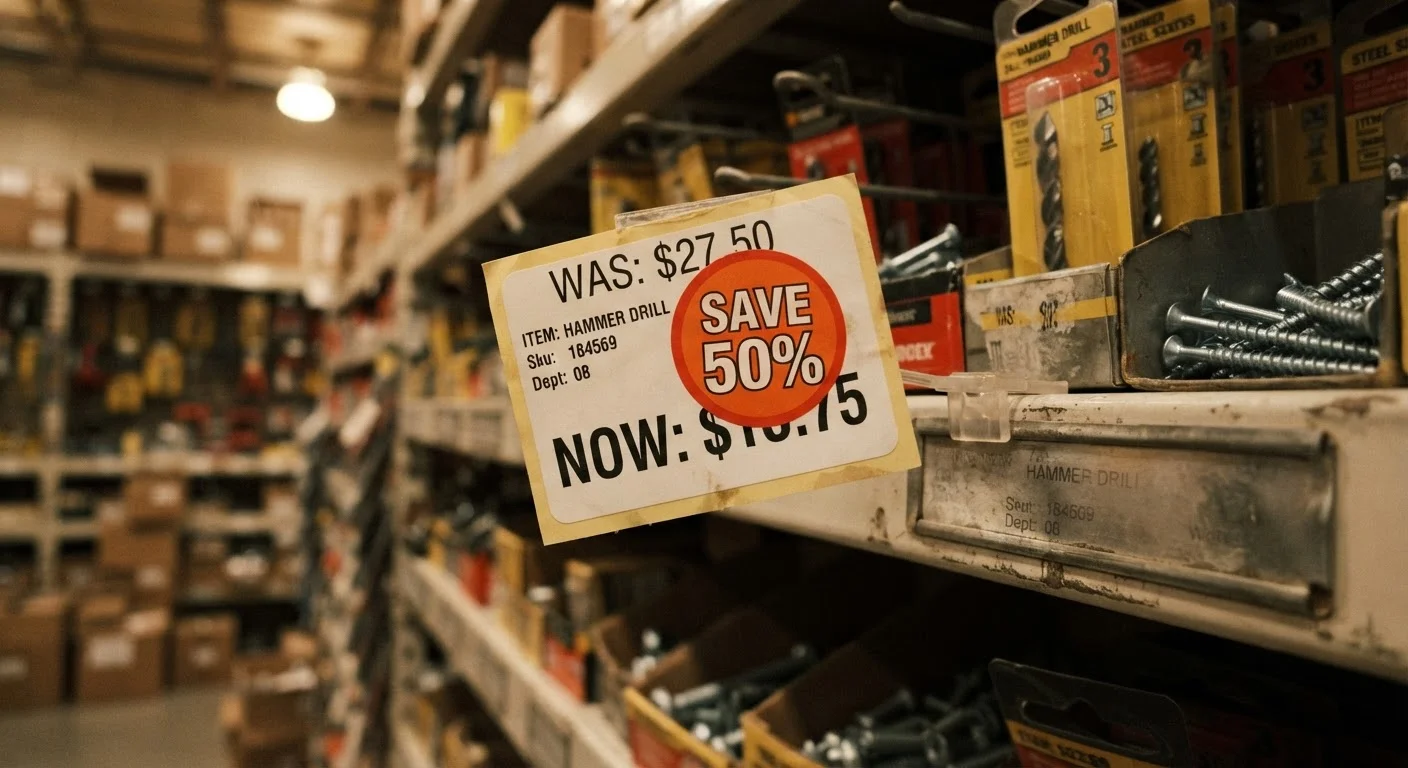
Photo: SaverSteals.com | Explore More. Shop Smarter. editorial
—— In This Article
Key Takeaways
- A percentage-off tag is only meaningful if the reference price reflects what the item actually sold for.
- Price history tools can reveal whether a "sale" price is genuinely below the item's typical retail level.
- Major tool retailers follow predictable sale cycles, making timing a more reliable strategy than reacting to signage.
- Manufacturer suggested retail prices (MSRP) are often set high, making steep discounts look more dramatic than they are.
- Verifying a markdown takes under two minutes and can prevent you from acting on a manufactured discount.
Why the Reference Price Is the Whole Ballgame
Every tool discount percentage you see — 20% off, 40% off, half price — is calculated against a reference price. If that reference price is inflated or rarely charged in practice, the percentage is essentially theater. This is the first and most important concept to internalize before hunting for deals on power tools, hand tools, or hardware.
Retailers are permitted under US Federal Trade Commission (FTC) guidelines to advertise a discount only if the original price was the genuine prevailing price for a meaningful period. In practice, enforcement is complaint-driven and inconsistent, which means the responsibility for verification falls on the buyer.
The straightforward fix is price history. Browser extensions and third-party price-tracking sites maintain historical pricing data on many SKUs sold through major online retailers. If a drill that's now marked "35% off" has been at that "sale" price for the past four months, the reference price isn't doing honest work. Reference price inflation is well documented across retail categories — tools are no exception.
Common Myths About Tool Discounts, Corrected
The tool and hardware category attracts a particular set of persistent misconceptions. Working through them systematically is more useful than general advice about "being skeptical."
Myth
A 40% discount tag on a power tool means you're paying 40% less than what the item normally costs.
Fact
The discount percentage is calculated against the stated reference price, which may not reflect what buyers typically paid.
MSRP — Manufacturer Suggested Retail Price — is set by the manufacturer and often bears little relationship to what a product actually sells for day-to-day. A tool with an MSRP of $200 that routinely sells for $130 and is now tagged at $120 with a "40% off MSRP" label has not been discounted 40% in any practical sense. The FTC's "former price" guidelines are meant to address this, but they apply to the retailer's own former pricing, not MSRP comparisons.
Myth
If the discount is advertised by the manufacturer, it's more trustworthy than a retailer-generated promotion.
Fact
Manufacturer promotions are subject to the same reference pricing limitations as retailer promotions.
Manufacturers set their own suggested prices and can structure promotional language around them just as retailers do. A manufacturer advertising "save $50" on a tool they list at $199 tells you nothing about whether $199 is what anyone was paying before the promotion. Independent price history data is a more reliable baseline than the manufacturer's own framing.
Myth
"Compare at" pricing on a tool tag refers to a verified price that another retailer charges.
Fact
"Compare at" is a retail term with limited external verification obligations in most US states.
"Compare at" labels are intended to suggest the item is priced below what you'd pay elsewhere, but the comparison source is rarely disclosed or independently audited. Some states have stronger truth-in-advertising requirements than others, but nationally, the term is more marketing shorthand than a verified competitive price claim. When you see it, treat it as a prompt to do your own comparison — not as confirmation that a saving exists.
Myth
Clearance pricing at hardware stores always represents a genuine reduction to move old inventory.
Fact
Clearance sections can include items marked down from already-elevated reference prices, or products being replaced by newer versions at similar effective prices.
Clearance designations signal that inventory is being wound down — but the starting price for that markdown still matters. A tool on clearance for $89, marked down from a $119 price that was itself above typical market price, may not represent savings relative to what the same tool costs at a standard retailer. Checking the price history of a clearance item is just as important as checking it for a regular sale item. The mechanics of retail markdowns follow similar patterns across categories.
Myth
Bundle deals on tool kits always offer better value than purchasing components individually.
Fact
Bundle pricing depends entirely on whether you need every item in the kit and what each component would cost separately.
Tool kits — particularly cordless combo kits — are aggressively marketed around bundle savings. But if a kit includes two tools you'd use and two you wouldn't, the effective cost of the useful items may exceed buying them separately. Work out the per-item value by pricing each component individually before concluding that a bundle saves money.
It's also worth noting that hidden costs like shipping, required accessories, and warranty add-ons can quietly cancel out a headline discount even when the markdown itself is legitimate.
How to Time a Tool Purchase Around Real Sale Cycles
Major home improvement and hardware retailers in the US tend to follow observable promotional calendars. Significant tool promotions reliably appear around Memorial Day, Labor Day, and the Black Friday–Cyber Monday window. Father's Day is another consistently active promotional period for power tools specifically. These windows are worth anticipating because the discounts during them reflect genuine competitive pressure between retailers, not manufactured urgency.
Manufacturer rebate programs — common in the cordless tool category — operate on separate cycles and are worth tracking independently. A rebate stacked on a legitimate sale-period price can represent a meaningful total reduction, but the rebate submission deadline and eligibility conditions matter. Read the terms before assuming the rebate is as simple as it appears on the shelf tag.
~3–4x
Typical tool MSRP-to-street-price ratio
Industry observers note that power tool MSRPs are commonly set significantly above actual selling prices, making MSRP-based discount claims appear larger than they are in practice.
4–5
Major US tool sale windows per year
Memorial Day, Father's Day, Labor Day, Black Friday, and post-holiday January are the most consistently active promotional periods for tool retailers in the US market.
For a broader perspective on how promotional pricing is structured across retail categories, see how signals of a genuine furniture sale differ from manufactured discounts — many of the same indicators apply to tools.
Practical Verification Steps Before You Buy
Checking whether a tool discount is real takes a small amount of structured effort — not hours of research.
- Look up price history before visiting a store or completing a checkout. Even a 30-day chart tells you whether the current price is unusual or routine.
- Compare against at least two other retailers carrying the same model number. If the "sale" price matches or exceeds what competitors charge at standard pricing, it isn't competitive.
- Verify the model number isn't a retailer exclusive. Some tools are sold under model numbers exclusive to a single chain, making direct price comparison impossible — a tactic that effectively shields the price from scrutiny.
- Factor in total cost of ownership. An item sold without a required battery, charger, or blade may appear cheaper than it is. The label terms used on price tags — "compare at," "was/now," "MSRP" — carry specific meanings worth understanding before you apply them to a hardware purchase.
Urgency Tactics Can Distort Judgment
Countdown timers, "while supplies last" messaging, and flash-sale framing are designed to compress the time you spend evaluating a price. Before responding to any time-limited tool promotion, take two minutes to check price history. A deal that doesn't survive two minutes of verification isn't one you need to rush for.
This article is for informational purposes only. Pricing practices vary by retailer and may change. Always verify current prices and terms directly with the retailer before making a purchase decision.

Tools Editorial Team
Tools Editorial Team is the collective byline for our editorial team and contributor network. Articles published under this byline or an editorial pen name are researched, written, and reviewed according to our editorial standards for clarity, consistency, and independence before publication.
View author profile