
Outlet Store vs. Clearance Section: Where Discounted Clothing Actually Comes From
Outlet stores and clearance racks look similar but work very differently. Here's what separates them and what that means for your wardrobe budget.
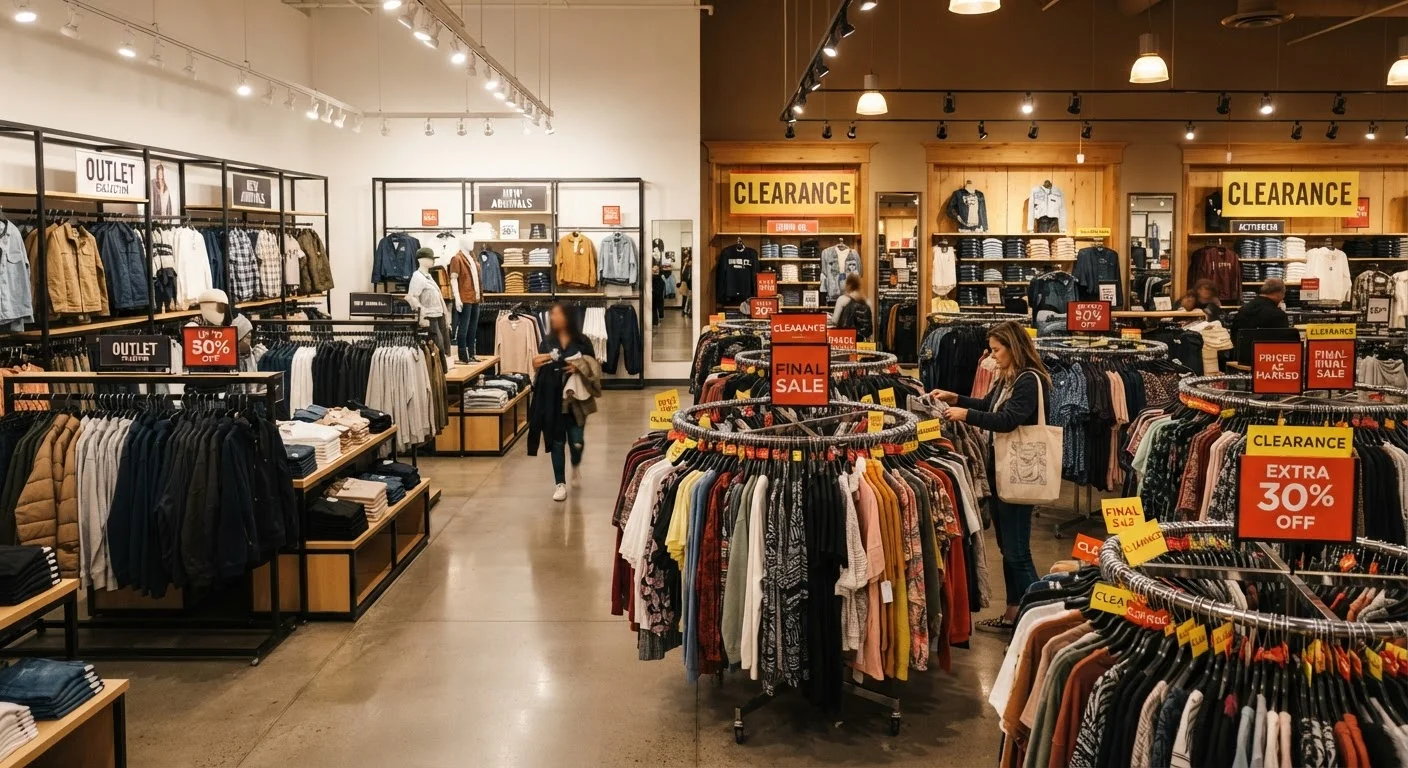
Photo: SaverSteals.com | Explore More. Shop Smarter. editorial
—— In This Article
Key Takeaways
- Many outlet stores sell merchandise manufactured specifically for the outlet channel, not surplus full-price stock.
- Clearance sections contain items the retailer needs to liquidate - often end-of-season or discontinued styles.
- Outlet pricing is not always deeper than clearance; the discount depends on the item's origin and markdown history.
- Clearance selections are narrower, often size-limited, but the savings on full-price goods can be significant.
- Understanding where discounted clothing comes from helps you evaluate whether the marked-down price reflects genuine value.
What Actually Ends Up in Each Place
The words "outlet" and "clearance" both signal lower prices, but they describe fundamentally different inventory pipelines. Knowing the difference lets you assess whether a discount reflects genuine value or simply lower-grade merchandise at a friendlier-sounding price.
Outlet stores were originally created to move surplus stock - overproduction, cancelled orders, and end-of-season goods that didn't sell through at full-price retail locations. That origin story still shapes how many shoppers perceive them. In practice, however, a significant share of modern outlet merchandise is produced specifically for the outlet channel. Retailers and brands manufacture items to a separate spec - sometimes using different materials, construction methods, or simplified detailing - to hit the lower price points outlets require. This is not universally true across all brands, but it is common enough that the Federal Trade Commission has addressed the issue of labeling standards around "compare at" pricing.
Clearance sections inside standard retail stores work differently. These are markdowns on merchandise that was originally intended for full-price sale. When items don't move fast enough - because a season is ending, a style is being discontinued, or a size ran too deep - the retailer reduces the price to free up floor space and recover cash. The same shirt that was on the main floor last month may appear on the clearance rack at 40-60% off this month. The product hasn't changed; the retail strategy has.
| Criterion | Outlet Stores | Clearance Sections |
|---|---|---|
| Merchandise origin | Surplus stock or outlet-specific production | Full-price items marked down to clear |
| Quality consistency | Varies; outlet-made items may differ from retail | Matches retailer's standard full-price quality |
| Size selection | Generally broader; stocked as primary channel | Often limited; popular sizes sell first |
| Discount transparency | "Compare at" prices can be misleading | Discount applies to verifiable prior retail price |
| Shopping convenience | Requires travel to outlet location | Available in most standard retail stores |
| Stock turnover | Replenished regularly as a sales channel | Seasonal; depletes quickly and isn't restocked |
For a parallel look at how this dynamic plays out in another category, see how outlet and clearance pricing differ for sports gear.
How Pricing and Discount Depth Compare
Outlet price tags often show a "compare at" or "original" price that implies steep savings from a retail standard. Treat those reference prices cautiously. If the item was made for the outlet, it never sold at that higher price - the comparison may be to a similar (but not identical) full-price item. This doesn't mean outlet merchandise is overpriced, but the advertised percentage off may not mean what it appears to mean.
Clearance markdowns are more straightforward to evaluate. You can often check what the item sold for on the retailer's own website or main floor a few weeks prior. The discount is applied to a price the item actually carried, which makes it easier to verify whether you're getting a genuine reduction.
~40-85%
Typical clearance markdown range in apparel retail
Industry retail analysts generally cite clearance markdowns in this range, though exact figures vary by retailer and category.
50%+
Share of outlet goods made specifically for outlet channels
Retail industry observers and consumer advocacy groups have noted that purpose-built outlet merchandise now accounts for a majority of stock at many major brand outlets.
That said, clearance selection has real limitations. By the time an item hits the clearance rack, the most popular sizes are typically gone. Common misconceptions about clearance clothing and size availability are worth understanding before you assume clearance racks are useless if you're not an unusual size - the reality is more nuanced than the stereotype.
Outlet stores usually maintain broader inventory depth because they're stocked as a primary sales channel, not as a liquidation mechanism. If consistent sizing and selection matter to you, that structural difference is meaningful.
Practical Implications for Budget Shoppers
Neither channel is categorically superior. The right choice depends on what you're shopping for and how you define value.
If your goal is to buy clothing you know was made to full retail standards - same fabrics, same construction - clearance sections at department stores or specialty retailers are the more reliable route. You're buying a product that passed the retailer's standard quality bar; it just didn't sell at full price. Comparing in-store and online clothing discounts can help you decide whether hunting in-store clearance racks or browsing online markdowns fits your schedule better.
If your goal is wardrobe building on a consistent budget - basics, layering pieces, casual wear - outlet stores can offer good value as long as you evaluate each item on its own merits rather than anchoring to the stated "original" price. Inspect fabric weight, stitching, and hardware the same way you would any other purchase.
It's also worth noting that neither outlet nor clearance clothing automatically represents the deepest possible savings. The secondhand clothing market - including resale apps and thrift stores - frequently offers lower prices on items with a verifiable retail history. For shoppers whose primary objective is cost efficiency over convenience, that channel deserves consideration alongside outlet and clearance options.
Online Outlet and Clearance Sections Follow the Same Logic
Many retailers maintain both outlet and clearance sections on their websites. The same distinctions apply: an online clearance tab typically lists full-price items being discontinued or moved out of season, while an online outlet section may mix surplus stock with items produced specifically for that lower price tier. Check product descriptions carefully - details like fabric composition and country of manufacture sometimes differ between outlet and main-line versions of otherwise similar styles.

Clothing Editorial Team
Clothing Editorial Team is the collective byline for our editorial team and contributor network. Articles published under this byline or an editorial pen name are researched, written, and reviewed according to our editorial standards for clarity, consistency, and independence before publication.
View author profile