
Outlet Stores vs. Clearance Sections: Where Sports Gear Savings Are Real
Not all discounted sports gear is equally discounted. Understand the difference between outlet pricing and in-store clearance before you shop.
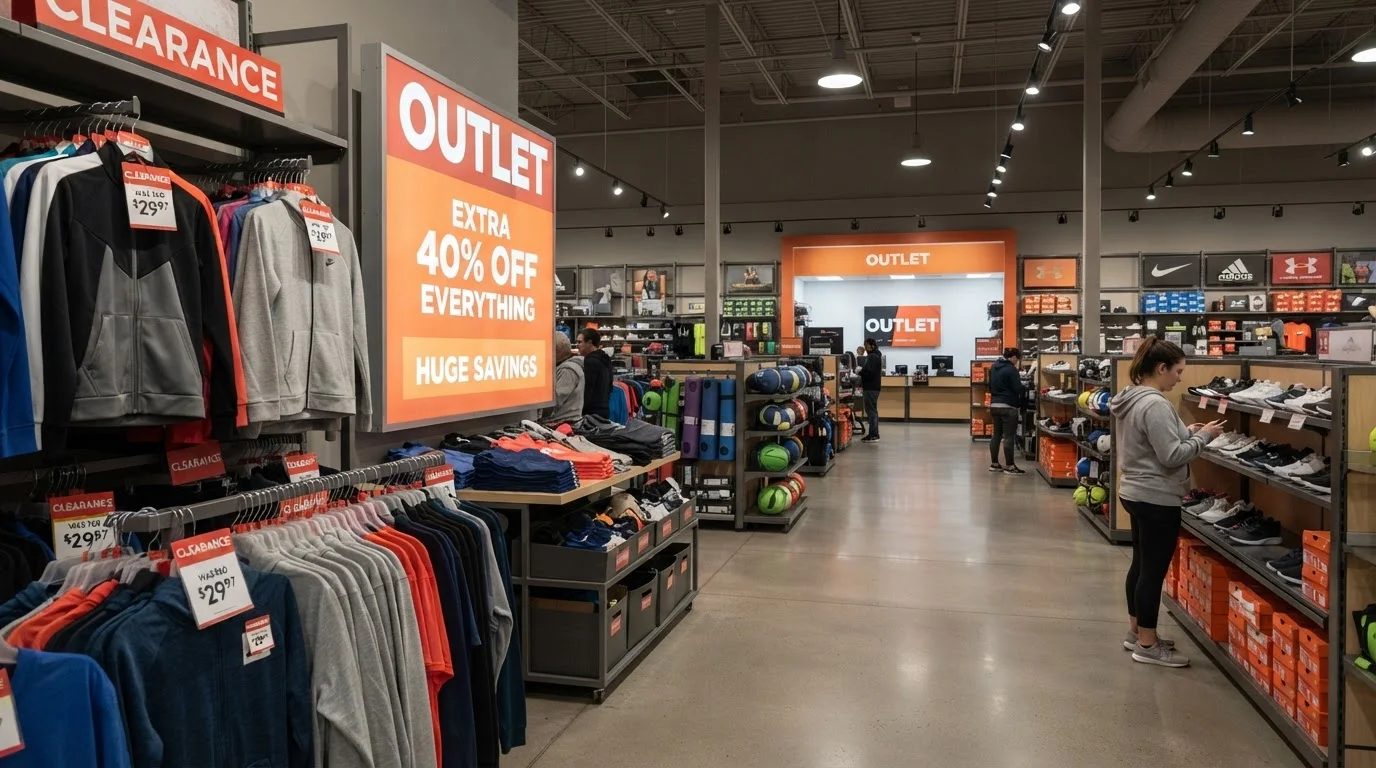
Photo: SaverSteals.com | Explore More. Shop Smarter. editorial
—— In This Article
Key Takeaways
- Outlet stores often carry merchandise made specifically for that channel, not unsold full-price stock.
- Clearance sections reflect a retailer's need to move inventory — discounts are real but selection is unpredictable.
- Outlet pricing can appear dramatic but may reference an inflated 'original' price not charged in mainstream retail.
- Clearance items are typically covered by standard return policies; outlet purchase terms vary widely.
- Seasonal timing affects both channels — end-of-winter and post-summer cycles drive the deepest markdowns.
- Verifying the original retail price independently is the single most effective protection against misleading discounts.
What Each Channel Actually Is
The terms outlet store and clearance section are often used interchangeably, but they describe fundamentally different inventory pipelines. Understanding that difference is the first step toward knowing whether a discount is genuine.
A clearance section is a designated area — physical or online — where a retailer marks down merchandise it needs to clear. This includes end-of-season items, discontinued colorways, overstocked products, and occasionally open-box returns. The discount references a price that was actually charged at that same store, which makes the markdown relatively straightforward to verify.
Outlet stores operate differently. Many major sporting goods and athletic apparel brands produce merchandise specifically for their outlet channels — items that were never sold at full price in mainstream retail. This practice is common enough that the Federal Trade Commission has addressed misleading reference pricing in retail broadly. When an outlet tag says 'compare at $120' and the item sells for $49, that $120 figure may not represent a price charged anywhere. As explained in our clothing outlet vs. clearance breakdown, this dynamic affects apparel categories across verticals, not just sports gear.
Neither channel is inherently dishonest, but they require different evaluation strategies.
How Pricing Is Set — and What That Means for You
Clearance pricing is typically driven by a retailer's inventory goals. When items aren't selling at full price, markdown schedules kick in — usually in waves. A product might start at 20% off, then move to 40%, then to 60% or more if it still hasn't sold. At sporting goods retailers, this cycle often aligns with season transitions: winter gear moves in late January through March, summer equipment in August and September.
| Criterion | Outlet Stores | Clearance Sections |
|---|---|---|
| Inventory origin | Often outlet-specific production | Unsold full-price store stock |
| Reference price reliability | Variable — verify independently | Generally reflects actual prior price |
| Typical discount depth | 30–70% off stated 'compare at' | 20–60% off original retail |
| Selection predictability | Broader but season-lagged | Narrower, dependent on overstock |
| Return policy | Varies; often more restrictive | Usually standard store policy |
| Best timing | Outlet sale events, year-round | End-of-season markdown cycles |
Outlet pricing is more static. Items arrive at a set price and may be further marked down during outlet-specific sale events, but the initial discount is already baked into the channel's model. The risk is that without a verifiable original retail price, you can't easily calculate your actual savings. The most reliable countermeasure is to search the item's model number across mainstream retail sites before purchasing.
For a practical checklist on evaluating whether any sports gear discount is real, see Sizing Up a Sports Gear Sale Before You Click Buy.
Return Policies, Quality Signals, and Real-World Trade-offs
Clearance items sold at a mainstream retailer are generally subject to the same return policy as full-price merchandise — with the common exception of final-sale items, which are usually clearly marked. That policy continuity is a meaningful protection, particularly for footwear and protective equipment where fit matters.
Outlet purchases introduce more variables. Return windows are often shorter, and some outlet locations operate under separate return terms from the brand's main retail stores. Online outlet sections may have restocking fees or require returns by mail only. Reading the terms before checkout is not optional.
Final Sale vs. Clearance: A Critical Distinction
Items marked 'final sale' or 'non-returnable' in both outlet and clearance contexts cannot be returned or exchanged regardless of fit issues. This designation is particularly common for footwear and apparel at deep discount levels. Always check the return status before purchasing performance gear you haven't tried on — the savings disappear quickly if the item doesn't work for your activity.
Quality is worth examining separately. Outlet-made merchandise is not necessarily lower quality, but construction standards can differ from flagship products. For performance-critical gear — helmets, joint supports, footwear with technical cushioning systems — comparing material specifications against mainstream equivalents is worth the extra few minutes. For used sports equipment, these same scrutiny principles apply with even greater importance.
Sport-specific savings patterns add another layer. Running shoes, for instance, follow predictable clearance cycles tied to model-year transitions, while team sport equipment may see sharper outlet discounts at end of season. Sport-by-sport savings strategies break down where each category tends to yield the most reliable discounts.

Sports Editorial Team
Sports Editorial Team is the collective byline for our editorial team and contributor network. Articles published under this byline or an editorial pen name are researched, written, and reviewed according to our editorial standards for clarity, consistency, and independence before publication.
View author profile